


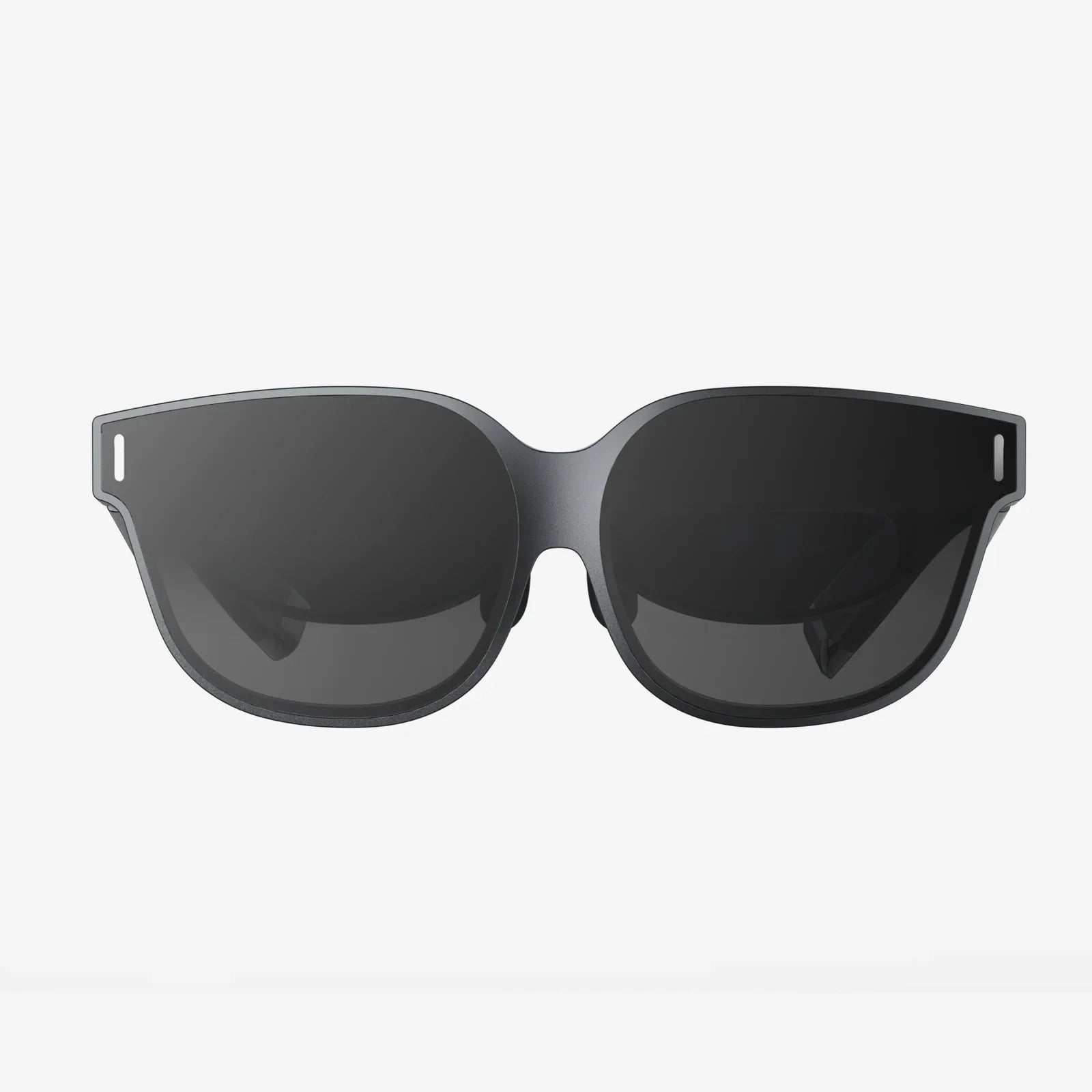
Imagine pointing your device at a vacant corner of your living room and watching a perfect, photorealistic sofa materialize, its fabric texture visible, its scale exact, allowing you to walk around it before you ever click ‘buy’. This is no longer the stuff of science fiction; it is the tangible, transformative power of products with AR technology that are quietly weaving a digital layer over our physical world, reshaping everything from how we shop and learn to how we work and heal. The revolution is not coming; it is already here, hiding in plain sight on the screens we hold in our hands and the wearables we are beginning to adopt, promising a future where information and imagination are no longer confined to a rectangle of glass but are seamlessly integrated into the very fabric of our existence.
The Core Mechanics: How AR Products Perceive and Project
To understand the magic, one must first appreciate the sophisticated technology humming beneath the surface. Products with AR technology are not merely overlaying images; they are engaged in a complex dance of perception, processing, and projection. At their heart lies a combination of advanced hardware and intelligent software working in concert.
The process begins with a suite of sensors, including cameras, LiDAR (Light Detection and Ranging), accelerometers, and gyroscopes. These components act as the product’s eyes and inner ear, constantly scanning the environment to understand its geometry, depth, and surfaces. They answer critical questions: Where is the floor? How far away is that wall? What is the scale of this table?
Simultaneously, Simultaneous Localization and Mapping (SLAM) algorithms kick in. SLAM allows the device to both map the environment in real-time and localize itself within that map. It’s what prevents a virtual dinosaur from clumsily sliding across the floor when you move and instead allows it to stand firmly in one spot, aware of its surroundings.
Finally, the rendering engine takes over, generating the digital content—the 3D model, the informational text, the animated character—and compositing it into the live camera feed with precise alignment and lighting. This last step is where the illusion is perfected, creating a believable blend of real and virtual that feels less like a special effect and more like an enhanced reality.
A New Era of Consumer Engagement: Retail and E-Commerce Transformed
Perhaps the most visible and rapidly adopted application of AR is in the world of commerce. For decades, online shopping presented a fundamental weakness: the inability to try, test, or visualize a product in your own space. Products with AR technology have demolished this barrier, creating a ‘try-before-you-buy’ paradigm that is revolutionizing retail.
Furniture and home decor retailers were among the first pioneers. Apps now allow customers to project thousands of sofas, chairs, rugs, and art pieces into their homes at true-to-life scale. You can check if that statement lamp will overwhelm your bedside table or if the new coffee table fits the flow of your living room, drastically reducing purchase anxiety and the rate of costly returns.
The fashion and beauty industries have followed suit with equally impressive applications. Virtual try-on mirrors and app experiences enable users to see how a pair of glasses frames their face, how a shade of lipstick complements their skin tone, or how a watch looks on their wrist—all without stepping into a store. This is not a simple photo filter; advanced AR maps the user’s facial features or body contours to ensure the virtual product aligns, rotates, and moves with them naturally, providing a surprisingly accurate preview.
This shift is more than a novelty; it is a powerful business tool that bridges the gap between the convenience of digital shopping and the confidence of physical retail, creating deeper engagement and more informed, satisfied customers.
Beyond the Showroom: Industrial and Enterprise Applications
While consumer-facing apps capture headlines, some of the most profound impacts of products with AR technology are occurring behind the scenes in factories, on construction sites, and in corporate boardrooms. Here, AR is not about entertainment but about efficiency, accuracy, and safety, serving as a powerful augment to human capability.
In manufacturing and complex machinery maintenance, technicians wearing AR smart glasses can see digital schematics, animated repair instructions, and vital performance data overlaid directly onto the physical equipment they are servicing. A novice engineer can be guided step-by-step by a remote expert who can draw arrows and highlight components in their field of view, reducing errors, minimizing downtime, and slashing the need for specialist travel.
In architecture, engineering, and construction (AEC), the implications are staggering. Instead of poring over 2D blueprints, teams can don headsets and walk through a full-scale, holographic model of a building before a single foundation is poured. They can identify design clashes, assess spatial relationships, and conduct virtual walkthroughs with clients, saving millions in potential rework and ensuring the final product matches the intended vision.
Logistics and warehouse management have also been revolutionized. AR smart glasses can display optimal picking routes, item locations, and inventory checks, allowing workers to fulfill orders hands-free and with vastly increased speed and accuracy, supercharging the backbone of global e-commerce.
Redefining Knowledge and Experience: Education and Training
The educational potential of products with AR technology is boundless, transforming abstract concepts into interactive, immersive experiences. Textbooks become living portals, and classrooms expand to encompass the entire universe.
Imagine a medical student examining a detailed, interactive 3D model of the human heart, able to peel back layers, observe blood flow, and understand complex pathologies from every angle, all from their tablet. History lessons can transport students to ancient ruins, digitally reconstructed to their former glory right on their desks. Astronomy apps can map the constellations overhead, labeling stars and planets by simply pointing a device at the night sky.
This technology promotes active, experiential learning. Instead of passively receiving information, students interact with it, manipulating digital objects and exploring concepts in a multi-sensory way that dramatically improves retention and comprehension. It provides a safe, repeatable, and cost-effective environment for practicing high-stakes skills, from surgical procedures to operating heavy machinery, without any real-world risk.
The Invisible Revolution: AR in Healthcare and Navigation
Two of the most impactful yet subtle applications of AR are in fields where precision and clarity are paramount: healthcare and spatial navigation.
In healthcare, AR is beginning to assist surgeons by projecting critical information—such as MRI data, the location of tumors, or the path of blood vessels—directly onto the patient’s body during procedures. This gives surgeons ‘X-ray vision,’ allowing for smaller incisions, more precise operations, and improved patient outcomes. It is also being used for patient education, helping doctors explain complex conditions and procedures visually, and for rehabilitation, guiding patients through physiotherapy exercises with correct form.
In navigation, AR is moving beyond the turn-by-turn directions of a map app. Next-generation products can overlay giant, floating arrows onto the real world through your smartphone, guiding you through complex airport terminals or subway stations. For pedestrians, this means looking at the world itself for guidance rather than down at a small map, making navigation more intuitive and safer. The potential for enhancing travel and exploration in unfamiliar cities is immense.
Challenges and The Path Forward: Privacy, Accessibility, and The Metaverse
Despite its promise, the widespread adoption of products with AR technology is not without significant hurdles. The most pressing concern is privacy. These devices, by their very nature, are constantly capturing data about their surroundings—our homes, our workplaces, and public spaces. This raises critical questions about who owns this spatial data, how it is stored, and how it might be used or misused. Establishing robust ethical frameworks and data security protocols is not an option but a necessity for the technology to earn public trust.
Furthermore, the hardware itself needs to evolve. For AR to become truly ubiquitous, it must break free from the smartphone screen. Smart glasses need to become lighter, more socially acceptable, have all-day battery life, and offer a visually compelling experience without the bulk and high cost of current prototypes. The goal is a pair of glasses that look ordinary but can conjure a powerful digital display on command.
This evolution is intrinsically linked to the development of the metaverse—a persistent network of interconnected virtual spaces. AR is poised to be the primary interface for the metaverse, the lens through which we will access and interact with this digital layer of reality. It won’t be about escaping to a fully virtual world but about enriching our existing world with connected information, shared experiences, and persistent digital objects.
The journey of products with AR technology is just beginning. We are moving from a world of isolated apps to a contextually aware, spatially computing environment that understands and adapts to our needs. The device in your pocket is the key to this new layer of reality—a reality where every surface is a potential screen, every object can hold a story, and the line between the digital and physical is not a boundary but a beautiful, seamless blend. The next time you look at an empty space, don’t just see what is; imagine what could be.
Share:
New Virtual Office: Redefining the Future of Work and Business Infrastructure
Virtual Meeting Trends Shaping the Future of Remote Collaboration