Imagine walking through a forest where the trees themselves tell stories, their bark morphing into animated scenes with every step you take. Picture a child’s bedroom where the walls come alive with a interactive, educational safari, the animals responding to their touch. Envision a car designer shaping a holographic engine block with bare hands, manipulating light as if it were solid matter. This is no longer the stuff of science fiction; it is the present and future being drawn in light, thanks to the revolutionary technology of projection tracing. This transformative approach to visual display is breaking down the barriers between the digital and the physical, creating immersive, intuitive, and magical experiences that are captivating audiences and industries alike.
The Core Principle: Beyond Simple Projection
At its most fundamental level, projection tracing is a sophisticated interplay of hardware and software designed to map digital content onto physical objects with pixel-perfect accuracy, regardless of the object's shape, texture, or movement. It is a significant evolution from traditional projection mapping, which primarily focused on static buildings. Projection tracing introduces a dynamic, real-time element.
The process can be broken down into a continuous, high-speed loop:
1. Perception and Scanning
A array of sensors, which can include depth-sensing cameras, LiDAR, or infrared scanners, constantly captures the physical environment. This isn't just a visual scan; it's a precise topographic survey that measures distances, contours, and the exact geometry of the target object and the space around it. This data creates a real-time 3D point cloud, a digital twin of the physical world.
2. Calibration and Alignment
Sophisticated software algorithms then process this 3D data. They calibrate the position, orientation, and lens properties of the projectors in relation to the scanned environment. This step is crucial for overcoming distortion. A simple square projected onto a curved surface would appear warped; the software pre-corrects the image, so it appears perfectly aligned from the viewer's perspective. This is often called "keystone correction" on a monumental, real-time scale.
3. Content Rendering and Warping
The desired digital content—be it an animation, a user interface, or a video—is then rendered by a powerful graphics engine. Before the image is ever sent to the projector, the software warps and fragments it based on the precise 3D model. It calculates exactly which pixels need to hit which points on the physical object to create the intended visual effect.
4. Projection and Interaction
The warped image is sent to the projectors, which cast the light onto the physical surface. The magic is that the result looks perfectly cohesive. Furthermore, if the system detects movement (e.g., a person walking into the light path or the object itself moving), the loop begins again instantly, recalibrating and re-rendering the imagery in milliseconds to maintain the illusion. This allows for truly interactive experiences where the digital light reacts to the physical world.
A Spectrum of Applications: From Art to Industry
The versatility of projection tracing is its greatest strength. Its ability to turn any surface into a display opens up a Pandora's box of creative and practical possibilities across numerous fields.
Transforming Entertainment and Live Events
The entertainment industry has been one of the earliest and most enthusiastic adopters. Concert stages are no longer static sets; they are living, breathing entities. With projection tracing, a singer can appear to have wings made of light that flutter in response to their movement, or a drummer's kit can explode in a cascade of visual particles with every beat. Theatrical productions use it to create dynamic, changing sets without a single physical piece moving, seamlessly transitioning from a cramped apartment to a vast forest. Theme parks employ it to create walk-through attractions where every wall and prop is part of a cohesive narrative, enhancing immersion far beyond what screens can offer.
Revolutionizing Retail and Brand Experiences
In the competitive world of retail, creating a memorable moment is paramount. Projection tracing allows brands to create "wow" moments that captivate consumers. A simple store window display can transform into an interactive game. A new vehicle in a showroom can have its entire exterior skin changed in an instant, showcasing different colors, materials, and even animated highlighting of technical features. At product launches, the product itself can become the screen, with specifications and dynamic visuals dancing across its surface, making the presentation an unforgettable spectacle.
Enhancing Education and Museum Exhibits
Education is moving towards experiential learning, and projection tracing is a powerful tool in this shift. Instead of looking at a static dinosaur skeleton in a museum, visitors can see the creature come to life, with muscles, skin, and movement projected directly onto the bones, telling a story of anatomy and evolution. Children can learn about the solar system by interacting with a physical orb that transforms into Mars, showing its topography and storms as they orbit around it. This hands-on, visual learning fosters a deeper understanding and retention of complex subjects.
Driving Innovation in Design and Manufacturing
In industrial settings, the applications are profoundly practical. The concept of the "digital twin" is made tangible with projection tracing. Automotive and aerospace engineers can project schematics, wiring diagrams, or assembly instructions directly onto a physical prototype or fuselage, guiding technicians with perfect accuracy and reducing errors. Designers can use it for virtual prototyping, projecting a new design onto a clay model to assess its form and aesthetics before committing to costly manufacturing processes. This "augmented reality without a headset" streamlines workflows and enhances precision on the factory floor.
The Technical Symphony: Hardware and Software in Concert
Creating a seamless projection tracing experience is a complex technical ballet. It requires a harmonious integration of several key components, each pushing the boundaries of its respective field.
The Projectors: Brute Luminosity and Precision
Not just any projector will do. These systems require units with extremely high brightness (measured in lumens) to overcome ambient light and create vivid, impactful imagery. They also need high resolution to ensure the mapped content remains sharp and detailed, even on complex surfaces. For large-scale installations, multiple projectors are often blended together to create a single, seamless canvas of light, a process that requires meticulous calibration.
The Brain: Powerful Processing and Software
The real magic happens in the software. Specialized platforms are the engines of projection tracing. They handle the real-time rendering of complex 3D graphics, the processing of the sensor data, and the intricate warping and blending of the projected imagery. These platforms often integrate with industry-standard game engines, which allows artists and designers to create content using familiar tools and unleash incredibly complex and interactive visual narratives.
The Eyes: Advanced Sensing Technology
The feedback loop is enabled by the sensors. Depth cameras provide the crucial 3D data, while traditional RGB cameras can be used for markerless motion capture, allowing the system to track people and objects within the space. This enables interactivity, where the projected world responds to the audience's movements, creating a dialogue between the viewer and the installation.
Challenges and Considerations
Despite its incredible potential, implementing projection tracing is not without its hurdles. The cost of high-brightness, high-fidelity equipment and the complex software licenses can be significant, often placing it out of reach for smaller organizations. The technical complexity demands a specialized team of artists, programmers, and engineers to design, calibrate, and maintain an installation.
Furthermore, the environment plays a crucial role. Ambient light is the natural enemy of projection, so controlling lighting conditions is often essential for achieving the desired visual impact. The physical surface itself also matters; while the technology can adapt to many textures, highly reflective or transparent surfaces can present unique challenges for the scanning and projection process.
The Future Drawn in Light
As the technology continues to mature, we can expect several key trends to shape its future. The hardware will become more compact, affordable, and powerful, democratizing access for smaller studios and businesses. Software will become more intuitive and automated, reducing the need for highly specialized technical knowledge and allowing creatives to focus on the art rather than the engineering.
The integration with artificial intelligence and machine learning is perhaps the most exciting frontier. AI could predict the movement of objects and people, allowing the system to pre-render responses for near-zero latency interactions. It could also generate dynamic content in real-time, creating truly unique and adaptive experiences that never play out the same way twice.
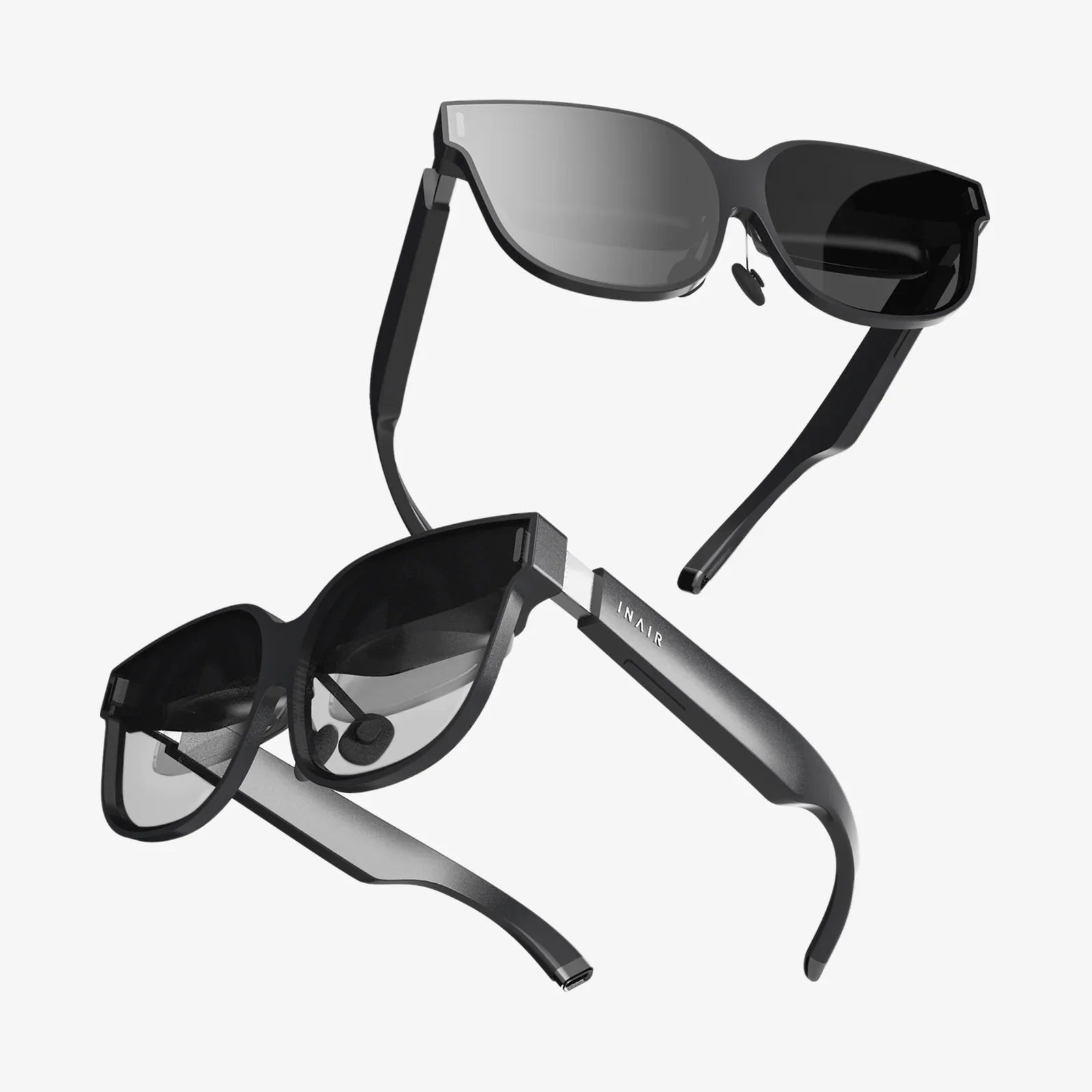
We are also moving towards the seamless fusion of projection tracing with other technologies like augmented reality (AR). Imagine smart glasses that can see and enhance the projected illusions, adding another layer of data and interaction, or systems where projected interfaces on your desk can be manipulated by your hands and then saved into your AR headset for later review.
The line between what is real and what is digital is becoming beautifully, and intentionally, blurred. Projection tracing is not about replacing our physical world but about enhancing it, adorning it with a layer of dynamic, responsive digital intelligence. It turns architecture into animation, products into portals, and empty spaces into empathic stories. It is a canvas as vast as the world itself, limited only by the imagination of those who dare to draw with light. We are no longer mere spectators of the digital revolution; we are stepping into its very frame, ready to play our part in the story it tells.


Share:
Best Price for Virtual Reality Headset: Your Ultimate Guide to Smart Savings
Autostereoscopic Display: The Future of Glasses-Free 3D is Here