


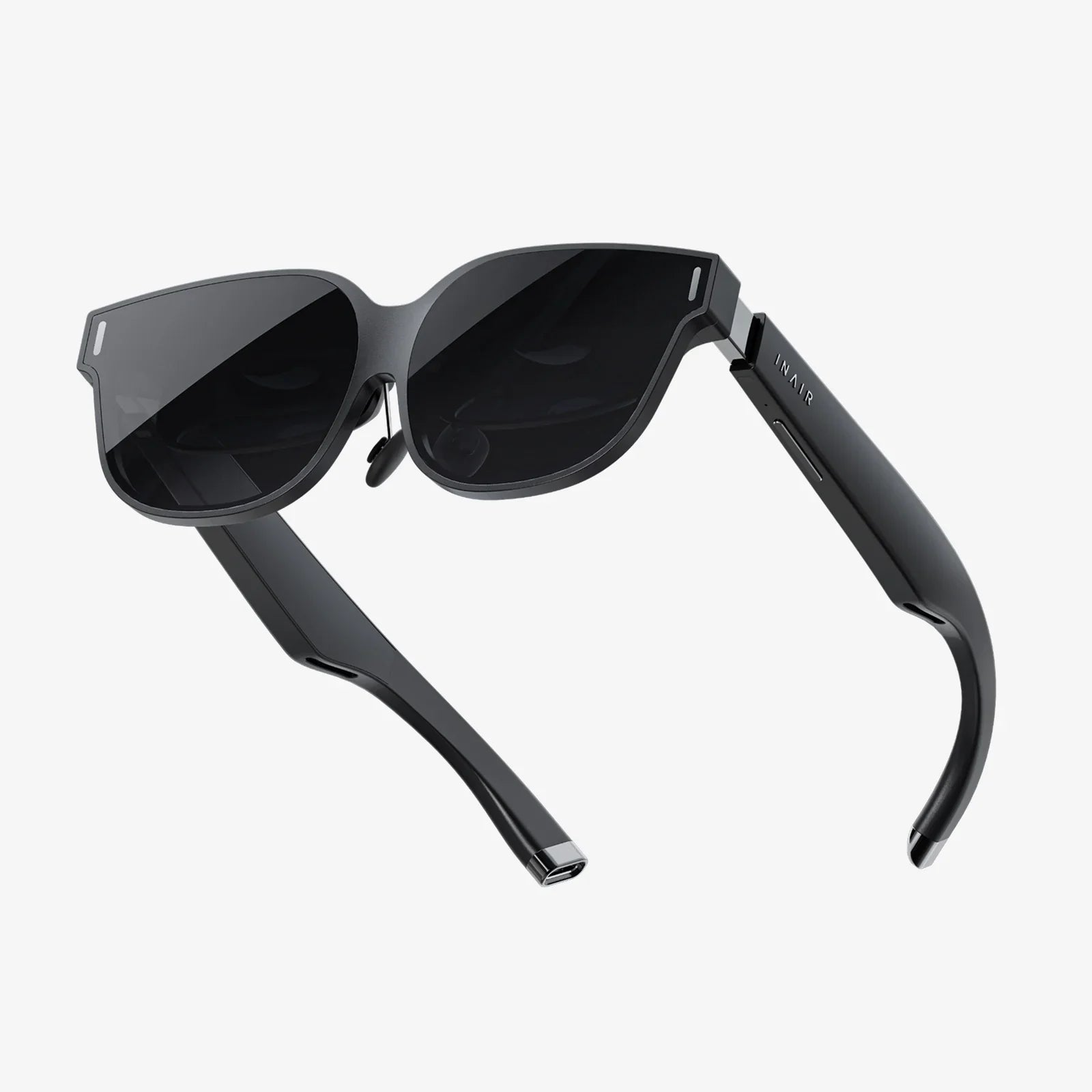
Imagine a world where your screen isn't a window to another place, but a portal you can step through. Where the difference between watching a concert and being in the front row evaporates. Where a surgeon can practice a complex procedure on a beating heart that isn't really there, and a historian can walk through a reconstructed ancient city, stone by stone. This isn't the promise of a distant future; it's the emerging reality of real 3D video, a technology poised to shatter our flat-screen paradigm and redefine visual storytelling, education, and human connection. Forget the flimsy glasses and the headaches of the past—this is something entirely different, and it's here to change everything.
Beyond the Gimmick: Defining Real 3D Video
To understand real 3D video, we must first divorce ourselves from the common misconceptions. For decades, "3D" has been synonymous with the stereoscopic effect used in blockbuster movies. This technique, while effective for creating an illusion of depth, is a clever trick. It presents two slightly offset 2D images—one for each eye—which our brain fuses into a single image with perceived depth. However, this is a fixed-perspective illusion. If you move your head to the side, the perspective doesn't change; the image remains flat, locked in place. It's a viewmaster, not a window.
Real 3D video, often called volumetric video or holographic video, is fundamentally different. It doesn't just simulate depth; it captures and reconstructs a three-dimensional volume of space. Think of it as a moving, digital sculpture. Instead of a flat image, it's a cloud of points in space, each with color and luminance data, creating a photorealistic 3D model that exists within a digital world. This model is then rendered in real-time, allowing a viewer to move around it, look behind objects, and peer into the scene from any angle, just as they would a physical object in the real world. The captured subject has true volume, true parallax, and true presence.
The Magic Behind the Curtain: How Real 3D Video is Captured
The creation of real 3D video is a complex dance of hardware and software, a far cry from a single camera on a tripod. The process typically involves a sophisticated capture rig—an array of dozens, sometimes hundreds, of high-resolution cameras synchronized to fire at the exact same moment. These cameras are strategically placed to surround the subject or scene from every possible angle.
Once the cameras capture this vast amount of synchronized 2D footage, the real computational heavy lifting begins. Powerful algorithms perform a process called photogrammetry or use neural radiance fields (NeRF) to analyze the parallax and perspective differences from every camera view. By comparing how a single point on a subject appears from dozens of different angles, the software can triangulate its precise position in 3D space. This is done for every point, for every frame of video, resulting in a dynamic "point cloud"—a shimmering, digital replica of the original performance.
This raw point cloud data is then processed, often being converted into a mesh (a digital skin stretched over the points) and textured with the color information from the cameras. The final output is a volumetric video file that can be imported into game engines, virtual reality environments, or specialized players, ready to be explored interactively.
A Spectrum of Depth: From 3DoF to 6DoF
To fully appreciate the immersion of real 3D video, it's crucial to understand the concept of Degrees of Freedom (DoF). This measures how a user can move within a digital space.
- 3 Degrees of Freedom (3DoF): This allows for rotational movement only—you can look up, down, left, and right (like turning your head while sitting in a fixed chair). This is the experience of most 360-degree videos and classic stereoscopic 3D.
- 6 Degrees of Freedom (6DoF): This is the holy grail of immersion. It adds translational movement to rotation. You can not only look around but also lean forward, backward, side-to-side, and even walk around within the digital space. Your movement changes your perspective authentically. Real 3D video is inherently a 6DoF medium. If you capture a volumetric performance of a dancer, a 6DoF viewer can literally walk in a circle around them, seeing the performance from behind, something utterly impossible with any prior video technology.
The Transformative Applications: More Than Just Entertainment
While the entertainment industry is salivating at the possibilities, the true power of real 3D video lies in its practical, world-changing applications.
Revolutionizing Education and Training
Imagine a medical student putting on a headset and standing beside a master surgeon, watching a complex procedure from their exact perspective. They can lean in to see the suturing technique, circle the operating table to understand the spatial relationships of organs, and replay the moment infinitely. This is experiential learning on a level textbooks could never provide. Similarly, mechanics can train on virtual engines, firefighters can navigate hazardous scenarios, and astronauts can prepare for spacewalks—all within perfectly captured real 3D environments.
Preserving Cultural Heritage
We can now capture performances, artifacts, and even entire historical sites in pristine 3D detail. Instead of looking at a static photo of a crumbling temple, future generations could don a headset and walk through it as it stood centuries ago. We can volumetrically capture the movements of legendary dancers, the techniques of master craftsmen, and the atmospheres of unique cultural ceremonies, preserving them not as recordings, but as experiential archives.
Supercharging Remote Collaboration and Communication
Video conferencing is a poor substitute for being in a room together. Real 3D telepresence could change that. By capturing and transmitting a person's volumetric image, they could appear as a hologram in a meeting room on the other side of the world. Colleagues could make eye contact, read body language accurately, and interact with 3D models of products together as if they were physically present. This has profound implications for global teamwork, design reviews, and remote assistance.
Creating Deeply Immersive Entertainment
Of course, the creative possibilities are staggering. filmmakers are no longer limited to a single camera angle. They can place the viewer inside the scene—on the stage with a band, on the sidelines of a sporting event, or in the middle of a cinematic battle. The viewer becomes an active participant, choosing where to look and what to focus on. This creates a new narrative language and a deeply personal connection to the content.
The Hurdles on the Horizon: Challenges to Overcome
For all its promise, real 3D video is not without significant challenges that must be addressed for mainstream adoption.
- The Data Tsunami: Volumetric video files are astronomically large. A few seconds of high-fidelity capture can generate terabytes of data. This creates immense strain on storage, processing, and, crucially, distribution networks. Streaming a 6DoF experience requires bandwidth far beyond today's 4K video streams.
- Computational Intensity: Rendering a complex 3D model in real-time from any arbitrary angle is incredibly demanding on processors and graphics cards. Delivering a smooth, high-resolution experience requires powerful hardware, which can be a barrier for consumers.
- The Capture Conundrum: Current capture rigs are expensive, immobile, and require expert operation. They also struggle with certain materials like transparent glass, shiny metals, and fine details like hair, which can appear noisy or solid in the reconstructed model.
- The Standards Void: The industry is still young, and there are no universally accepted file formats or delivery standards. This fragmentation can hinder content creation and distribution.
The Future is Volumetric: What's Next?
The trajectory is clear. As with all technology, the hurdles of data, computation, and cost will relentlessly fall. We are already seeing the emergence of AI-powered compression techniques that drastically reduce file sizes without perceptible quality loss. Consumer hardware is becoming more powerful every year, and 5G/6G networks will provide the necessary bandwidth for streaming. We will move from room-sized capture studios to smaller, more accessible systems, and perhaps one day, to consumer-grade devices that can capture our lives in 3D.
The next evolution will be the move from pure capture to real-time generation. The fusion of real 3D video with powerful generative AI models will allow us to not just capture reality, but to manipulate and create within it. Imagine editing a volumetric video as easily as we edit text today—changing a performer's costume, adding digital effects that interact with the real light, or even creating photorealistic digital humans from scratch. The line between the captured real and the synthetically generated will blur into irrelevance, opening a universe of creative potential.
We are standing at the precipice of a new visual era. The flat screen, a dominant medium for over a century, is finally showing its limits. Real 3D video offers a more natural, more human way of seeing and sharing our world. It’s a technology that doesn’t just show us a story but invites us to step inside it, to explore, to learn, and to connect in ways we are only beginning to imagine. The portal is opening; the question is no longer if you will step through, but when.
Share:
Smart Working Significato: Redefining the Modern Workspace and Its Cultural Impact
Why Is Transparency Important in the Use of AI: The Bedrock of Trust and Accountability