


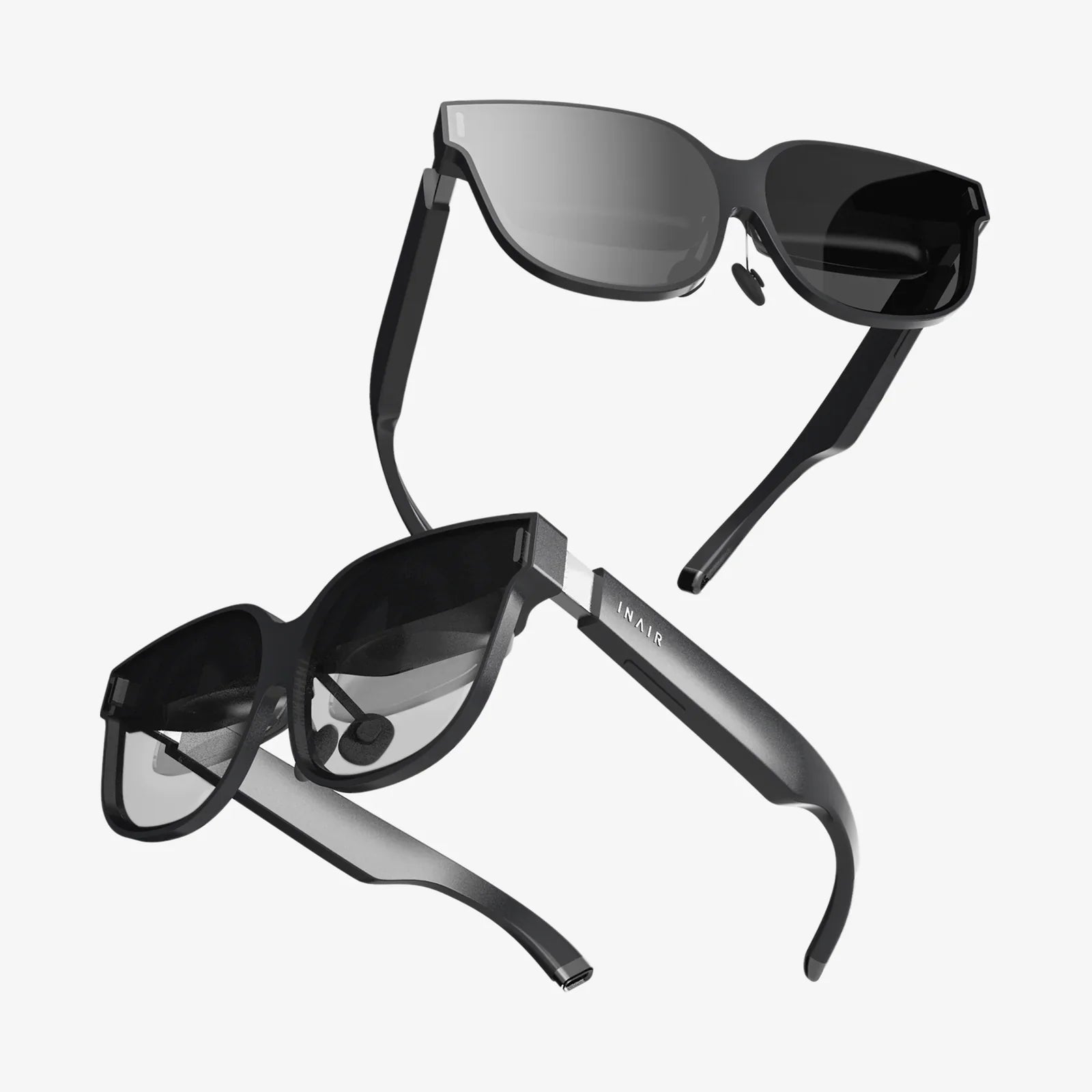
Imagine a world where your digital screen is no longer a flat pane of glass but a shimmering, three-dimensional sculpture of light, existing in the very air before you. This is the ultimate promise of real holographic technology, a concept that has captivated human imagination for decades but is only now beginning to step out of the realm of science fiction and into tangible, albeit complex, scientific reality. The journey to achieve this vision is not merely a quest for a better display; it is a fundamental rethinking of how we interact with and visualize information, light, and space itself.
Defining the Dream: What Truly Constitutes a Hologram?
Before delving into the mechanics, it is crucial to distinguish real holographic technology from the myriad of impostors that borrow its name. The term "hologram" is often misapplied to various 3D effects, from the Pepper's Ghost illusion used in concerts to sophisticated stereoscopic displays found in some modern devices. A true hologram, however, is a recording of a light field. It is not merely a stereoscopic image that tricks the brain into perceiving depth through two slightly offset images. Instead, it is a window onto a scene, replicating the way light would actually travel from that scene to your eyes.
This means that a real holographic display possesses several defining characteristics that set it apart. It is autostereoscopic, requiring no special glasses or head tracking for the viewer. It is volumetric, meaning the image has true volume and exists in three-dimensional space, not on a 2D plane. Most importantly, it exhibits all the visual cues of a real object: motion parallax (the image changes perspective as you move around it), convergence (your eyes must focus at different depths within the image), and, critically, accommodation. Accommodation is the ability of your eyes to focus on different planes within the image. On a traditional screen, your eyes focus on the physical surface of the display, regardless of whether an object appears to be in the foreground or background. A true hologram allows your eyes to focus naturally on the apparent depth of each element, drastically reducing visual fatigue and creating an unparalleled sense of realism.
The Science of Capturing Light: How Holograms Are Made
The foundation of traditional holography was laid in 1947 by physicist Dennis Gabor, who coined the term and won a Nobel Prize for his invention. The classic method involves recording an interference pattern. This process requires a coherent light source, typically a laser, which is split into two beams: the object beam and the reference beam.
The object beam is directed onto the subject of the hologram. The light scatters off this object and travels towards a recording medium, often a special photographic plate or film. Simultaneously, the reference beam is directed onto the same plate without touching the object. When these two beams meet, they interfere with each other. The resulting interference pattern, a complex series of dark and light fringes, is etched onto the plate. This pattern appears as a meaningless swirl to the naked eye, but it contains a complete record of the light field's phase and amplitude information.
To view the hologram, the plate is illuminated by a light source identical to the original reference beam. This illumination beam diffracts through the intricate interference pattern on the plate, reconstructing the exact light field that originally scattered off the object. To the viewer, this is indistinguishable from the object itself, preserving its three-dimensionality perfectly. This analog, laser-based technique produces stunningly realistic holograms but is static, complex, and unsuitable for dynamic displays.
The Digital Leap: From Static Images to Dynamic Displays
The advent of powerful computers marked a paradigm shift, giving birth to computer-generated holography (CGH). Instead of using a physical object and lasers to record an interference pattern, CGH uses algorithms to mathematically compute what that pattern would be for a virtual 3D model. This digital hologram can then be printed onto a plate or, more importantly, displayed on a spatial light modulator (SLM).
An SLM is a device that can modulate the amplitude, phase, or both of a light wave. Think of it as a sophisticated digital projector that doesn't just control the color and intensity of pixels, but the very wavefront of the light itself. By loading the computed holographic pattern onto a high-resolution SLM and illuminating it with a coherent laser, it is possible to recreate the calculated light field, effectively generating a dynamic, digital hologram that can change in real-time. This is the core technological principle behind modern research into real-time holographic displays.
The Immense Hurdles: Why Your Holographic Phone Is Still a Decade Away
Despite the conceptual clarity, the engineering challenges to creating practical, real-time holographic displays are staggering. They represent the frontier of display technology and computational physics.
The primary challenge is bandwidth. A hologram is an information-rich object. To create a convincing, high-resolution holographic video, the amount of data required is astronomical. We are not talking about megapixels; we are talking about gigapixels or even terapixels of information to define the complex wavefront for every frame. Current SLMs simply do not have a high enough pixel density and refresh rate to handle this data load for large-scale, wide-angle holograms. The computational power required to calculate the interference patterns in real-time is equally immense, far exceeding the capabilities of even the most advanced consumer graphics processors.
Other significant hurdles include achieving a wide field of view, which requires extremely high pixel densities on the SLM, and creating full-color displays, which often involve combining multiple SLMs for red, green, and blue lasers. Furthermore, the quest for a compact form factor that could fit into a consumer device adds another layer of complexity to an already daunting problem set.
Beyond the Hype: Current Applications and Research Frontiers
While a consumer holographic television remains a future goal, real holographic technology is already finding powerful, albeit niche, applications. In security, holograms are ubiquitous on credit cards, passports, and currency. Their extreme difficulty to counterfeit makes them a gold standard for authentication. In data storage, holographic memory systems are being researched for their potential to store vast amounts of data in three-dimensional crystals at incredible densities.
In scientific visualization, researchers are using holographic displays to interact with complex 3D data sets, from molecular models in pharmaceuticals to geological formations and astronomical data. The ability to literally reach into a data set and manipulate it offers profound advantages over flat-screen manipulation.
The research community is attacking the core challenges from multiple angles. Some are developing novel algorithms and leveraging the nascent power of quantum computing to reduce the computational burden of CGH. Others are exploring new materials for SLMs, including metasurfaces—artificial materials with nanostructures designed to manipulate light in precise ways that could one day replace bulky optical components. Another promising avenue is photonic integrated circuits, which aim to miniaturize the entire light modulation system onto a single chip.
A Future Sculpted from Light: The Long-Term Vision
The ultimate endpoint of this technology is nothing short of revolutionary. Imagine telepresence so real that a person's light field is captured, transmitted, and reconstructed in your living room, creating a genuine sense of shared physical space for remote work and social interaction. Surgeons could practice complex procedures on dynamic, life-sized holographic organs before ever making an incision. Architects and engineers could walk clients through full-scale holographic models of their designs. Classrooms could feature interactive, 3D historical artifacts or biological processes, transforming education from passive observation to active exploration.
This future will not be built upon a single breakthrough but on a sustained convergence of advancements across multiple disciplines: optics, material science, computer science, and electrical engineering. It will require not just faster processors, but new ways of thinking about computation and light itself.
The path to perfect, real-time holography is long and fraught with scientific challenges, but each step forward reveals a more breathtaking vista of possibility. It is a pursuit that pushes the very boundaries of what is possible, transforming our flat, pixelated windows into the world into vibrant, volumetric portals, forever changing our relationship with the digital realm. The age of true holograms is dawning, and it will redefine reality as we know it.
Share:
AR Projector: The Future of Interactive Display Technology and Immersive Experiences
AR Projector: The Future of Interactive Display Technology and Immersive Experiences