


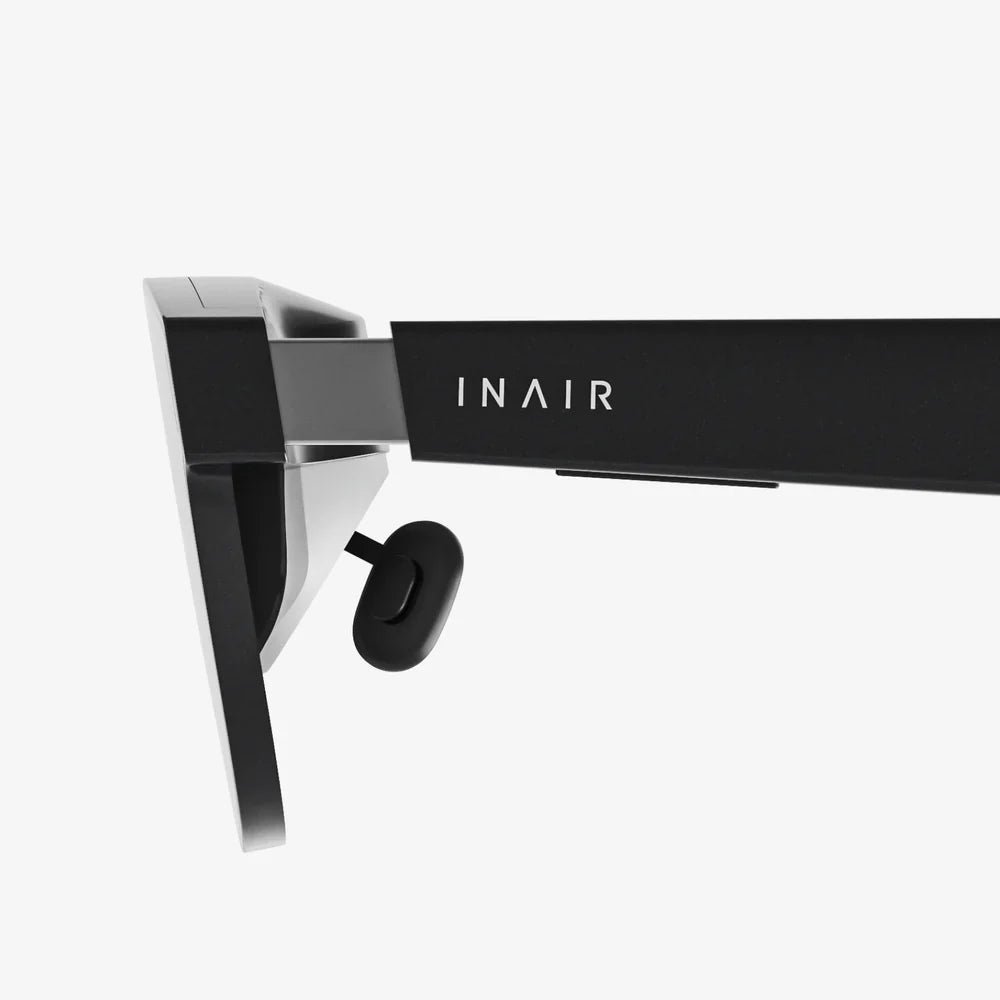
Imagine stepping through a portal, not in a science fiction novel, but in your own living room. The world around you dissolves, replaced by a breathtaking alien landscape, a meticulously recreated historical site, or a hyper-realistic training simulation. This is no longer a fantasy; it is the tangible, awe-inspiring promise of real VR glasses. This technology has vaulted from the pages of speculative fiction into a powerful, accessible tool that is reshaping how we play, learn, work, and connect. The journey into these immersive digital realms begins with a single device: a headset that serves as your personal gateway to the impossible.
The Core Technology: How Real VR Glasses Create New Worlds
At its heart, a modern VR headset is a masterpiece of integrated engineering, designed to trick your senses into accepting a digital reality as truth. The magic lies in the sophisticated interplay of several key components.
Visual Immersion: The Displays and Lenses
The primary window into any virtual world is the display. Unlike a television or monitor you observe from a distance, VR displays are mere inches from your eyes. They are typically high-resolution, fast-refreshing panels—one for each eye—that present slightly offset images to create a stereoscopic 3D effect. These displays are viewed through specialized optical lenses that warp and focus the image to fill your entire field of view (FOV). A wider FOV is crucial for immersion, as it reduces the "binocular" or "goggle" effect, making the virtual environment feel vast and limitless. Advanced features like high dynamic range (HDR) and increased pixel density (pixels-per-degree) are now becoming standard, working to eliminate the "screen door effect" and deliver stunning, crystal-clear visuals.
Precision Tracking: Head and Motion
For the illusion to hold, the virtual world must respond to your movements with perfect, lag-free precision. This is achieved through a combination of internal and external tracking systems. Inside-out tracking uses integrated cameras and sensors on the headset itself to map the physical room and track its own position within it. Outside-in tracking, while less common now, uses external sensors placed in the room to precisely monitor the headset's movement. This six degrees of freedom (6DoF) tracking allows you to not just look around (rotational movement) but also lean, crouch, and walk (positional movement), making you an active participant in the space.
Auditory and Haptic Feedback
Immersion is a multi-sensory experience. Spatial audio, delivered through built-in headphones or dedicated audio straps, is essential. It mimics how sound behaves in the real world, allowing you to pinpoint the direction and distance of a noise, like a spaceship flying overhead or a whisper from behind. Haptic feedback, through advanced controllers, provides a sense of touch. You can feel the recoil of a virtual weapon, the vibration of a steering wheel, or the subtle thump of a basketball bouncing. This tactile connection bridges the gap between seeing an action and feeling it, grounding you firmly in the experience.
Beyond Gaming: The Expansive Universe of VR Applications
While gaming remains a massive driver of consumer adoption, the true potential of real VR glasses extends far beyond entertainment, revolutionizing entire industries.
Education and Training: Learning by Doing
VR offers an unparalleled platform for experiential learning. Medical students can perform intricate virtual surgeries without risk, allowing for mistake-driven learning. History classes can take field trips to ancient Rome or walk through a reconstructed dinosaur habitat. Corporate training programs use VR to simulate high-pressure scenarios, from public speaking to emergency response drills, building muscle memory and confidence in a safe, repeatable environment. This "learning by doing" approach dramatically improves knowledge retention and skill acquisition.
Professional Design and Collaboration
Architects and engineers are using VR to step inside their blueprints and 3D models before a single brick is laid. They can assess scale, spot design flaws, and experience the flow of a space in a way a 2D screen could never allow. Globally distributed teams are using social VR platforms for collaboration, meeting around a virtual table to interact with 3D data models as if they were physical objects, breaking down the barriers of traditional video conferencing.
Healthcare and Therapy
The therapeutic applications of VR are profound and growing. It is successfully used to treat phobias through controlled, gradual exposure therapy. Patients with PTSD can process trauma in a safe and manageable setting. For physical rehabilitation, VR games can make repetitive exercises engaging and motivating, helping patients recover motor skills. Furthermore, VR serves as a powerful distraction tool for patients undergoing painful procedures, transporting them to calming environments to reduce anxiety and perceived pain.
Social Connection and Live Events
VR is evolving into a new social platform. Users can gather with friends and family from across the globe in virtual spaces to watch movies, play games, or simply chat as personalized avatars. The sense of shared presence—making eye contact and using natural gestures—creates a connection far more profound than a standard video call. Major concerts, sports events, and conferences are now being live-streamed in VR, offering front-row seats and unique interactive experiences to a global audience from the comfort of their homes.
Choosing Your Gateway: A Buyer's Considerations
Entering the world of VR requires choosing the right hardware to match your needs and budget. The market offers a spectrum of options, broadly categorized by their processing power and connectivity.
Standalone vs. Tethered Headsets
Standalone headsets are all-in-one wireless devices with a mobile-grade processor, battery, and storage built directly into the headset. They offer incredible freedom of movement, ease of setup, and accessibility, making them the perfect entry point for most consumers. Their trade-off is that they are less powerful than their tethered counterparts. Tethered headsets, also known as PCVR or console VR, connect via a high-speed cable to a powerful external computer or games console. This setup delivers the highest-fidelity graphics, more complex simulations, and the most visually stunning experiences available. The choice often boils down to a balance between convenience and sheer graphical power.
Key Specifications to Evaluate
When comparing devices, several specs are critical. Resolution: Higher numbers mean sharper, clearer images. Refresh Rate: Measured in Hertz (Hz), a higher rate (90Hz and above) ensures smoother motion and reduces the potential for motion sickness. Field of View (FOV): A wider FOV (above 100 degrees) enhances the feeling of immersion. Tracking Quality: Ensure the system offers robust 6DoF tracking for both the headset and controllers. Content Library: Consider the ecosystem and the available apps, games, and experiences that are compatible with the platform.
The Future is Immersive: What's Next for VR?
The technology behind real VR glasses is advancing at a breakneck pace. Several key developments are poised to push immersion to even greater heights and further blur the line between the digital and the physical. Varifocal lenses and eye-tracking technology will work in tandem to solve the vergence-accommodation conflict, a primary source of eye strain, by dynamically focusing on where the user is looking. This will also enable foveated rendering, where only the center of your gaze is rendered in full detail, drastically improving performance. Haptic technology is evolving beyond controllers to include full gloves that can simulate the sensation of texture and resistance, and even full-body suits for complete tactile immersion. Furthermore, the concept of the "metaverse"—a persistent, interconnected network of shared virtual spaces—is being built primarily on the backbone of VR technology, suggesting a future where these digital worlds become integral to our daily social and professional lives.
Overcoming the Hurdles: The Path to Mass Adoption
Despite its incredible potential, VR still faces challenges on its path to becoming a ubiquitous technology. For some users, motion sickness remains an issue, though advancements in higher refresh rates, lower latency, and better software design are steadily mitigating this. The cost of high-end hardware, especially when factoring in a powerful gaming PC, can be a significant barrier, though the growing market of capable standalone devices is making the entry point more affordable. Finally, the form factor of headsets needs to continue evolving towards lighter, more comfortable, and more socially acceptable designs, perhaps eventually converging with the look and feel of standard eyeglasses. As these hurdles are cleared, the adoption of real VR glasses will only accelerate.
The door to other worlds is now open, and it's waiting for you to take that first step. Real VR glasses are not just another piece of consumer electronics; they are a paradigm shift in human-computer interaction. They offer a glimpse into a future where our digital and physical realities are seamlessly intertwined, unlocking new forms of creativity, empathy, and understanding. The content library is vast and growing, the technology is more accessible than ever, and the experiences available today were unimaginable just a few years ago. Your personal portal to adventure, knowledge, and connection is sitting on the virtual shelf, ready to transport you. The only question that remains is: what will you experience first?
Share:
Does VR Work With Glasses? A Complete Guide to Virtual Reality and Eyewear
Tint Adjustable Smart Sunglasses: The Future of Eyewear is Here