


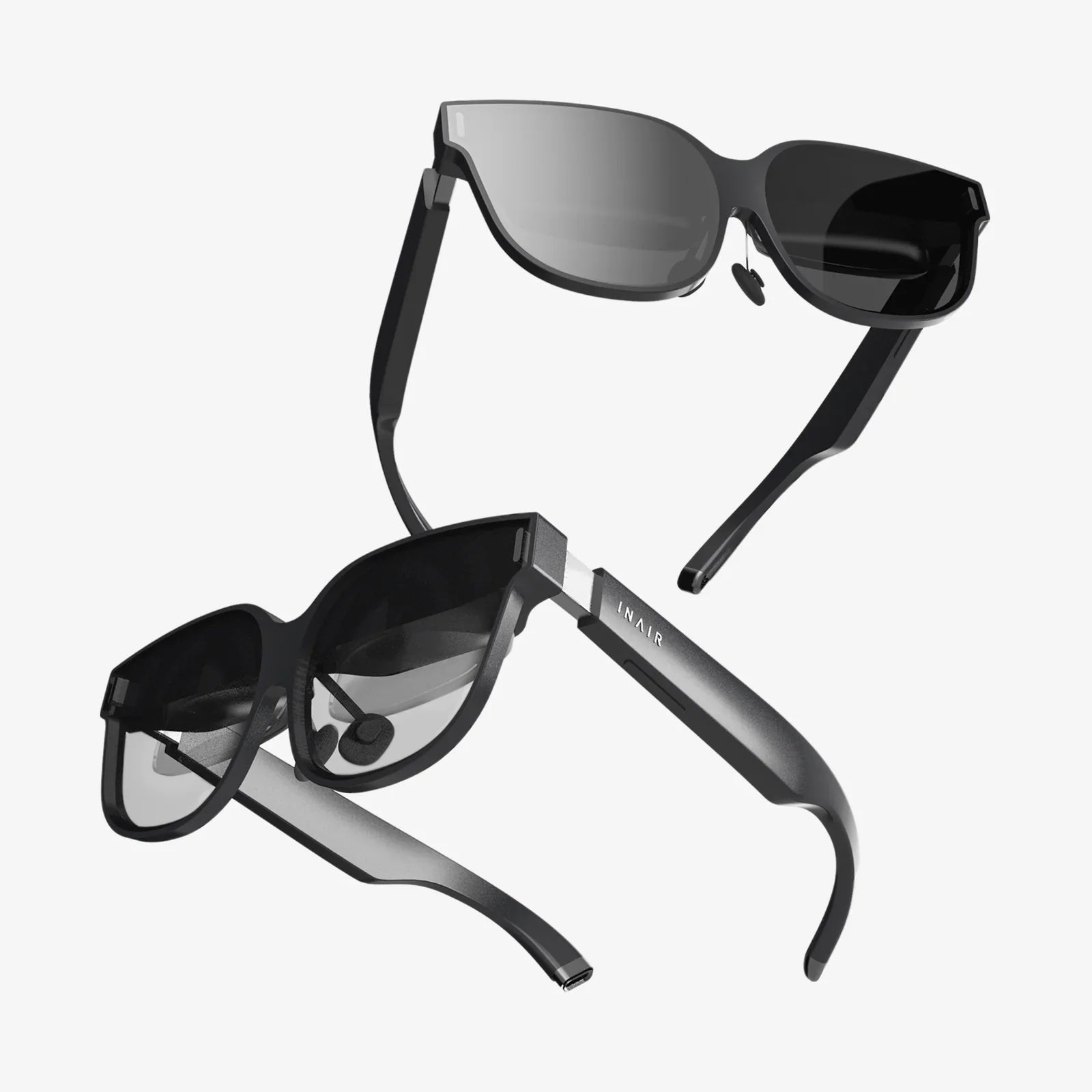
Imagine reaching out and feeling the rough bark of a tree in a forest that doesn't exist, making eye contact with a digital human who seems to recognize you, or feeling a genuine sense of vertigo on the edge of a virtual skyscraper. This is the promise of realistic VR, a technological frontier that is rapidly evolving from a novel gaming gadget into a platform poised to revolutionize everything from how we work and learn to how we connect and heal. The pursuit is no longer just about visual fidelity; it's about crafting a perfect, seamless illusion that convinces your entire body and mind that you are somewhere else. We are standing on the precipice of a new reality, and the line between the virtual and the real has never been thinner.
The Pillars of Presence: Building a Believable World
The ultimate goal of realistic VR is not just high resolution; it's a state known as "presence." Presence is the unequivocal sensation of being in the virtual environment, a suspension of disbelief so powerful that your subconscious accepts the digital world as real. Achieving this holy grail doesn't rely on a single miracle technology but on the harmonious convergence of several key pillars.
Visual Fidelity: The First and Most Demanding Sense
The human visual system is incredibly sophisticated and quick to spot imperfections. Early virtual experiences were plagued by low resolution, causing a "screen door effect," and low polygon counts, making worlds feel angular and artificial. Realistic VR tackles this with:
- High-Resolution Displays: Modern systems boast resolutions that make individual pixels nearly indistinguishable, drastically reducing the screen door effect and creating crisp, clear images.
- High Dynamic Range (HDR): HDR allows for a much broader range of luminance, from deepest blacks to brightest whites. This mimics the way our eyes naturally adjust to light and is critical for simulating realistic sunlight, shadows, and reflections.
- Wide Field of View (FoV): A natural human FoV is roughly 210 degrees. While current technology hasn't perfectly replicated this, wider FoVs help fill your peripheral vision, preventing the feeling of looking through binoculars and deepening immersion.
- Advanced Rendering Techniques: Technologies like foveated rendering—which uses eye-tracking to render only the spot you're directly looking at in high detail—allow for more efficient processing of incredibly complex scenes with realistic lighting, textures, and particle effects in real-time.
Audio: The Unsung Hero of Immersion
Sound is arguably as important as sight for selling the illusion. Realistic VR employs 3D spatial audio, which mimics how sound waves interact with the human head and ears. If a virtual bee buzzes around your head in a VR experience, spatial audio allows you to hear it move from your right ear, behind you, and over to your left without ever turning around. This auditory cue is so powerful it can trigger instinctual physical reactions, making you duck or turn your head. It provides constant, subconscious confirmation that the world around you is coherent and physically plausible.
Haptics: The Language of Touch
We understand our world through touch. You can see a brick wall, but you only know it's rough by touching it. Realistic VR is integrating haptic feedback to close this loop. This goes far beyond simple controller rumble. Advanced haptic gloves can simulate the sensation of pressure, texture, and even resistance. Imagine feeling the weight and smoothness of a virtual apple in your palm, the recoil of a virtual tool, or the gentle push of water against your legs. This tactile feedback is a monumental leap towards true embodiment in a digital space, making interactions feel tangible and meaningful.
Tracking and Interaction: Your Body in the Machine
Presence shatters the moment your virtual hands don't match your real ones. Realistic VR requires precise, low-latency tracking of not just your head and hands, but potentially your entire body, eyes, and facial expressions. Inside-out tracking, where sensors on the headset itself map the environment and your movements, allows for untethered freedom. Furthermore, natural interaction is key. Instead of pressing a button to pick up an object, you simply reach out and grab it. This 1:1 mapping of your real-world actions to the virtual world is fundamental to maintaining the fragile state of presence.
The Human Brain: The Final Renderer
All this technology is for naught without understanding the user—the human brain. Realistic VR is, at its core, a sophisticated form of perceptual trickery.
Embodiment and the Proteus Effect
When you look down in a realistic VR experience and see a virtual body that moves in sync with your own, your brain can begin to accept it as your own. This is embodiment. Studies have shown that the form of this virtual body can directly influence your behavior and perceptions, a phenomenon known as the Proteus Effect. Embodiment in a tall, powerful avatar can make users behave more confidently in subsequent tasks, while embodying a child-like avatar can make the world seem larger and more intimidating. This powerful psychological effect is a cornerstone of therapeutic VR applications.
Vestibular Mismatch and Simulator Sickness
The greatest barrier to realistic VR has often been the body's own defense mechanisms. Simulator sickness occurs when there's a conflict between what your eyes see (e.g., running, flying) and what your vestibular system in your inner ear feels (sitting still). This sensory mismatch can cause nausea, dizziness, and headaches. Overcoming this requires a multi-pronged approach: higher frame rates (90Hz and above) for smoother motion, reducing latency to near-zero, and implementing clever software solutions like "vignetting" (temporarily darkening the periphery during movement) to ease the brain into artificial locomotion.
Applications Beyond Entertainment: Changing Reality Itself
While gaming is a massive driver, the implications of realistic VR extend far beyond, offering solutions to some of society's most pressing challenges.
Revolutionizing Education and Training
Imagine medical students practicing complex surgical procedures on hyper-realistic virtual patients, making mistakes without consequence. Envision mechanics trainees taking apart and reassembling a full-sized virtual jet engine, or history students standing in the Roman Forum as it was 2,000 years ago. Realistic VR enables experiential learning, which is proven to dramatically improve knowledge retention and skill acquisition. It provides safe, repeatable, and scalable training environments that were previously impossible or prohibitively expensive.
Transformative Therapy and Rehabilitation
Therapists are using realistic VR for exposure therapy, gradually and safely exposing patients with phobias—like fear of heights, flying, or public speaking—to their triggers within a controllable virtual space. For patients recovering from strokes or physical trauma, VR-based rehabilitation turns repetitive exercises into engaging games, increasing motivation and adherence to treatment plans. It can also help manage chronic pain by diverting the brain's attention with immersive, pleasant virtual environments.
The Future of Remote Work and Social Connection
The video call grid is a poor substitute for human interaction. Realistic VR promises the next evolution of telepresence: digital meeting rooms where avatars with realistic eye contact and body language can collaborate on 3D models, share a virtual whiteboard, and experience the nuance of a shared physical space. This sense of "being there" with colleagues, family, or friends, regardless of physical distance, could redefine globalization, remote work, and the very nature of community.
The Ethical Frontier: Navigating the New Reality
With such profound power comes immense responsibility. The development of realistic VR forces us to confront serious ethical questions.
- Privacy and Data: These systems collect unprecedented amounts of biometric data—eye movement, hand gestures, voice recordings, even pupil dilation, which can indicate interest or stress. Who owns this data? How is it used and secured?
- The Reality Gap: As experiences become more real, the potential for psychological trauma, especially from intense or malicious content, increases. How do we protect users?
- Addiction and Escapism: If a virtual world becomes more appealing than the real one, will people choose to withdraw from reality? Establishing healthy boundaries will be crucial.
- Identity and the Self: If you can be anyone or anything in VR, how does that affect your sense of self in the real world? The Proteus Effect shows our digital selves can change our real-world behavior, for better or worse.
The journey towards truly realistic VR is not just a technical sprint; it's a marathon of innovation, psychology, and philosophy. It’s about building mirrors to our world and doors to impossible ones. The technology is accelerating at a breathtaking pace, moving beyond sight and sound to engage touch, smell, and even taste. We are not just building new gadgets; we are architecting new human experiences, crafting stories that you don't just watch but live, and creating connections that transcend physical law. The virtual is becoming real, and in doing so, it is forever changing our understanding of what reality itself can be.
Share:
Safety Glasses With Bluetooth Speakers: The Ultimate Guide to Protected Hearing and Vision
Safety Glasses With Bluetooth Speakers: The Ultimate Guide to Protected Hearing and Vision