


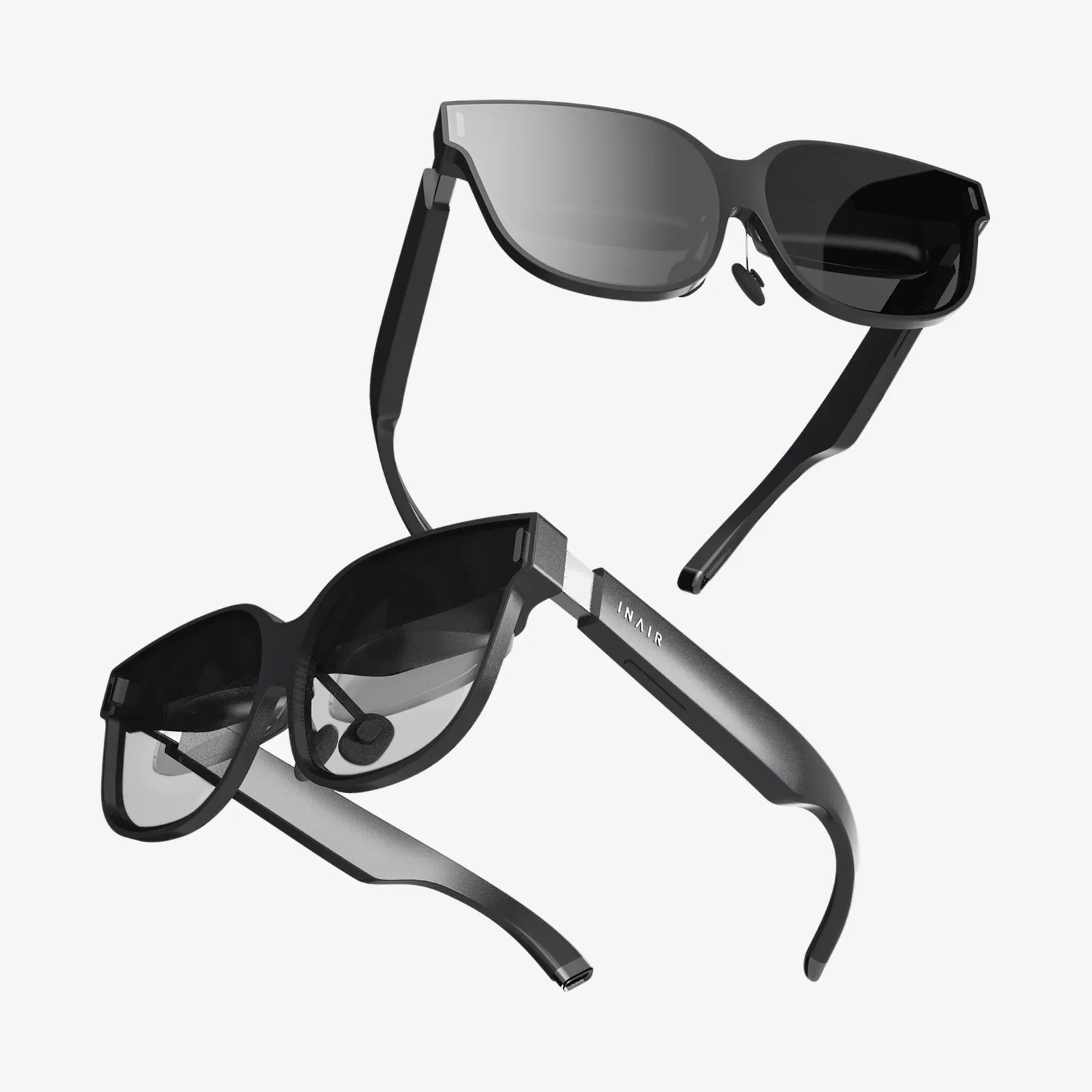
The alarm on your smartphone buzzes, not with a traditional ringtone, but with a gentle, procedurally generated melody designed by an algorithm to be optimally pleasant. You reach for the device, your first interaction of the day not with a person, but with a slab of glass and silicon that serves as a portal to a thousand other worlds. You scroll through a feed of curated lives, watch events unfold on the other side of the globe in real-time, and message a friend you haven't seen in person for years. Before you've even had your coffee, the battle between reality and virtual has already begun, and the lines have never been more deliciously, dangerously blurred.
The Historical Divide: A World of Substance and a World of Ideas
For most of human history, the concept of "virtual" was a philosophical abstraction, not a technological one. Reality was the tangible world: the soil underfoot, the weight of a tool, the warmth of a fire. The virtual existed in the realms of thought, imagination, and art—a painting of a bison was a virtual representation of a real creature, a story told around a campfire was a virtual experience of events that may or may not have happened. This duality was clear. One was corporeal and immediate; the other was conceptual and mediated.
The advent of new technologies began to bridge this gap. The telephone virtualized the human voice, separating it from the body. Photography and film virtualized sight and experience, allowing us to see places and moments frozen in time. Each step brought the virtual closer to mimicking the real, but a fundamental chasm remained. These were recordings, representations. They lacked interactivity, presence, and the fluid responsiveness of the physical world. They were echoes, not alternatives.
The Digital Revolution: Building Worlds from Code
The true seismic shift began with the digital revolution. Computers gave us the ability to not just record reality, but to construct entirely new ones from the ground up. Early text-based adventures and primitive graphics were clearly artificial, their virtuality undeniable. But as computing power exploded, so did the fidelity of these simulations. We moved from reading about a dungeon to navigating a 3D graphical representation of one, to today, where with a headset, we can feel present within one.
This has given rise to a spectrum of virtuality. On one end, we have Augmented Reality (AR), which layers digital information onto our perception of the physical world. Seeing navigation arrows on the street through your glasses or visualizing a new piece of furniture in your living room through your tablet is a hybrid experience. It enhances reality rather than replacing it.
On the other end lies Virtual Reality (VR), which seeks to fully immerse the user in a digitally constructed environment, effectively replacing their sensory input with a synthetic alternative. Here, the goal is presence—the tricking of the brain into believing it is somewhere it is not.
In between exists the vast universe of the modern internet: social media platforms that create virtual social spheres, multiplayer games that function as virtual societies with their own economies and rules, and video conferencing that virtualizes the boardroom. This is the virtual world most of us inhabit daily—a layer of digital interaction superimposed over our physical lives.
The Psychological Merging: Where Does "I" End and the Avatar Begin?
As we spend more time in these digital spaces, profound psychological questions emerge. Our online identities, or avatars, are curated versions of ourselves. We choose the profile picture, craft the bio, and share the highlights. This virtual self can be more confident, more witty, or simply different from our offline persona. But which one is the "real" us? The answer is increasingly both.
Studies have shown the Proteus Effect, where the appearance of our avatar can influence our behavior in the real world. Individuals given taller avatars in a virtual environment displayed more confident behavior in subsequent real-world negotiations. Those with more attractive avatars exhibited increased self-disclosure and intimacy. The virtual experience had leaked into and altered their reality.
Furthermore, experiences in virtual worlds trigger genuine emotional and neurological responses. The adrenaline rush from a narrow escape in a game, the grief felt at the loss of a character you've invested in, the joy of connecting with a friend online—these feelings are not virtual. They are neurologically real. The brain does not neatly categorize an emotion as "real" or "digital." An emotion is an emotion. This is the core of the blurring line: virtual experiences generate real consequences in our minds and bodies.
The Social Fabric: Community in a Post-Geographic World
The impact on social structures is equally transformative. For centuries, community was defined by geography. Your neighbors, your village, your town—these were your primary social circles. The virtual world has shattered this constraint. Now, your most meaningful connections might be with a group of individuals scattered across continents whom you know only by their usernames and voices.
This has incredible liberating potential. It allows people with niche interests, marginalized identities, or limited mobility to find belonging and support that may be absent in their physical environment. Virtual communities can be lifelines.
However, this shift also carries risk. The decline of place-based community can lead to increased loneliness and a loss of social cohesion. If our deepest connections are all online, what happens to the casual, unplanned interactions that foster a sense of local belonging—chatting with a neighbor, recognizing familiar faces at a coffee shop? These micro-interactions, the gentle background hum of physical community, are difficult to virtualize and may be fading, with potential consequences for our collective mental health and social resilience.
The Philosophical Conundrum: What is "Real" Anyway?
At its heart, the reality vs. virtual debate forces us to confront a ancient philosophical question: what constitutes reality? Is it solely that which is made of atoms and obeys the laws of physics? Or is reality, for a conscious being, ultimately a perceptual experience?
If you have a deeply meaningful conversation with a friend in a beautifully rendered virtual garden, the garden is made of code and the friend is represented by an avatar. But the meaning derived, the empathy shared, and the laughter experienced are undeniably real phenomena in your consciousness. The medium was virtual, the outcome was real. This suggests that the value of an experience is not necessarily tied to its substrate.
Some philosophers of mind and technologists even posit a future where the distinction becomes meaningless. If a virtual experience becomes indistinguishable from a physical one to our senses and our brain, does the label "virtual" retain any practical meaning? It becomes merely a descriptor of origin, not of quality or authenticity. In this view, reality is not a binary state but a spectrum of experiences, all of which contribute to the rich tapestry of a human life.
The Future: Integration, Not War
The narrative often framed is one of conflict: reality vs. virtual. This is likely a fallacy. The future is not about one defeating the other, but about their increasing integration. We are moving towards a world of phygital experiences, where the physical and digital seamlessly blend.
Imagine architects walking through full-scale digital models of buildings before a single brick is laid, surgeons practicing complex procedures on virtual organs that behave exactly like real ones, or historians offering immersive virtual tours of ancient cities. The potential for education, empathy, and professional training is staggering. The virtual will not replace reality; it will become a tool to understand, enhance, and augment it.
The challenge, then, is not to choose between these two realms but to learn to navigate the hybrid space wisely. It requires developing a new form of literacy—digital mindfulness. We must cultivate the awareness to know when to put on the headset for a transformative experience and when to take it off to feel the sun on our skin. It means designing technology that serves human flourishing rather than demanding our constant attention. It involves creating virtual spaces that encourage genuine connection rather than performative vanity and that augment our reality without encouraging us to escape from it entirely.
The goal is balance. To use the virtual to bring more depth, connection, and wonder into our physical lives, not less. To ensure that our digital tools remain in our service, reminding ourselves that the most profound virtual reality is still, and will always be, a subset of the breathtaking, complex, and shared reality we all fundamentally inhabit.
So the next time you lose an hour in a game, fall down a wiki rabbit hole, or feel a genuine pang of joy from a message notification, remember—you are not traversing between two separate worlds. You are a citizen of a new, singular existence, one where the boundaries are porous and every click, swipe, and glance is part of the ongoing, incredible experiment of defining what it means to be real, right here, right now.
Share:
What Is Meant By Spatial Audio - The Future Of Immersive Sound
Should You Use Spatial Audio? The Ultimate Guide to Immersive Sound