


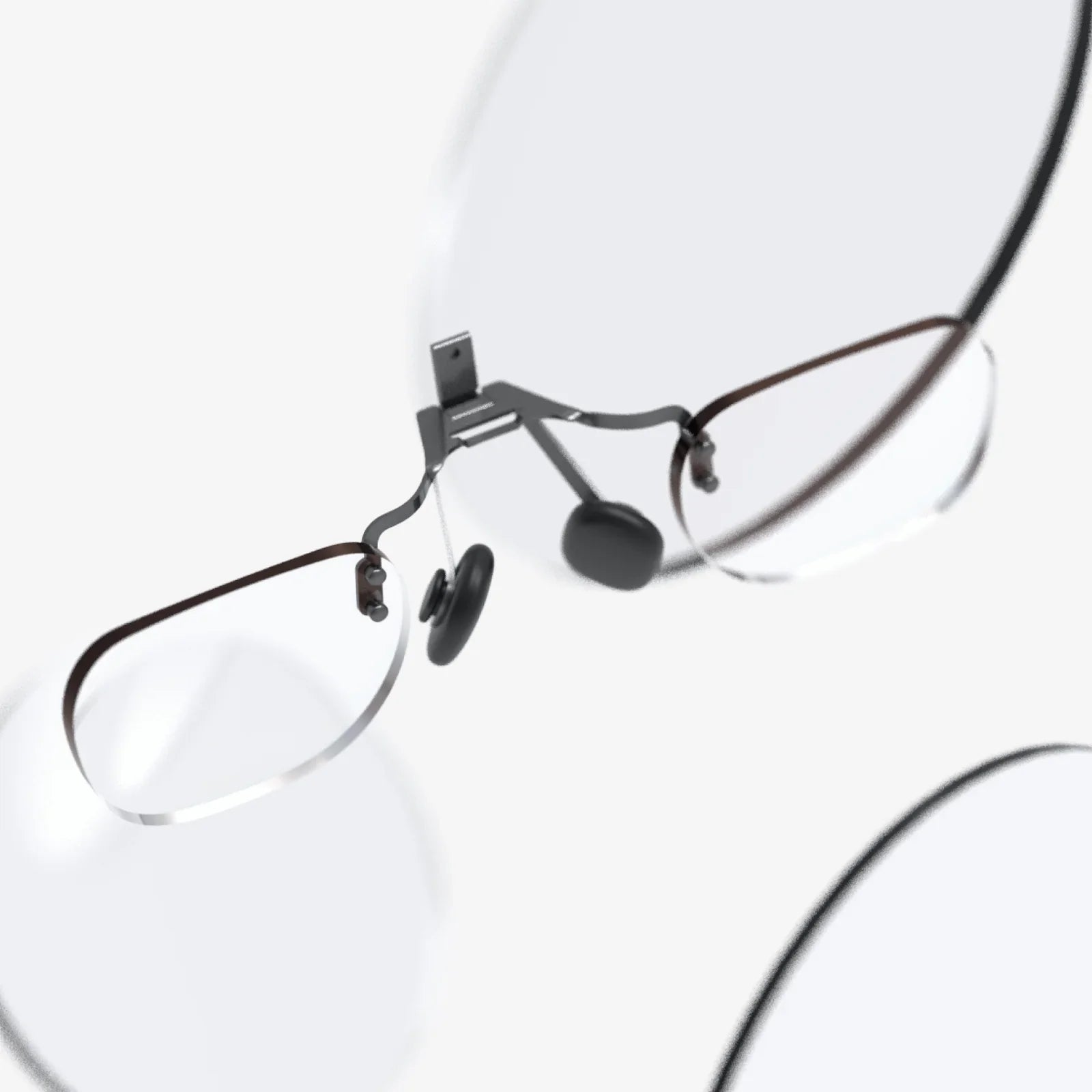
Imagine a world where digital information doesn’t just live on a screen in your hand or on your desk, but is seamlessly woven into the very fabric of your perception. Where directions float on the sidewalk ahead of you, a translator’s subtitles appear naturally under a friend speaking another language, and the history of a monument unfolds before your eyes as you gaze upon it. This is the promise of augmented reality (AR), a technology long confined to science fiction and high-budget enterprise solutions. For years, the dream of owning a pair of AR glasses felt distant, reserved for specialized industries with deep pockets. But a seismic shift is underway. The focus is no longer solely on pushing the absolute boundaries of what’s technically possible, regardless of cost. Instead, a new and powerful wave of innovation is centered on a single, transformative goal: delivering a reasonable AR glass experience. This isn't about creating a cheaper, inferior product; it's about a fundamental rethinking of design, value, and accessibility to usher in the next great computing revolution for everyone.
Defining "Reasonable" in the AR Landscape
The term "reasonable" is often mistakenly conflated with "cheap." In the context of AR glass technology, reasonableness is a more nuanced and powerful concept. It represents the optimal intersection of three critical axes: performance, price, and practicality.
First, performance refers to a suite of capabilities that deliver a genuinely useful and immersive experience. This doesn't necessitate a 200-degree field of view or photorealistic holograms—features that currently demand exotic components and immense processing power. Instead, a reasonable AR glass focuses on core functionalities:
- Adequate Field of View (FOV): A viewport large enough to display contextual information like notifications, simple 3D models, or navigation cues without feeling overly constrictive.
- Clear Display Resolution: Text and graphics must be sharp and legible, eliminating the screen-door effect that plagued earlier generations of head-mounted displays.
- Responsive Tracking: Low latency in tracking the user's head and hand movements is crucial to prevent motion sickness and ensure digital objects feel stable in the real world.
- Intuitive Interaction: Support for voice commands, simple gesture controls, or a companion touch interface, making the technology accessible without a steep learning curve.
Second, price is the most obvious component. A reasonable AR glass must move from a price point comparable to a high-end laptop or luxury item to one that aligns with mainstream consumer electronics. This means positioning the technology within the reach of a professional justifying a tool for work, a tech enthusiast eager to experiment, and eventually, the average consumer.
Finally, practicality is perhaps the most overlooked yet vital element. A reasonable AR device must be something people actually want to wear. This demands:
- Lightweight and Comfortable Form Factor: Glasses that don't cause fatigue after an hour of use, moving away from the bulky, helmet-like designs of the past.
- Socially Acceptable Design: Aesthetics that resemble traditional eyewear, making the wearer look like a stylish early adopter rather than a cyborg.
- All-Day Battery Life: Power efficiency that supports hours of use, ideally through a combination of on-device battery and a sleek, pocketable battery pack.
- Standalone or Tethered Flexibility: The ability to function as a standalone device for mobility or tether to a more powerful device for intensive tasks.
A reasonable AR glass successfully balances these three pillars. It sacrifices the bleeding-edge, prohibitively expensive features that few truly need to deliver a solid, reliable, and desirable experience that many can afford and use daily.
The Technical Hurdles to Affordability
Creating a high-quality AR experience has traditionally been an expensive endeavor. The journey to reasonableness requires overcoming significant technical and economic challenges that have historically driven costs sky-high.
The Display Dilemma
At the heart of any AR glass is its display system—the technology that projects light into the user's eyes to overlay digital images onto the real world. The most advanced systems, like waveguides coupled with micro-LED or laser beam scanning projectors, offer incredible clarity and a large field of view. However, they are incredibly complex and expensive to manufacture, with low yields driving up costs. Achieving reasonableness often involves making strategic choices: opting for slightly less exotic optical waveguides or using more mature micro-OLED technology. These technologies may offer a more modest field of view but provide exceptional pixel density and color accuracy at a fraction of the cost, perfectly suitable for displaying information and interacting with nearby virtual objects.
The Processing Power Paradox
AR is computationally intensive. It requires simultaneous localization and mapping (SLAM) to understand the environment, complex computer vision algorithms to recognize objects and surfaces, and powerful graphics rendering to place objects convincingly. Packing this processing power into the tiny form factor of glasses has required custom silicon and specialized chips, which have a massive research and development cost. The path to a reasonable AR glass leverages a different approach: the symbiotic relationship between the glasses and another device. By using a smartphone's proven and powerful processor to handle the heavy computational lifting, the glasses themselves can be lighter, cooler, and far less expensive. This "companion model" is a key stepping stone, distributing the processing burden and the cost across two devices consumers may already own.
The Battery Life Conundrum
Power consumption is the eternal enemy of mobile devices. High-resolution displays, bright projectors, multiple cameras, and onboard processors are all massive power drains. Designing a battery small enough to fit on a pair of glasses yet powerful enough to last more than a few minutes is a monumental challenge. Reasonable solutions are emerging in the form of innovative power management. This includes offloading processing to a host device, using low-power displays specifically designed for AR, and incorporating a small battery in the glasses' frame for basic functions, supplemented by a larger, sleek battery pack that resides in a pocket. This bifurcated approach balances the desire for a lightweight design with the practical need for usable battery life.
Use Cases: Where Reasonable AR Glasses Shine
The value of a reasonable AR glass becomes crystal clear when examining its practical applications. By moving from a niche, expensive tool to an accessible one, it unlocks a universe of possibilities across various domains.
Professional and Industrial Revolution
This is where AR is already proving its worth, and affordability will accelerate its adoption exponentially. Technicians can have repair manuals and schematic diagrams hover over malfunctioning machinery. Warehouse workers can see optimal picking routes and inventory information hands-free, dramatically increasing efficiency and reducing errors. Architects and interior designers can walk clients through full-scale 3D models of unbuilt spaces. For these professionals, a reasonable AR glass transitions from a capital expenditure curiosity to an indispensable, ROI-positive tool that improves safety, accuracy, and productivity.
The Future of Learning and Remote Assistance
Imagine a medical student studying anatomy with a interactive, life-sized hologram of the human body, or a mechanic receiving real-time visual guidance from an expert thousands of miles away, who can literally draw arrows and circles in their field of view. Reasonable AR glasses make immersive, on-the-job training and remote expertise accessible to smaller businesses and educational institutions, democratizing knowledge and support.
Everyday Consumer Applications
While enterprise leads, consumer applications will follow closely behind reasonable pricing. The killer app might be navigation, with turn-by-turn directions laid over the real world, eliminating the need to look down at a phone. It could be immersive language translation, with subtitles appearing for street signs and conversations. For the home, it could mean visualizing how a new piece of furniture would look in your living room at actual scale before you buy it. For social connection, it could mean sharing a virtual screen to watch a movie with a distant friend as if you were on the same couch. These are not far-fetched ideas; they are the immediate and obvious applications that become possible when the hardware barrier is lowered.
The Road Ahead: The Inevitable March to Mainstream Adoption
The trajectory of reasonable AR glass technology is not a question of "if" but "when." The forces driving it are powerful and familiar: advancements in semiconductor manufacturing will yield more efficient and cheaper processors; competition will drive innovation in display technology; and economies of scale will kick in as adoption increases, further reducing the cost of components. The initial market will likely be prosumers and professionals, but as the technology matures and the library of compelling applications grows, it will steadily integrate into daily life. The goal is not to replace the smartphone overnight, but to become a complementary device that offers a more intuitive and immersive way to interact with the digital world, ultimately evolving into a primary interface for the metaverse and spatial computing.
The true magic of a reasonable AR glass lies not in any single technological breakthrough, but in the elegant synthesis of existing technologies into a package that is finally, undeniably, for us. It’s the moment the future stops being a exclusive preview and becomes a tangible tool in our hands—or on our faces—ready to reshape our reality, one affordable frame at a time.
Share:
AI Hardware Breakthroughs 2025: The New Architecture Powering the Intelligence Revolution
Best AI-Driven Continuous Integration Tools for Reducing Build Times