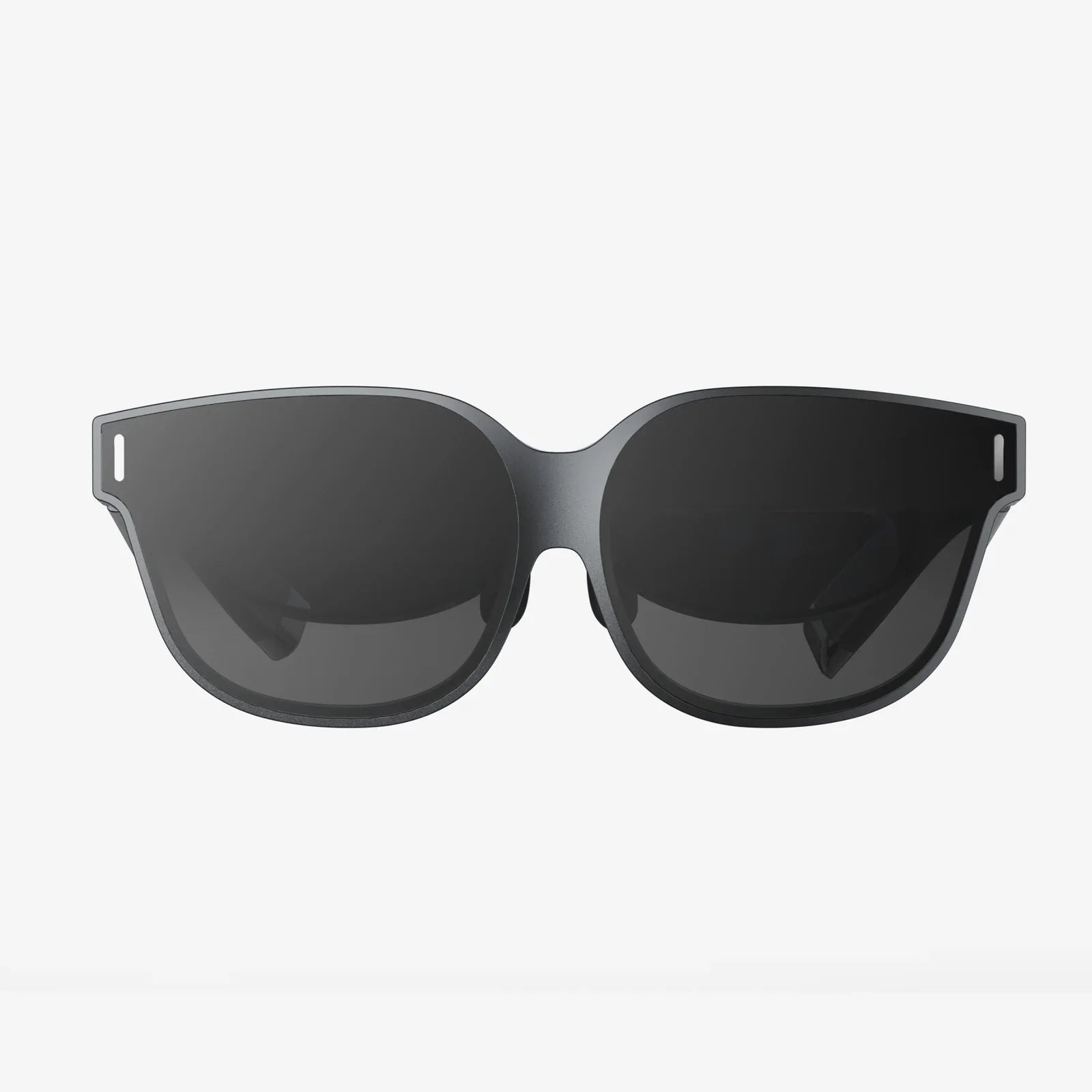
Imagine stepping through a portal into another world, a digital realm so convincing that your every sense is fooled into believing it's real. Your heart races as you peer over a virtual cliff edge; you flinch as a digital dragon swoops overhead; you feel a genuine connection with a humanoid avatar controlled by a friend across the globe. This is the profound promise of virtual reality (VR), a technology that has captivated our collective imagination for decades. But this seamless escape from reality doesn't happen by magic. It is the direct result of meticulously meeting a complex set of rigorous requirements for virtual reality, a symphony of engineering, design, and human psychology working in perfect harmony. The journey into these immersive worlds is paved with specific, non-negotiable demands that separate a transformative experience from a nauseating gimmick.
The Unforgiving Mandate: Achieving Photorealistic Visual Fidelity
At the very heart of the VR experience lies the visual domain. It is the primary conduit through which we perceive these new worlds, and its requirements are exceptionally demanding. The goal is nothing short of fooling the human brain, a processor exquisitely tuned to detect even the slightest hint of the artificial.
Resolution and Pixel Density: The War on Screen Door Effect
The first major hurdle is resolution. Early VR headsets suffered from a visible "screen door effect," where users could perceive the fine lines between pixels, shattering immersion instantly. Modern requirements demand incredibly high-resolution displays, often exceeding 4K per eye, packed into a tiny space mere centimeters from the user's face. This immense pixel density, measured in pixels per degree (PPD), is crucial for rendering sharp text, distant objects, and fine details without visible grid lines. It's a relentless arms race against human visual acuity.
Field of View: Expanding the Digital Canvas
Closely tied to resolution is the field of view (FoV). Human binocular vision covers approximately 200-220 degrees horizontally. If a VR headset offers a significantly narrower FoV, perhaps 90 or 100 degrees, the user experiences a distinct "looking through binoculars" or "scuba mask" effect. A core requirement for true immersion is maximizing the FoV to envelop the user's entire peripheral vision, pushing the digital world to the very edges of their sight and eliminating the black borders that constantly remind them they are wearing a device.
Refresh Rate and Low Persistence: The Battle Against Latency and Motion Blur
Perhaps the most critical visual requirement is a high refresh rate, typically 90Hz or, preferably, 120Hz and beyond. When a user turns their head, the image must update instantaneously. A low refresh rate introduces lag, or latency, between the user's movement and the visual update. This discrepancy is a primary cause of simulator sickness, as the brain receives conflicting signals from the eyes (I'm not moving) and the vestibular system (I am moving). Coupled with this is low-persistence display technology, which flashes images for milliseconds instead of keeping them constantly illuminated. This eliminates the motion blur that occurs when you quickly turn your head, ensuring a crystal-clear image during movement, which is absolutely fundamental to comfort and presence.
The Imperative of Seamless Tracking and Unwavering Stability
For a virtual world to feel solid and interactive, the system must understand and track the user's position and movements with imperceptible precision. This requirement breaks down into two key areas.
Precise Positional Tracking
Six degrees of freedom (6DoF) tracking is now a standard requirement for high-end VR. This means the system tracks not just rotational movements (pitch, yaw, roll) but also translational movements in three-dimensional space (forward/back, up/down, left/right). Whether achieved through external base stations emitting lasers or inside-out tracking using onboard cameras, the system must pinpoint the headset's and controllers' positions in space with millimeter accuracy. Any jitter, drift, or lag in this tracking immediately breaks the illusion of being solidly placed within the environment.
Rock-Solid Tracking Volume
The system must maintain this flawless tracking across the entire designated play area. Losing tracking when a user bends down, reaches behind them, or moves to the edge of their space is disruptive and dangerous. The requirement is for a large, consistent, and robust tracking volume that allows for natural, unencumbered movement without fear of the virtual world glitching or collapsing.
The Auditory Dimension: Crafting a 3D Soundscape
While visuals often steal the spotlight, audio is equally vital for immersion. The requirement here is for true 3D spatial audio. This technology uses head-related transfer functions (HRTFs) to simulate how sound waves interact with the head, ears, and torso, tricking the brain into perceiving sounds as coming from specific points in three-dimensional space. The creak of a floorboard behind you, the whisper in a distant corridor, the buzz of a drone flying overhead—these auditory cues are processed by the brain to build a convincing mental model of the environment. High-quality, immersive audio is not an enhancement; it is a fundamental requirement for completing the illusion and providing critical situational awareness.
The Human Factor: Ergonomic and Physiological Demands
Technology is useless if it is uncomfortable, inaccessible, or makes the user sick. The human-centric requirements for VR are arguably the most challenging to solve.
Comfort and Form Factor
A headset must be a comfortable extension of the user, not a burdensome appliance. This requires careful consideration of weight distribution, padding, materials, and adjustability to accommodate a wide range of head shapes and sizes. The ideal is to make the hardware "disappear" from the user's perception. Furthermore, the form factor is evolving towards smaller, sleeker, wireless designs to reduce physical tethering and increase freedom of movement, making the technology more approachable and less intrusive.
The Paramount Challenge: Mitigating Simulator Sickness
Simulator sickness remains the single greatest barrier to mass VR adoption. It is a complex physiological response triggered by the sensory conflict mentioned earlier. The technical requirements—high refresh rates, low latency, precise tracking—are all direct countermeasures to this problem. Beyond hardware, software design plays a huge role. Techniques like implementing a static frame of reference (e.g., a virtual cockpit), using teleportation or "blink" movement for those sensitive to smooth locomotion, and avoiding unnatural camera accelerations are all software-level requirements to ensure user comfort.
Accessibility and Inclusivity
A truly successful technology must be for everyone. This imposes requirements for inclusive design: supporting users with different physical abilities, providing options for seated versus standing experiences, offering robust calibration for various IPDs (interpupillary distance), and including comprehensive comfort settings that allow users to tailor the experience to their personal tolerance levels.
The Computational Backbone: Raw Processing Power
Rendering two high-resolution, high-frame-rate views simultaneously is an astronomically more demanding task than rendering a single image for a flat monitor. The requirement for a powerful computing unit—whether a high-end personal computer or a sophisticated standalone system-on-a-chip (SoC)—cannot be overstated. This hardware must render complex scenes at a stable frame rate, without ever dropping frames, as a single missed frame can induce discomfort. This drives the need for advanced rendering techniques like foveated rendering (which leverages eye-tracking to render only the user's central focal point in full detail), sophisticated optimization, and ever more powerful graphics processors.
The Software and User Experience Framework
The hardware is nothing without the software that brings it to life. The requirements here span from low-level drivers to high-level user interface design.
Intuitive Interaction Paradigms
We don't have a standard keyboard and mouse in VR. The requirement is for natural, intuitive input. This has been successfully addressed with motion-tracked controllers that mimic hand presence, but the next frontier is on the horizon: accurate hand-tracking and haptic feedback. Users need to be able to manipulate virtual objects in ways that feel real, receiving tactile confirmation of their actions. This requires sophisticated software algorithms for gesture recognition, physics simulation, and cross-platform interaction standards.
User Interface and Experience Design
Traditional 2D UI metaphors fail in a 3D world. Menus, text, and interactive elements cannot be simple overlays; they must feel like part of the environment. This demands a complete rethinking of UX design, focusing on diegetic interfaces (elements that exist within the world itself), spatial audio cues, and interactions that feel physical and direct. The software must guide the user effortlessly without pulling them out of the experience.
The Future Horizon: Emerging and Aspirational Requirements
As the technology matures, the bar for what constitutes an acceptable VR experience continues to rise. The requirements of tomorrow are already coming into focus.
Photorealistic real-time graphics, powered by ray tracing and advanced global illumination, will become a standard expectation. The seamless blending of the virtual and real through high-fidelity mixed reality (MR) pass-through cameras is moving from a novelty to a core feature for many applications. Ultimately, the endgame for visual immersion may lie in varifocal or light field displays that solve the vergence-accommodation conflict—a current issue where your eyes focus on a virtual object but your lens must remain focused at a fixed distance, causing eye strain. Solving this biological puzzle is a monumental requirement for the next generation of hardware.
Furthermore, the pursuit of true emotional presence will drive requirements for hyper-realistic avatars with lifelike facial expression tracking and body language, enabled by advanced machine learning and neural networks, making social interactions in VR as nuanced and rich as those in the physical world.
The magic of virtual reality is not found in any single component but in the flawless orchestration of them all. It is a fragile illusion, one that shatters at the first sign of lag, blur, or discomfort. Meeting the stringent requirements for virtual reality is a relentless pursuit of perfection across multiple disciplines, a constant push to narrow the gap between the digital and the real. As these pillars—visual fidelity, precise tracking, immersive audio, human comfort, and raw computational power—grow stronger and more refined, the door to these impossible worlds swings open wider, inviting us not just to see, but to truly be and feel elsewhere. The future of human experience is being built today, one meticulously calculated requirement at a time.