


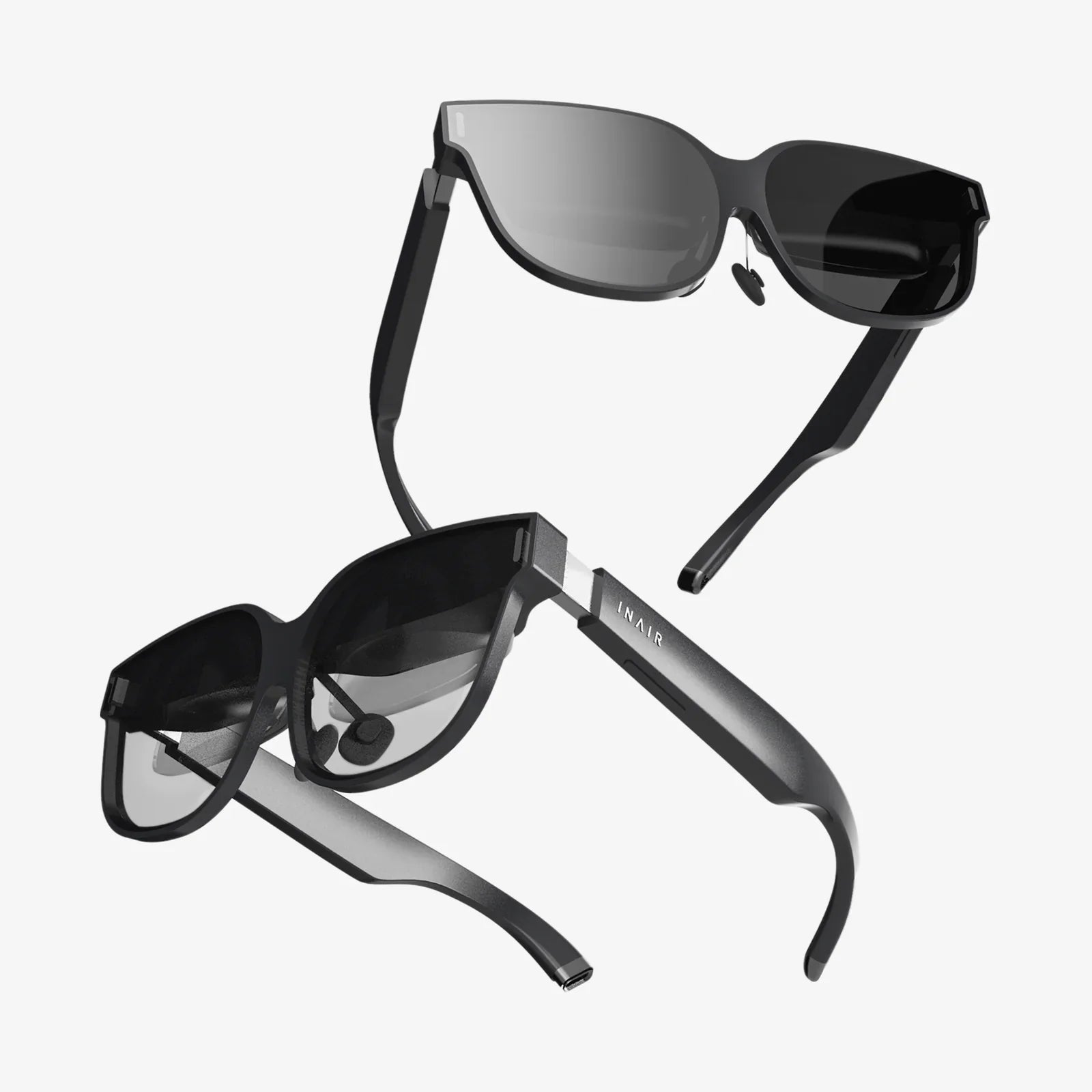
Imagine a world where digital information doesn’t just live on a screen but is seamlessly woven into the very fabric of your physical environment. Directions materialize on the street in front of you, historical figures reenact events on the very ground they occurred, and complex machinery reveals its inner workings through animated holograms. This is no longer the stuff of science fiction; it is the imminent future being forged in laboratories and research institutions worldwide. The relentless pace of research on augmented reality is not merely developing a new technology; it is fundamentally re-architecting the human experience, promising to dissolve the final barrier between the digital and the physical. The journey to understand this transformation begins not with a gadget, but with the profound scientific inquiry driving it forward.
The Foundational Pillars of AR Technology
At its core, augmented reality is an experiential technology that superimposes computer-generated perceptual information onto the real world. Unlike virtual reality, which creates a fully immersive digital environment, AR enhances reality by adding to it. This seemingly magical feat rests on a complex foundation of interdisciplinary research spanning computer vision, optics, human-computer interaction (HCI), and wearable computing.
Tracking and Registration: The Quest for Precision
The single most critical technical challenge in AR research is accurate tracking and registration. For a digital object to feel authentically part of the real world, it must remain perfectly aligned with a user’s perspective as they move. Early research focused on marker-based tracking, using distinct visual patterns (like QR codes) as anchors. While effective for controlled environments, this approach is impractical for widespread use. This limitation spurred a shift toward markerless tracking, a far more complex endeavor.
Modern research leverages a combination of technologies to achieve robust tracking:
- Visual Inertial Odometry (VIO): This sophisticated technique fuses data from camera feeds (visual) with inertial measurement units (IMUs) that track movement, rotation, and acceleration. The camera identifies feature points in the environment, and the IMU fills in the gaps between camera frames, allowing for smooth and accurate positional tracking without predefined markers.
- Simultaneous Localization and Mapping (SLAM): This is the holy grail of environmental understanding for AR. SLAM algorithms allow a device to both map an unknown environment in real-time and localize itself within that map simultaneously. Research into more efficient and powerful SLAM algorithms is crucial for enabling AR in dynamic, unpredictable spaces.
- Depth Sensing: The integration of depth sensors, such as time-of-flight cameras and structured light systems, provides a crucial layer of spatial data. This allows digital content to understand and interact with the geometry of the real world, enabling occlusion (where a real object can pass in front of a virtual one) and more realistic physical interactions.
Display Systems: The Window to a Blended World
How digital information is presented to the user is another primary axis of AR research. The goal is to create displays that are high-resolution, wide-field-of-view, socially acceptable, comfortable for prolonged use, and ultimately, indistinguishable from viewing the natural world.
- Optical See-Through (OST): These displays, often in the form of glasses, use optical combiners like waveguides or half-silvered mirrors to project imagery directly into the user’s eyes while allowing them to see the real world through the lenses. Research focuses on increasing the field of view, achieving true color reproduction, and managing the vergence-accommodation conflict—a physiological issue where the eyes struggle to focus on virtual objects at different depths.
- Video See-Through (VST): This approach uses cameras to capture the real world and then displays a combined feed of the real-world video and computer graphics on an opaque screen. While this can offer more control over the blending process and more vivid virtual colors, it can introduce latency and a potential loss of visual fidelity, making research into low-latency passthrough video a critical area.
- Projection-Based AR: Here, light is projected directly onto physical surfaces to alter their appearance. Research in this area explores everything from miniaturized pico-projectors for personal use to large-scale systems for industrial training and entertainment.
Interaction Paradigms: Beyond the Touchscreen
Interacting with content that exists in three-dimensional space requires moving beyond the two-dimensional touch interface. AR research is exploring a new lexicon of human-computer interaction:
- Gesture and Hand Tracking: Using cameras and depth sensors to interpret hand gestures and finger movements as commands. This allows for intuitive, direct manipulation of virtual objects.
- Gaze Tracking: Determining where a user is looking to enable selection and interaction through dwell time or as a targeting mechanism for other inputs.
- Voice Commands: Using natural language processing to control the AR environment hands-free.
- Haptic Feedback:
Providing a sense of touch is one of the most significant challenges. Research into wearable haptic devices, ultrasonic mid-air haptics, and sensory substitution techniques aims to make virtual objects feel tangible, dramatically increasing the sense of presence and realism.
Transformative Applications Across the Spectrum
The true value of AR research is realized in its application. The technology is poised to revolutionize nearly every sector, moving from novelty to necessity.
Revolutionizing Industry and Manufacturing
Perhaps the most mature and impactful application of AR is in industrial settings. Research demonstrates significant improvements in efficiency, accuracy, and safety.
- Assembly and Maintenance: AR can overlay digital work instructions, animations, and schematics directly onto machinery, guiding a technician through complex procedures step-by-step. This reduces errors, slashes training time, and allows less experienced workers to perform tasks typically requiring an expert.
- Design and Prototyping: Engineers and designers can visualize and interact with 3D models at full scale within a physical space before a single physical prototype is built. This facilitates collaborative design reviews and enables rapid iteration.
- Logistics and Warehousing: AR smart glasses can display optimal picking routes, item locations, and inventory information, dramatically accelerating order fulfillment and reducing walking time in vast warehouses.
Advancing Medical Practice and Patient Care
In medicine, where precision is paramount, AR research is yielding life-saving tools.
- Surgical Guidance: By overlaying CT or MRI scan data—such as the precise location of a tumor or critical blood vessels—directly onto a surgeon’s field of view during an operation, AR enhances spatial awareness and improves surgical outcomes.
- Medical Training: Students can practice procedures on detailed, interactive holographic anatomy models, gaining valuable experience without risk to patients. This provides a depth of understanding that textbooks or screens cannot match.
- Patient Education and Rehabilitation: Doctors can use AR to visually explain complex conditions and treatment plans to patients. In physiotherapy, AR games can motivate patients to complete repetitive exercises by turning them into engaging activities.
Redefining Education and Cultural Heritage
AR has the potential to transform learning from a passive activity into an active, experiential journey.
- Interactive Learning: Imagine a history class where students can witness a Roman legion march through their schoolyard or a biology lesson where a beating heart hologram floats above the dissection table. AR makes abstract concepts concrete and unforgettable.
- Museum and Site Enhancement: At historical sites, AR can reconstruct ruined buildings to their former glory. Museums can use it to bring artifacts to life, telling deeper stories and providing context that static placards cannot.
- Skill Acquisition: From learning to play the piano by following illuminated keys to mastering complex repair tasks, AR provides an in-situ, guided learning experience that accelerates skill development.
Shaping the Future of Retail and Remote Collaboration
AR is closing the gap between imagination and reality in commerce and changing how we work together.
- Try-Before-You-Buy: Consumers can visualize products like furniture in their home at true scale or see how a pair of glasses looks on their face before making a purchase, reducing uncertainty and returns.
- Remote Assistance: An expert located thousands of miles away can see what a local field technician sees and annotate their real-world view with arrows, notes, and diagrams to guide them through a fix, saving on travel costs and downtime.
- Virtual Meetings: Moving beyond flat video calls, AR meetings could involve collaborators interacting with shared 3D models as if they were in the same physical room, fostering a new level of understanding and creativity.
The Human Factor: Psychological and Social Implications
As the technology matures, research on augmented reality must expand beyond engineering to grapple with profound psychological, ethical, and societal questions. Pervasive, persistent AR will challenge our very notions of reality, privacy, and human connection.
The Perception of Reality and Attention
Constant augmentation raises critical questions about attention and cognition. Could AR lead to a phenomenon of "attention obesity," where our cognitive resources are so saturated with digital information that we become disconnected from our immediate physical surroundings and the people in them? Research into the long-term cognitive effects of divided attention between real and virtual elements is essential. Furthermore, the ability to alter perception so seamlessly introduces the potential for manipulation and the erosion of a shared, objective reality.
Privacy in a World of Augmented Eyes
AR devices, equipped with always-on cameras and microphones, represent perhaps the most intimate surveillance technology ever conceived. They continuously capture not only what the user sees and hears but also how they interact with the world. This data is a treasure trove for companies and a significant threat to individual privacy. Research must focus on developing privacy-by-design frameworks, such as on-device processing, clear user controls, and ethical data handling policies, to prevent a dystopian future of constant behavioral tracking and personalized manipulation in public and private spaces.
The Digital Divide and Accessibility
As with any transformative technology, there is a risk that AR will exacerbate existing social and economic inequalities. Will access to powerful AR tools and the information they provide become a new marker of privilege, creating a divide between the "augmented" and the "unaugmented"? Conversely, AR also holds immense promise for accessibility, offering new modes of interaction and information access for people with disabilities. Research must consciously work to ensure the technology is inclusive and equitable, serving to bridge gaps rather than widen them.
Navigating the Path Forward: Challenges and Opportunities
The roadmap for AR is incredibly exciting, but the path is littered with significant hurdles that require concerted research efforts.
Overcoming Technical and Hardware Limitations
The dream of all-day, stylish AR glasses remains just out of reach due to fundamental constraints in battery life, processing power, thermal management, and display technology. Creating a device that is socially acceptable, comfortable, and powerful enough for compelling experiences is the paramount hardware challenge. Breakthroughs in areas like low-power silicon, battery chemistry, and novel optical designs are critical to moving from prototypes to mass adoption.
Building the Spatial Internet
For AR to become a ubiquitous platform, it needs a robust underlying infrastructure—a persistent, shared, and context-aware digital layer over the physical world. This "spatial internet" or "AR cloud" requires massive advancements in 5G/6G connectivity for low-latency data streaming, edge computing to process information closer to the user, and standardized protocols for anchoring digital content in a way that multiple users can experience it consistently. This is a moonshot project akin to building the early internet, requiring global collaboration.
Establishing Ethical Frameworks and Standards
Perhaps the most complex challenge is not technical but human. We are entering uncharted ethical territory. Who owns the digital space over a physical building? How do we prevent AR from being used for malicious purposes, such as creating convincing but dangerous illusions in the real world? How do we combat digital graffiti and spam in public spaces? Proactive research involving ethicists, sociologists, policymakers, and the public is urgently needed to establish norms, regulations, and standards that ensure this powerful technology serves humanity positively.
The flickering holograms and clunky headsets of today are merely the first whisper of a coming storm. The relentless march of research on augmented reality is steadily building the foundational pillars for a world where the line between atoms and bits will not just be blurred but erased. This is not a future to be passively consumed but one that must be actively shaped by interdisciplinary collaboration, ethical foresight, and a unwavering focus on human-centric design. The choices made in research labs and boardrooms today will determine whether this new layer of reality becomes a tool for empowerment, connection, and knowledge, or a source of distraction, division, and control. The gateway to this blended existence is opening; the question is no longer if we will step through, but how we will choose to build the world on the other side.
Share:
How Much Does Augmented Reality Development Cost: A Comprehensive 2024 Guide
Best Platform for Augmented Reality: A Deep Dive into the Ultimate Development Ecosystem