


- by wangfred
Scientific Extended Reality: Revolutionizing Research, Discovery, and Human Potential
- by wangfred
Imagine stepping inside a beating human heart, watching blood cells rush through valves, or walking across the surface of Mars, examining rock formations in minute detail before a rover even lands. Envision manipulating a complex protein molecule with your hands to design a new drug or rehearsing a delicate surgical procedure countless times without risk to a single patient. This is not a glimpse into a distant future; it is the transformative reality of scientific extended reality (XR) today. This convergence of virtual reality (VR), augmented reality (AR), and mixed reality (MR) is moving beyond entertainment and consumer gadgetry to fundamentally reshape the very fabric of scientific inquiry, offering unprecedented tools for visualization, simulation, and collaboration that are unlocking new dimensions of understanding and accelerating the pace of discovery across every field of science.
Before delving into its applications, it is crucial to understand the distinct technologies that comprise the scientific extended reality ecosystem. While often used interchangeably, they represent a spectrum of digital immersion.
Virtual Reality constructs a completely computer-generated, immersive environment that replaces the user's physical surroundings. Using a head-mounted display (HMD) and motion-tracking technology, VR transports scientists into a fully digital world. This is the tool for total simulation—be it a virtual laboratory, a historical ecosystem, or the interior of a volcano. It is the ultimate tool for isolation from distractions and deep focus on a digital subject.
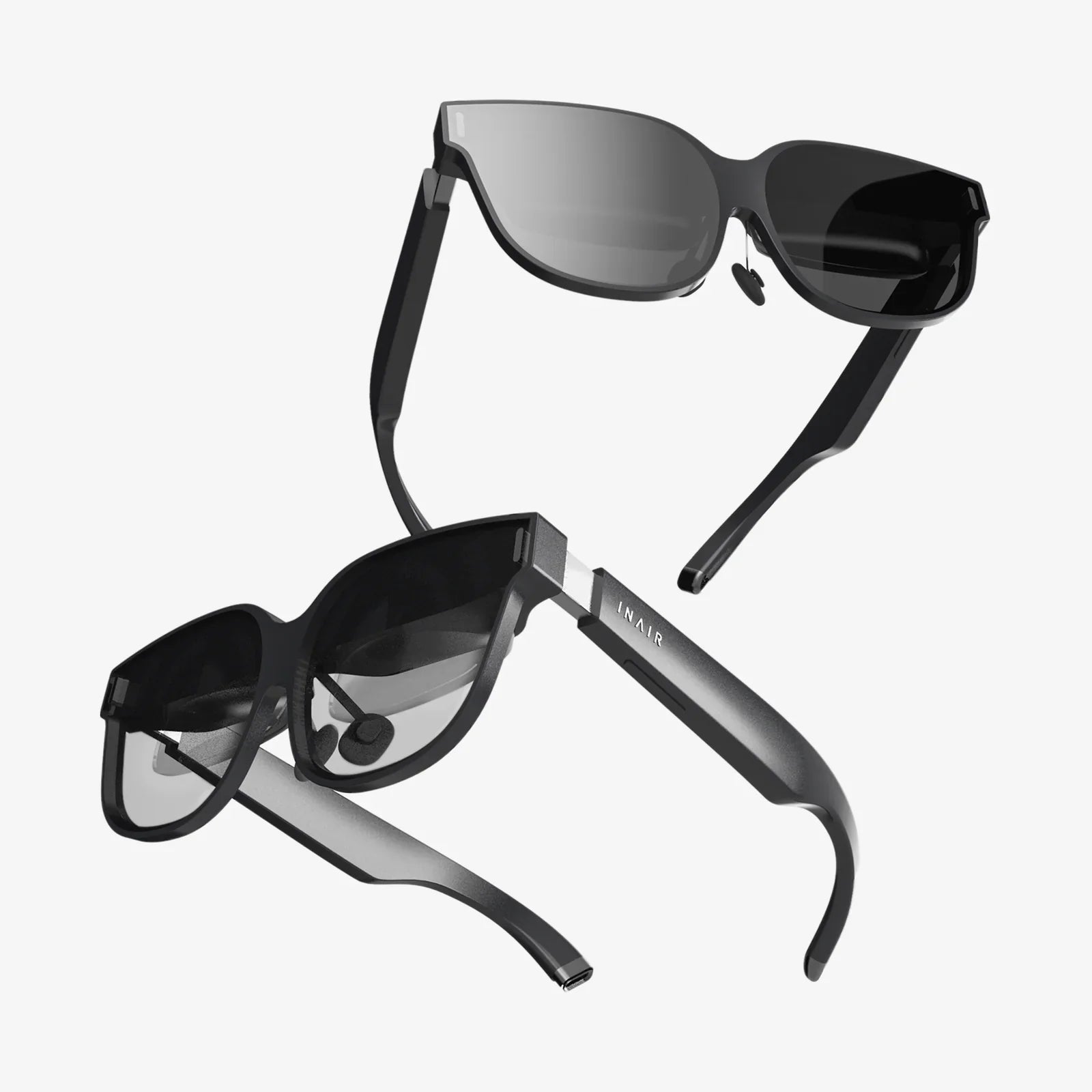
Augmented Reality superimposes digital information—such as images, data, and 3D models—onto the user's view of the real world through a device like a transparent HMD, smart glasses, or even a smartphone or tablet camera. In a scientific context, AR allows a researcher to look at a lab bench and see real-time data visualizations hovering over their equipment, or a medical student to study anatomy on a physical mannequin with digital layers revealing muscles, organs, and circulatory systems.
Mixed Reality is the most advanced and interactive facet of XR. It goes beyond simple overlays to create environments where physical and digital objects co-exist and interact in real-time. Using advanced sensors and cameras, MR devices understand the geometry of the physical space, allowing digital objects to be occluded by real ones and respond to the user's environment. A scientist could place a holographic model of a new engine prototype on their desk, walk around it, and even use real tools to 'interact' with its digital components, seeing how they would fit together in the physical world.
The integration of XR into scientific practice is not a single application but a paradigm shift affecting multiple aspects of research and development.
Scientists are drowning in data. From genomic sequences and climate models to astronomical observations and particle physics collisions, the complexity and volume of modern scientific data can be overwhelming when confined to 2D screens. Scientific extended reality offers a revolutionary solution: immersive data visualization. Instead of looking at a graph, a researcher can step inside it. Complex multi-dimensional datasets can be represented as interactive 3D landscapes, networks, or structures. A neuroscientist can navigate a fly-through of a human brain scan, tracing neural pathways in three dimensions. A climate scientist can stand within a swirling, data-rich hurricane simulation, intuitively understanding the interplay of temperature, pressure, and wind velocity in a way a flat map could never convey. This spatial understanding unlocks patterns, correlations, and outliers that might otherwise remain hidden.
XR creates the ultimate safe space for experimentation and training. Procedures that are too dangerous, expensive, or ethically challenging to perform in the real world can be rehearsed and perfected in virtual environments.
Science is a global endeavor, but physical distance has always been a barrier to seamless collaboration. XR shatters this barrier. Using avatars in a shared virtual space, experts from around the world can meet inside a virtual lab or around a 3D model of their research subject. A marine biologist in Australia can guide colleagues through a digital twin of a coral reef, pointing out specific areas of bleaching. An engineer in Germany can assist with the assembly of a prototype in a factory in Japan, leaving holographic notes and annotations directly on the machinery viewed through an AR headset. This "telepresence" ensures that the best minds can work together on a problem, regardless of their physical location, accelerating innovation and problem-solving.
The design iteration cycle in fields like engineering, architecture, and product development is long and costly. MR transforms this process. Designers and engineers can interact with life-size, holographic prototypes long before any physical materials are used. They can assess the ergonomics of a new vehicle's cockpit, check sightlines in a new building design, or test the aerodynamic properties of a new wing design in a virtual wind tunnel. This ability to "fail fast and cheaply" in the digital realm saves immense amounts of time, resources, and materials, leading to better-designed products and a more sustainable development process.
The theoretical potential of scientific XR is already being realized in tangible, groundbreaking ways across diverse fields.
In healthcare, XR is a game-changer. Beyond surgical training, it is used for patient education, allowing doctors to show patients their own anatomy and explain procedures visually. It powers revolutionary therapies, such as using VR for exposure therapy to treat phobias and PTSD, or for motor rehabilitation in stroke patients by creating engaging virtual tasks that encourage movement. In neuroscience, researchers use VR to create controlled environments for studying human behavior and brain activity in ways impossible in the real world, such as navigating complex virtual mazes while in an fMRI scanner.
XR allows astronomers to visualize and explore the universe at a human scale. They can walk through a simulation of the large-scale structure of the cosmos, witnessing the cosmic web of galaxies, or stand on the surface of exoplanets based on real telescope data. NASA and other space agencies use VR to train astronauts, simulate missions to Mars, and control robots on other planets with greater precision by providing operators with an immersive, 3D view of the rover's surroundings.
For decades, scientists have used computer models to visualize molecules, but these models are trapped on 2D screens. XR liberates them. Researchers can now don a headset and step inside a protein, examining its intricate folding structure from within. They can manipulate molecules with their hands, docking a potential drug candidate into the active site of an enzyme to see how well it fits, accelerating the drug discovery process by providing an intuitive, spatial understanding of molecular interactions.
XR acts as a time machine for historians and archaeologists. Using data from digs and scans, they can reconstruct ancient sites in VR, allowing anyone to walk through a historically accurate recreation of Ancient Rome or a Mayan temple at the peak of its glory. AR can be used on-site, where looking at a ruin through a tablet or glasses can overlay a digital reconstruction onto the current remains, bringing history vividly to life and providing new insights into how these spaces were used.
Despite its immense promise, the widespread adoption of scientific extended reality faces several significant hurdles.
High-fidelity XR requires substantial computational power, high-resolution displays, accurate motion tracking, and often expensive hardware. Creating photorealistic and physically accurate simulations demands expertise in 3D modeling, game engine programming, and data science. This can put the technology out of reach for smaller labs and institutions, potentially creating a divide between well-funded and underfunded research programs.
Issues like simulator sickness, user interface design, and physical comfort during prolonged use remain challenges. Ensuring that XR tools are accessible and intuitive for scientists who are not tech experts is crucial for adoption. Furthermore, long-term physiological and psychological effects of prolonged immersion are still areas of active research.
For XR to become a universal tool in science, there is a pressing need for standardized file formats and data protocols. A 3D model or dataset created for one specific VR platform should be easily accessible and usable on another. The scientific community must develop shared standards to ensure that XR resources are reusable and interoperable, avoiding a future of walled-garden ecosystems that stifle collaboration.
The trajectory of XR points towards even more profound integration into science. We are moving towards a future of the 'Metaverse for Science'—a persistent, collaborative, and interconnected network of virtual labs and simulations. The convergence of XR with other transformative technologies like artificial intelligence and haptics will be particularly powerful. AI will be used to generate realistic simulations and intelligent virtual assistants, while advanced haptic feedback suits and gloves will allow scientists to not just see, but feel the texture of a virtual material or the resistance of a virtual object. Brain-computer interfaces may one day allow us to manipulate virtual data with our thoughts, creating a truly seamless fusion of human intuition and machine computation.
The line between the physical and digital laboratories is rapidly dissolving. Scientific extended reality is not merely a new set of tools; it is a new medium for thought itself, expanding the canvas upon which we can question, experiment, and discover. It promises a future where the only true limit to scientific exploration is the boundary of our own imagination, empowering us to see the unseen, experiment without limits, and collaborate without borders in the relentless pursuit of knowledge. The lab of the future is being built today, and its doors are open to anyone, anywhere, with a question and a headset.