


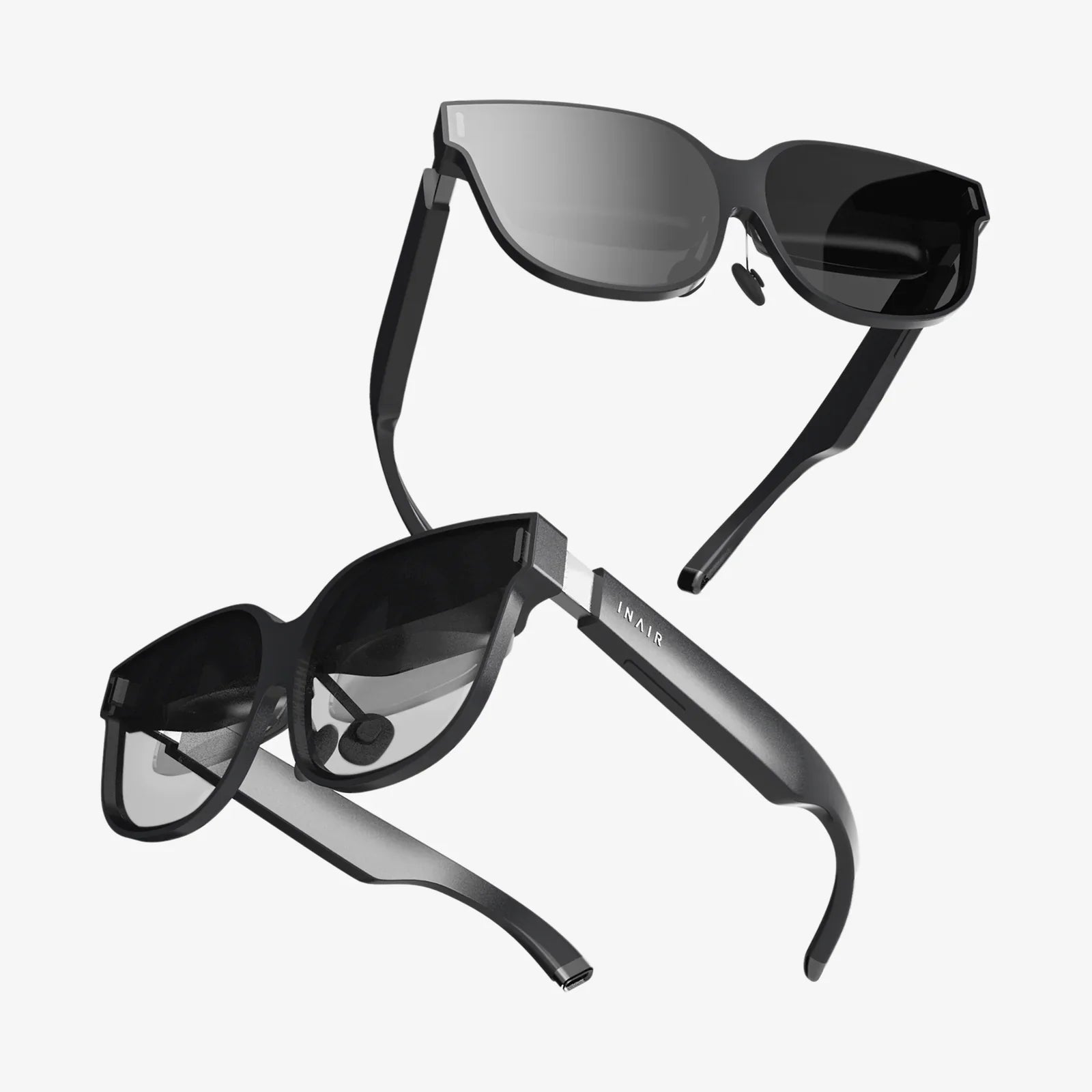
Imagine a workspace that unfolds around you, not confined to a 24-inch rectangle but sprawling across your entire field of vision. Envision your digital life—your documents, your browser tabs, your creative tools—floating seamlessly in your physical environment, responsive, dynamic, and limitless. This is not a scene from a distant sci-fi future; it is the imminent reality promised by the convergence of a screenless laptop with AR glasses, a technological synergy poised to dismantle the very foundations of how we compute.
The Inevitable Evolution: From Screens to Spatial Reality
For decades, the paradigm of personal computing has been tethered to the screen. From the bulky cathode-ray tubes to the sleekest of modern OLED panels, our primary window to the digital world has been a flat, static surface. We have meticulously refined this experience—increasing pixel density, enhancing color accuracy, and minimizing bezels—but we have never fundamentally challenged the core concept. The screen remains a barrier, a distinct and separate plane from our physical reality.
The concept of a screenless laptop, or a computing hub, represents a radical departure. This device, often compact and powerful, contains all the processing power, memory, and connectivity of a traditional laptop but lacks its defining feature: the built-in display. Instead, it offloads the visual interface to a pair of advanced augmented reality glasses. This is more than a simple wireless display extension; it is a complete decoupling of computation and visualization, enabling each to evolve independently and specialize.
Augmented reality glasses, once the stuff of fantasy, are rapidly maturing. They overlay digital information onto the user's view of the real world through transparent waveguides or micro-LED projectors. Early iterations were plagued by limited fields of view, bulky designs, and underwhelming brightness. However, recent advancements in optics, battery technology, and miniaturized sensors are yielding devices that are increasingly wearable, visually immersive, and contextually aware. They can understand their position in space, track the user's gaze and gestures, and integrate digital objects into the environment with convincing stability.
The marriage of these two technologies—the raw, untethered power of a screenless computer and the immersive, spatial canvas of AR glasses—creates something far greater than the sum of its parts. It is the key to unlocking true spatial computing, a future where our digital and physical lives are not just connected, but cohesively intertwined.
Unlocking Unprecedented Productivity and Focus
The implications for professional work are nothing short of transformative. The traditional laptop screen is a notorious bottleneck for productivity, forcing a constant, mentally taxing context switch between applications through Alt-Tab or clumsy window management. A screenless setup with AR glasses shatters this constraint.
- Infinite, Virtual Workspaces: Instead of being limited to one or two physical monitors, users can spawn dozens of virtual screens, arranging them in a 360-degree sphere around themselves. A developer could have their code editor centered, documentation pinned to the left, a communication app to the right, and a terminal window above—all visible with a slight turn of the head, creating a truly bespoke and limitless digital workstation.
- Deep Focus and Immersion: By donning AR glasses, users can effectively create a digital cocoon, free from the visual distractions of their physical surroundings. This can foster a state of deep work, allowing for intense concentration on complex tasks. The ability to pin a single crucial document or design file directly in your view, making everything else fade away, is a powerful tool for combating the constant barrage of notifications and distractions that plague modern work.
- Contextual and Spatial Data Visualization: For data scientists, engineers, and financial analysts, data is no longer trapped in two-dimensional charts. Complex 3D models, molecular structures, or interactive data visualizations can be brought out into the room, allowing them to be walked around, manipulated with gestures, and understood from every angle in a way a flat screen could never permit.
Redefining Creativity and Design
For creative professionals, this technology is a new medium in itself. The ability to interact with digital creations as if they were physical objects fundamentally changes the creative process.
Imagine a 3D sculptor working on a digital character. Instead of manipulating a model on a screen with a mouse and keyboard, they could reach out and sculpt the virtual clay directly with their hands, seeing their creation come to life at a 1:1 scale in the center of their studio. An architect could place a full-scale 3D model of a new building's interior right inside the unfinished physical space, walking through it with clients to assess sightlines, lighting, and flow before a single wall is built.
Graphic designers and video editors could have their tool palettes and timelines floating in space around them, accessible with a glance or a gesture, while their canvas occupies their central field of vision, unencumbered by operating system menus and interface clutter. This direct, spatial manipulation bridges the gap between intention and action, making the digital creation process more intuitive and visceral.
The Ultimate in Portability and Privacy
The practical advantages extend beyond pure functionality. A screenless laptop computer can be made significantly smaller, lighter, and more power-efficient than its traditional counterpart since it does not need to accommodate a display, its backlight, and a large battery to run it. This makes it the ultimate portable powerhouse.
Furthermore, this setup offers a novel solution to a perennial problem: public screen privacy. With AR glasses, the display is projected directly onto the user's retinas. Shoulder surfing becomes impossible. This is a boon for anyone working on sensitive information in public spaces like airplanes, coffee shops, or open-plan offices. Your financial reports, proprietary code, or confidential strategy documents remain for your eyes only, regardless of your environment.
Navigating the Challenges on the Road to Adoption
Despite its immense potential, the path to mainstream adoption for the screenless laptop with AR glasses is not without significant hurdles.
- Ergonomics and Wearability: For this paradigm to succeed, the AR glasses must become as comfortable and socially acceptable as a standard pair of eyeglasses. Current generations, while improving, can still be heavy, cause eye strain during extended use, and present a distinctive technological aesthetic that not all users are comfortable with. Achieving all-day comfort is a critical engineering challenge.
- The Social Conundrum: Interacting with someone wearing opaque AR glasses can be disconcerting, as it obscures their eyes and creates a barrier to natural human connection. Solutions like forward-facing displays that show a representation of the user's eyes, or glasses with variable transparency, are being explored to mitigate this social friction.
- Software Ecosystem and User Interface (UI): We have half a century of design language built around the WIMP (Windows, Icons, Menus, Pointer) paradigm. Designing intuitive, glanceable, and ergonomic spatial interfaces that are navigated by gaze, gesture, and voice is an entirely new frontier. A robust ecosystem of applications built from the ground up for spatial computing is essential for this technology to move beyond a niche gadget.
- Battery Life and Processing Power: Driving high-resolution, high-refresh-rate displays for each eye requires substantial processing power, which in turn demands significant energy. Balancing performance, thermal output, and all-day battery life between the computer and the glasses remains a key technical obstacle.
A Glimpse into the Near Future
We are standing at the precipice of this new era. The initial use cases will likely be in specialized professional fields where the ROI is clear: surgery, advanced manufacturing, field service engineering, and architecture. In these domains, the ability to overlay schematics, instructions, or diagnostic data directly onto physical equipment is already proving invaluable.
As the technology matures, becomes more affordable, and the software ecosystem flourishes, it will inevitably trickle down to consumers and knowledge workers. The dream is a seamless transition: your powerful computing core sits in your bag or connects wirelessly from your desk. When you need to work, you simply put on your lightweight glasses and your entire digital world instantly materializes around you, tailored to your context and preferences. When you're done, you take them off, and it vanishes, leaving you fully present in the physical world.
This is the true promise of the screenless laptop with AR glasses: not just to change the device we use, but to redefine the very nature of our interaction with technology. It promises a future where technology adapts to our environment and our humanity, rather than forcing us to contort ourselves to the limitations of a glowing rectangle. The screen has served us well, but its days as the sole gateway to the digital realm are numbered. A brighter, more immersive, and infinitely expansive horizon is coming into view.
The revolution will not be televised on a screen; it will be experienced all around you, blending bits and atoms into a new, unified reality. The tools to step into this world are being forged now, and they promise to unlock a dimension of productivity, creativity, and connection we are only beginning to imagine.
Share:
Best Wireless Streamer: Your Ultimate Guide to Flawless Audio Freedom
Virtual Reality Hand Controllers: The Ultimate Guide to the Gateway of Digital Touch