


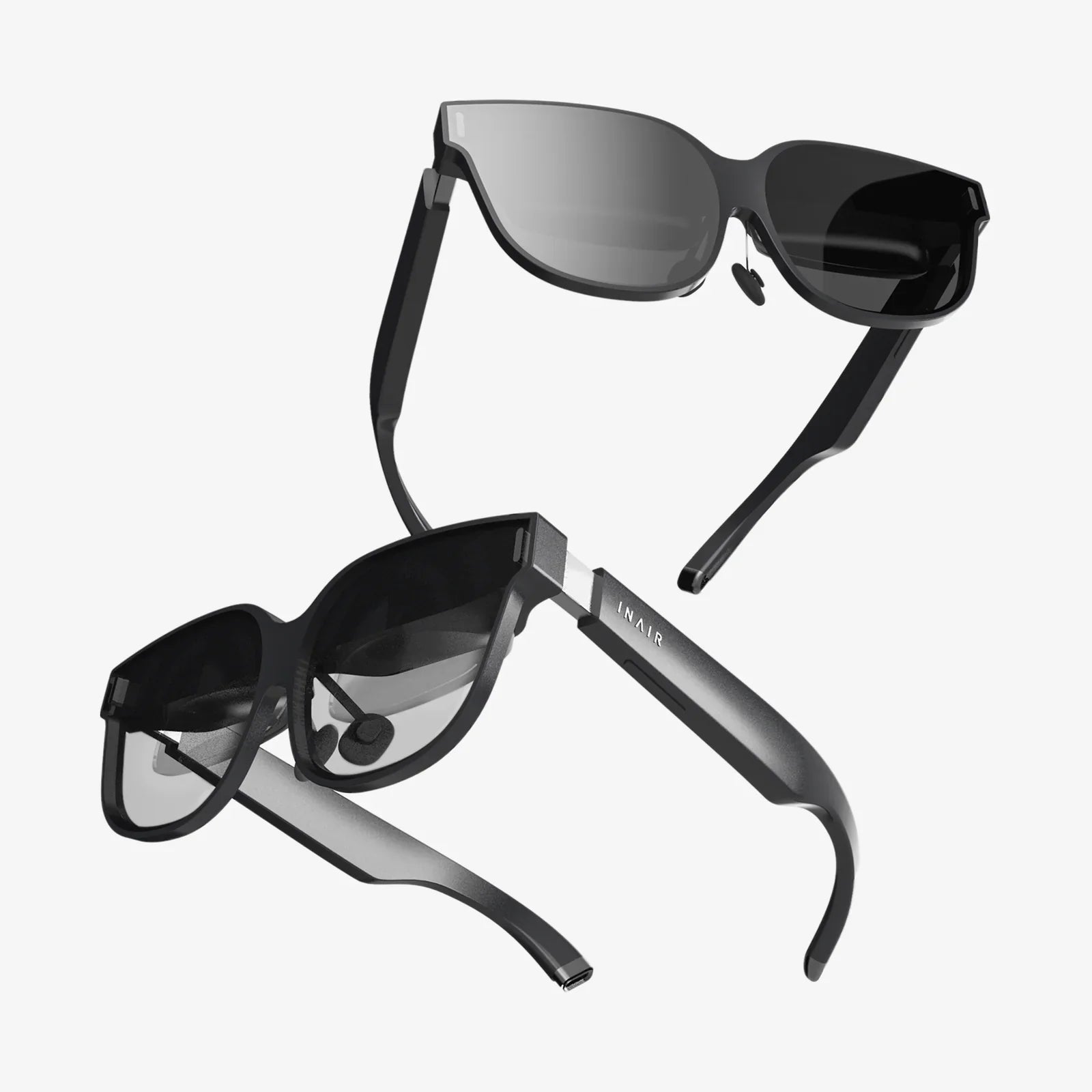
Imagine a world where information doesn't live on a screen in your hand but is seamlessly woven into the fabric of your reality. Where directions float effortlessly on the street corner you need to turn at, where a recipe hovers just above your mixing bowl without a single smudge on your tablet, and where the name of that vaguely familiar actor appears discreetly in your periphery as you watch a film. This is the promise that has tantalized technophiles for over a decade, a vision perpetually set to arrive consumer-ready next year. But now, after years of prototypes, false starts, and clunky iterations, a confluence of technological advancements is finally forging a new generation of smart glasses designed not for developers or niche enterprises, but for you and me. The age of ambient computing, worn on our faces, is dawning.
The Architectural Leap: From Bulky to Invisible
The single greatest hurdle for smart glasses has always been the fundamental trade-off between capability and form factor. Early attempts were either powerful but obtrusive, resembling futuristic welding goggles, or sleek but functionally anemic, offering little more than a basic camera and a Bluetooth connection. The path to consumer-ready adoption is paved with a radical miniaturization of core components.
At the heart of this revolution are micro-OLED and increasingly, Laser Beam Scanning (LBS) displays. These technologies project vibrant, high-resolution images onto waveguides—essentially transparent lenses that bounce light directly into the user’s retina. The result is a bright, clear digital overlay that can appear to float in space, from text messages to complex 3D models, all while allowing the wearer to see the real world perfectly. This optical engine, once the size of a matchbox, is now smaller than a pencil eraser, enabling designers to create frames that are indistinguishable from traditional eyewear.
Simultaneously, the processing power required for these experiences has shrunk. Instead of relying on a chunky onboard computer, modern architectures often use a hybrid approach. The glasses themselves house a ultra-low-power chip for basic tasks and sensor data collection, while a companion device—typically a smartphone in your pocket—acts as the powerhouse, handling the heavy computation via a robust, low-latency wireless connection. This division of labor is crucial for achieving an all-day battery life without burdening the wearer with excessive weight on their temples.
The AI Co-Pilot: The Brain Behind the Lenses
Hardware is only half the story. A sleek pair of glasses that merely projects a smartphone notification is a party trick, not a paradigm shift. The true magic, the element that transforms them from a display into an indispensable consumer-ready tool, is artificial intelligence. AI acts as the intelligent filter for reality, determining what information is relevant, when to show it, and how to interact with it.
Contextual awareness is paramount. Using a suite of sensors—including accelerometers, gyroscopes, magnetometers, microphones, and often outward-facing cameras—the glasses build a real-time understanding of the user’s environment and intent. Are you sitting in a meeting? Your notifications will be minimized to subtle icons. Are you walking through a foreign city? Translational overlays might appear on street signs and menus. Are you looking at the night sky? Constellations could be identified and labeled. This ambient intelligence ensures the technology serves you, rather than demanding your constant attention.
Furthermore, multimodal AI models enable intuitive interaction. Instead of fumbling with a touchpad on the frame, users can navigate with a combination of voice commands, subtle head gestures, and even eye tracking. You can dismiss a pop-up with a blink, scroll through a menu by looking to the edge of the lens, or select an item with a slight nod. This hands-free, eyes-forward interaction model is critical for safety and social acceptance, allowing users to engage with digital content without becoming disconnected from their physical surroundings.
Designing for the Human Face: Comfort, Style, and Identity
Technology that is worn on the body, especially on the face, ceases to be just a gadget and becomes an extension of personal identity and style. This is a challenge the smartphone industry never truly faced. A successful consumer-ready product must overcome profound design hurdles related to ergonomics, aesthetics, and personalization.
Comfort is non-negotiable. Frames must be lightweight, balanced to avoid pressure points on the nose or ears, and available in a wide range of sizes. Battery technology and placement are a key part of this equation; weight must be distributed evenly, often across both arms, to avoid a lopsided feeling. Materials like titanium, flexible polymers, and memory metal allow for durable yet comfortable frames that can withstand daily use.
Perhaps most importantly, they must look good. The specter of Google Glass, and its associated social stigma of the "glasshole," still looms large. The answer is not to hide the technology but to integrate it elegantly. This means offering a variety of frame styles—from classic aviators and wayfarers to modern geometric shapes—and collaborating with established eyewear brands to ensure legitimacy in the fashion world. Interchangeable lenses allow for prescription options, sunglasses, and blue-light filtering, ensuring one pair of glasses can serve all visual needs. People must want to wear them, not feel they have to.
A Universe of Use Cases: Beyond Novelty
For this category to succeed, it must offer compelling utility that transcends tech demos and novelty apps. The applications for well-executed smart glasses are as vast as human activity itself.
- Enhanced Navigation: Walking or driving with directions overlaid onto the road itself, complete with live traffic updates and points of interest highlighted in real-time.
- Real-Time Translation: Conversing with someone in another language with subtitles seamlessly appearing beneath them, or reading a foreign menu instantly translated before your eyes.
- Interactive Learning & DIY: Following a complex recipe hands-free, learning to play a guitar with chord diagrams superimposed on the fretboard, or repairing an engine with an animated schematic guiding each step.
- Accessibility: Providing auditory descriptions of the world for the visually impaired, or real-time transcription of conversations for the hearing impaired.
- Remote Collaboration: A expert guiding a field technician through a repair by drawing annotations directly into their field of view, making the concept of "see what I see" a reality.
This shift represents a move away from "pull" computing, where we actively seek out information on a device, to "push" computing, where relevant information contextually presents itself to us, exactly when we need it.
Navigating the Inevitable Storm: Privacy and the Social Contract
No discussion of always-on, camera-and-microphone-equipped wearables can be complete without addressing the elephant in the room: privacy. The very features that make smart glasses powerful—their ability to see and hear the world—also make them potentially intrusive. Achieving consumer-ready status is as much a social and ethical challenge as a technical one.
Manufacturers must prioritize privacy by design. This includes obvious physical indicators like a prominent LED light that illuminates when the camera is active, a feature that must be hardwired and impossible to bypass. It also involves clear, transparent data policies. Does audio processing happen on the device or in the cloud? Is video footage ever stored? Users must have unequivocal control over their data. On-device processing for features like translation and object recognition, where possible, is a powerful way to build trust, as personal data never leaves the user's possession.
Furthermore, a new social contract needs to be written. The norms around when it is and isn't appropriate to record will need to be established through public discourse and, potentially, legislation. The goal is not to create a society of sousveillance, but to develop a technology that respects individual privacy while enhancing shared experiences. Building this technology with privacy at its core is the only way to ensure it is welcomed into society, rather than rejected as a tool of surveillance.
The journey to perfecting this technology is iterative. The first generation of truly consumer-ready smart glasses will not be perfect. Battery life may still be a concern for power users, the field of view for AR content may be limited, and the app ecosystem will take time to mature. But they represent the critical first step—a step out of the lab and into the mainstream. They will prove the concept, establish the design language, and begin the vital process of normalizing this new form of interaction. They are the foundation upon which the next decade of innovation will be built, a future where the digital and physical worlds are no longer separate realms, but a single, enhanced, and extraordinary reality.
This isn't just about checking notifications without pulling out your phone; it's about unlocking a new layer of human potential, about having a knowledgeable guide, a creative canvas, and a personal assistant seamlessly integrated into your perception of the world. The devices are being assembled, the software is being refined, and the stage is being set for a revolution that will unfold not on our desks or in our pockets, but directly before our eyes, changing everything about how we see, learn, and connect.
Share:
Smart Glasses Augmented Reality 2025: The Year Your World Gets an Upgrade
Smart Glasses for Productivity: The Ultimate Guide to Augmented Workflows