


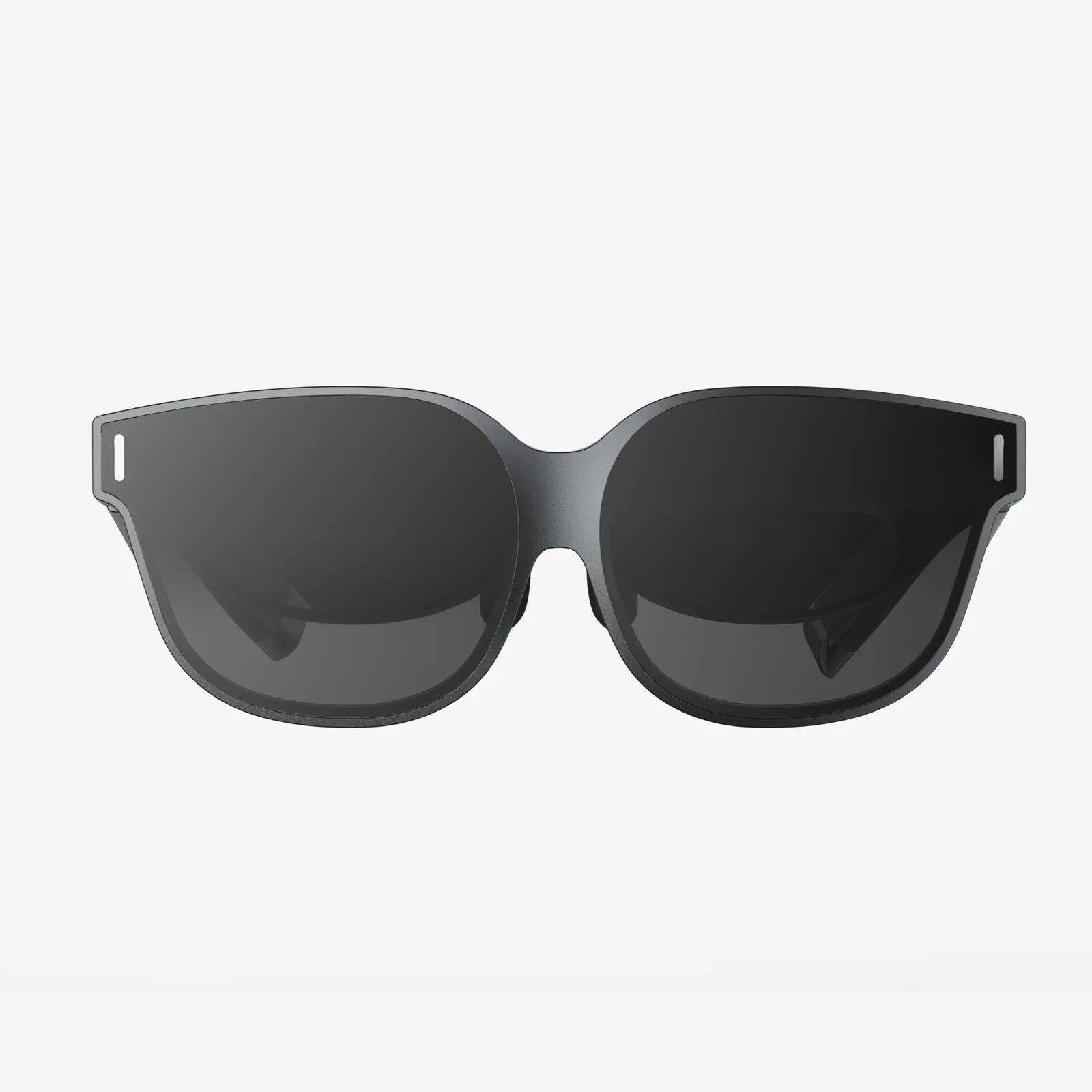
Imagine slipping on a pair of sleek, modern glasses and being instantly transported. The pixelated edges and blurry textures that once broke the spell of virtual worlds are gone, replaced by a crystal-clear, hyper-realistic landscape that your brain struggles to distinguish from the physical room you just left. This isn't a distant dream of the future; it's the present-day promise encapsulated by the pursuit of a sharper image in virtual reality glasses. This relentless drive for visual fidelity is the final frontier in making VR not just a novel gadget, but a truly believable portal to anywhere, anytime, and anything. The quest for the perfect pixel is redefining our relationship with digital content, and it all starts with what we see.
The Heart of the Illusion: Display Technology and Resolution
At the core of any visual experience, especially one as demanding as virtual reality, lies the display. The term "sharper image" directly translates to higher resolution and pixel density. Early VR pioneers were hampered by low-resolution screens that created a pronounced "screen door effect"—the visible grid of black lines between pixels, making it feel like you were viewing the world through a mesh screen. This effect was the single biggest immersion breaker.
Modern high-definition VR glasses have tackled this problem head-on. They utilize advanced micro-OLED or fast-switch LCD panels that pack an extraordinary number of pixels into a very small space. We're now seeing resolutions exceeding 4K per eye, a staggering leap from just a few years ago. This immense pixel density is the first and most critical step in eliminating the screen door effect. When the pixels are too small and too close together for the human eye to distinguish individually, the digital canvas becomes seamless. Text becomes crisp and readable from across a virtual room, the fine details on a virtual instrument panel are legible, and the individual strands of hair on a digital character look real.
Beyond the Pixel: The Role of Lenses and Optical Clarity
However, a high-resolution screen is only half the battle. The lenses placed between your eyes and those screens are equally, if not more, important in delivering a sharp image. These are not simple magnifying glasses; they are complex, precision-engineered optical elements designed to warp and focus the flat screen image into a believable, wide-field-of-view 3D space.
Traditional Fresnel lenses, while effective, often introduced visual artifacts like god rays—unwanted glare and streaks of light around high-contrast elements. The latest generation of VR glasses is moving towards pancake lenses. These multi-element lenses use polarization folding to bend light multiple times, allowing for a much more compact physical design while simultaneously providing edge-to-edge clarity. This means the entire field of view, not just the center, remains in sharp focus, drastically reducing distortion and blur. This optical breakthrough ensures that the incredible resolution of the screens is delivered faithfully to your retina, maximizing the potential for immersion.
Powering the Precision: Processing and Performance
A razor-sharp display and perfect lenses are meaningless if the content stutters and lags. A consistent, high frame rate is non-negotiable for both visual smoothness and user comfort. Most high-end VR systems now target a minimum of 90 frames per second (FPS), with many pushing to 120Hz or even higher. This fluidity is crucial for making virtual movement feel natural and for preventing the motion sickness that plagued earlier systems.
This immense demand for graphical power is handled by sophisticated processors, either within a connected computing unit or integrated directly into standalone headsets. These systems employ advanced rendering techniques like foveated rendering—a technology that uses eye-tracking to render the exact spot where the user is looking in full resolution, while subtly reducing the detail in the peripheral vision. This massive computational saving allows the system to dedicate its resources to making the center of your gaze as photorealistic as possible, further enhancing the perception of a sharper image without requiring impossible amounts of processing power.
The Software That Sharpens: Anti-Aliasing and Supersampling
The pursuit of visual clarity extends deep into the software realm. Developers use a suite of techniques to clean up the final image before it reaches the screens. Anti-aliasing (AA) is a fundamental graphics technique that smooths out the jagged, "stair-stepped" edges of polygons. In VR, high-quality AA is essential because these "jaggies" are far more noticeable and immersion-breaking when magnified and wrapped around your entire field of view.
Beyond standard AA, supersampling is a powerful tool for enthusiasts. This method involves rendering the virtual scene at a resolution significantly higher than the native resolution of the headset's displays and then downsampling it to fit. The result is an image with exceptionally smooth edges and vastly reduced shimmering on fine details, effectively acting as the highest-quality form of anti-aliasing possible. While computationally expensive, it represents the ultimate software-driven method for achieving that coveted sharper image.
A World of Applications: More Than Just Games
While the gaming world is the most visible beneficiary of this visual arms race, the implications of crystal-clear VR extend far beyond. The value of a sharper image is being realized across numerous professional and educational fields.
- Education and Training: Medical students can practice complex surgical procedures on virtual patients, where the clarity of anatomical details can be the difference between understanding and confusion. Mechanics can train on intricately detailed virtual engines, seeing every bolt and wire with perfect clarity.
- Design and Architecture: Architects and interior designers can walk clients through photorealistic virtual models of unbuilt homes. The ability to see the grain of the virtual wood flooring or the texture of the marble countertops allows for confident decision-making long before construction begins.
- Social Connection and Remote Work: The metaverse concept relies on the ability to read subtle facial expressions and body language in virtual avatars. A sharper image makes virtual meetings feel more personal and authentic, fostering a genuine sense of presence among participants who may be continents apart.
The Human Factor: Ergonomics and Comfort
A device can have the most advanced display on the planet, but if it's uncomfortable to wear, the experience is ruined. The latest designs prioritize a balanced weight distribution, often moving the battery pack to the back of the headstrap to act as a counterweight. This prevents the front-heavy feeling that causes neck strain and allows for longer, more comfortable sessions. Furthermore, improved materials, better facial interfaces, and adjustable systems ensure a secure yet comfortable fit for a wide range of users. Comfort is intrinsically linked to immersion; you can't forget you're in a headset if it's constantly pressing on your cheeks or sliding down your nose.
The Future is Clear: What's Next for Visual Fidelity?
The journey towards visual perfection in virtual reality is far from over. The horizon holds even more promising technologies. Varifocal displays, which dynamically adjust their focus based on where you are looking in the virtual space, promise to solve the vergence-accommodation conflict—a current issue where your eyes struggle to focus on objects at different virtual distances. This will further enhance realism and reduce eye strain.
We are also moving towards resolutions that meet and exceed the resolving power of the human eye, often called "retinal resolution." At this point, adding more pixels will yield no perceptible difference in sharpness; the digital image will be as detailed as reality itself. When combined with advancements in high dynamic range (HDR) for better contrast and color, and expanded field of view, the line between the virtual and the real will become increasingly—and perhaps irrevocably—blurred.
The evolution of high-definition virtual reality glasses represents a fundamental shift in how we interact with technology. It's a move away from looking at a screen and towards inhabiting a digital environment. The relentless push for a sharper image is not about vanity; it's about building a more effective, more believable, and more powerful window into other worlds. It's the key that unlocks the full potential of virtual reality, transforming it from a promising technology into an indispensable tool for creativity, connection, and exploration. This is just the beginning of seeing what we've only ever been able to imagine.
Share:
Best AR Coating Glasses: The Ultimate Guide to Sharper Vision and Digital Comfort
AI and Computing: The Symbiotic Engine Reshaping Our World