


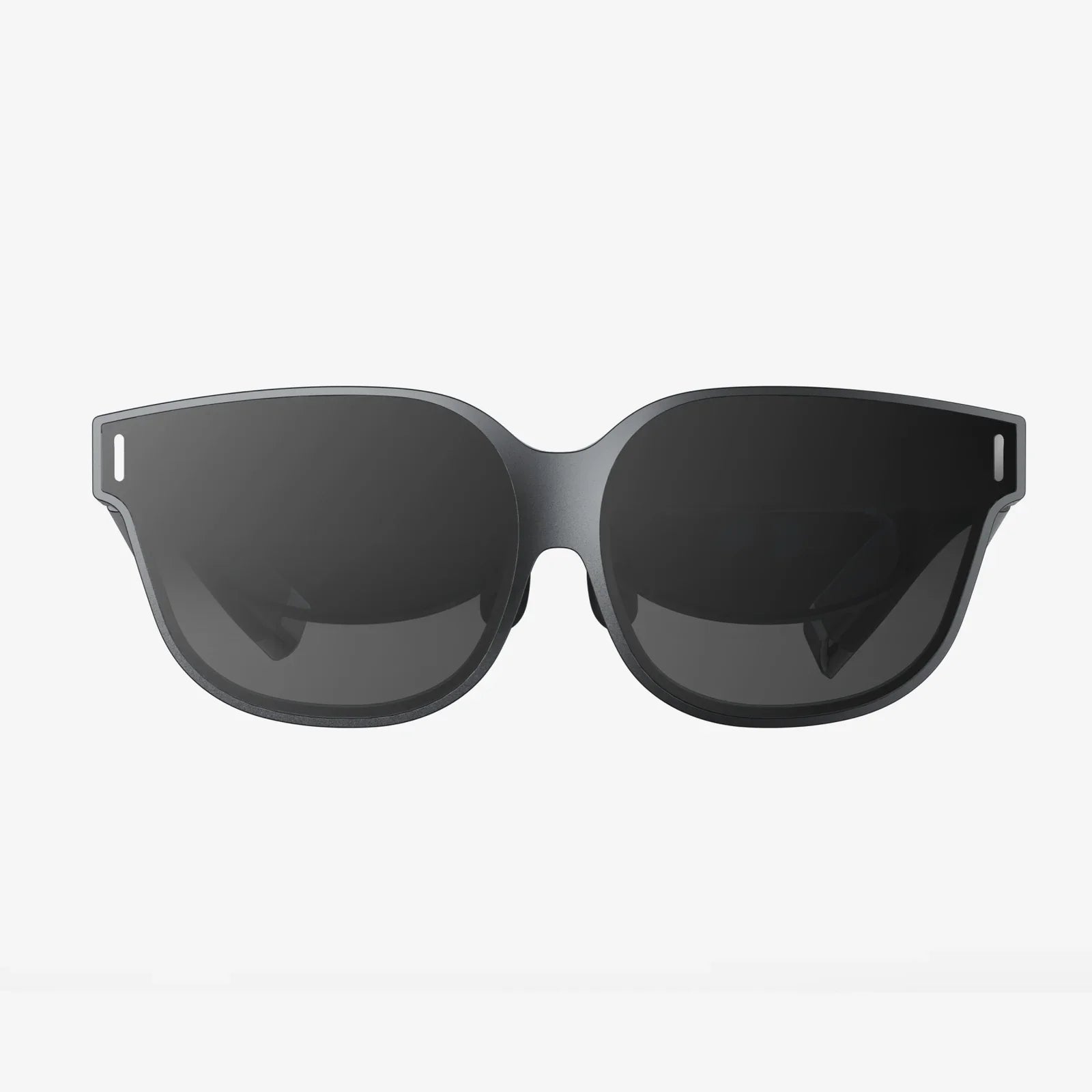
Imagine a world where information doesn't block your view but instead whispers it from the edges. Where directions gently pulse in your periphery, notifications don't interrupt your conversation but linger just out of sight until you need them, and the digital layer of our lives feels less like a screen and more like a subtle, ever-present sense. This isn't the futuristic dream of intrusive smart glasses or clunky headsets; it's the quiet, revolutionary promise of Side Augmented Reality, a technological paradigm poised to fundamentally change how we interact with both our devices and our environment.
Beyond the Center Stage: Redefining the AR Experience
For years, the popular conception of Augmented Reality has been dominated by central vision displays. Think of a navigation arrow superimposed directly on the road ahead or a character from a game dancing on your living room table. This approach, while impressive, has significant limitations. It can be visually obstructive, demanding constant focus and pulling attention away from the real world it's trying to augment. It often leads to cognitive overload, as the brain struggles to prioritize between the high-fidelity real environment and the digital overlay competing for the same focal point.
Side AR proposes a radical alternative. Instead of placing information in the center of the user's field of view, it leverages our peripheral vision. This area of sight, while lower in detail resolution, is exceptionally good at detecting motion, recognizing patterns, and monitoring our surroundings for changes—a leftover from our evolutionary need to spot predators lurking at the edges of our awareness. Side AR taps into this innate capability, using it as a channel for non-intrusive, ambient information delivery.
The Technological Pillars of Peripheral Computing
Building a seamless Side AR experience rests on several converging technological advancements.
Advanced Micro-Optics and Waveguides
The key hardware challenge is projecting information into the peripheral vision without bulky equipment. This is being solved through sophisticated micro-optics and waveguide technology. Imagine incredibly thin, transparent films or lenses embedded into the temples of standard eyeglasses or the edges of a car's windshield. These waveguides can bend light from tiny projectors, directing laser-sharp images and text to specific areas of the peripheral retina. The result is a display that is always present but only consciously perceived when needed, leaving the central vision completely unobstructed for the task at hand.
Contextual Awareness and AI Integration
For Side AR to be useful and not just another source of noise, it must be incredibly smart. This requires a robust suite of sensors—miniaturized cameras, microphones, inertial measurement units (IMUs), and environmental sensors—all working in concert. The data from these sensors is processed by on-device artificial intelligence that understands context. Is the user walking, driving, or sitting in a meeting? Who are they talking to? What is their current task? The AI uses this contextual understanding to decide what information is important enough to surface, when to surface it, and, crucially, how to present it in the periphery without causing distraction. This moves us from explicit interaction (pulling out a phone to check) to implicit interaction (the information presents itself because the system knows you need it).
Ultra-Low Power Processing
For Side AR to be adopted in everyday wearables like glasses, it cannot be a power-hungry system. The processing must be incredibly efficient, relying on low-power chipsets and neuromorphic computing models that mimic the brain's event-based processing. Instead of rendering a constant, high-frame-rate video overlay, a Side AR system might only activate when a specific, pre-defined pattern or change is detected by the sensors, dramatically conserving energy and enabling all-day battery life.
A Universe of Applications: From Productivity to Preservation
The potential use cases for Side AR extend far beyond the consumer gadget sphere, promising transformative impacts across numerous industries.
Enhanced Human Performance and Safety
In fields where focus is paramount, Side AR becomes an invaluable tool. For a surgeon performing a delicate operation, vital signs and procedure reminders can be displayed in their periphery, keeping their hands steady and their gaze locked on the patient. For an aircraft pilot, system status alerts and landing data can be presented outside the central cockpit view, maintaining situational awareness without cluttering the primary instruments. For industrial workers in complex environments, safety warnings about hazardous materials or malfunctioning equipment could appear as a subtle glow in their peripheral vision, prompting evasive action before the central brain even processes the threat.
Seamless Navigation and Wayfinding
Navigation is a perfect use case. Instead of holding up a phone or looking down at a watch, a gentle, directional light pulse in the lower-left periphery could indicate the next turn is 100 meters away. The intensity or frequency of the pulse could increase as the turn approaches, creating an intuitive, heads-up guidance system that allows users to fully engage with their surroundings—not a digital map.
Revolutionizing Accessibility
Side AR holds profound promise for individuals with sensory impairments. For those with hearing loss, speech-to-text transcription of a conversation could be displayed as subtitles in the periphery, allowing them to "read" a discussion while maintaining eye contact with the speaker. For individuals with low vision, edge-based alerts could highlight obstacles, changes in elevation, or important landmarks, providing a constant, non-obstructive safety buffer.
The Future of Social Interaction and Content Consumption
Socially, Side AR could help us be more present. Notifications from messages or emails could manifest as a faint, colored aura at the edge of sight, conveying urgency through color rather than disruptive pop-ups. A quick, almost subconscious glance could dismiss or save it for later. For content, imagine watching a film while relevant background information about the actors or setting subtly presents itself on the side, available for deeper exploration without pausing the main event.
The Ethical Frontier: Privacy, Attention, and the Blurring of Reality
With such a powerful and personal technology comes a host of serious ethical considerations that must be addressed proactively, not reactively.
The Ultimate Privacy Challenge
A always-on, context-aware Side AR system is, by its nature, a profound surveillance device. Its sensors are constantly scanning the user's environment, recording conversations, identifying faces, and logging locations. The potential for data collection is unprecedented. Who owns this data? How is it stored, processed, and used? Robust, transparent, and user-centric data governance frameworks must be built into the very architecture of this technology. The concept of "privacy by design" is not an option; it is an absolute necessity.
The Battle for Human Attention
If we think the battle for our attention is fierce now, Side AR opens a new front. Advertisers will inevitably seek to place branded cues and calls-to-action in our peripheral vision. The line between useful information and manipulative advertisement will become dangerously thin. Regulations may be needed to define and protect "attention rights," ensuring our peripheral vision is not colonized by commercial interests without explicit, revocable consent.
Cognitive Load and Reality Differentiation
There is a risk of creating a new form of cognitive fatigue, a constant, low-level distraction that could make deep focus more difficult. Furthermore, as digital overlays become more seamless and integrated, the ability to distinguish between what is real and what is digitally augmented may become challenging for some, raising questions about mental well-being and our shared perception of reality.
Navigating the Path Forward
The development of Side AR cannot be left to technologists and corporations alone. Its evolution requires a multidisciplinary approach involving ethicists, sociologists, psychologists, policymakers, and the public. We must engage in open dialogues about the world we want to build. Do we want a future where our peripheral vision is monetized and monitored, or one where it is enhanced and empowered, making us more capable, connected, and present in our own lives?
The choices we make today, in the design labs and policy rooms, will determine the answer. The hardware is being miniaturized, the algorithms are being refined, and the first prototypes are already demonstrating the stunning potential of this peripheral paradigm. The revolution will not be staring us in the face; it will be happening just beside it, waiting for us to notice.
The next time you instinctively sense your phone vibrate in your pocket or catch a flicker of movement from the corner of your eye, consider it a preview. Side AR is evolving to harness that very instinct, transforming those fleeting sensations into a rich, contextual, and continuous stream of understanding. It promises a future not of screens we look at, but of an ambient intelligence we feel, a seamless extension of our own cognition that empowers us to navigate the world with unprecedented awareness, all while keeping what truly matters directly in front of us.
Share:
Unusual Smart Devices That Are Quietly Revolutionizing Our Daily Lives
What Can I Use VR Goggles For? Exploring the Boundless Virtual Universe