


- by wangfred
Sightful Glasses: The Invisible Revolution in How We Interact With the World
- by wangfred
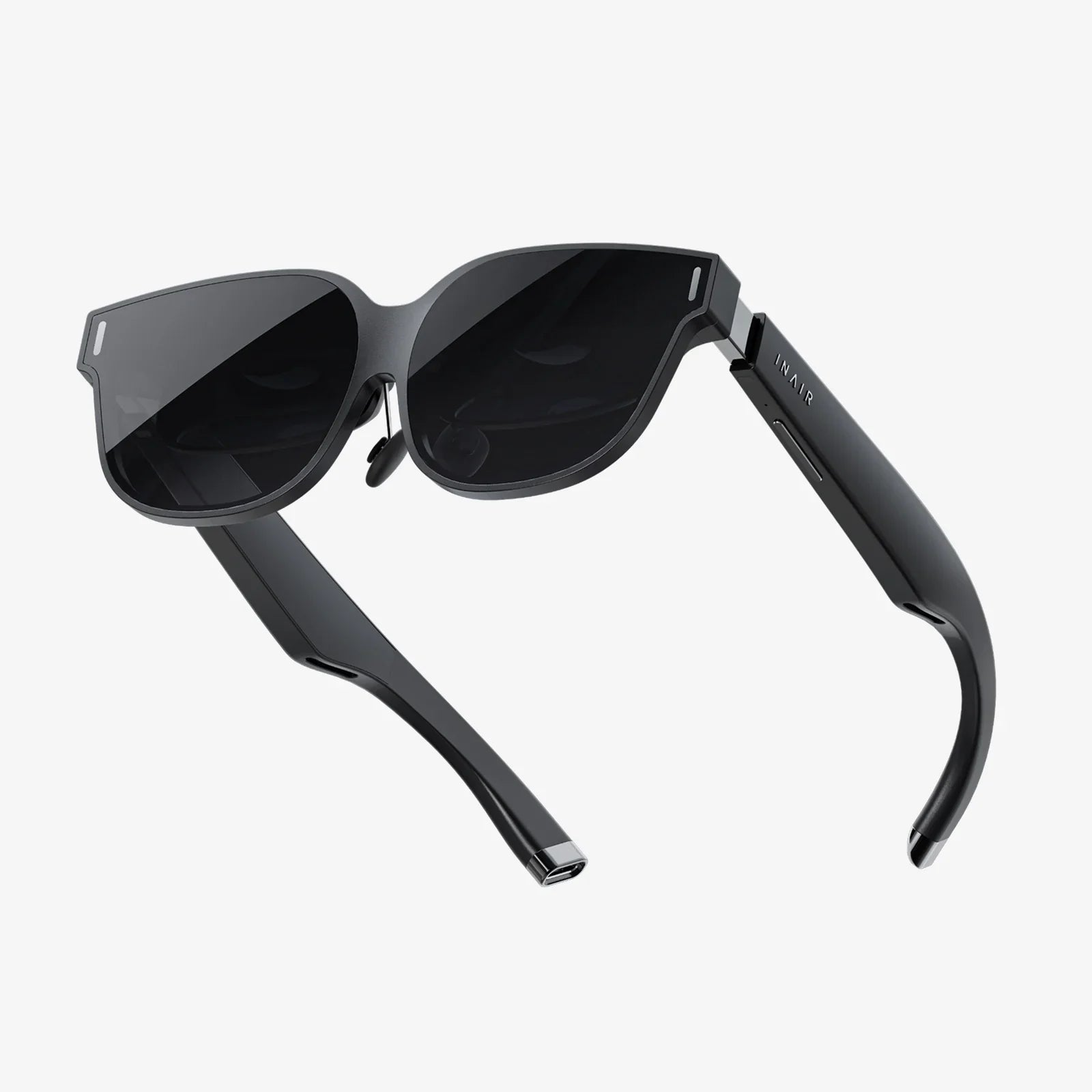
Imagine a world where information doesn't live on a screen in your hand, but is woven directly into the fabric of your reality. Where the line between the digital and the physical blurs into insignificance, and your environment becomes an intelligent, responsive partner. This isn't a distant science fiction fantasy; it's the imminent future being built today, and it’s arriving on the bridge of your nose. The era of passive eyewear is ending, and the dawn of sightful glasses is here, promising to fundamentally alter our perception of everything.
For centuries, the primary function of glasses was singular: to correct imperfect vision. They were tools to achieve normalcy. Then, they evolved into fashion statements, expressions of personal identity. The next logical, and most revolutionary, step is to transform them into a platform for augmentation. Sightful glasses represent this quantum leap. They are not merely about seeing better; they are about understanding more.
This evolution has been a long time in the making. The concept of augmented reality (AR) has tantalized technologists for decades, but it was often shackled to clunky headsets, isolating helmets, or the limited viewfinder of a smartphone. The true power of AR lies in its seamlessness—its ability to enhance your world without pulling you out of it. Sightful glasses achieve this by integrating the technology into a form factor that is socially acceptable, comfortable to wear all day, and, most importantly, positioned directly in your line of sight. They are the missing link between the human user and the digital universe.
To understand the potential of sightful glasses, one must first appreciate the symphony of advanced technologies working in concert behind the lenses. This is far more complex than projecting a simple navigation arrow.
At the heart of the experience is the display technology. How do you project vibrant, high-resolution digital images onto clear lenses without blocking the user's view of the real world? The answer lies in sophisticated solutions like waveguide technology. Imagine etching a lens with microscopically small patterns that can catch light from a tiny projector at the temple and pipe it directly into your eye. This creates the illusion that text, images, and 3D models are floating in space before you, all while maintaining a completely clear view of your surroundings. The precision required is breathtaking, representing a monumental achievement in optical engineering.
Display is useless without intelligence. Sightful glasses are packed with a suite of sensors—high-resolution cameras, depth sensors, accelerometers, gyroscopes, and microphones. These act as the glasses' eyes and ears, constantly scanning and interpreting the environment. This field is known as spatial computing. The device doesn't just see a table; it understands the geometry of the room. It can map a 3D space, recognize objects and faces, and precisely anchor digital content to physical locations. This contextual awareness is what separates a gimmick from a genuine tool. The glasses know where you are, what you're looking at, and what you might need to know about it.
All the sensor data in the world is just noise without a brain to process it. This is where artificial intelligence becomes the critical differentiator. Powerful, miniaturized processors within the frames run complex machine learning models in real-time. This AI enables features like real-time language translation, where spoken foreign words can appear as subtitles beneath the person speaking. It can identify plants, analyze complex data schematics overlaid on machinery, or highlight the key ingredients on a grocery store shelf that align with your dietary preferences. The AI is the concierge, deciding what information is relevant and presenting it at the exact moment it becomes useful.
The theoretical is impressive, but the practical applications are where sightful glasses will win over the world. Let's walk through a day in a near-future life enhanced by this technology.
Such a powerful tool does not arrive without profound challenges. The very features that make sightful glasses revolutionary also raise critical questions we must address as a society.
The always-on cameras and microphones represent a paradigm shift in surveillance. The potential for unauthorized recording in private spaces, facial recognition on a mass scale, and the constant collection of unprecedented amounts of personal and environmental data is a legitimate concern. Who owns this data? How is it stored and used? The concept of consent becomes murky when everyone is potentially a recording device. Robust, transparent, and enforceable digital ethics frameworks and privacy-first designs are not optional; they are a prerequisite for public trust.
Furthermore, the "attention economy" could reach a new, more invasive level. If advertisers can place virtual billboards in your field of view based on what you look at, we risk creating a world of digital clutter and hyper-targeted manipulation. The battle for your eyeballs will literally be fought in front of your eyes. The need for clear boundaries and user-controlled filters will be paramount.
There is also a social risk: the further dilution of shared reality. If everyone experiences a personally curated version of the world, does our common ground erode? Will we retreat further into our own digital bubbles, seeing only what our algorithms want us to see? The technology must be designed to connect us to reality and to each other, not to replace it with a personalized simulation.
The path forward for sightful glasses will follow a familiar technological arc. Early adopters will embrace the potential despite high costs and limited capabilities. The technology will rapidly improve—battery life will extend, processing power will increase, and the form factor will shrink towards the ultimate goal: indistinguishability from traditional eyewear.
Their true success hinges on deep ecosystem integration. They cannot be a standalone island. They need to be the central hub that connects your smartphone, your smart home, your car, and the wider Internet of Things. They must become the most intuitive and natural interface imaginable, controlled by voice, gesture, and eventually, even thought.
We are standing at the precipice of the next major computing platform, one that promises to be even more transformative than the smartphone. It will redefine industries, create new forms of art and storytelling, and change how we learn, work, and play. The questions it raises are profound and necessary. The sightful glasses are not just a new product; they are a new lens through which we will view our future. The world is about to get a lot more interesting, and it will all happen right before your eyes.
This isn't about having a screen closer to your face; it's about unlocking a new layer of human experience, one where your curiosity is instantly rewarded and your potential is amplified by an invisible guide. The future is looking right back at you, and it's waiting for you to put it on.
Share:
AI Powered Features: The Silent Revolution Reshaping Our Digital World
Virtual Reality Audio News Is Revolutionizing How We Experience Global Events