


- by wangfred
Small Form Factor VR Headset: The Unseen Revolution Reshaping Reality
- by wangfred
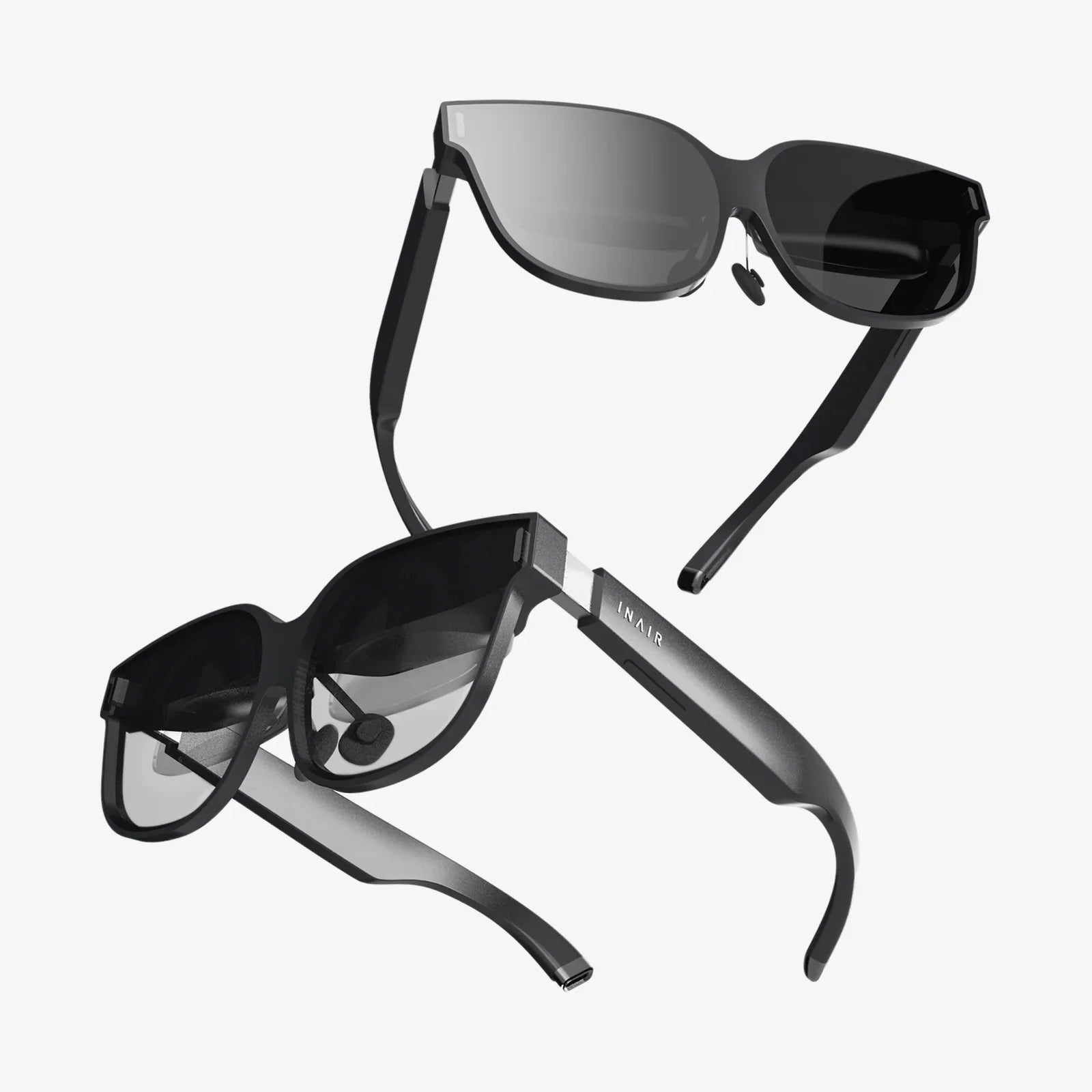
Imagine slipping into a vast digital universe, not with a heavy face-mounted computer, but with a pair of sleek glasses that feel as natural as your favorite sunglasses. This isn't a scene from a distant sci-fi movie; it's the imminent future being built today, and it’s all centered on one pivotal innovation: the small form factor VR headset. The race to miniaturize immersive technology is more than an engineering challenge; it's a fundamental shift that will dissolve the barriers between ourselves and the digital realms we wish to explore. For years, virtual reality promised a revolution but was often tethered—both by wires and by the sheer bulk of its hardware. That era is closing. We are stepping into the light, into an age of streamlined, powerful, and truly accessible virtual experiences. The question is no longer if VR will become a part of our daily lives, but how seamlessly it will integrate. The answer lies in the relentless pursuit of smaller, smarter, and more sophisticated design.
To appreciate the seismic shift of modern compact designs, one must first understand the limitations of their predecessors. Early consumer-grade headsets were marvels of technology, but they came with significant trade-offs. The form factor was often described as front-heavy, creating pressure on the bridge of the nose and the forehead, leading to user fatigue and limiting comfortable play sessions. The weight distribution was a constant challenge for engineers.
Beyond comfort, size was the primary obstacle to accessibility and adoption. The elaborate setup process—involving external sensors, a powerful desktop computer, and a cat's cradle of cables—effectively confined the VR experience to a dedicated, cleared-out space. It was a niche hobby, an impressive tech demo for enthusiasts, but a logistical nightmare for the average consumer. This bulk acted as a physical and psychological barrier, preventing VR from becoming a spontaneous, everyday tool for work, socializing, or entertainment. The dream of virtual reality was trapped in a cumbersome box.
Creating a truly small form factor headset is a breathtaking feat of interdisciplinary engineering. It requires a harmonious and radical improvement across several key components, each presenting its own set of challenges.
Perhaps the most significant leap has been in optics. Traditional headsets used Fresnel lenses, which are effective but require a certain distance between the lens and the display to focus properly. This mandatory gap was a major contributor to the headset's depth and protrusion from the face.
The advent of pancake lenses has changed everything. These compact optics use a principle of polarized light folding, bouncing it multiple times between lens elements before it reaches the eye. This process allows the light path to be effectively much longer than the physical space it occupies. The result? A drastic reduction in the required lens-to-screen distance, slimming down the headset's profile by orders of magnitude. This single innovation is arguably the key that unlocked the potential for glasses-like designs.
A slimmer optical stack is useless without a high-quality display to match. Older LCD panels struggled with issues like motion blur and the dreaded screen-door effect. The shift to Micro-OLED technology addresses this brilliantly. These displays are incredibly thin and efficient, but their real magic lies in their pixel density. They can pack a stunning number of pixels into a tiny area, delivering breathtaking clarity and resolution without adding bulk. This ensures that the pursuit of a smaller form factor does not come at the cost of visual fidelity; in fact, it enhances it.
Eliminating the need for external base stations or sensors was a crucial step toward a self-contained, portable device. Modern inside-out tracking achieves this by using a constellation of tiny, wide-field-of-view cameras embedded directly on the headset's shell. These cameras continuously monitor the surrounding environment, using sophisticated algorithms and simultaneous localization and mapping (SLAM) technology to understand the user's position in space and track the motion of the controllers. This complex process happens instantaneously, untethering the user physically and freeing them from the setup constraints of the past.
While standalone headsets have powerful mobile processors, the most demanding applications still benefit from external power. The solution is no longer a bulky cable but sophisticated wireless streaming protocols. By leveraging high-speed Wi-Fi standards, a small form factor headset can act as a high-resolution display and input device, offloading the intense number-crunching to a nearby computer or even a cloud server. This distributed computing model preserves the freedom of movement while providing access to virtually infinite graphical power, ensuring that compact design never means compromised performance.
The implications of miniaturization extend far beyond more comfortable gaming. By transforming the headset from an isolating apparatus into an accessible wearable, its potential uses expand exponentially.
Imagine attending a meeting as a full-bodied hologram from a coffee shop, or manipulating 3D architectural models on a virtual desk that spans the horizon. Small form factor headsets make this practical. Professionals can carry a powerful spatial computer in their briefcase, enabling collaboration and visualization on a scale previously impossible. Sectors from engineering and medicine to design and education will be transformed by the ability to interface with complex digital information naturally and portably.
True telepresence—the feeling of actually sharing a space with someone remotely—has been a long-held dream. Bulky hardware was a non-starter for social adoption. A lightweight, glasses-like device changes the calculus. Sharing a live concert with a friend across the globe, sitting around a virtual campfire with family, or conducting a job interview with a sense of shared presence will become mundane activities. This has the potential to reshape communication, reducing the notion of distance and fostering connection in a deeply human way.
The ultimate destination for many small form factor devices is a seamless blend of the virtual and the real, often referred to as mixed or augmented reality (AR). Their slim design is the prerequisite for this future. Pass-through video technology, powered by the same cameras used for inside-out tracking, allows users to see their physical environment in high resolution. Digital objects can then be anchored convincingly to the real world. This technology promises everything from navigation cues floating over city streets to interactive learning models appearing on a student's desk, all mediated by a device no more obtrusive than regular eyewear.
The path to perfect miniaturization is not without its obstacles. Engineers face a constant battle against physics, and every design decision involves a trade-off.
Battery life remains a formidable challenge. Smaller devices mean less space for batteries, and powering high-resolution displays, multiple cameras, and advanced processors is incredibly demanding. Innovations in battery chemistry, power-efficient components, and perhaps even novel solutions like swappable battery packs will be critical. Furthermore, the laws of thermodynamics are unforgiving. Packing immense computing power into a tiny space generates heat, which must be dissipated efficiently and comfortably so close to the user's face. Passive and active cooling solutions that are both effective and silent are a key area of development.
There is also the philosophical question of immersion. Some argue that a completely transparent, glasses-like device might break the sense of presence that a fully enclosed headset provides. Finding the right balance between immersion and awareness of one's surroundings will be a central design consideration for different use cases.
The journey toward the ultimate small form factor VR headset is ongoing. We can anticipate several trends that will continue to drive this evolution. The integration of eye-tracking and facial expression capture will become standard, enabling more intuitive control and authentic social interactions in virtual spaces. Haptic feedback, perhaps through advanced controllers or even ultraleather technology, will add the crucial sense of touch to the visual and auditory experience.
Most excitingly, we are moving toward neural interfaces. Research into non-invasive methods of reading neural signals is advancing rapidly. The eventual goal is a device that can understand user intention without the need for controllers, manipulated purely by thought. This represents the final form of miniaturization: a seamless interface between the human mind and the digital world.
The evolution of the small form factor VR headset is more than a tale of shrinking circuits and refined optics; it is the story of technology finally adapting to us, rather than us adapting to it. It’s about building a bridge to virtual worlds that is so easy to cross, we forget we’re wearing it at all. This invisible integration is the key to unlocking a future where our digital and physical lives are not separate realities, but a continuous, enhanced spectrum of experience. The revolution won't be bulky; it will fit neatly in your pocket, ready to expand your world the moment you put it on.
Share:
Best VR Headset Comparison 2025: The Ultimate Buyer's Guide
Best VR Headset Comparison 2025: The Ultimate Buyer's Guide