


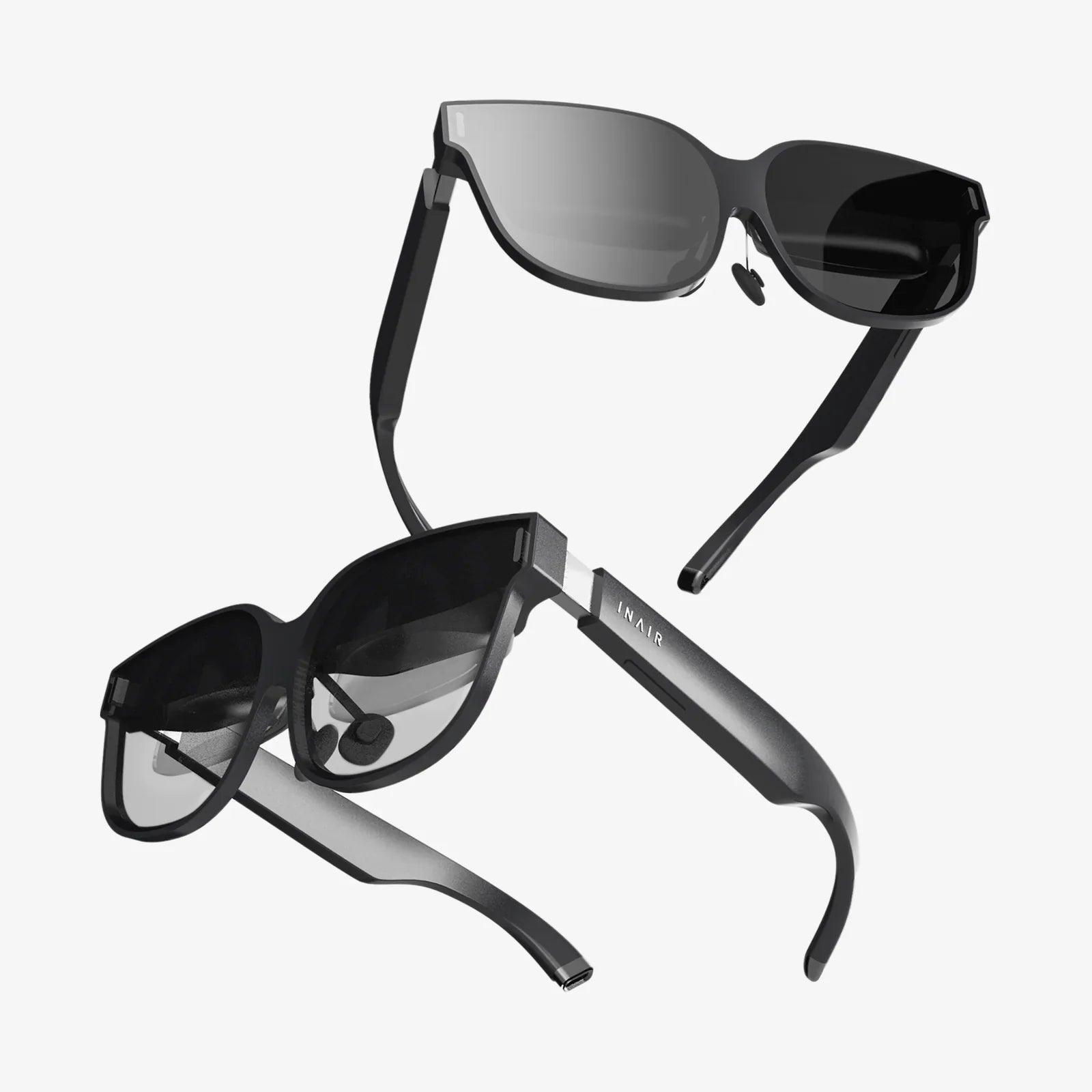
Imagine slipping on a pair of sleek, lightweight glasses and instantly being transported to another world—a detailed digital landscape rendered in stunning clarity, all without the cumbersome weight and complex setup of traditional equipment. This is no longer a scene from science fiction; it's the reality promised by the latest generation of small VR headsets for PC. The quest for a more accessible, comfortable, and high-fidelity virtual experience is driving a monumental shift in design, moving away from bulky helmets towards streamlined visors that prioritize both form and function. For gamers, architects, engineers, and everyday enthusiasts, this evolution represents the key to unlocking VR's true potential, making prolonged immersion not just possible, but profoundly enjoyable. The era of the small PC VR headset is here, and it's changing everything we thought we knew about virtual reality.
The Driving Force Behind the Shrink: Why Size Matters in VR
For years, virtual reality was synonymous with large, front-heavy headsets that often felt like strapping a brick to your face. This design, while necessary for the technology of the time, created significant barriers to adoption and enjoyment. The movement towards miniaturization isn't merely an aesthetic choice; it's a critical engineering endeavor aimed at solving the core challenges that have plagued VR since its inception.
Comfort and Accessibility: The most immediate benefit of a smaller form factor is a dramatic increase in comfort. Reduced weight alleviates pressure on the cheekbones and bridge of the nose, allowing for extended play or work sessions without fatigue. This also makes VR more accessible to a wider range of users, including those who might have found older models too physically demanding.
Reduced Facial Interface and Improved Hygiene: A smaller headset often means a smaller facial gasket. By moving the optics closer to the eyes, manufacturers can design interfaces that rest more lightly on the face, minimizing the "scuba mask" effect. This not only enhances immersion by reducing peripheral distractions but also improves hygiene by decreasing the amount of skin contact and sweat absorption.
Portability and Convenience: A compact VR headset is inherently easier to store, transport, and set up. This encourages spontaneous use and makes it a more integral part of a user's tech ecosystem rather than a specialized piece of equipment that requires dedicated space and effort to deploy.
Broadening the Appeal: By shedding the bulky, tech-heavy appearance, small VR headsets appear more like consumer electronics and less like niche developer kits. This sleekness is crucial for mainstream adoption, making the technology less intimidating and more appealing to a general audience.
Packing a Punch: The Advanced Technology Inside Compact Frames
Creating a powerful yet small VR headset for PC is a remarkable feat of engineering. It requires integrating high-end components into a tightly constrained space without compromising on performance. Several key technologies have converged to make this possible.
Pancake Lenses: This is arguably the most significant innovation enabling smaller headsets. Traditional Fresnel lenses, used in older VR models, require a certain distance between the lens and the display to focus the image correctly. Pancake optics use a principle of folded optics, bouncing light multiple times between lens elements before reaching the eye. This allows the lenses to be much thinner and brings the displays significantly closer to the face, slashing the overall depth and weight of the headset while often improving optical clarity and reducing god rays.
Micro-OLED Displays: To fit into a smaller chassis, displays must be both small and incredibly sharp. Micro-OLED panels are a breakthrough here. Unlike the LCDs used in many older headsets, Micro-OLEDs offer superior pixel density, perfect blacks, vibrant colors, and a faster response time. This means users get a crystal-clear image with no screen-door effect and exceptional contrast, all from a display panel that is physically tiny.
Inside-Out Tracking: The elimination of external base stations or sensors is a huge win for miniaturization and ease of use. Modern small PC VR headsets utilize sophisticated inside-out tracking. This involves multiple wide-angle cameras embedded in the headset's shell that constantly map the room and track the position of the controllers. This technology removes the need for external hardware, simplifying setup and making the entire system more portable, all while maintaining highly accurate positional tracking.
Advanced Materials: Engineers are turning to advanced polymers, magnesium alloys, and carbon fiber to create rigid, durable structures that are also incredibly light. The strategic distribution of weight, often by moving the battery to the rear of the headstrap as a counterbalance, further enhances comfort and makes the headset feel even lighter than it is.
Not All Small Headsets Are Created Equal: Understanding the Specs
When evaluating a small VR headset for your PC, it's vital to look beyond the physical dimensions and understand the specifications that dictate performance. A small but low-resolution headset will be a disappointing experience. Here’s what to scrutinize:
Resolution and Pixel Density: This is measured in pixels per inch (PPI) or, more commonly for VR, by the per-eye resolution (e.g., 1920x1832). Higher numbers mean a sharper, more detailed image where text is readable and distant objects are clear. This is crucial for both gaming and professional applications.
Field of View (FoV): Measured diagonally in degrees, FoV determines how much of the virtual world you can see at once. A very narrow FoV can feel like looking through binoculars. While a smaller form factor can sometimes slightly constrain the maximum possible FoV, good designs achieve a wide, immersive field of view (around 100-110 degrees is considered good).
Refresh Rate: Measured in Hertz (Hz), this indicates how many times per second the image refreshes. A higher refresh rate (90Hz, 120Hz, or even 144Hz) leads to smoother motion, which is critical for fast-paced games as it reduces latency and the potential for motion sickness.
IPD Adjustment: The Interpupillary Distance (IPD) is the distance between your pupils. A mechanical IPD adjustment allows you to physically shift the lenses to match your specific measurement. This is essential for achieving a clear, comfortable, and distortion-free image. Software-based IPD adjustment is less ideal.
PC Connection: Most small high-end VR headsets connect to a PC using a single streamlined cable that carries display signal, data, and power. The standard has moved to DisplayPort (or DisplayPort over USB-C) for its high bandwidth, which is necessary for pushing high resolutions and high refresh rates. Some headsets may also offer a wireless mode for untethered freedom, though this often requires a very strong Wi-Fi 6/6E network.
The Perfect Pair: Matching Your PC to Your Headset
A small VR headset is often a high-resolution VR headset. It demands significant graphical processing power to run effectively. Your existing PC might need an upgrade to keep up.
The Graphics Card (GPU): This is the most important component for VR. You will need a powerful, modern graphics card. Mid-range cards from recent generations are typically considered the minimum starting point, but to fully leverage high resolutions and refresh rates, a high-end card is highly recommended. This ensures you can maintain a stable framerate, which is non-negotiable for a comfortable VR experience.
Processor (CPU) and RAM: While the GPU does the heavy lifting, a capable multi-core CPU and sufficient RAM (16GB is the standard, 32GB is better for future-proofing) are necessary to feed data to the GPU and run the VR runtime, game, and other background processes smoothly.
Ports: Check your PC's available ports. You will need a compatible video port (DisplayPort is most common) and a free USB port for data. Ensure your motherboard and power supply are also up to the task of supporting your components.
Beyond Gaming: The Expansive Universe of PC VR Applications
While gaming is a primary driver, the value of a small, high-quality PC VR headset extends far into professional and creative fields.
Architecture and Design (AEC): Architects and engineers use VR to walk clients through unbuilt structures. A comfortable headset allows for longer, more productive review sessions, enabling stakeholders to experience scale, spatial relationships, and lighting in a way blueprints cannot convey.
Product Design and Prototyping: Automotive and industrial designers can create and examine full-scale 3D models of new products in a virtual space, iterating on designs and identifying issues long before a physical prototype is ever built.
Medical Training and Visualization: Medical students can practice complex procedures in a risk-free virtual environment. Surgeons can plan operations by exploring detailed 3D reconstructions of a patient's anatomy derived from CT or MRI scans.
Virtual Social Spaces and Remote Collaboration: Platforms are emerging that allow teams from across the globe to meet in a persistent virtual office, interacting with 3D models and data as if they were in the same room. A comfortable headset makes this a viable all-day work tool.
The Future is Compact and Clear: What's Next for Small Form Factor VR?
The trend towards miniaturization is only accelerating. The next frontier involves integrating these advancements with other emerging technologies.
Varifocal Lenses and Eye-Tracking: Future headsets will likely feature eye-tracking as a standard component. This enables foveated rendering, where the GPU focuses its power on rendering only the area where the user is looking in full detail, drastically reducing performance requirements. Combined with varifocal lenses that adjust focus dynamically based on where you look, this could solve the vergence-accommodation conflict, a primary source of eye strain in current VR systems.
HDR and Enhanced Contrast: The adoption of Micro-OLED is just the beginning. Future displays will push brightness and color gamut to support High Dynamic Range (HDR), creating virtual worlds with incredibly realistic and vibrant lighting.
Biometric Integration: Sensors could be added to monitor user state—heart rate, pupil dilation, etc.—to adapt experiences in real-time or for use in advanced training and therapy scenarios.
The Path to AR/MR Fusion: Many small VR headsets already use high-resolution color passthrough cameras, effectively functioning as Mixed Reality (MR) devices. As this technology improves, the line between virtual and augmented reality will blur, leading to a single, compact device that can seamlessly transition between fully digital and digitally augmented real-world experiences.
The revolution in virtual reality isn't just about better graphics; it's about a better experience from the moment you put the headset on. The small VR headset for PC is the culmination of years of innovation, finally delivering on the promise of immersion without intrusion. It represents a fundamental shift from experimental gadget to refined tool—a gateway to infinite worlds that fits comfortably on your head and seamlessly into your life. This isn't just the next step; it's the step that will finally bring virtual reality into the mainstream, one comfortable, breathtaking, and incredibly clear experience at a time.
Share:
VR Headset for 6.6 Inch Phone: Your Ultimate Portal to Immersive Entertainment
Cheap VR Headset for Movies: Your Ultimate Guide to Affordable Cinematic Immersion