


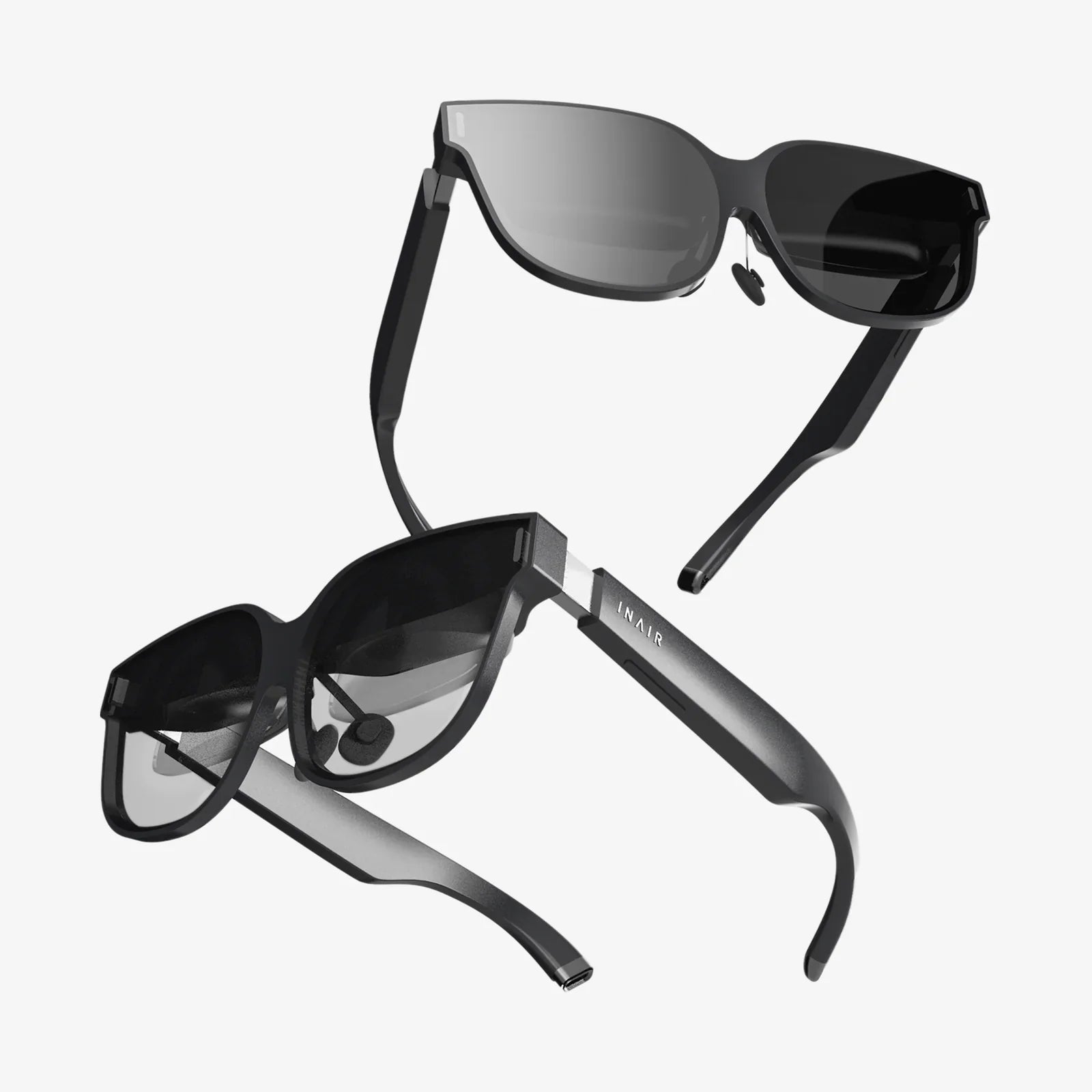
Imagine a world where your eyeglasses project a high-definition map onto the street in front of you, where your smart contact lens analyzes your health in real-time, and where the very fabric of your clothing can change color or display notifications with a thought. This isn't science fiction; it's the imminent future being built today on the back of a single, transformative technology: the smallest OLED display. The race to miniaturize these brilliant panels of light is pushing the boundaries of physics, manufacturing, and human imagination, promising to weave computing seamlessly into the fabric of our daily existence.
The Core Science: How OLEDs Defy Traditional Limits
To appreciate the monumental achievement of a micro-display, one must first understand the fundamental magic of Organic Light-Emitting Diode (OLED) technology. Unlike traditional Liquid Crystal Displays (LCDs) that require a separate backlight—a layer that is inherently difficult to miniaturize—OLEDs are emissive. This means each individual pixel is a microscopic, self-illuminating element.
At its heart, an OLED is a semiconductor device composed of a series of thin organic layers sandwiched between two electrodes. When an electric current is applied, these organic compounds emit light. The color of this light is determined by the specific chemical composition of the organic material. By precisely depositing tiny sub-pixels of red, green, and blue (RGB) organic materials, manufacturers can create a full-color display with exceptional contrast, since a black pixel is simply one that is turned off, achieving a true and deep black.
This self-emissive property is the key to miniaturization. Removing the backlight unit, light guides, and polarizers found in LCDs eliminates entire layers of bulk and complexity. The path to creating the smallest OLED display, therefore, becomes a challenge of material science, electrical engineering, and nanofabrication—a challenge of making these tiny light-emitting structures more efficient, more durable, and infinitesimally smaller.
The Manufacturing Gauntlet: Building at the Nanoscale
Creating a display where individual pixels are measured in micrometers is a feat of precision engineering. Two primary techniques have emerged as frontrunners in this microscopic construction race.
Fine Metal Mask (FMM) Evaporation
This is the most common method for producing high-quality RGB OLED displays. It involves placing an ultra-thin metal mask with precisely etched holes between a substrate (like a silicon wafer) and a source of the organic material. The material is then heated in a vacuum chamber until it evaporates, passing through the tiny holes in the mask and depositing onto the substrate in the desired pattern. The challenge? As pixels get smaller and displays get denser, the metal masks must become impossibly thin and precise, requiring near-perfect alignment to prevent color bleeding. The physical limitations of crafting and handling these fragile, intricate masks represent a significant barrier to further miniaturization.
White OLED with Color Filters (WOLED)
An alternative approach sidesteps the FMM dilemma entirely. Instead of depositing individual RGB materials, this method creates a uniform layer of white OLED light. On top of this white emitter, a standard color filter array—similar to those used in LCDs—is applied to produce the red, green, and blue sub-pixels. While this process is simpler and avoids the alignment nightmares of FMM, it comes with a trade-off in efficiency. The color filters absorb a significant portion of the white light, meaning the display requires more power to achieve the same brightness, a critical consideration for power-constrained wearable devices.
The Silicon Solution
A critical innovation for the smallest displays is the use of a Single-Crystal Silicon Wafer as the backplane, instead of the glass or plastic used in larger panels. This technology, often referred to as OLED-on-silicon, leverages the vast and mature infrastructure of the semiconductor industry. Silicon wafers allow for the creation of incredibly small and dense pixel-driving circuits. Each pixel can be driven by its own microscopic transistor etched directly onto the silicon, enabling higher resolutions and faster response times than would ever be possible with traditional thin-film transistor (TFT) glass backplanes.
Beyond Resolution: The Metrics That Truly Matter
When discussing the smallest OLED displays, the conversation extends far beyond physical size. A suite of performance characteristics becomes paramount, each one a critical hurdle on the path to viability.
- Pixel Density (PPI): This is the star metric. While a smartphone might have a respectable 400-500 PPI, micro-OLEDs for near-eye applications must soar into the thousands. To achieve a "retina" effect where the human eye cannot discern individual pixels when viewed through a lens, densities of 3,000 to 10,000 PPI are often targeted.
- Brightness (nits): A display that is brilliant indoors can look washed out in direct sunlight. For augmented reality glasses to be practical, their micro-displays must be capable of extreme brightness levels to overpower ambient light, often requiring thousands of nits of output.
- Power Efficiency: There is no space for a large battery in a pair of glasses or a smart ring. Every milliwatt of power consumed by the display is a direct deduction from the device's operational lifespan. Maximizing lumens per watt (optical efficiency) is arguably as important as maximizing pixels per inch.
- Latency: In virtual and augmented reality, low latency is non-negotiable. Any delay between a user's head movement and the display updating can lead to motion sickness and a broken sense of immersion. The driving circuitry on silicon excels here.
A Universe of Applications: Where Tiny Screens Make a Giant Impact
The applications for micro-OLEDs extend far beyond making existing devices smaller. They enable entirely new product categories and redefine our interaction with technology.
Augmented and Virtual Reality (AR/VR)
This is the killer app. The smallest OLED displays are the engine of the next computing platform. In VR headsets, they provide the stunning, high-resolution, and fast-refreshing imagery needed to create believable virtual worlds. In AR glasses, they project information onto transparent waveguides, allowing users to see digital overlays seamlessly integrated with the real world. Their small size and high performance are the only way to create headsets that are socially acceptable and comfortable enough for all-day wear.
Medical Technology
The impact here is profound. Miniature displays are revolutionizing surgical medicine by being integrated into electronic endoscopes and surgical loupes. Surgeons can receive vital patient statistics, ultrasound imagery, or magnification overlays directly in their field of view without looking away from the operating table. This enhances precision, reduces procedure time, and improves patient outcomes.
Military and Aerospace
For decades, the military has used Head-Up Displays (HUDs) in fighter jet cockpits. Micro-OLED technology is now bringing this capability to the individual soldier through helmet-mounted displays and smart scopes. Pilots, drivers, and engineers can have crucial navigation, targeting, and systems data presented directly before their eyes, keeping their hands free and their attention focused on the task at hand.
The Next Frontier: Bio-Integration
Looking further ahead, the ultimate destination for this technology is inside us. Research is already underway on biocompatible, ultra-flexible OLEDs that could be used in smart contact lenses for health monitoring (e.g., measuring glucose levels in tears) or for providing basic visual information. Imagine a display so small and efficient it could be powered wirelessly and sit comfortably on the surface of the human eye.
The Challenges on the Horizon
The path forward is not without obstacles. The pursuit of the smallest OLED display faces its own set of physical and economic constraints. The evaporation process using FMM becomes exponentially more difficult and expensive as pixel sizes shrink. Yield rates—the number of perfect displays per manufacturing run—can be low, keeping costs high. Furthermore, the organic materials themselves have a limited lifespan, especially the blue emitters, which degrade faster than red and green. Ensuring these micro-displays can last for thousands of hours of use without dimming or color-shifting is a persistent battle for chemists and engineers.
From a user experience perspective, the "vergence-accommodation conflict" in VR remains a hurdle. While the display can show a realistic 3D image, the user's eyes are still focused on a fixed screen mere centimeters away, which can cause eye strain for some. Solving this will require additional technological leaps like varifocal lenses, working in tandem with the micro-display.
The quest for the smallest OLED display is a symphony of disciplines, a convergence of chemistry, physics, electrical engineering, and computer science. It’s a testament to human ingenuity, demonstrating that by making technology smaller, we are not diminishing its impact but rather expanding its potential to touch every facet of our lives. We are moving from an era of devices we carry to an era of technology we wear, and finally, to an era of intelligence we experience. The goal is no longer a bigger screen, but an invisible one.
This invisible revolution is already whispering promises of a transformed reality, where the line between the digital and the physical dissolves into a seamless, enhanced experience. The smallest OLED display is the brush that will paint this new world, pixel by microscopic pixel, and its canvas is everything we see.
Share:
Examples of Human Computer Interface: From Punch Cards to Neural Links
Commercial VR: The Next Frontier in Business Transformation and Immersive Enterprise Solutions