


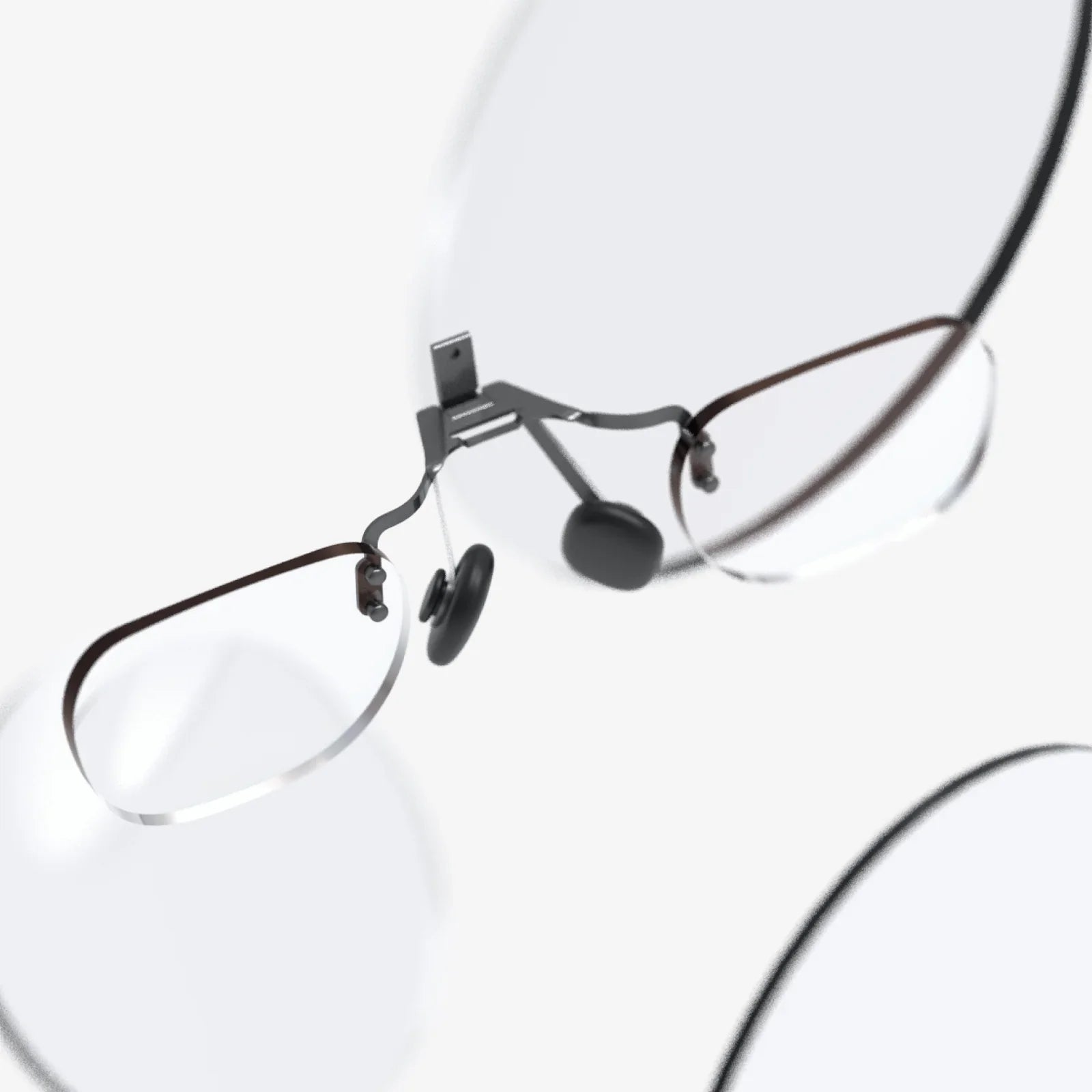
Imagine a world where the digital and the physical are no longer separate realms, but a single, seamless tapestry of information and experience. This is the promise of Smart Augmented Reality (AR), a technology poised to leap from the screens of science fiction and become as integral to our daily lives as the smartphone. It’s not just about overlaying a cartoon character on your living room rug; it’s about an invisible revolution that will fundamentally alter our perception of reality itself, and it’s already beginning.
Beyond the Novelty: Defining True Smart AR
To understand Smart AR, we must first move past the common misconceptions. It is distinct from its technological cousin, Virtual Reality (VR). Where VR seeks to replace your world with a simulated one, Smart AR aims to enhance and augment your existing reality. The key differentiator is the "smart" qualifier. This isn't just a static overlay; it's a context-aware, intelligent, and interactive layer of digital information.
At its core, Smart AR relies on a sophisticated technological stack:
- Advanced Sensors and Computer Vision: Cameras, LiDAR, accelerometers, and gyroscopes act as the eyes and inner ears of the system, constantly scanning and interpreting the environment. Computer vision algorithms identify surfaces, objects, and spatial geometry, building a real-time 3D map of the world.
- Precise Spatial Mapping and Anchoring: This is the ability to pin digital content to a specific point in the physical world. A virtual sculpture doesn’t just float in front of you; it sits stably on your table, and you can walk around it, viewing it from every angle as if it were physically present.
- AI-Powered Contextual Awareness: This is the "brain" of Smart AR. Artificial Intelligence and machine learning analyze the sensor data to understand context. The system doesn't just see a machine; it recognizes it as a specific model, understands its components, and can display the relevant repair manual hovering beside it. It doesn't just see a street; it recognizes the restaurant you're looking at and displays its reviews and today's specials.
- Intuitive Interaction Modalities: Interaction moves beyond touchscreens. Users manipulate AR content through gesture controls, voice commands, eye-tracking, and even haptic feedback, creating a natural and immersive experience.
The Engine Room: Transforming Industries from the Inside Out
The most immediate and impactful applications of Smart AR are emerging not in consumer entertainment, but within industrial and enterprise sectors, where it is solving real-world problems and driving efficiency.
Revolutionizing Manufacturing and Complex Assembly
On the factory floor, Smart AR is a game-changer. Technicians assembling complex machinery, from jet engines to medical devices, can use AR glasses to see digital work instructions overlaid directly onto the components in their field of view. Animated arrows show the exact sequence of assembly, torque values are displayed next to each bolt, and safety warnings are highlighted. This reduces errors, slashes training time for new workers, and improves overall quality control. Remote experts can see what an on-site technician sees and annotate their reality with virtual arrows and notes to guide them through a repair, eliminating the need for costly travel and minimizing downtime.
Redefining Healthcare and Medical Training
In medicine, the stakes are incredibly high, and Smart AR is rising to the challenge. Surgeons can use AR headsets to visualize critical patient data—like MRI scans or 3D models of tumors—precisely registered onto the patient's body during an operation. This provides a kind of "X-ray vision," allowing for more precise and less invasive procedures. Medical students can practice complex surgeries on detailed, virtual holograms, accelerating their learning curve without risk. Furthermore, AR can assist nurses in difficult procedures like venipuncture by overlaying a map of veins directly onto the patient's arm.
Empowering Design and Architecture
Architects and interior designers are using Smart AR to step inside their creations long before the first brick is laid. They can project full-scale, holographic models of buildings onto empty lots, allowing clients to virtually walk through the spaces and make changes in real-time. Interior decorators can place virtual furniture, art, and lighting into a client's actual living room, enabling them to see how everything fits and looks before making a purchase. This eliminates costly mistakes and ensures client satisfaction.
Supercharging Retail and E-Commerce
The retail sector is undergoing an AR-powered transformation. The dreaded "will it fit?" question for online shopping is being answered by AR apps that allow customers to see how a new sofa will look in their lounge, a new lamp on their side table, or even how a pair of glasses fits their face—all in real-time and at true scale. This dramatically enhances consumer confidence, reduces return rates, and creates a more engaging shopping experience that bridges the gap between online and in-store.
The Everyday Evolution: Smart AR in Our Daily Lives
While enterprise leads the charge, the tendrils of Smart AR are slowly weaving into the fabric of our daily routines, promising a future of enhanced convenience and connection.
The Next Paradigm of Personal Computing
The smartphone may eventually be replaced as our primary computing device by lightweight, stylish AR glasses. These devices could project a persistent, personalized interface onto the world around you. Your morning calendar could float on your mirror as you get ready. Navigation arrows could be painted onto the sidewalk, guiding you to your destination without needing to look down at a phone. Notifications could appear subtly in your periphery, less intrusive than a buzzing phone. This promises a more ambient and integrated form of computing that keeps you present in the world rather than distracting you from it.
Reimagining Education and Storytelling
Education will be transformed from a passive to an active, experiential pursuit. History students won't just read about ancient Rome; they will walk through a digitally reconstructed Forum, witnessing historical events unfold around them. Biology students can dissect a virtual frog or explore a detailed, life-sized hologram of the human heart. This immersive form of learning caters to different learning styles and creates powerful, memorable experiences that foster deeper understanding and retention.
Enhancing Social Connection and Collaboration
Smart AR has the potential to redefine remote collaboration and social interaction. Instead of a grid of faces on a video call, you could have shared virtual workspaces where 3D models and data visualizations can be manipulated by colleagues across the globe as if they were in the same room. Friends and family separated by distance could watch a movie together on a virtual screen, play immersive board games on a real table, or simply share experiences as digital avatars within a shared augmented space, fostering a stronger sense of presence and togetherness.
Navigating the Uncharted: Ethical and Societal Challenges
This powerful technology does not arrive without significant challenges and profound questions that society must grapple with.
The Privacy Paradox
Smart AR, by its very nature, is a data-collection engine. To function, it must continuously capture and analyze its environment—which includes people and private spaces. The potential for constant, passive surveillance is unprecedented. Who owns the data collected by these devices? How is it stored, used, and protected? The concept of consent becomes blurred when your image and surroundings can be recorded by anyone wearing AR glasses. Robust ethical frameworks and stringent regulations will be essential to prevent a dystopian future of perpetual monitoring.
The Digital Divide and Accessibility
There is a real risk that Smart AR could exacerbate existing social and economic inequalities. If this technology becomes central to education, work, and social participation, those who cannot afford it or lack the digital literacy to use it could be left further behind. Furthermore, designing interfaces that are accessible to people with different abilities is not an afterthought; it must be a core principle from the outset to ensure this new reality is inclusive for all.
Reality Filtration and the Blurring of Truth
If everyone can customize their reality with personalized filters and information layers, do we risk fracturing our shared experience of the world? One person might see a historical monument with an educational narrative, while another sees it adorned with propaganda or misinformation. The ability to alter perception so seamlessly raises alarming possibilities for manipulation, from hyper-targeted advertising to more sinister forms of control. Developing critical media literacy skills and perhaps even digital "reality checks" will become crucial for navigating an augmented world.
The Invisible Infrastructure of Tomorrow
The full realization of Smart AR is dependent on the maturation of several underlying technologies. Widespread adoption hinges on the development of lightweight, all-day wearable hardware with a wide field of view and high resolution. It requires the ultra-low latency and massive bandwidth of next-generation wireless networks to offload intensive processing to the cloud seamlessly. And finally, it demands a new layer of spatial computing software and standards—an operating system for reality itself—that allows digital content to be persistent, shared, and interactive across different devices and platforms.
We are standing at the precipice of a new era, one where the boundary between our digital and physical lives will finally dissolve. Smart AR is not merely a new gadget or a flashy app; it is a foundational shift in how we compute, communicate, and comprehend the world around us. The revolution won't arrive with a bang, but with a quiet, persistent overlay, enhancing our reality so intuitively that we will soon wonder how we ever lived without it. The future is not something we will step into; it is a layer we will choose to see.
Share:
What Is Human-Computer Interaction - The Bridge Between Humans and Machines
AR Creation: The Ultimate Guide to Building Your Own Augmented Reality Experiences