


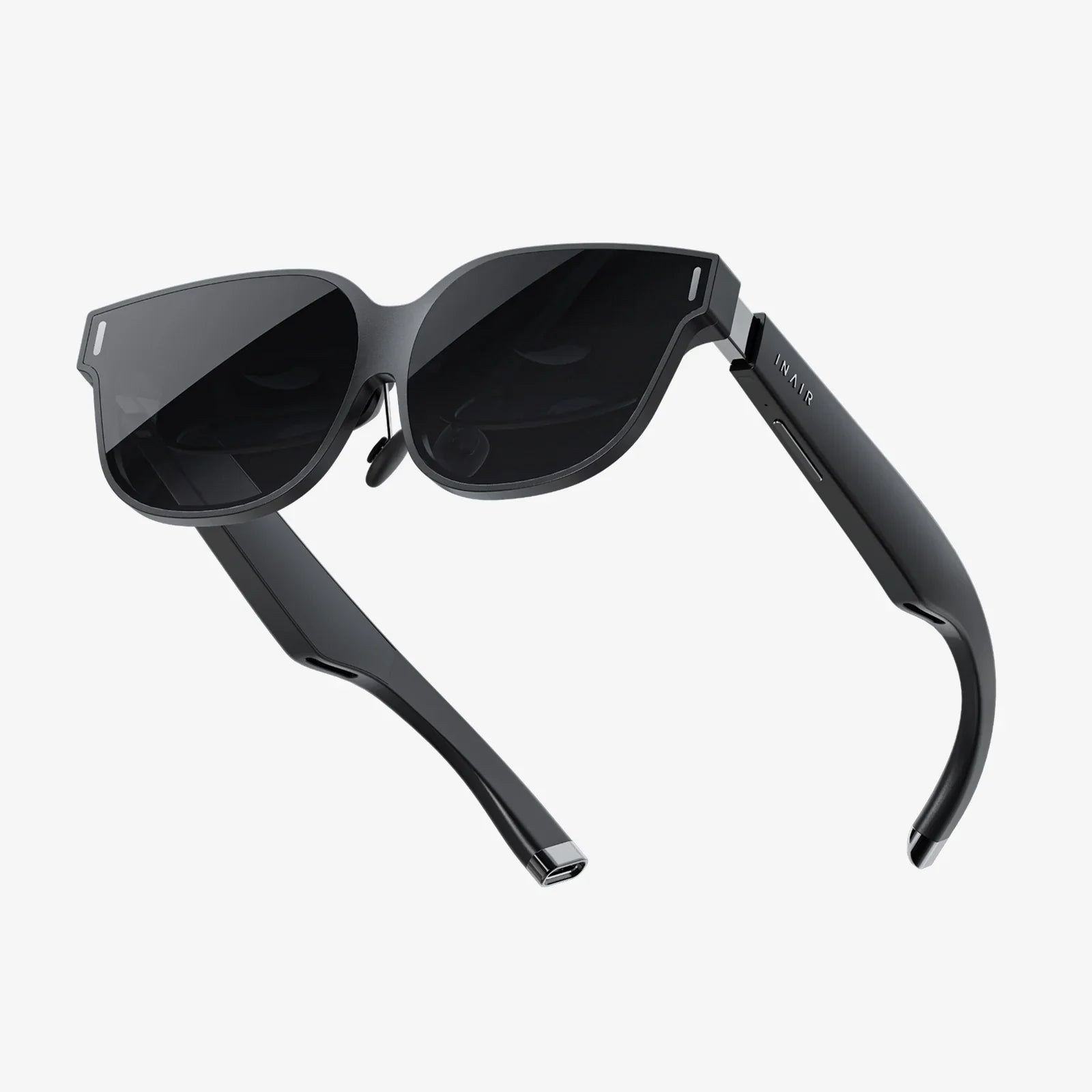
Imagine a world where your environment doesn't just respond to your commands but anticipates your needs, a world where the technology in your pocket, on your wrist, and throughout your home understands you better than you understand yourself. This is no longer the realm of science fiction; it is the burgeoning reality of the personal technology revolution, a seismic shift powered by the evolution of smart devices to individuals. We are moving beyond one-size-fits-all gadgets into an era of deeply personalized, context-aware companions that are fundamentally reshaping the human experience, one algorithm at a time.
The Genesis: From Tools to Companions
The journey of personal technology began with utility. The first portable calculators, early personal computers, and even initial mobile phones were tools—marvels of engineering designed to perform specific functions for a broad audience. They were impersonal, demanding users to adapt to their rigid interfaces and limited capabilities. The user had to learn the language of the machine.
The paradigm started to shift with the advent of smartphones and ubiquitous connectivity. These devices became portals to personalized experiences through app stores, social media feeds, and search histories. For the first time, technology began to reflect individual choices. However, this was still largely a manual curation. The true transformation began when these devices started learning on their own.
The inflection point arrived with the convergence of three critical technologies: sophisticated sensors, powerful edge computing, and advanced artificial intelligence, particularly machine learning. Sensors—from accelerometers and gyroscopes to heart rate monitors and microphones—provided a constant stream of raw data about the user and their environment. Edge computing allowed this data to be processed on the device itself, in real-time, enabling instant responses without constant reliance on distant cloud servers. Finally, machine learning algorithms became the brain, sifting through this data deluge to identify patterns, learn preferences, and make predictions unique to the individual user.
This trifecta marked the moment smart devices stopped being tools and started becoming companions. They were no longer waiting for instructions; they were beginning to understand context.
The Mechanics of Personalization: How Your Device Learns You
The personalization of smart devices is not magic; it is a sophisticated, continuous feedback loop of data collection, analysis, and adaptation. This process happens across multiple layers, often seamlessly in the background.
1. Data Acquisition: The Constant Conversation
Every interaction is a data point. A smartwatch doesn't just tell the time; it continuously monitors your heart rate, tracking its fluctuations during a workout, a stressful work meeting, or a restful sleep. A smart speaker doesn't just play music; it listens for a wake word, but its advanced algorithms are also constantly analyzing acoustic patterns to better distinguish your voice from background noise. Smart lights and thermostats learn from your adjustments, building a model of your preferred home environment at different times of the day and week.
This acquisition is both explicit and implicit. Explicit data is what you directly provide: setting an alarm, asking a question, or manually logging a meal. Implicit data is far more valuable and voluminous—it is the data gathered without active input. It is the route your navigation app learns you prefer during evening commutes, the news topics you consistently pause to read, or the gradual dimming of your phone's screen as you get drowsy in bed, detected by the front-facing camera.
2. On-Device Intelligence: Learning Without Leaking
A critical development in fostering trust and efficiency is the move toward on-device AI processing. Instead of sending every snippet of audio or personal habit to the cloud, modern devices perform much of the analysis locally. Your phone can now process voice commands offline, your camera can enhance photos using a locally-stored algorithm, and your fitness tracker can detect an irregular heart rhythm without an internet connection.
This approach enhances privacy by minimizing data transmission and drastically reduces latency, making interactions feel instantaneous and natural. The device becomes a truly personal repository of your habits, refining its model of you without constantly broadcasting your life to external servers.
3. Predictive and Proactive Engagement
The ultimate goal of this learning is to shift from a reactive to a predictive model. The device's value skyrockets when it can anticipate a need before you articulate it. This manifests in seemingly small but profoundly impactful ways:
- Your phone automatically silencing itself as you walk into the movie theater, based on geofencing and calendar data.
- A wellness app suggesting you may be getting sick based on a slight elevation in resting heart rate and decreased sleep quality, prompting you to rest.
- Your car pre-conditioning the cabin to your preferred temperature at 5:00 PM because it knows you leave work at 5:15 PM every weekday.
This proactive engagement creates a sense of a symbiotic relationship, where the device acts as a digital guardian angel, smoothing out the friction of daily life.
The Ecosystem Effect: The Sum is Smarter Than Its Parts
The power of individualized smart devices is exponentially amplified when they work in concert. A single device knows a lot, but a network of devices knows everything about your context. Interoperability and ecosystem integration are the force multipliers of personalization.
Consider a scenario enabled by a cohesive ecosystem: Your smartwatch detects that you have entered a deep sleep stage. It signals your smart thermostat to slightly lower the temperature, optimizing your sleep cycle. Meanwhile, your smart lights remain off. In the morning, as your sleep cycle lightens, the lights begin a gradual sunrise simulation. Your coffee machine, receiving a signal that you are stirring, starts brewing your morning cup. Your mirror display shows the day's weather and calendar, and your car confirms your first meeting's location and estimates traffic.
None of this required a single command. It was the result of multiple devices, each with a sliver of knowledge about you, sharing data securely to create a holistic and automated experience that is perfectly tailored to your routine. The individual intelligence of each device creates a collective ambient intelligence that orchestrates your environment seamlessly.
The Double-Edged Sword: Privacy, Autonomy, and the Human Element
This hyper-personalized future is not without its profound challenges. The very mechanisms that enable these conveniences also raise critical questions about privacy, security, and human autonomy.
The Privacy Paradox
To serve you best, these devices must know you intimately. This creates the privacy paradox: the trade-off between unparalleled convenience and the surrender of vast quantities of personal data. While on-device processing mitigates some risk, the business models of many companies often rely on data aggregation for advertising and further service development. Users are left to navigate complex privacy settings, often facing opaque terms of service that few read and even fewer understand.
The potential for misuse is significant. Data breaches could expose incredibly intimate details of a person's life—their health, daily routines, and private conversations. Furthermore, the constant surveillance necessary for these devices to function can create a chilling effect, subconsciously altering behavior when one knows they are always being "listened to" or "watched" by their own technology.
The Risk of Algorithmic Bubbles and Diminished Autonomy
When algorithms curate our news, suggest our music, and plan our routes, they inevitably shape our reality. They can create powerful filter bubbles, reinforcing our existing beliefs and limiting exposure to serendipitous discoveries or challenging viewpoints. The algorithm's goal is efficiency and engagement, not necessarily intellectual breadth or personal growth.
There is also a risk of losing skills and autonomy. Over-reliance on navigation apps may erode our innate sense of direction. Constant activity tracking can externalize motivation, making us dependent on digital validation for exercise. The danger is that in seeking to optimize our lives, we outsource too much of our decision-making and intuition to algorithms, potentially diminishing our own capabilities and agency.
The Human Element: Ensuring Technology Serves Us
The key to navigating this new world is intentionality and design ethics. The focus must remain on creating technology that serves the individual, not the other way around. This requires:
- Radical Transparency: Companies must clearly explain what data is collected, how it is used, and who it is shared with, in simple, unambiguous language.
- User-Centric Control: Individuals must have easy-to-use, granular controls over their data and the ability to easily opt out of features without being penalized.
- Ethical AI Development: Algorithms must be designed to avoid bias and prioritize user well-being over mere engagement metrics.
- Digital Literacy: Users must be educated on how these technologies work to make informed choices about their adoption and use.
The Future: Invisible, Intuitive, and Indispensable
The trajectory of smart devices is toward greater invisibility and intuition. The future lies not in more screens, but in fewer. Technology will recede further into the background, woven into the fabric of our clothes, our homes, and our cities. Brain-computer interfaces, though in early stages, promise a future where control is thought-based, eliminating the need for any physical intermediary.
The concept of a single "device" will fade, replaced by a continuous, ambient field of intelligence that is personalized to the individual moving through it. Your preferences in lighting, temperature, information, and entertainment will follow you seamlessly from your car to your office to a hotel room, all authenticated securely and privately.
The ultimate goal is to offload the cognitive load of mundane tasks, freeing up our mental bandwidth for creativity, connection, and problem-solving—the uniquely human endeavors that technology cannot replicate. The smart device of the future will be less of a gadget and more of a personalized layer of cognition, an exoskeleton for the mind that handles the trivialities of existence so that we can focus on what truly matters.
We stand at the precipice of a new era, one where our digital companions are poised to become true extensions of our will and identity. The promise is a world of breathtaking efficiency and profound convenience, a world tailored not to the masses, but to the one. The quiet hum of your devices is the sound of the future being built, not for everyone, but specifically for you—are you ready to see what it learns next?
Share:
Artificial Intelligence Development: Charting the Course of Our Technological Future
Artificial Intelligence Development: Charting the Course of Our Technological Future