


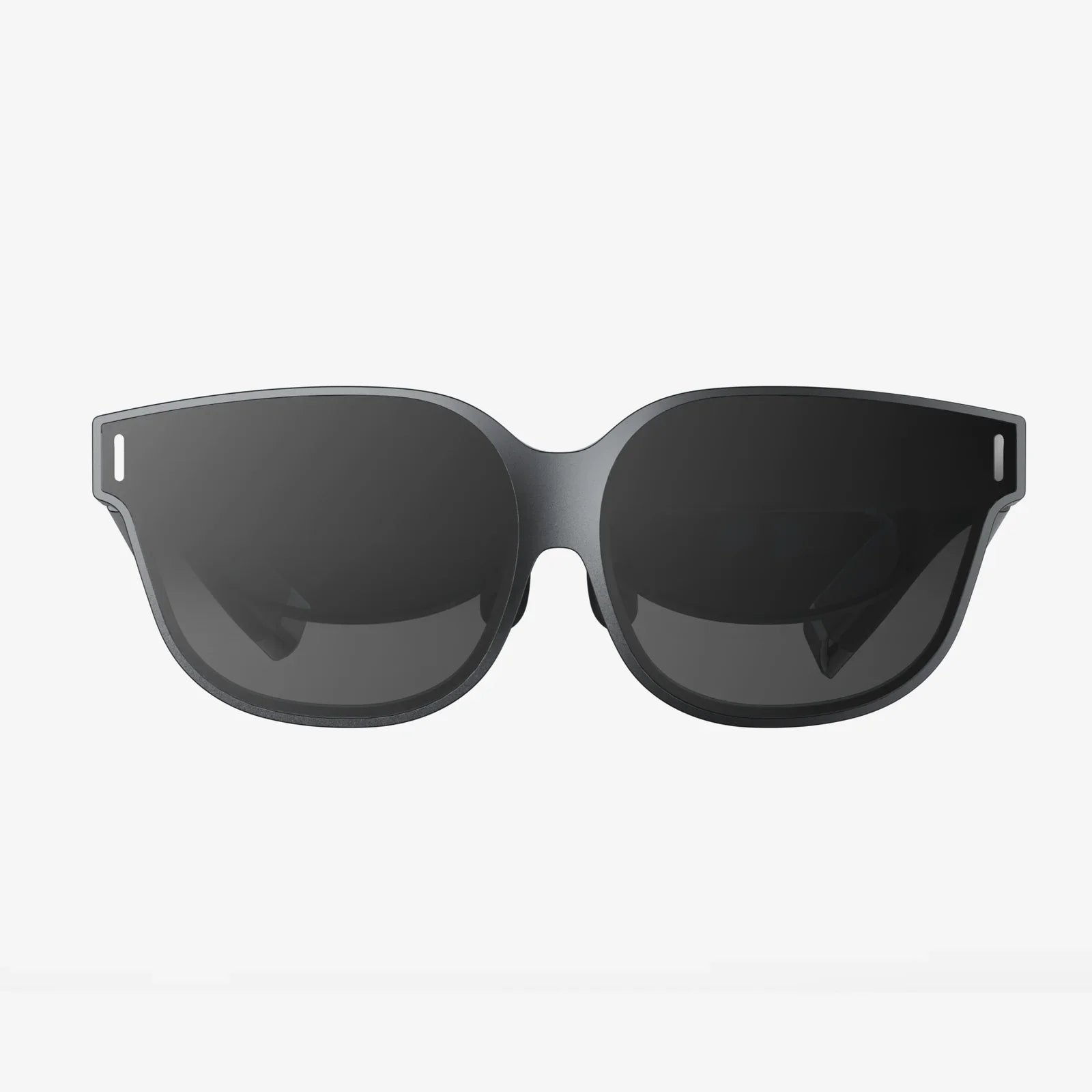
- by wangfred
Smart Eyewear Device The Future of Wearable Technology on Your Face
- by wangfred
Imagine a world where information flows as naturally as sight, where digital assistants are not confined to a screen in your pocket but exist in the periphery of your vision, and where the line between the physical and digital realms gracefully blurs. This is not a distant science fiction fantasy; it is the imminent future being shaped by the rapid evolution of the smart eyewear device. This transformative technology is moving beyond clunky prototypes and niche applications, promising to become the next indispensable piece of wearable technology, fundamentally altering our perception of reality and our interaction with the digital universe.
The concept of enhancing human vision is as old as the first piece of polished glass. For centuries, eyewear served a single, vital purpose: correction. Glasses and contact lenses were tools to fix a biological deficiency, to bring a blurry world into focus. Then came the digital age, and with it, the desire to overlay information onto our field of view. Early attempts were ambitious but ultimately hampered by technological limitations—bulky designs, short battery life, and a lack of compelling software. They were novelties, often perceived as socially awkward and functionally limited.
Today, we stand at a pivotal moment. Advances in micro-electronics, battery technology, display systems, and artificial intelligence have converged to make smart eyewear not just feasible, but genuinely desirable. The modern smart eyewear device is no longer just about displaying notifications; it's about contextual computing, understanding the world around you, and providing a seamless, intuitive interface that empowers the user without isolating them from their environment.
At its core, a smart eyewear device is a sophisticated computer worn on the face. Its intelligence is derived from a complex symphony of hardware and software components working in unison.
The most critical component is the display technology. Unlike virtual reality headsets that completely immerse you in a digital world, smart eyewear aims for augmented reality (AR), projecting digital images onto the real world. Several technologies enable this:
The challenge for all these systems is to provide a wide field of view, high resolution, and enough brightness to be visible in direct sunlight, all while maintaining transparency when not in use.
To understand and interact with its surroundings, smart eyewear is equipped with a suite of sensors. High-resolution cameras capture the world in real-time, enabling features like live translation and object recognition. Depth sensors, such as LiDAR (Light Detection and Ranging), scan the environment to create a precise 3D map, allowing digital objects to interact realistically with physical surfaces—a virtual pet could run across your real coffee table, for instance. Inertial Measurement Units (IMUs) track head movement and orientation to keep the digital overlay stable and aligned with the real world. Environmental sensors can also measure ambient light, temperature, and air quality.
All this data requires significant processing power. A miniaturized system-on-a-chip (SoC), similar to those found in high-end smartphones, acts as the brain, handling complex computer vision algorithms, machine learning models, and graphics rendering. For more intensive tasks, the device can seamlessly offload processing to a paired smartphone or leverage cloud computing via high-speed 5G and Wi-Fi connectivity. This hybrid approach balances performance with power consumption, a critical consideration for all-day wear.
Battery life remains one of the biggest engineering challenges. Powering bright displays, powerful processors, and constant data streaming is incredibly demanding. Innovations are happening on multiple fronts: more energy-efficient components, advanced software optimization to minimize power draw, and novel charging solutions. Some designs integrate the battery into the temples of the frames, while others may utilize a small, discreet external battery pack connected via a thin cable. The ultimate goal is all-day battery life, a key milestone for mass adoption.
The true potential of smart eyewear is unlocked through its software and applications. Its hands-free, eyes-forward nature makes it ideal for a vast array of use cases across numerous industries.
In professional settings, smart eyewear is a powerful tool for efficiency and safety.
For the consumer, smart eyewear promises to make everyday tasks simpler, safer, and more immersive.
For all its promise, the path to ubiquitous smart eyewear is fraught with significant hurdles that must be addressed.
The always-on cameras and sensors necessary for these devices raise legitimate and serious privacy concerns. The idea of people recording audio and video in public spaces without explicit consent is a societal minefield. Manufacturers must implement clear, physical indicators when recording is active, robust data encryption, and strict, transparent privacy policies that give users complete control over their data. The industry must proactively address these concerns through ethical design and regulation, not as an afterthought.
For something worn on the face, aesthetics are non-negotiable. Early devices failed because they were too conspicuous and unattractive. Success hinges on creating designs that are lightweight, comfortable, and, crucially, stylish. Collaboration with renowned fashion designers and eyewear brands will be essential to create a range of styles that appeal to different tastes, from conservative to avant-garde. The technology must be invisible, allowing the wearer to express their personal style without looking like a cyborg.
Social acceptance is the final barrier. Wearing a device that can potentially record conversations and take pictures discreetly will inevitably create social friction. Norms around their use will need to evolve. Is it polite to wear them during a conversation? Will certain venues ban them? Overcoming the "glasshole" stigma of earlier iterations requires not only better design but also demonstrably useful and respectful applications that enhance social interactions rather than detract from them.
The future of smart eyewear is not just about incremental improvements; it's about a fundamental shift in human-computer interaction. We are moving towards a world of ambient computing, where technology fades into the background of our lives, providing information and assistance only when needed and contextually relevant. Future iterations will feature even more advanced AI assistants that understand your routines and intentions, offering information proactively. Haptic feedback in the frames could provide tactile notifications. Biometric sensors could continuously monitor health metrics like blood glucose levels or detect early signs of neurological conditions, transforming them from a communication device into a vital health guardian.
The journey of the smart eyewear device is just beginning. It promises a future where our tools understand not just our commands, but our context, our environment, and our intent. It’s a future where the digital world doesn’t demand our attention through a small, handheld rectangle, but instead enhances our perception of the reality right in front of us. The next time you put on a pair of glasses, you might not just be seeing the world more clearly—you might be seeing an entirely new one, layered with possibility and seamlessly connected to everything that matters.