


- by wangfred
Smart Glasses AI News December 2025: The Dawn of a New Augmented Reality Era
- by wangfred
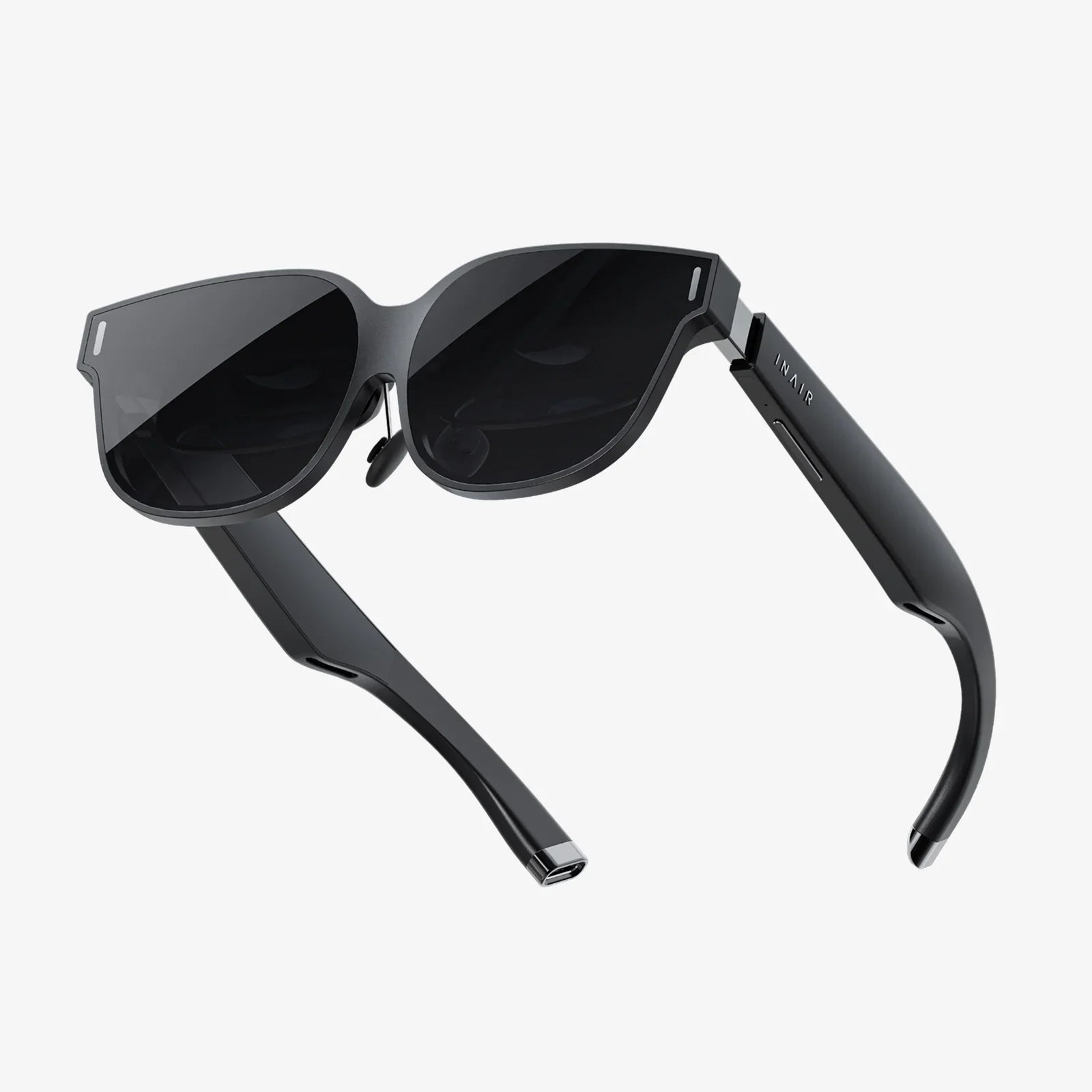
Imagine a world where your field of vision becomes a limitless canvas for information, where digital assistants perceive your environment with you, and language barriers dissolve before your eyes. This is no longer the realm of science fiction. December 2025 has erupted as a historic inflection point, a month where a cascade of announcements in artificial intelligence and wearable hardware converged to fundamentally redefine the potential of smart glasses. The long-promised future of seamless, context-aware augmented reality has, quite suddenly, arrived.
For years, smart glasses existed in a state of perpetual "almost." They were either powerful but socially awkward and bulky, or sleek and discreet but functionally limited. The missing ingredients were processing power efficient enough to fit into a glasses form factor and artificial intelligence sophisticated enough to make the augmentation genuinely useful and intuitive. December 2025 represents the moment these two technological trajectories finally intersected. Breakthroughs in neuromorphic computing chips, which mimic the neural structure of the human brain, provided the raw, efficient processing power. Concurrently, leaps in multimodal AI models—capable of understanding and cross-referencing audio, visual, and textual data in real-time—provided the necessary cognitive engine. This synergy unlocked capabilities previously confined to research labs and demo reels.
The most consumer-facing news came in the form of next-generation personal assistants. Unlike their voice-only predecessors, these new AI agents are designed to see what you see and hear what you hear. The implications are staggering.
Real-Time Visual Translation: A headline-grabbing feature demonstrated this month was real-time, overlayed text translation. A user looking at a street sign, menu, or document in a foreign language sees the translated text seamlessly integrated into their natural field of vision, preserving the original layout and font style as much as possible. This goes far beyond simple word substitution; the AI understands context, cultural nuance, and even handwritten text.
Contextual Information and Navigation: Walking down a street, a user can glance at a restaurant and instantly see its health inspection rating, popular dishes, and wait time—all sourced and synthesized by the AI from myriad online sources. Navigation is no longer a blue dot on a map but a series of visual cues and arrows painted onto the real world, guiding you to the exact shelf in a large store where your item is located or the best exit in a complex train station.
Advanced Memory Augmentation: A key application is the concept of a "photographic memory" assistant. The glasses can passively record and index your experiences. Forgetting where you parked your car or the name of a colleague you met at a conference becomes a thing of the past. A simple verbal query—"Where did I leave my keys?"—allows the AI to scan recent visual memories and highlight the relevant moment. This, unsurprisingly, has immediately sparked intense debate around privacy and data sovereignty.
Perhaps the most profound December announcement was not about what the glasses can show, but how we control them. The clunky paradigms of touchpads on temple arms or voice commands that disrupt conversations are being rapidly supplanted by nascent neural interface technology.
Several leading developers unveiled non-invasive sensors integrated into the nose pads and frames that can detect subtle neuromuscular signals. A tiny furrowing of the brow, a clench of the jaw, or even subvocalization (speaking in your mind without making a sound) can be interpreted as commands. This allows for completely private and seamless interaction. Scrolling through a list can be done by flicking your eyes in a certain pattern or thinking "scroll down." Selecting an item is as simple as thinking "select." This silent, invisible dialogue between user and machine represents the biggest step toward true ambient computing yet seen, moving us closer to a future where technology understands our intent without explicit instruction.
Beyond consumer applications, December 2025 saw massive enterprise adoption. The spatial web—a persistent, digital layer over the physical world—began its transition from a niche concept to an industrial tool.
Field technicians, from mechanics to wind turbine engineers, can now see complex diagnostic data and animated repair instructions overlaid directly on the machinery they are fixing. A surgeon can see a patient's vital signs and 3D anatomical models from recent scans directly in their line of sight during an operation, without ever turning away from the patient. Architects and construction crews can walk through a building site and see the digital blueprint perfectly aligned with the physical structure, identifying potential clashes before they become costly errors.
This professional revolution is driven by a combination of high-precision location tracking (often using ultra-wideband technology) and AI-powered object recognition that can identify components and surfaces with near-perfect accuracy, even in dynamic, unstructured environments.
The rapid advancements of December have not arrived without significant societal alarm bells ringing at full volume. The ethical considerations are vast and complex.
The Privacy Paradox: Devices that see and hear everything present an unprecedented privacy challenge. The potential for constant, passive surveillance—both by corporations and governments—is a primary concern. The very feature that allows the AI to be helpful—its persistent awareness of your environment—also means it is aware of everyone and everything around you. New norms and stringent regulations around data collection, anonymization, and consent are being demanded by lawmakers and civil liberties groups worldwide. The question of who owns the data collected from your perspective—the video, the audio, the biometric signals—is the subject of fierce legal debate.
The Digital Divide 2.0: This technology risks creating a new, stark socioeconomic divide. Will these powerful AI assistants become a luxury tool for the affluent, granting them even greater advantages in productivity, learning, and social navigation? Ensuring equitable access to this augmenting technology is a critical challenge for the coming years.
Reality itself is now a contested space. If everyone can augment their vision with their own preferred digital layer, do we all still share a common reality? The potential for misinformation, manipulated perceptions, and social fragmentation is a serious concern that developers and ethicists are only beginning to grapple with.
The announcements of December 2025 are not an endpoint, but a powerful catalyst. They have set the stage for the next decade of technological evolution. We are moving from a world of mobile-first to one that is ambient-first, where computing is woven into the fabric of our daily lives, perceiving our context and anticipating our needs.
The next hurdles are already clear: improving battery life to support these power-intensive functions for a full day, refining the social acceptability of the hardware to make it indistinguishable from traditional eyewear, and, most importantly, building a robust ethical and legal framework to guide this powerful technology. The convergence seen this month ensures that the conversation is no longer about if smart glasses will become mainstream, but how we will choose to shape this new, augmented human experience.
The world you see through your own eyes is about to get a massive, intelligent upgrade. The glasses you might wear tomorrow won't just display notifications; they will see, listen, and think alongside you, fundamentally blurring the line between your intuition and artificial intelligence. The future, quite literally, looks different from here.