


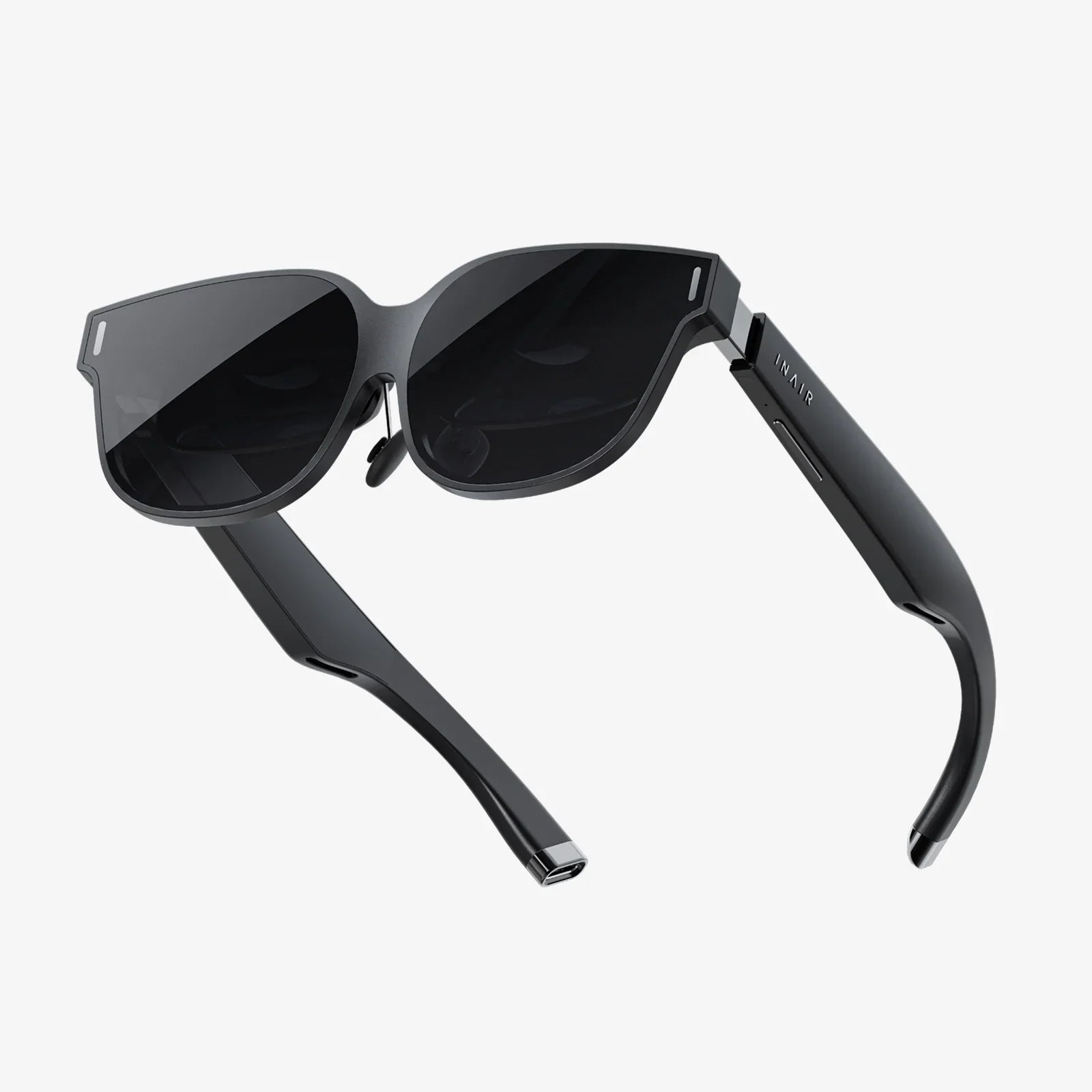
- by wangfred
Smart Glasses AI Updates Are Redefining Reality and How We Interact With It
- by wangfred
Imagine a world where the digital and physical seamlessly merge, where information flows around you as naturally as air, and a intelligent, ever-evolving companion perched on your nose understands your needs before you even voice them. This isn't a distant sci-fi fantasy; it's the imminent future being built today, one silent, over-the-air update at a time. The true revolution in wearable technology isn't just in the hardware we see, but in the unseen, constantly improving artificial intelligence that powers it, transforming smart glasses from a novel gadget into an indispensable extension of our own cognition.
In their earliest iterations, smart glasses were largely defined by their physical components. The field of view of the display, the battery life, the processing power of the onboard chip—these were the metrics that dominated reviews and consumer interest. They were, in essence, static devices. Once purchased, their capabilities were fixed, frozen in time by the silicon and software they shipped with. This model, inherited from traditional consumer electronics, created a fundamental limitation. Any major new feature or significant improvement in functionality required users to wait for and purchase an entirely new generation of hardware, a cycle that stifled innovation and slowed adoption.
The experience was often clunky. Commands were rigid, interfaces were intrusive, and the glasses' understanding of the world was rudimentary at best. They could project information, but they couldn't truly comprehend the context in which that information was being used. This hardware-centric approach meant that the immense potential of the form factor—to provide contextual, ambient computing—remained largely untapped. The device could see, but it couldn't perceive; it could hear, but it couldn't listen; it could compute, but it couldn't think.
The introduction of sophisticated, updatable artificial intelligence marked a tectonic shift in the philosophy behind smart glasses. The focus moved from the device as a finished product to the device as a living platform. This transition is akin to the difference between a basic calculator and a modern smartphone. The calculator's function is fixed by its circuitry. The smartphone, however, is a blank slate whose purpose and capabilities are continually redefined by the software and services downloaded onto it.
Smart glasses with updateable AI have embraced this platform model. The hardware becomes a vessel—albeit a sophisticated one with sensors, cameras, and microphones—for an evolving digital brain. This brain is no longer confined to the limits of its initial programming. Through regular updates delivered seamlessly over Wi-Fi, the entire personality and capability of the glasses can be enhanced, refined, and expanded without the user ever needing to swap out the physical frame. This changes the very value proposition of the device, transforming it from a perishable piece of tech into a long-term investment that grows smarter over time.
These silent updates are far more than simple bug fixes or minor feature additions. They represent profound upgrades to the core intelligence of the system, impacting nearly every aspect of the user experience.
One of the most significant areas of improvement is in computer vision. Early updates might focus on improving the accuracy of text recognition, allowing the glasses to more reliably read signs, documents, or menus in a variety of fonts and lighting conditions. Subsequent updates could dramatically expand the glasses' visual vocabulary. Suddenly, they can not only identify a dog but distinguish its breed; they can not only see a car but recognize its make and model; they can not only look at a complex machinery diagram but highlight specific components and pull up relevant instructional manuals. Each update layers on a deeper, more nuanced understanding of the visual world.
The voice assistant living within smart glasses is another primary beneficiary of AI updates. What begins as a simple command-and-response system can, over time, evolve into a truly conversational partner. Updates can expand its language support, improve its ability to filter out background noise in crowded environments, and, most importantly, enhance its contextual awareness. It learns to understand the intent behind fragmented, conversational speech. You can say, "Hey, remind me about this when I get to the office," and the AI, understanding what "this" refers to and knowing your location, can seamlessly set a geofenced reminder. This shift from transactional commands to contextual conversations is entirely driven by AI updates.
Perhaps the most futuristic aspect of these updates is the move towards predictive intelligence. By learning from user patterns and preferences, the AI can transition from a reactive tool to a proactive assistant. Imagine your glasses, having learned your daily commute, silently alerting you to a major traffic accident on your usual route and suggesting an alternative before you even ask. Or, while walking through a grocery store, they could highlight a recipe ingredient you need that's on sale, based on your meal-planning habits. This level of personalized, anticipatory support is not something that can be pre-programmed at the factory; it must be learned and refined continuously through AI updates that improve the system's machine learning models.
The stability, precision, and realism of augmented reality overlays are also heavily dependent on software. AI updates can bring new algorithms for SLAM (Simultaneous Localization and Mapping), allowing digital objects to anchor to the physical world with incredible persistence, without drift or jitter. They can introduce new occlusion techniques, making a virtual screen appear to realistically disappear behind a real-world sofa. These advancements, critical for creating believable and useful AR experiences, are delivered directly to existing hardware, constantly elevating the fidelity of the mixed reality environment.
This constant evolution is powered by a sophisticated dance between cloud-based intelligence and on-device processing. Highly complex AI models that require immense computational power are trained and refined in massive data centers. The distilled insights from these models—lighter, more efficient neural networks—are then packaged into updates and sent to the glasses.
A critical balance is struck between what is processed in the cloud and what is handled on the device. For privacy, speed, and reliability, key functions like real-time translation, initial image recognition, and voice activation must occur directly on the glasses, ensuring that sensitive audio and video data doesn't need to be constantly streamed to a remote server. AI updates continuously optimize this balance, making on-device processing smarter and more efficient, thereby reducing latency and preserving user privacy.
The very nature of smart glasses—always-on, always-sensing, always-worn—makes the role of AI updates in privacy and security paramount. An update can giveth, and an update can taketh away. Therefore, a tremendous ethical responsibility rests on the developers of these systems.
Updates must include robust enhancements to privacy safeguards. This includes improved on-device data processing, clearer user controls over what data is collected and how it is used, and more transparent indicators of when the sensors are active. The AI must be updated not just to see more, but to know when it should not see—developing features that allow it to automatically blur faces in a crowd or ignore sensitive information on a screen unless explicitly granted permission by the user. The evolution of ethical AI is just as important as the evolution of capable AI, and this must be a central tenet of every update cycle.
As this update-driven evolution continues, the line between user and device will blur even further. Future AI updates could focus on advanced biometric monitoring, using micro-cameras to analyze skin health or detect subtle changes in pupil dilation that signal fatigue or stress. They could enable real-time collaborative AR, where the AI seamlessly merges the perspectives of multiple wearers to solve a physical problem or design a 3D model in mid-air.
The ultimate goal is a device that achieves what technologists call "calm computing." It won't demand your attention with flashy graphics or constant notifications. Instead, through its ever-improving intelligence, it will present the right information, at the right time, in the right context, and then fade into the background until needed again. It will become a true cognitive partner, its capabilities limited not by its original design, but only by the pace of algorithmic innovation delivered through the air.
The frames on your face will remain familiar, but the intelligence behind the lenses will be in a state of perpetual becoming, constantly downloading a better, sharper, more intuitive version of reality itself.