


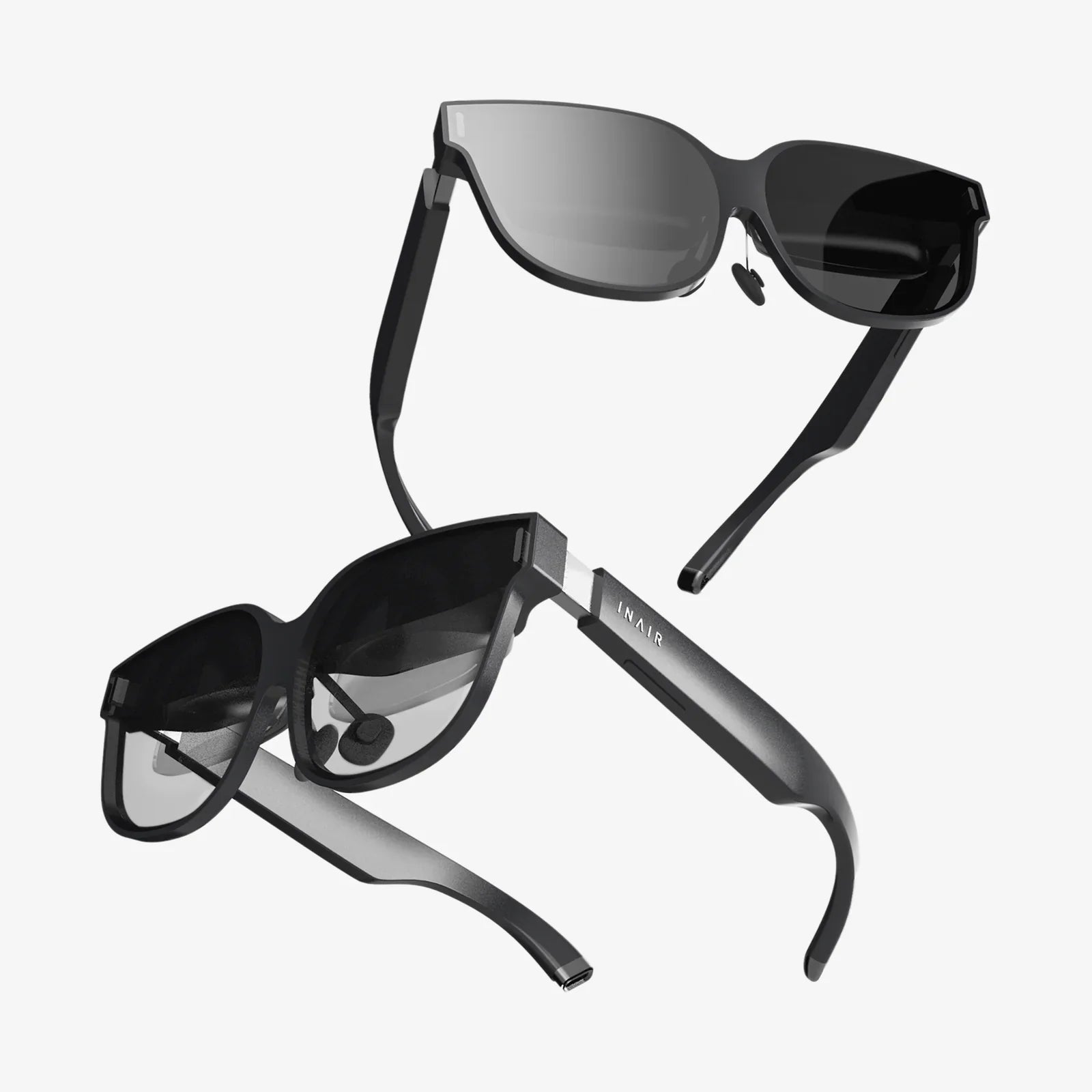
- by wangfred
Smart Glasses Alternative Reality: The Next Evolution of Human-Computer Interaction
- by wangfred
Imagine a world where the digital and the physical are no longer separate realms, where information flows around you like a sixth sense, and the very fabric of your reality is enhanced, annotated, and made infinitely more meaningful. This is the promise held within the sleek, minimalist frames of smart glasses alternative reality, a technology not of distant science fiction, but of an imminent tomorrow. This isn't about escaping our world; it's about fundamentally enriching it, layering a dynamic digital skin over everything we see, hear, and experience. The journey into this new dimension of human-computer interaction is beginning, and it will change everything.
To understand smart glasses alternative reality, we must first move beyond the confines of traditional screens. For decades, our primary interface with the digital world has been a flat, rectangular pane of glass—first on desktops, then in our pockets. We are forced to look down, to divert our attention from our surroundings to a separate device. Smart glasses alternative reality shatters this paradigm. It represents a shift from screen-based computing to spatial computing, where the digital environment is mapped onto the physical one.
This technology is often conflated with its more immersive cousin, virtual reality (VR). The distinction, however, is critical. Where VR seeks to fully replace your visual field with a computer-generated one, transporting you to a completely different place, alternative reality (often used interchangeably with augmented or mixed reality) aims to supplement your world. It superimposes digital objects, data, and interfaces onto your real-world view, allowing you to interact with them as if they were truly there. Think of navigation arrows painted onto the street in front of you, the name and biography of a new acquaintance floating next to their head during a conversation, or a historical monument restored to its former glory right before your eyes. The goal is contextual, immediate, and hands-free information.
The magic of smart glasses alternative reality is orchestrated by a sophisticated symphony of hardware and software components, all miniaturized to fit into a form factor resembling everyday eyewear.
These devices are packed with a suite of sensors that act as their eyes. High-resolution cameras continuously scan the environment. But their job isn't to take pictures for you to share; it's to understand the world. They perform simultaneous localization and mapping (SLAM), creating a real-time 3D map of your surroundings. Depth sensors measure the distance to objects, while ambient light sensors adjust the display brightness. Inertial measurement units (IMUs)—including accelerometers and gyroscopes—track the precise movement and orientation of your head, ensuring digital objects remain locked in place, whether on a table or a wall.
The raw data from the sensors is processed by a powerful onboard computer. This is where the artificial intelligence and machine learning magic happens. The system must identify surfaces (floors, walls, tables), understand objects (a chair, a cup, a person), and even track human hands and gestures for interaction. This requires immense computational power, all happening in near-instantaneous latency to prevent a disorienting lag between your movement and the digital overlay. Advances in dedicated AI chips are making this possible without requiring a tether to a separate computer.
Perhaps the most crucial component is the display system. How do you project bright, vibrant digital images onto a transparent lens in broad daylight? The prevailing solution involves micro-projectors and waveguides. A tiny projector, often using lasers or LEDs, shoots light into a transparent piece of glass or plastic (the waveguide) etched with microscopic patterns. This light bounces through the waveguide via total internal reflection before being directed into the user's eye. The result is a crisp, digital hologram that appears to exist in the world at a certain depth, all while allowing the user to see their natural environment clearly.
The theoretical potential of this technology is vast, but its real power is revealed in its practical, transformative applications, which are already emerging across numerous fields.
For the industrial and service sectors, smart glasses alternative reality is a game-changer. Field technicians can have schematic diagrams, instruction manuals, and live video feeds from remote experts overlaid directly onto the malfunctioning machinery they are repairing. This provides hands-free, context-aware guidance, drastically reducing error rates, training time, and downtime. Similarly, in logistics and warehousing, workers can see optimal picking routes and item information displayed in their line of sight, supercharging efficiency and accuracy.
In medicine, the implications are profound. Surgeons can have vital signs, 3D anatomical models from pre-op scans, and critical monitoring data projected within their field of view during procedures, eliminating the need to look away at separate screens. Medical students can learn anatomy by walking around a life-sized, interactive hologram of the human body. Nurses can instantly see patient records and IV drip rates just by looking at a hospital bed, improving both the speed and quality of care.
Architects, engineers, and interior designers are using this technology to step inside their creations before a single physical resource is spent. They can walk through a full-scale 3D model of a new building, assessing sightlines and structural elements. Teams spread across the globe can collaborate in a shared virtual space, manipulating 3D models as if they were in the same room, pointing and annotating the holographic design in real-time. This dissolves geographical barriers and unlocks a new era of co-creation.
On a consumer level, the potential for entertainment and social connection is staggering. Imagine watching a football game where live stats and player profiles appear around your living room, or a film where subtitles are perfectly placed within the scene. Social media could evolve from a feed on a phone to a shared layer of inside jokes, memories, and art tied to specific locations, viewable only by your friends. Gaming will explode into the real world, transforming your local park into an alien landscape or your coffee table into a strategic battlefield.
For all its promise, the path to widespread adoption of smart glasses alternative reality is fraught with significant technological, social, and ethical hurdles that must be thoughtfully addressed.
The ultimate goal is a device that is indistinguishable from regular glasses: lightweight, comfortable, stylish, and with all-day battery life. We are not there yet. Balancing computational power with heat dissipation and energy consumption in such a small package remains a monumental engineering challenge. The technology must become invisible before people will willingly wear it every day.
This is arguably the most significant barrier. A device that sees everything you see and hears everything you hear is a privacy advocate's nightmare. Continuous environmental scanning and recording raise profound questions. Who owns the data collected about the world and the people in it? How is it stored, used, and secured? The potential for unauthorized surveillance, facial recognition on a mass scale, and the creation of permanent, searchable records of our lives is a dystopian possibility that must be guarded against with robust regulation and transparent, user-centric data policies.
How will this technology impact social norms? If someone is wearing smart glasses during a conversation, are they recording you? Are they looking up your social profile while you talk? Are they distracted by a floating notification? New social etiquette will need to develop. Furthermore, a constant stream of digital notifications and information could lead to cognitive overload, shortening attention spans and further divorcing us from the simple act of being present in the moment. The digital divide could also widen, creating a new class of information-haves and have-nots.
Looking decades ahead, the trajectory of smart glasses alternative reality points toward something even more fundamental. The eventual endpoint may not be a device you wear, but a technology that becomes integrated into contact lenses or even directly with the human visual cortex. The interface will likely evolve from hand gestures and voice commands to direct neural input, allowing us to manipulate digital information with our thoughts.
This could lead to the concept of the Metaverse—a persistent, shared, and interconnected virtual space—becoming a layer over our existing reality rather than a separate destination. Our reality would become programmable and customizable. The very way we communicate could be transformed, moving beyond text and speech to sharing thoughts, emotions, and complex 3D models directly.
This future is both exhilarating and terrifying. It holds the potential to solve some of humanity's greatest challenges, from providing expert-level knowledge to anyone anywhere to creating new forms of art and connection we can't yet conceive. But it also demands a proactive and serious conversation about the world we want to build. The technology itself is neutral; its impact is defined by the choices we make today about its design, governance, and adoption.
The frames are being designed, the waveguides are being etched, and the algorithms are learning to see. The alternative reality is no longer a speculative concept; it is a technological evolution gathering momentum, ready to step out of the lab and into our daily lives. The question is no longer if this future will arrive, but how we will choose to shape it. The opportunity to enhance human potential is unparalleled, inviting us to not just imagine a better world, but to actively construct it, one digital layer at a time.