


- by wangfred
Smart Glasses Audio News: The Invisible Revolution in Information Consumption
- by wangfred
Imagine walking through a bustling city street, your hands full, your eyes navigating the crowd, yet you are simultaneously, seamlessly, absorbing the latest breaking news, market updates, and a deep-dive analysis on a foreign policy shift—all without looking at a screen or fumbling for a device. This is not a scene from a distant science fiction future; it is the burgeoning reality made possible by the convergence of smart glasses and audio news delivery. This technological synergy is quietly orchestrating a revolution in how we consume information, promising to untether us from our screens and reintegrate news into the flow of our daily lives. It represents a fundamental shift from a pull model of information, where we must actively seek it out, to a push model, where it flows to us contextually and conveniently, creating a new, invisible layer of knowledge over our perception of the world.
The journey to audio-based news has been evolving for decades. The radio was the original purveyor of live, auditory information. Then came the podcast, which democratized audio content and allowed for on-demand listening. The proliferation of smartphones and high-speed connectivity supercharged this, making millions of hours of audio journalism available in our pockets. We became accustomed to listening to news digests during our commutes or deep-dive interviews while at the gym. However, this model still required a conscious decision: selecting a podcast, plugging in headphones, and starting an app. The device, while portable, remained a distinct object demanding interaction.
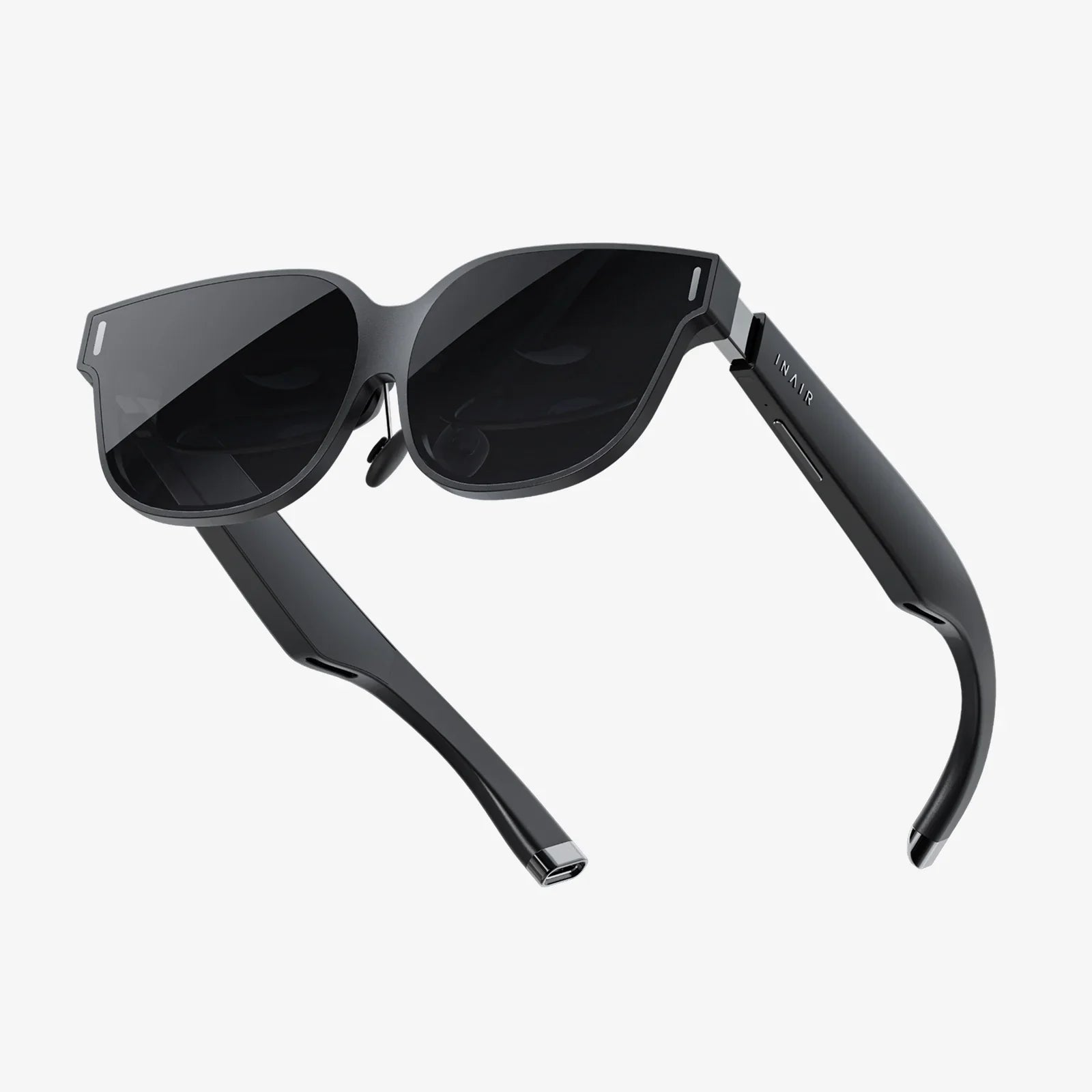
Smart glasses shatter this final barrier of intentionality. By embedding audio technology directly into a frame worn on the face, they achieve true wearability. The hardware ceases to be a device we use and becomes an accessory we wear, an always-available, always-on conduit for information. This marks the evolutionary step from portable audio to wearable audio, fundamentally changing the relationship between the user and the content. News is no longer an activity; it is an ambient layer of intelligence, accessible with a simple voice command or a subtle tap on a temple piece.
The magic of receiving audio news through smart glasses hinges on a sophisticated blend of hardware and software working in concert.
Unlike traditional headphones that blast sound into the ear canal, many smart glasses utilize bone conduction technology. Tiny transducers vibrate against the skull bone, particularly near the temple, sending these vibrations directly to the cochlea, bypassing the eardrum. Alternatively, some employ miniature, directional open-ear speakers that sit just in front of the ear, projecting sound inward without blocking the ear canal. Both methods are crucial for a news consumption device. They allow the user to hear their news briefing, a live report, or an audio article with perfect clarity while simultaneously remaining aware of their surroundings. This situational awareness is critical for safety while walking, cycling, or simply being present in a social setting—news consumption no longer requires sensory deprivation.
The hardware is merely the vessel; the real intelligence lies in the software. Advanced artificial intelligence and Natural Language Processing (NLP) power the entire experience. AI algorithms curate news feeds based on user preferences, past listening history, location, and even time of day. A morning briefing might focus on overnight headlines and the day's calendar, while an evening update might prioritize market closings and next-day forecasts.
NLP is used for two primary functions: text-to-speech (TTS) and voice command recognition. High-fidelity TTS engines can now convert written articles from thousands of publications into natural, flowing, and highly intelligible audio, effectively creating an infinite stream of audio content from text-based sources. Conversely, voice recognition allows the user to interact with the glasses hands-free. A simple utterance like, "Hey glasses, what's the latest on the election?" or "Read me tech news" triggers the system to fetch, process, and deliver the requested information instantly.
The impact of this technology extends far beyond simple convenience. It is reshaping the very experience of being informed.
Smart glasses audio news unlocks the potential of 'micro-moments'—those slivers of time previously lost to inactivity. Waiting for a coffee, walking between meetings, or doing household chores can now be transformed into opportunities for learning and staying updated. This enables a form of productive multitasking that is impossible with screen-based consumption. Your eyes and hands are free for the task at hand, while your mind engages with complex information. It effectively adds hours of potential learning and information absorption back into our weeks.
This technology is a monumental leap forward for accessibility. For individuals with visual impairments or certain reading disabilities like dyslexia, smart glasses audio news provides an independent, efficient, and dignified way to access the same wealth of written journalism as everyone else. It breaks down barriers, granting immediate and effortless access to the daily newspaper, a long-form magazine feature, or a crucial government announcement. The technology, in its ideal form, is a great equalizer in information access.
There is a compelling argument to be made for the cognitive benefits of audio news. Listening to a well-narrated story can foster deeper emotional connection and comprehension compared to scanning text on a screen, which is often riddled with distractions. The human voice carries intonation, emphasis, and nuance that can make complex topics clearer and more memorable. For deep-dive content, audio allows the listener to close their eyes and focus entirely on the narrative, potentially leading to better information retention.
Despite its promise, the path forward for smart glasses audio news is not without significant hurdles that must be navigated.
The very strength of this technology—its constant, ambient availability—is also its greatest weakness. There is a genuine risk of cognitive overload and attention fatigue if users feel bombarded by an endless stream of audio information. The line between being conveniently informed and being perpetually distracted is thin. The onus will be on developers and users alike to establish healthy boundaries. Features like scheduled briefings, priority-only alerts, and "focus modes" that silence news updates will be essential for digital wellness. The goal should be to augment reality, not to overwhelm it.
The shift to audio delivery has profound implications for journalism. The classic inverted pyramid structure of a news article—most important facts first—works well for scanning but may not be ideal for a linear audio narrative. News organizations will need to develop new storytelling formats specifically for the audio medium. Furthermore, the role of the narrator becomes paramount. Will news be read by a sterile AI voice, or will publications employ professional narrators to maintain tone and credibility? The potential for misuse is also present; deepfake audio technology could theoretically be used to create convincing but entirely false news reports, making source verification and trust more critical than ever.
Smart glasses with voice assistants are, by design, always listening for their wake word. This inherently raises privacy concerns. Users must trust that their conversations are not being recorded or stored without their consent. Transparent data policies, robust on-device processing (where data is processed on the glasses themselves rather than sent to the cloud), and clear physical indicators showing when the microphone is active are non-negotiable features for widespread adoption. The industry must prioritize privacy by design to avoid a backlash.
The current implementation of audio news is just the opening chapter. The future points towards even greater integration and immersion.
We are moving towards spatially aware audio. Imagine walking through a historic district and your glasses offer an audio news clip describing a significant event that happened exactly where you are standing, with the sound appearing to emanate from that location. Or, financial news could be delivered with subtle audio cues—a rising chime for a bullish market, a falling tone for a dip—creating an intuitive, ambient financial dashboard for your ears.
Advanced AI will move beyond simple curation to actual synthesis. Instead of just reading an article, your glasses' AI could scan dozens of sources on a developing story and generate a unique, unbiased, and comprehensive audio summary in real-time, tailored to your level of expertise. It will become a personal news editor, researcher, and narrator, all housed in the frame on your face.
The convergence of smart glasses and audio news is more than a novelty; it is a fundamental re-architecture of our information landscape. It promises a world where staying informed is less a dedicated task and more a natural, integrated, and continuous part of our existence. It liberates us from the screen, enhances our accessibility to knowledge, and, if developed thoughtfully, can create a richer, more nuanced, and less intrusive relationship with the world's events. The revolution will not be televised. It will be whispered directly into your perception, leaving your eyes free to witness the world it describes.
This seamless fusion of auditory information and daily life is quietly building a world where your morning headlines arrive not on a screen you check, but through the glasses you wear, blending with the sound of your coffee brewing and the morning traffic outside your window. The next breaking news alert won't interrupt your view—it will become a part of it, offering a deeper understanding of your environment without ever asking you to look away. The promise is a future where you are not just informed but effortlessly enlightened, connected to the global narrative through a discreet whisper in your ear, making every walk, wait, and moment a potential gateway to a deeper understanding of the world around you.