


Imagine walking down a bustling city street, and with a subtle glance towards a historic building, its recent preservation battle and a link to the full city council debate appear, hovering like a ghost in your periphery. A breaking news alert about a market shift doesn’t buzz in your pocket to be ignored; it materializes as a concise, urgent ticker along the edge of your vision, allowing you to process it without breaking stride from your conversation. This is the transformative promise of smart glasses display news—a future where information doesn’t interrupt our world but seamlessly integrates with it, creating a dynamic, contextual, and profoundly personal news experience that is always on, yet never obtrusive.
Beyond the Screen: Redefining the News Interface
For centuries, the fundamental paradigm of news consumption has been one of intentionality. We pick up a paper, turn on a broadcast, or open an app. We shift our focus from our immediate environment to a dedicated screen. Smart glasses, with their head-up, optical display technology, shatter this paradigm. The interface ceases to be a separate device we look at and becomes a layer we look through.
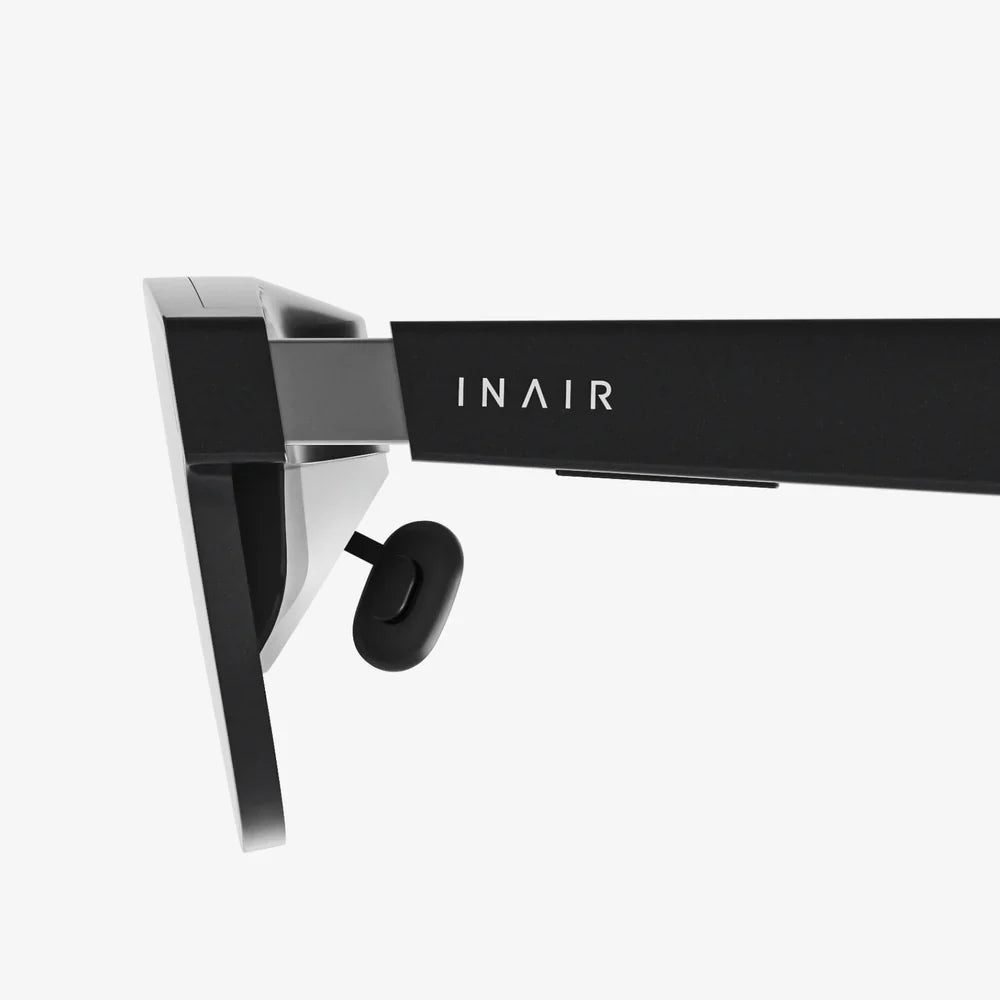
The core technology enabling this shift revolves around miniature displays projected onto waveguides or other optical elements, which then reflect the images directly onto the user's retina. This creates the perception of digital information existing in the real world, a concept known as augmented reality (AR). For news, this is a quantum leap. It means headlines can float in the corner of your eye during your morning routine, data visualizations can animate over a printed report on your desk, and live translations or context for foreign-language signs can appear the moment you look at them. News transitions from a scheduled event to a persistent, ambient stream of intelligence.
The Pillars of a New News Experience
The integration of news into smart glasses will be built upon several key technological and conceptual pillars that differentiate it from all previous media.
Contextual and Ambient Intelligence
The most powerful aspect of smart glasses as a news platform is context. Equipped with cameras, microphones, location data, and biometric sensors, these devices will possess an unprecedented understanding of your environment and, to some extent, your state of mind. The news you receive can be filtered and presented based on:
- Location: Walk past a government building, and get updates on local politics. Approach a sports stadium, see the latest scores and player stats.
- Gaze and Focus: Look at a product on a shelf, and consumer reports or recent news about its manufacturer pop up. Glance at a landmark, and its history and related current events become available.
- Time and Schedule: Receive a briefing on your first meeting of the day as you enter the office. Get traffic and transit news alerts timed perfectly for your commute home.
- Biometrics: If the device detects elevated stress levels, it might suppress non-critical news alerts, promoting digital wellness.
This moves us beyond personalized news feeds to situational news feeds, where the information is not just relevant to your interests, but to your immediate reality.
Multimodal Interaction: Beyond the Touchscreen
Interacting with a news story on a phone involves tapping, scrolling, and pinching. On smart glasses, interaction will be far more nuanced and hands-free, relying on a combination of:
- Voice Commands: "Read more about this," "Save this story," "Next headline."
- Gesture Control: A subtle finger pinch or swipe in the air to scroll through an article or dismiss an alert.
- Dwell Time and Eye-Tracking: Simply looking at a notification for a few seconds could expand it, while looking away could minimize it. This creates a incredibly intuitive and frictionless interface.
This multimodal approach makes consuming news less disruptive and more integrated into physical tasks, from cooking to commuting.
Data Spatialization and Immersive Storytelling
How do you visualize the scale of a natural disaster on a phone screen? On a smart glasses display, a journalist could spatialize the data. Holding up a physical coin, a 3D animation could appear next to it comparing it to the budget deficit, making abstract numbers tangibly understandable. Imagine a historical news story about a battle being replayed on the very field where you're standing, with tactical maps and soldier narratives overlaid on the landscape. This is immersive storytelling—news that doesn't just tell you what happened but allows you to experience the context and scale in a profoundly new way.
Implications for Journalism and the Fourth Estate
This new medium will force a radical evolution in journalistic practices, ethics, and business models.
The Art of the Glanceable Story
The inverted pyramid structure—presenting the most crucial information first—will be more important than ever. But it will need to be compressed into a "glanceable" format. The first 10 words of a headline and a key data point might be all a user sees before choosing to engage further. Journalists will need to master the art of micro-content that is complete in itself yet serves as a compelling gateway to deeper layers of analysis, video, and primary sources, which could be accessed with a voice command or a look.
The Battle for Attention and Ethical Design
Placing information directly in someone's field of vision is a powerful attention grabber. This creates an immense ethical responsibility for both tech companies and news organizations. How urgent must an alert be to justify an interruptive overlay? How can interfaces be designed to avoid cognitive overload and distraction in dangerous situations like crossing the street? The principles of ethical and calm technology will need to be baked into the core of news delivery systems, prioritizing user safety and well-being over clicks and engagement metrics.
New Frontiers for Fact-Checking and Transparency
AR can be a powerful tool for verification and transparency. A political speech could stream live with real-time fact-checks appearing as footnotes. Looking at a product, you could see not just its news coverage but its supply chain history. However, this also opens the door to sophisticated misinformation. Malicious actors could create AR overlays that deface real-world locations with false information, creating a pervasive and hard-to-detect form of fake news. The industry will need to develop robust provenance standards for AR content, perhaps using blockchain or other verification methods, so users can trust what they see superimposed on their world.
The Evolving Business Model
The shift to smart glasses could disrupt the ad-based model that dominates digital news. Banner ads are irrelevant in an AR landscape. Instead, sponsored content might take the form of virtual product placements or contextual information sponsorships (e.g., "Weather data provided by..."). This could lead to a renaissance for subscription models, where users pay a premium for an ad-free, high-quality, contextual news layer that adds genuine value to their daily life. Micropayments for accessing deep-dive content on a per-story basis could also become more viable with frictionless payment systems integrated into the glasses.
Navigating the Societal Chasm: Privacy, Accessibility, and the Digital Divide
The path to this augmented future is fraught with significant societal challenges that must be addressed proactively.
The Privacy Paradox
Smart glasses, by their very nature, are data-collection machines. To provide contextual news, they need to see what you see and hear what you hear. This creates an unprecedented privacy dilemma. Continuous recording, even if processed on the device, raises specters of perpetual surveillance. Clear, transparent, and user-centric data policies will be non-negotiable. Users must have absolute control over their data, how it's used, and who it's shared with. The concept of "privacy by design" must be the foundation of this technology.
The Digital Divide in Three Dimensions
If smart glasses become the primary portal for contextual news and information, a new, more profound digital divide will emerge. It won't just be about who has access to the internet, but who has access to a digitally-augmented layer of reality. This could create a society of "information haves" and "information have-nots," where a privileged class navigates the world with a constant stream of enriching data while others are left with an un-augmented and potentially disadvantaged experience. Ensuring equitable access and preventing this from becoming an exclusively luxury commodity is a critical societal challenge.
The Social Contract and Etiquette
The social acceptance of smart glasses is not a given. Society will need to develop new norms and etiquette. Is it rude to read a news alert in the middle of a conversation? How do we know when someone is recording? Restaurants, theaters, and private spaces may ban them, creating new cultural boundaries. Navigating this will require a public dialogue about the appropriate place for technology in our social interactions.
The flicker of a news headline in your peripheral vision is no longer science fiction; it's the next chapter in our relentless pursuit of information. Smart glasses display news represents more than a new gadget; it is the culmination of a digital evolution, promising to weave the very fabric of current events into the tapestry of our daily lives. It offers the potential for unparalleled understanding, efficiency, and connection to our world. But this power comes with a profound responsibility—to design with empathy, to prioritize ethics over engagement, and to ensure this powerful tool serves to illuminate reality, not to obscure it or further divide us. The future of news isn't on a screen you hold; it's in the world you see, waiting to be unlocked with a simple glance.
Share:
3D Audio Spatialization: The Invisible Revolution Reshaping Our Sonic Reality
AR Accessories: The Essential Toolkit for Unlocking Augmented Reality's Full Potential