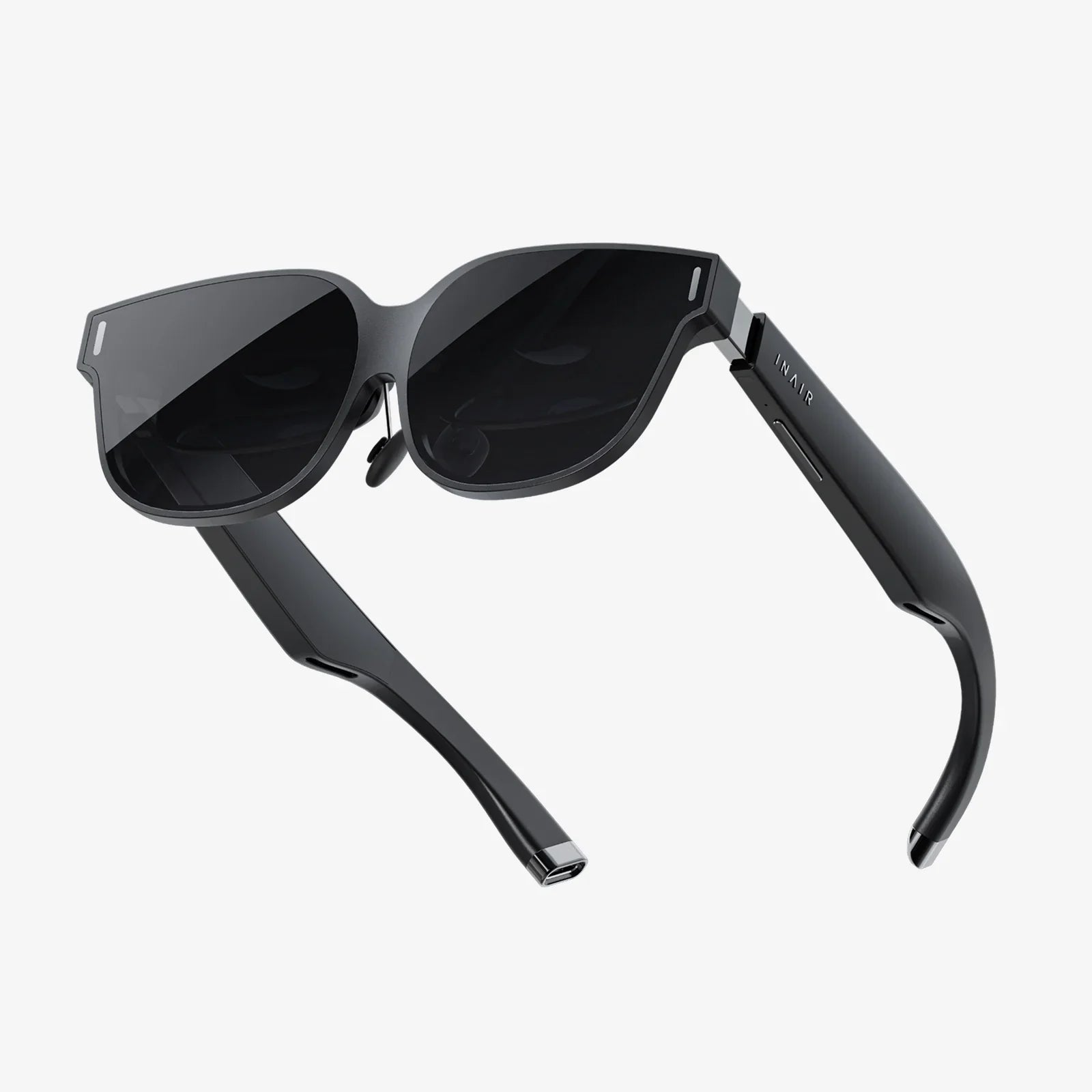
Imagine a world where digital information isn't confined to a screen in your hand or on your desk, but is seamlessly layered over your physical reality. This is the promise of smart glasses, a frontier of wearable technology that hinges on one absolutely critical component: the quality of the display. The way these devices paint light onto your retina defines not just the clarity of a virtual map or the vibrancy of a notification, but the very feasibility of wearing them for more than a few minutes. The quest for the perfect blend of the digital and physical realms begins and ends with display technology, and the differences between the various approaches are vast, complex, and fundamentally shape the user experience. This deep dive into smart glasses display quality comparison will illuminate the key metrics, trade-offs, and technological battles that will determine the future of how we see our world.
The Canvas of Augmented Reality: Understanding the Core Technologies
Before comparing quality, one must first understand the different methods used to project images. Not all smart glasses displays are created equal; they employ fundamentally distinct optical architectures, each with its own set of strengths and inherent limitations.
Waveguide Displays: The Invisible Conduit
Waveguides are currently the dominant technology for sleek, consumer-oriented smart glasses aiming for all-day wearability. They function like sophisticated prisms or mirrors, piping light from a micro-display module typically located in the temple of the glasses to the lens in front of your eye.
-
How they work: Light from a tiny LCD, OLED, or Laser Beam Scanning (LBS) module is injected into a transparent glass or plastic substrate. Through a combination of diffraction (using nanoscale gratings) or reflection (using partially mirrored surfaces), this light is "folded" through the waveguide until it is directed outward into your eye.
-
Key Advantage: Unmatched aesthetics and social acceptability. The display components are hidden in the frame, resulting in a form factor that closely resembles regular eyewear.
-
Quality Challenges: Waveguides are notoriously inefficient with light, often requiring very bright projectors that drain battery life. They can also suffer from visual artifacts like the "rainbow effect" (in diffractive waveguides) or a limited "eyebox"—the sweet spot where the image is visible, requiring precise fitting.
Birdbath Optics: The Brightness Powerhouse
Birdbath optics offer an alternative path, often resulting in a richer visual experience at the cost of a bulkier design.
-
How they work: This design uses a combiner—a partially reflective mirror—set at an angle (like a birdbath, hence the name) between your eye and the world. A micro-display projects an image upward from the temple, which is then reflected off this combiner and into your eye. You see the digital image reflected off this surface, superimposed on the real world seen through it.
-
Key Advantage: Generally superior image quality. Birdbath systems can achieve higher brightness, better color saturation, and a wider field of view (FOV) compared to many waveguide solutions because they are less constrained by light efficiency problems.
-
Quality Challenges: The optical path requires more space, leading to a deeper and chunkier frame. The combiner can also slightly darken the user's view of the real world, and the design is more susceptible to external light glare.
Curved Mirror Combiners: The Simple Reflector
This is a simpler, more direct approach often seen in earlier or more specialized devices.
-
How they work: A small projector module mounted on the temple or above the lens shines light directly onto a curved, mirrored surface built into the lens. This mirror reflects the image into your eye.
-
Key Advantage: Simplicity and potentially lower cost. The optical path is straightforward, which can reduce complexity.
-
Quality Challenges: This design almost always results in a very conspicuous and bulky form factor that is far from discreet. The image quality can be good but is often limited by the size and curvature of the combiner mirror.
Deconstructing the Image: Key Metrics for Display Quality Comparison
Beyond the underlying technology, how do we objectively measure and compare what we see? Several key metrics define the visual performance of a smart glasses display.
Resolution and Pixels-Per-Degree (PPD)
While resolution (e.g., 1920x1080) is a familiar term, it is almost meaningless in isolation for near-eye displays. The true measure of sharpness is Pixels-Per-Degree (PPD).
-
What it is: PPD calculates the number of pixels that fit into one degree of your field of view. The human eye is generally considered to have a maximum acuity of 60 PPD (often cited as "retina" display quality, where individual pixels are indistinguishable at a normal viewing distance).
-
Comparison Point: A high-resolution display crammed into a very wide FOV will have a low PPD and appear pixelated or "screen-door effect"-like. A display with a modest resolution but a narrow FOV can achieve a high PPD and look very sharp. When comparing, prioritize PPD over raw resolution figures. Most current consumer smart glasses struggle to surpass 35-45 PPD.
Field of View (FOV)
This is the angular size of the digital image you see, measured diagonally (like a TV) or horizontally.
-
What it is: A small FOV (e.g., 15 degrees) means the digital content appears like a small floating postage stamp in your vision, useful for notifications but terrible for immersive AR. A large FOV (e.g., 50+ degrees) allows digital objects to feel life-sized and anchored in your space.
-
The Trade-Off: FOV is the eternal enemy of PPD and form factor. Increasing FOV without sacrificing sharpness or making the glasses enormous is one of the hardest challenges in AR optics. It's a primary differentiator between notification-focused glasses and immersive AR headsets.
Brightness and Nits
Measured in nits (candelas per square meter), brightness is paramount for usability in various lighting conditions, especially outdoors.
-
What it is: A display needs to be bright enough to overcome ambient light. A dim display will look washed out and illegible on a sunny day. High-end smart glasses aim for 2000+ nits or even higher to remain visible in direct sunlight.
-
Comparison Point: Waveguide systems require extremely bright projectors (which consume more power) to overcome their inherent light loss. Birdbath optics are typically more efficient and can achieve high brightness more easily. This is a critical spec for any glasses intended for outdoor use.
Color Gamut and Contrast Ratio
These metrics define the vibrancy and depth of the image.
-
Color Gamut: The range of colors a display can reproduce. A wide color gamut (like DCI-P3) means richer, more realistic, and more engaging visuals. OLED-based projectors typically excel here compared to LCD or LBS solutions.
-
Contrast Ratio: The difference between the brightest white and the darkest black. A high contrast ratio makes text appear crisper against backgrounds and makes digital objects feel solid rather than translucent. This is a particular challenge for optical see-through displays, as the real world's light "bleeds" through, reducing perceived contrast.
Transparency and See-Through Quality
This is a unique and often overlooked aspect of display quality: the quality of the real world you see through the lenses.
-
Visual Fidelity: Do the lenses distort the real world? Do they have a noticeable color tint (often yellow or blue)? Do they reduce the amount of light entering your eye, making the world seem dimmer? The best smart glasses are those where you forget the lenses are there at all.
-
Comparison Point: Waveguides, being flat, typically offer superb real-world clarity with minimal distortion. Birdbath and curved mirror combiners can sometimes introduce minor distortion or a more noticeable tint. This is crucial for safety and comfort during prolonged use.
The Human Factor: Ergonomics and Visual Comfort
Technical specifications are useless if the device is uncomfortable to wear or painful to look at. Display quality is inextricably linked to human factors.
The Eyebox and Pupil Swim
The eyebox is the three-dimensional volume within which your pupil must be positioned to see the full image clearly. A small eyebox means you must keep your head very still; any movement can cause the image to cut off, blur, or distort—an effect sometimes called "pupil swim." A large, forgiving eyebox is a hallmark of advanced optical engineering and is essential for a comfortable experience.
Accommodation-Vergence Conflict (AVC)
This is the grand challenge of AR/VR, a primary source of eye strain and headaches. Your eyes vergence (cross) to focus on nearby objects and accommodate (lens muscles flex) to bring them into focus. In most current smart glasses, the digital image is projected at a fixed focal distance (e.g., 2 meters away). If you try to place a virtual object close to your face, your eyes will verge to look at it, but your lenses will still be focused at infinity, creating a sensory mismatch that your brain hates. Advanced technologies like varifocal displays are beginning to solve this, but it remains a key differentiator in high-end versus consumer-grade hardware.
Weight and Balance
The choice of display technology directly impacts the device's form factor. Waveguides enable lightness. Birdbath optics often demand more weight and a front-heavy design, which can cause pressure on the nose and ears, making all-day wear impractical. Display quality cannot be evaluated separately from the physical comfort of the device itself.
The Future of the Display: Emerging Technologies
The race for the perfect AR display is fueling incredible innovation beyond the current mainstream options.
-
Holographic Optics: An evolution of diffractive waveguides using more advanced techniques to create thinner, more efficient optics with a larger eyebox and fewer artifacts.
-
Laser Beam Scanning (LBS): Using tiny moving mirrors to "draw" the image with laser light directly onto the retina. It promises incredible efficiency, always-in-focus imagery (solving AVC), and deep blacks, but has historically struggled with resolution and "speckle" noise.
-
MicroLED: These incredibly small, bright, and efficient light-emitting diodes are the holy grail for micro-displays. They could enable direct retinal projection systems with unprecedented brightness and color without the bulk of a projector, but manufacturing them at scale remains a significant hurdle.
Each of these technologies aims to break the existing trade-offs, offering a path to high FOV, high PPD, and all-day comfort in a socially acceptable form factor.
The battle for your field of view is being waged not with megapixels, but with nanometers, nits, and degrees. The ultimate display isn't just about the sharpest text or the most vibrant colors; it's about creating an invisible window to a digital layer that feels as natural and effortless as sight itself. The differences in today's smart glasses displays are profound, dictating everything from how you receive a message to how you interact with a virtual masterpiece hovering in your living room. As these technologies mature and converge, the line between what is real and what is rendered will not just blur—it will disappear entirely, forever changing our perception of reality itself.