


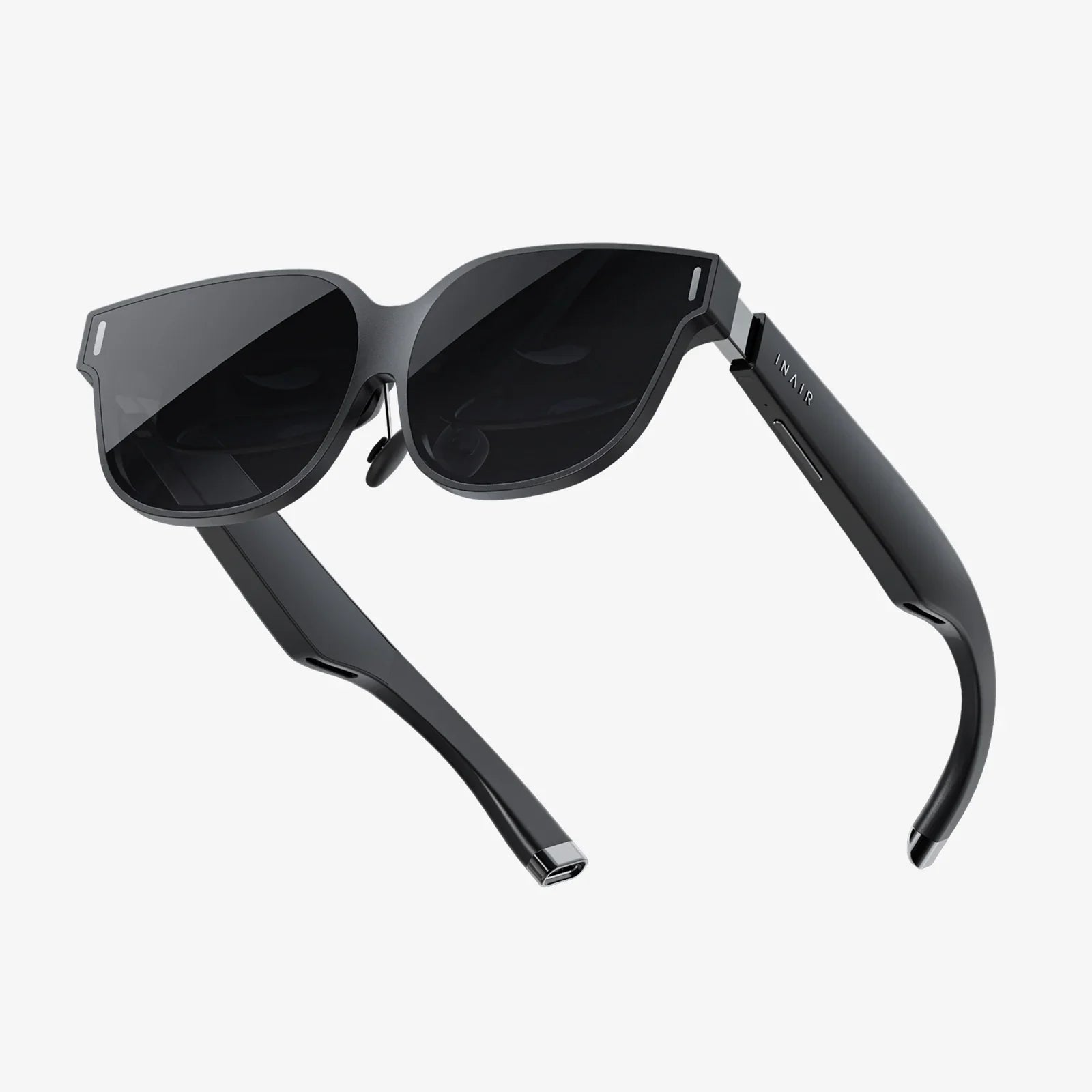
- by wangfred
Smart Glasses Functionality: Beyond Novelty to Necessity in a Connected World
- by wangfred
Imagine a world where information flows as effortlessly as your gaze, where the digital and physical realms coalesce into a single, intuitive experience—this is the transformative promise of modern smart glasses functionality, a technological leap poised to redefine our daily lives from the ground up.
At their essence, smart glasses are wearable computers designed for your face. Their functionality is not a single feature but a sophisticated ecosystem of interconnected systems working in harmony. The foundational pillar is the optical system, which projects digital imagery into the user's field of view. This is achieved through various technologies, from simple LED arrays to complex waveguide and holographic optical elements that paint high-resolution, full-color graphics onto transparent lenses. This display is the canvas upon which all other functionality is painted.
Supporting this visual output is a suite of sensors that act as the glasses' eyes and ears. High-resolution cameras capture the world in front of the wearer, while microphones listen to ambient sound and voice commands. Inertial Measurement Units (IMUs), including accelerometers and gyroscopes, track head movement and orientation with incredible precision, ensuring the digital overlays remain stable and locked to the real world. Advanced models incorporate depth sensors and LiDAR scanners to create a real-time 3D map of the environment, enabling a true understanding of spatial relationships.
The brain of the operation is an onboard System-on-a-Chip (SoC), a miniature computer processor that handles data processing, runs operating systems, and manages power distribution. This is complemented by wireless connectivity modules like Wi-Fi, Bluetooth, and increasingly, 5G, which tether the glasses to the internet and other devices, such as smartphones and wearables. Finally, all this is powered by compact, high-density batteries strategically placed within the frame's arms to balance weight and provide all-day endurance, a constant challenge in wearable design.
The most revolutionary aspect of smart glasses functionality is their ability to deliver Augmented Reality (AR). Unlike Virtual Reality, which replaces the real world, AR supplements it. This creates a potent tool for contextual computing. For a technician repairing a complex machine, the glasses can overlay animated repair instructions, highlight specific components with arrows, and display real-time diagnostic data from the equipment itself. For a traveler navigating a foreign city, arrows and street names can be painted onto the pavement, while historical information about a building pops up simply by looking at it.
This functionality is powered by sophisticated computer vision algorithms. The glasses analyze the camera feed in real-time, using object recognition to identify items, people, and text. Simultaneous Localization and Mapping (SLAM) technology allows the glasses to understand its position within a space without prior knowledge of that space, anchoring digital objects to physical locations. This means a virtual sculpture can be placed in the middle of a room and remain there as the user walks around it, viewing it from all angles.
Smart glasses are poised to fundamentally change how we communicate. The always-available camera and microphone enable a form of lifelogging and first-person perspective sharing that feels more authentic and immersive than holding up a smartphone. A parent can share their child's first steps with a grandparent as if they were seeing it through their own eyes. A remote expert can see exactly what a field engineer sees, drawing annotations directly into their field of view to guide them through a complex procedure.
Audio functionality is equally transformative. Bone conduction technology or miniature directional speakers can deliver sound directly to the wearer's ears without obstructing the ear canal, allowing them to hear both digital audio and the real world simultaneously. This enables seamless, hands-free calls and audio playback. Advanced beamforming microphones can isolate the wearer's voice from background noise, ensuring crystal-clear communication even in windy or crowded environments. This combination creates a powerful platform for telepresence, making remote collaborators feel physically present.
The hands-free, eyes-forward nature of smart glasses functionality makes them a powerful productivity tool across numerous professions. In logistics and warehousing, workers can see picking lists, inventory locations, and shipping instructions without constantly looking down at a handheld scanner or clipboard, dramatically increasing speed and reducing errors. Their hands remain free to handle packages and operate machinery safely.
In healthcare, a surgeon could access a patient's vital signs or reference medical imaging without breaking sterility by looking away from the operating field. Medical students can observe procedures from the surgeon's point of view. For field service technicians, the ability to pull up schematics, access manuals, and video-call a specialist while keeping both hands on the job reduces downtime and improves repair quality. In design and architecture, 3D models can be projected onto physical spaces, allowing creators to visualize scale and form in context long before any physical construction begins.
True intelligence in smart glasses is delivered through the integration of Artificial Intelligence (AI) and robust voice assistants. The onboard AI processes the vast stream of sensor data to provide proactive, contextual information. By understanding your calendar, location, and gaze, the glasses could subtly highlight the face of a colleague you're meeting for the first time in a crowded conference hall or notify you that your departing gate has changed as you walk past a flight information board.
Voice control is the primary interface, transforming the glasses from a passive display into an interactive agent. A natural language voice assistant allows users to command the glasses without any physical input. A user can say, "Hey glasses, record a video of what I'm seeing," "Translate this menu in front of me," or "What's the name of this building?" and the glasses will execute the command instantly. This creates a frictionless, intuitive, and private way to interact with technology, making it feel like a natural extension of one's own cognition.
For all their potential, the path to mainstream adoption is fraught with significant hurdles. The first is design. The technology must be miniaturized to the point where it is indistinguishable from conventional eyewear—lightweight, stylish, and socially acceptable. Early prototypes were often bulky and obtrusive, but the industry is relentlessly driving toward frames that consumers would willingly wear all day.
The most profound challenge is privacy. A device that can record video and audio continuously raises legitimate concerns about consent and surveillance. The functionality for facial recognition is particularly double-edged, offering incredible convenience for identifying contacts while posing a grave threat to personal anonymity. Manufacturers must address this with clear ethical guidelines, physical indicators like recording lights, and user-centric controls that ensure the wearer and those around them feel their privacy is respected. Societal norms will need to evolve to determine when and where it is appropriate to use such powerful recording devices.
The trajectory of smart glasses functionality points toward even deeper integration into our lives. Future iterations may move beyond complementing smartphones to replacing them entirely, becoming our primary connected compute device. Advancements in battery technology, such as solar-charging coatings or kinetic energy harvesting from movement, could solve the endurance challenge. Haptic feedback in the frames could provide subtle tactile notifications.
We can anticipate functionality centered on personal health and environmental awareness. Biometric sensors could monitor pupil dilation, blink rate, and exposure to UV light, offering insights into fatigue, focus, and health. Environmental sensors could analyze air quality, pollen count, or even identify harmful substances, providing a real-time health dashboard of your immediate surroundings. The ultimate goal is a device that feels less like a piece of technology and more like a cognitive enhancer, amplifying our human abilities to see, hear, understand, and connect with the world around us in ways previously confined to science fiction.
The true power of this technology lies not in the hardware itself, but in its silent, seamless operation—transforming the way we work, connect, and perceive our environment without ever requiring us to look down at a screen again, ultimately unlocking a more intuitive and immersive human experience.