


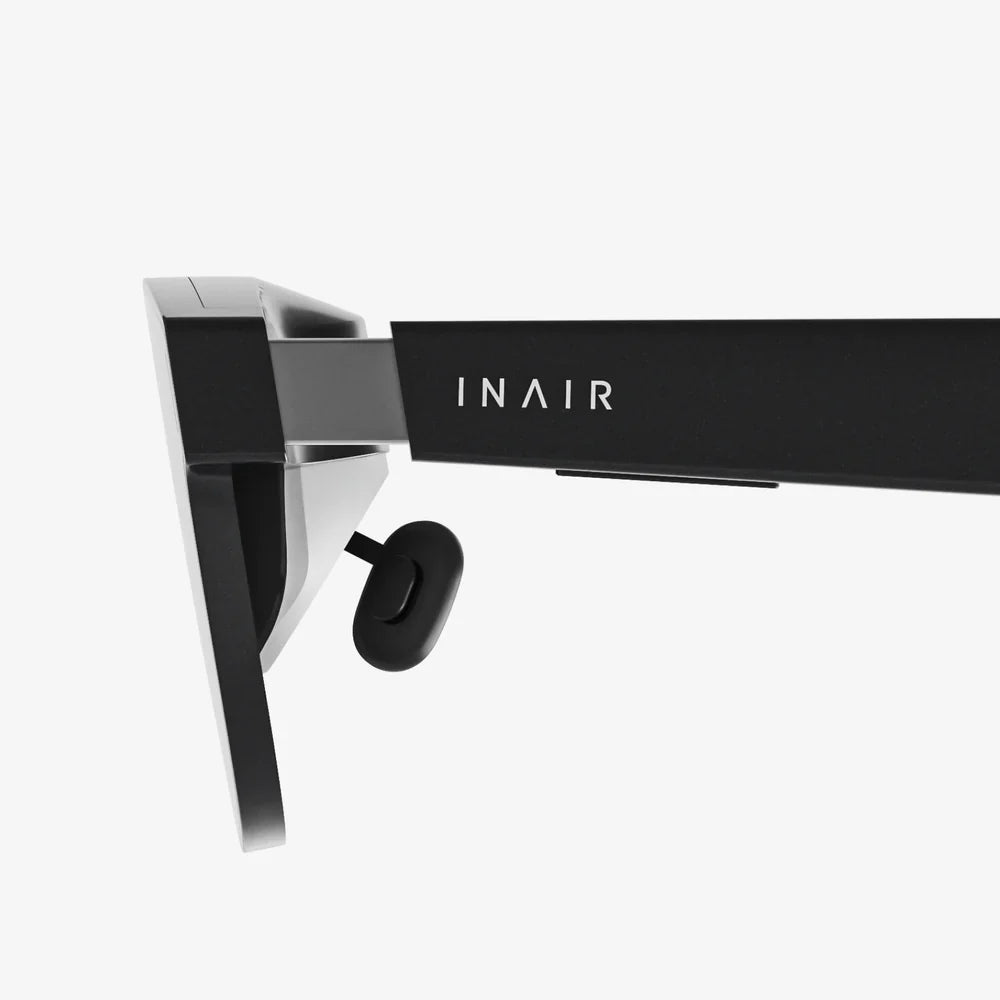
Imagine a world where digital information doesn't live on a screen in your hand, but is seamlessly painted onto the very fabric of reality around you. This is the promise of smart glasses, and while tech giants worldwide scramble to perfect the formula, a tiny nation has quietly positioned itself as the undisputed global epicenter for the core technologies that will make this vision a ubiquitous reality. The story of smart glasses is being written with a significant and sophisticated Israeli accent, born from a unique fusion of military R&D, academic excellence, and a startup culture that thrives on solving impossible problems.
The Fertile Ground: Why Israel Became a Nexus for Optical Tech
Israel's ascent in the smart glasses arena is not a random occurrence; it is the direct result of a perfect storm of historical, technological, and cultural factors. The nation's mandatory military service acts as an unparalleled incubator for deep tech talent. Elite cybernetics, intelligence, and air force units become training grounds for engineers who work on cutting-edge imaging, sensor fusion, and augmented reality systems long before they enter the civilian market. This creates a pipeline of exceptionally skilled individuals for whom complex optical and computational challenges are second nature.
Furthermore, Israel's world-renowned academic institutions, particularly the Technion – Israel Institute of Technology, and the Weizmann Institute of Science, are powerhouses of research in physics, computer science, and electrical engineering. Their work in fields like nanophotonics, computer vision, and light field technology provides the fundamental research that commercial ventures can later build upon. This academic-military-industrial triangle creates a feedback loop of innovation, where theoretical advancements are rapidly tested in demanding applications and then refined for commercial use.
Beyond the Frame: The Core Israeli Technological Breakthroughs
While a final consumer product captures the imagination, the true Israeli genius lies in developing the fundamental components that make smart glasses possible. The country's tech sector excels at creating the indispensable "picks and shovels" for the wider industry.
Revolutionizing Waveguide Technology
Perhaps the single most critical bottleneck in smart glasses design is the optical combiner—the transparent lens that projects digital images onto the user's eye while allowing them to see the real world. Bulky prism-based solutions are a non-starter for all-day wear. The answer lies in waveguide technology: ultra-thin, transparent glass or plastic that uses diffraction gratings to bend light from a micro-projector into the eye.
Israeli companies are global leaders in the design, simulation, and mass production of these incredibly complex optical elements. They have pioneered manufacturing techniques that allow for high yields of these nano-patterned optics, which are notoriously difficult to produce without defects. Their advancements have been crucial in moving waveguides from lab curiosities to components viable for consumer and enterprise products, making devices lighter, more efficient, and with a much wider field of view.
Mastering Micro-Display Engines
A waveguide is useless without a tiny, incredibly bright, and power-efficient projector to feed it light. This is another area where Israeli innovation shines. Local firms have developed groundbreaking Liquid Crystal on Silicon (LCoS) and Laser Beam Scanning (LBS) micro-display engines. These systems are marvels of miniaturization, capable of generating vibrant, high-resolution images while consuming minimal power—a critical consideration for wearable devices with limited battery space. This expertise ensures the digital overlay is crisp, clear, and visible even in bright sunlight.
The Intelligence Behind the Lenses: AI and Computer Vision
Smart glasses are not just about display; they are about understanding. For the device to provide contextually relevant information, it must perceive and interpret the world in real-time. This requires sophisticated computer vision algorithms and on-device AI. Israeli expertise in this domain, honed in applications from autonomous vehicles to security systems, is directly transferable. Companies are developing specialized processors and software that allow smart glasses to perform tasks like object recognition, spatial mapping, and gesture tracking with low latency and without needing a constant cloud connection, preserving user privacy and responsiveness.
Transforming Industries: The Real-World Impact Today
The value of this technology is not confined to futuristic consumer concepts. It is already delivering tangible, high-value solutions across numerous sectors, and Israeli companies are at the forefront of these enterprise applications.
Precision Medicine and Surgery
In the medical field, smart glasses are revolutionizing surgery and patient care. Surgeons can now wear glasses that overlay critical information—such as MRI or CT scans—directly onto their field of view of the patient on the operating table. This "X-ray vision" capability allows for unparalleled precision without constantly looking away at a monitor. Israeli tech provides the high-fidelity optics and accurate tracking necessary for these life-critical applications, ensuring the digital overlay is perfectly registered with the physical world.
The Augmented Workforce
In manufacturing, logistics, and field service, smart glasses are creating a new paradigm for the workforce. A technician repairing a complex machine can see step-by-step instructions and diagrams overlaid on the equipment itself. A warehouse worker can see optimal picking routes and instantly verify items without consulting a handheld scanner. These applications drastically reduce errors, improve training speed, and enhance efficiency. The robust, industrial-grade hardware and software required for these demanding environments are a specialty of the Israeli tech scene.
Accessibility and Navigation
On the consumer side, some of the most powerful applications are in accessibility. Smart glasses can recognize faces and discreetly display a person's name to someone with prosopagnosia (face blindness). They can read text aloud and describe scenes for the visually impaired, effectively acting as an artificial visual cortex. For everyone else, they promise a future where directions are painted onto the sidewalk, and information about landmarks, restaurants, and history is available simply by looking. The advanced AI needed for these real-time interpretations is a key area of Israeli development.
Navigating the Challenges: Privacy, Social Acceptance, and the Path Forward
For all its promise, the path to widespread smart glasses adoption is fraught with challenges that the Israeli tech ecosystem is uniquely positioned to address. The most significant hurdle is the "creep factor"—the societal anxiety surrounding always-on cameras and sensors worn on the face. This is not just a perception issue; it is a fundamental design and ethical problem.
Israeli startups are proactively tackling this by pioneering privacy-by-design solutions. This includes hardware innovations like physical shutter switches that block the camera, and software solutions that process all visual data locally on the device itself, never sending sensitive imagery to the cloud. There is a strong focus on developing clear, intuitive visual indicators that signal when recording is active, helping to build public trust. The experience gained from working in the highly sensitive fields of cybersecurity and defense provides these companies with a deep understanding of how to build secure and trustworthy systems.
Beyond privacy, other challenges remain. Battery life continues to be a constraint, driving innovation in low-power components and alternative charging solutions. Finally, the industry must crack the code on design, creating devices that people are actually proud to wear as a fashion statement, not just a piece of utility hardware.
A Vision of the Future, Built in the Present
The journey towards true, consumer-ready augmented reality is a marathon, not a sprint. It requires patient, deep technological development across multiple disciplines—optics, sensors, AI, and miniaturization. Israel may not always be the brand name on the final product you buy off the shelf, but there is an overwhelming probability that the core technology inside—the lenses that project the light, the engine that generates the image, or the AI that makes sense of the world—will bear the indelible mark of Israeli innovation. The nation's ecosystem isn't just participating in the smart glasses revolution; it is providing the essential foundations upon which the entire industry is being built, ensuring that the future we see through our glasses is sharper, smarter, and more connected than ever before.
From the surgeon's operating room to the factory floor and eventually onto the faces of everyday consumers, a quiet optical revolution is underway. The next time you see someone effortlessly interacting with a digital layer superimposed on our world, look closer—the technology making it possible likely passed through the hands of innovators in a tiny nation that has always had a vision for a smarter, safer, and more connected future.
Share:
Best Device Intelligence Services 2025: The Ultimate Guide to Future-Proofing Your Digital Ecosystem
Simple Digital Products Are Revolutionizing Our Daily Lives and Minds