


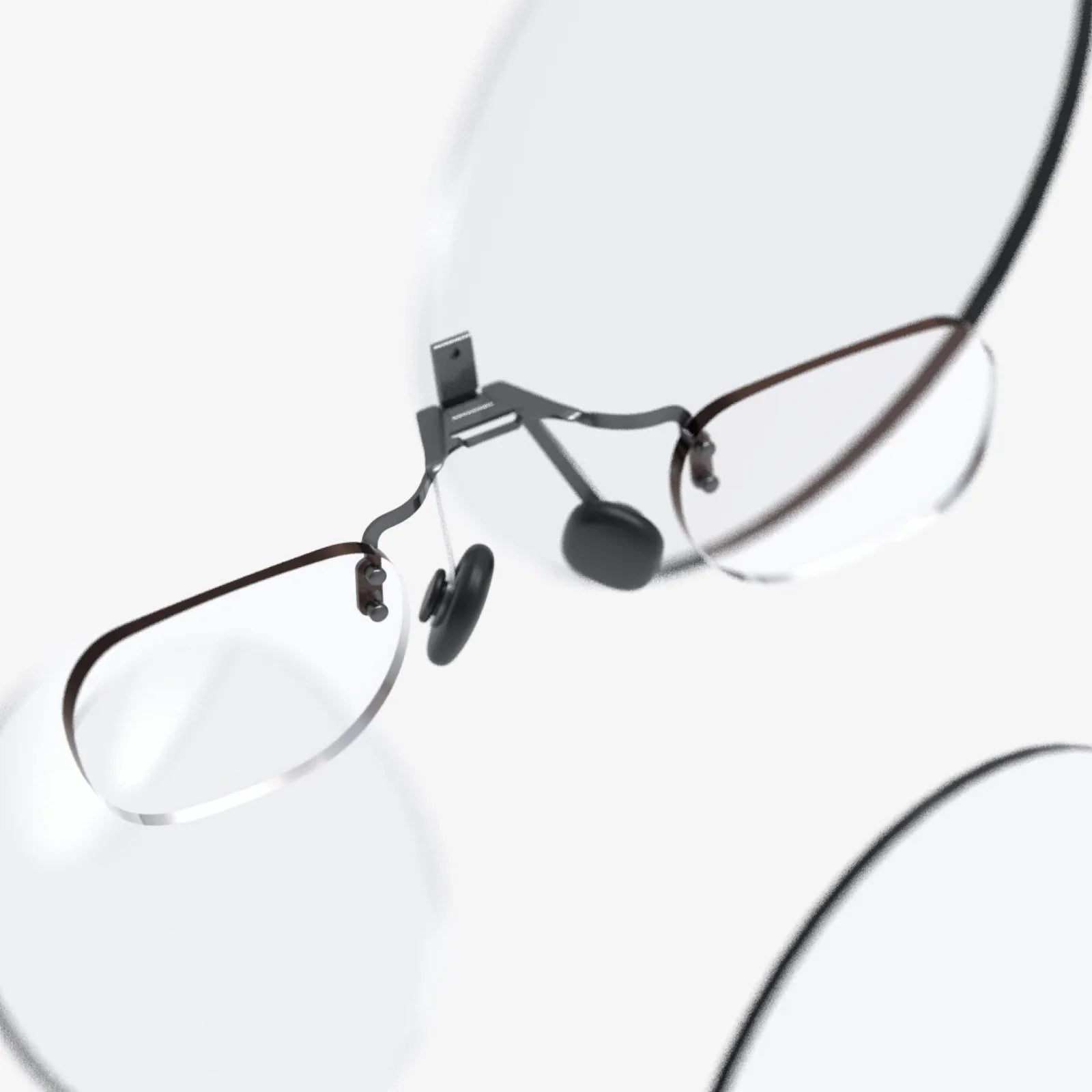
Remember the promise? A world where digital information seamlessly overlays our physical reality, where directions float on the street before us, where a friend’s name politely hovers above their head at a crowded party, and where the answer to any question is just a whisper away. For decades, this vision of augmented reality, primarily delivered through smart glasses, has been a tantalizing fixture of science fiction. Yet, for the average consumer, it remained just that—a fiction. Early attempts were clunky, expensive, socially awkward, and technologically limited. But look closer. The whispers have become a roar. The pieces are finally falling into place. We are standing on the precipice of the single most significant shift in personal computing since the smartphone, and it’s about to land squarely on our noses. The revolution isn't just coming; it's putting on its glasses and stepping into the light.
The Long Road: From Laboratory to Niche Novelty
The journey of smart glasses toward mainstream acceptance has been a marathon, not a sprint. The initial wave of consumer-facing devices, emerging in the early 2010s, was met with a mixture of awe and skepticism. They were groundbreaking in concept but deeply flawed in execution. The core issue was a fundamental misalignment between technological ambition and practical usability.
First-generation devices often suffered from a fatal trifecta of problems:
- Bulky and Unwieldy Design: They were engineering prototypes masquerading as consumer goods. Large battery packs, heavy frames, and obvious camera modules made them uncomfortable to wear for extended periods and screamed "tech gadget" rather than "fashion accessory."
- Social Stigma and the "Glasshole" Effect: Perhaps the most significant barrier was cultural. Early devices raised legitimate concerns about privacy, creating a society of unwilling participants being recorded without consent. Wearers were often labeled with the derogatory term "Glasshole," perceived as privileged and privacy-invading tech elites. This social friction was a major deterrent to widespread adoption.
- Limited and Gimmicky Functionality: The technology simply wasn't mature enough. Displays were low-resolution, fields of view were narrow, battery life was abysmal, and processing power was insufficient for complex AR tasks. Most applications were novelties—taking a photo or getting a weather update—that failed to provide a compelling, daily utility justifying the cost and social capital required.
These early stumbles were not failures but rather necessary, if painful, first steps. They served as a massive real-world beta test, teaching developers, designers, and companies invaluable lessons about what the market truly needed and, more importantly, what it would reject.
The Perfect Storm: Converging Technologies Fueling the Rise
What has changed? Why is the mainstream moment for smart glasses arriving now, rather than five years ago or five years from now? The answer lies in the simultaneous maturation of several critical technologies, creating a perfect storm that is finally enabling smart glasses to fulfill their original promise.
The Micro-Optical Revolution
At the heart of any pair of smart glasses is the display system, known as the optical engine. Early waveguides and prism-based systems were complex, expensive, and optically inefficient. Today, advancements in micro-LED technology and diffractive waveguides are game-changers. Micro-LEDs are incredibly small, bright, and power-efficient light sources that can be projected into waveguides—essentially transparent pieces of glass or plastic that pipe light directly to the eye. This allows for bright, high-resolution text and graphics to be overlaid onto the real world without blocking the user's vision, all while consuming a fraction of the power of older systems. The result is a sleek form factor that begins to resemble ordinary eyewear.
The Invisible Network: 5G and Edge Computing
Truly immersive AR requires massive computational power. Rendering complex 3D models into a real-time environment is processing-intensive. Smart glasses, constrained by size and thermal limits, cannot house a supercomputer. The solution lies offloading this computation. The rollout of 5G networks, with their ultra-low latency and high bandwidth, is crucial. It allows the glasses to act as a sophisticated window, streaming complex AR experiences rendered instantly from the cloud or via edge computing nodes. This symbiosis between the wearable device and the powerful external network means the glasses can be lighter, cheaper, and cooler (in both temperature and style).
The AI Brain: Contextual Awareness and Voice Interaction
Hardware is nothing without intelligence. The rise of powerful, on-device artificial intelligence and machine learning models is what will make smart glasses feel truly magical. AI enables:
- Real-time Translation: See subtitles over a conversation with someone speaking a foreign language, instantly.
- Object and Text Recognition: Point your gaze at a monument to get its history, or at a restaurant menu to see reviews and dietary information highlighted.
- Advanced Voice Assistants: Move beyond simple commands to conversational, context-aware assistants that understand your surroundings. Instead of "set a timer," you can say, "remind me to check the oven in 20 minutes when this lasagna is done."
This AI-driven, context-aware functionality moves smart glasses from being a screen on your face to an intelligent companion that enhances your perception.
Beyond Novelty: Defining the Killer Applications
Technology for technology's sake is not a mainstream proposition. For smart glasses to become as ubiquitous as smartphones, they must solve real problems and provide undeniable value in everyday life. The "killer app" for smart glasses isn't one single application, but a suite of capabilities centered around contextual information liberation and hands-free utility.
The Professional and Industrial Arena
While consumer adoption has been slower, the enterprise and industrial sectors have already embraced smart glasses as transformative tools. Here, the value proposition is clear and immediately impacts the bottom line:
- Remote Expert Guidance: A field technician repairing a complex piece of machinery can stream their point-of-view to an expert thousands of miles away, who can then annotate the technician's real-world view with arrows, diagrams, and instructions, dramatically reducing downtime and errors.
- Augmented Manuals and Logistics: Warehouse workers can see digital pick-and-place instructions overlaid onto physical shelves, guiding them to the exact item and verifying its correctness, streamlining fulfillment and reducing errors to near zero.
- Enhanced Training and Safety: Surgeons-in-training can practice procedures with virtual guidance, and engineers can visualize the internal workings of a system before touching it, overlaying safety warnings and procedural checklists.
This enterprise adoption is critical. It validates the technology, funds further R&D, and, crucially, begins to normalize the concept of wearing computerized glasses, slowly eroding the social stigma.
The Consumer Experience
For the mainstream consumer, the value will be more subtle but no less profound:
- Navigation Reimagined: Instead of looking down at a phone, giant, arrow-shaped directions will be painted onto the road itself, guiding you turn-by-turn while you keep your head up and aware of your surroundings.
- Social Connection and Memory: Imagine never forgetting a name at a networking event again, with a discreet name and company tag appearing when you look at a person (with appropriate privacy controls, of course). Or reliving a family vacation by seeing your own photos and videos pinned to the exact locations where they were taken.
- Interactive Learning and DIY: Learning guitar? See chord fingerings hover over your fretboard. Cooking a new recipe? See the next steps materialize right above your mixing bowl, hands-free and mess-free.
- Accessibility Unleashed: For individuals with visual or hearing impairments, smart glasses could describe surroundings, read text aloud, or amplify and transcribe conversations in real time, acting as a powerful assistive technology.
Clearing the Final Hurdles: Privacy, Design, and the Ecosystem
Even with perfect technology, three formidable hurdles remain before smart glasses can achieve true ubiquity.
The Privacy Problem: Building a Foundation of Trust
The specter of privacy is the single biggest ghost that must be exorcised. Always-on cameras and microphones understandably raise alarm. For mainstream adoption, this must be addressed not as an afterthought, but as a core design principle. Solutions will need to be both technological and social:
- Hardware Switches and Clear Indicators: Tangible, physical switches that disable cameras and microphones, paired with obvious external LEDs that signal when recording is active, are non-negotiable for building trust.
- On-Device Processing: Where possible, sensitive data like video feeds should be processed directly on the device itself, rather than being streamed to the cloud, ensuring personal moments remain personal.
- Transparent Data Policies and Ethical Frameworks: Companies must be radically transparent about what data is collected, how it is used, and who has access to it. Strong industry-wide ethical standards will be essential.
The Fashion Imperative: Blending In to Stand Out
Glasses are one of the most personal items we wear—an extension of our identity and style. For smart glasses to go mainstream, they cannot be a monolithic, one-size-fits-all gadget. They must be fashion-first. This means partnerships with renowned eyewear brands, a wide array of styles (from bold to minimalist), customizable frames and lenses (including prescription), and designs where the technology is invisible. The goal is for someone to choose a pair first because they look great, and second because they are smart. The technology must disappear, leaving only the utility and the style.
Building the AR Ecosystem
A device is useless without a robust software ecosystem. The success of the smartphone was fueled by the app store model. Smart glasses will require a similar explosion of developer creativity. This means powerful and accessible software development kits (SDKs), tools for creating 3D content, and a viable business model for developers. The creation of a shared "AR cloud"—a persistent, digital layer over the physical world that all devices can access—will be the final piece, allowing for shared, multi-user experiences that are anchored to specific locations.
The whispers are getting louder, the prototypes are looking more like real glasses, and the software is getting smarter by the day. The elements are no longer science fiction; they are supply chain realities, software updates, and design patents. The transition won't happen overnight—it will be a gradual seep into our lives, first in specific jobs, then in hobbyist circles, and finally, as the technology becomes invisible and the applications become indispensable, on the faces of millions. The age of glancing down at a screen is winding down. The age of looking up and seeing a smarter world is dawning. Get ready to see the future, quite literally, in a whole new light.
Share:
Multi Screen Computer Setup: The Ultimate Guide to Unlocking Unprecedented Productivity
Best Portable Computer: The Ultimate Guide to Power and Mobility in 2024