


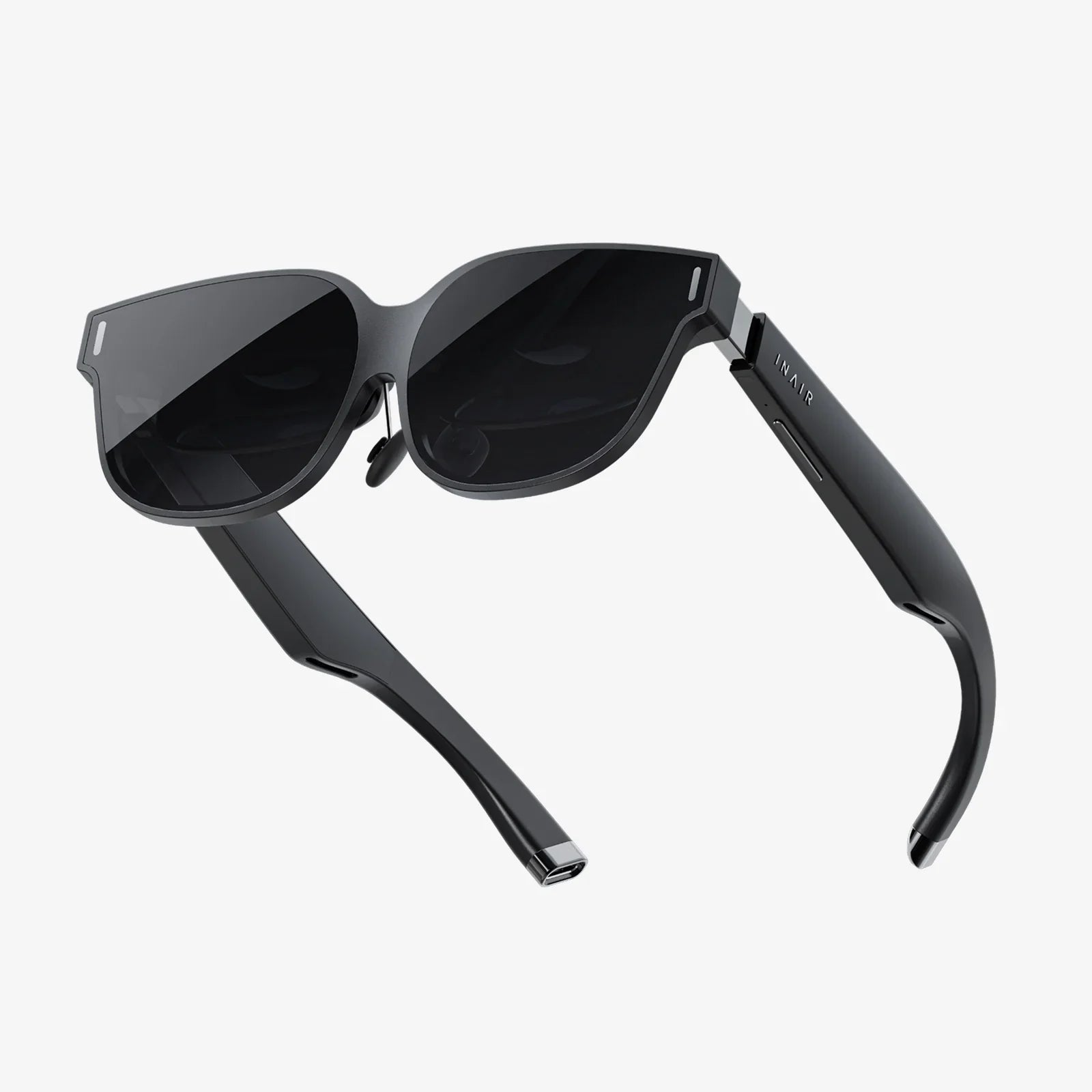
The world is on the cusp of a visual computing revolution, and the humble pair of glasses is its unlikely vanguard. No longer confined to the realms of science fiction, smart glasses are rapidly transitioning from niche gadgets to mainstream productivity and lifestyle tools, promising to overlay our physical reality with a seamless stream of digital information. This technological convergence is fueling an economic boom, with the global smart glasses market poised for a period of unprecedented expansion between 2024 and 2030. The narrative is no longer about if this technology will become integral to our daily lives, but how quickly and how profoundly it will transform industries, redefine human-computer interaction, and create a multi-billion-dollar ecosystem. The numbers tell a compelling story of innovation meeting necessity, driven by a remarkable Compound Annual Growth Rate that signals a new era of augmented living.
The Quantitative Landscape: Projecting the Meteoric Rise
To understand the magnitude of this shift, one must first examine the cold, hard data. Market analysts and research firms unanimously project a period of explosive growth for the smart glasses industry throughout the latter half of this decade. The global smart glasses market size, valued in the low single-digit billions of dollars in 2024, is forecast to catapult to a staggering figure exceeding ten billion dollars by the year 2030. This represents a monumental leap, underscoring a fundamental shift in adoption rates and technological capability.
The engine behind this dramatic expansion is the projected Compound Annual Growth Rate (CAGR). Industry forecasts suggest the market will surge at a CAGR of between 20% and 25% from 2024 to 2030. To put this into perspective, a 25% CAGR means the market will double in size approximately every three years. This growth rate is not merely healthy; it is indicative of a sector experiencing a powerful technological and commercial inflection point. It signals a transition from early adoption to early majority, where utility begins to decisively outweigh novelty for a broad range of consumers and enterprises.
Deconstructing the Growth Engine: Key Market Drivers
This phenomenal projected growth is not occurring in a vacuum. It is the direct result of several powerful, concurrent drivers synergizing to propel the entire industry forward at breakneck speed.
The Enterprise Revolution: Productivity Reimagined
The most significant and immediate driver of market growth is the rapid adoption of smart glasses within enterprise and industrial sectors. For businesses, the value proposition is clear and immediately quantifiable: enhanced efficiency, reduced errors, and improved safety.
- Logistics and Warehousing: Workers equipped with smart glasses can view picking lists, inventory locations, and shipping instructions hands-free, dramatically accelerating order fulfillment and reducing errors. Real-time visual guidance minimizes training time and maximizes accuracy.
- Manufacturing and Field Services: Technicians on assembly lines or in the field can access digital schematics, receive remote expert guidance via live video feed, and follow step-by-step augmented reality instructions overlaid directly onto the machinery they are repairing. This reduces downtime, improves first-time fix rates, and enhances knowledge retention.
- Healthcare: Surgeons can view patient vitals and imaging data without looking away from the operating field. Medical students can observe procedures from the surgeon's point of view, and nurses can streamline complex medication administration processes.
This enterprise-driven demand provides a stable, high-value revenue base that is funding the research and development necessary for the consumer market's future growth.
Technological Leaps: Making the Impossible Invisible
The clunky, socially awkward, and functionally limited smart glasses of the past are giving way to a new generation of devices, thanks to breathtaking advancements in core technologies.
- Micro-Optics and Waveguide Displays: Innovations in display technology, particularly in waveguide and holographic optics, are enabling manufacturers to create sleek, lightweight form factors that closely resemble conventional eyewear. These displays project high-resolution, bright images directly into the user's field of view without bulky components.
- 5G and Edge Computing: The proliferation of high-speed, low-latency 5G networks is crucial for offloading intensive processing tasks to the cloud or edge servers. This allows for thinner, lighter glasses with longer battery life, as the demanding work of rendering complex AR environments is handled remotely.
- Artificial Intelligence and Computer Vision: On-device AI chipsets are becoming more powerful and energy-efficient. They enable features like real-time object recognition, spatial mapping, and gesture control, making interactions with the digital world more intuitive and responsive.
- Battery Technology: Improvements in energy density and the development of low-power components are gradually solving one of the biggest historical constraints: all-day battery life.
The Software Ecosystem: Building the Augmented World
Hardware is nothing without software. The expansion of robust software development kits (SDKs) and operating systems designed specifically for augmented reality is empowering a global developer community to build compelling applications. From enterprise workflow solutions to immersive gaming, educational tools, and navigation aids, this burgeoning app ecosystem is creating the compelling use cases that drive hardware sales.
Market Segmentation: A Diverse and Expanding Universe
The smart glasses market is not a monolith. Its growth is being fueled by distinct segments, each with its own dynamics and potential.
- By Application: The enterprise/industrial segment currently holds the largest market share and will continue to be a dominant force. However, the consumer segment is expected to witness the highest growth rate towards the end of the forecast period, particularly in areas like social media, fitness, gaming, and personal navigation.
- By Display Type: This includes optical see-through (where the user sees the real world with digital images projected onto it) and video see-through (where cameras capture the real world and blend it with digital elements on a screen). Optical see-through is preferred for most enterprise and consumer applications due to its safety and natural feel.
- By Component: The market includes not just the finished wearable devices but also the critical components within them: sensors, displays, processors, cameras, and software. Each of these sub-markets is experiencing its own growth trajectory.
Navigating the Hurdles: Challenges and Restraints
Despite the overwhelmingly positive outlook, the path to ubiquitous adoption is not without significant obstacles that could temper growth.
- Privacy and Social Acceptance: The presence of always-on cameras and sensors in social settings raises legitimate privacy concerns. The industry must develop clear ethical guidelines, robust privacy controls, and visible indicators of recording to gain public trust. The "glasshole" stigma, while fading, still presents a barrier to widespread consumer adoption.
- Battery Life and Form Factor: While improving, achieving a full day of heavy use on a single charge in a form factor indistinguishable from regular glasses remains the ultimate engineering challenge.
- Content and Killer Apps: For the consumer market, a definitive "killer app"—an application so compelling it drives mass adoption—has yet to fully emerge. While many useful apps exist, the platform needs its equivalent of a spreadsheet for the PC or a web browser for the internet.
- Cost: High-end smart glasses remain a significant investment, particularly for consumers. As manufacturing scales and technology matures, prices are expected to fall, but this will be a gradual process.
The Road to 2030: A Future Forged in Glass
As we look towards 2030, the smart glasses market is set to evolve from a tool for specific tasks into a ubiquitous platform for computing. The lines between enterprise and consumer use will blur as devices become more capable and socially accepted. We can anticipate the rise of a thriving B2B2C model, where businesses provide smart glasses to employees who also use them for personal tasks, accelerating familiarity and comfort.
Furthermore, the convergence of smart glasses with the broader concept of the metaverse—a persistent network of shared 3D virtual spaces—will be a major catalyst. Smart glasses are poised to become the primary portal for accessing these immersive digital worlds in a way that is integrated with our physical environment, far surpassing the capabilities of smartphones or virtual reality headsets for all-day use.
The impressive CAGR from 2024 to 2030 is more than just a financial metric; it is a pulse check on a technological revolution. It measures the velocity at which a new layer of reality is being constructed, one that promises to enhance human potential, reshape industries, and redefine our connection to information. The companies, developers, and policymakers who successfully navigate the challenges of privacy, design, and utility will not only capture a significant share of this multi-billion-dollar market but will also play a pivotal role in building the foundational technology for the next era of human-computer interaction.
Imagine a world where instructions appear exactly where you need them, where language barriers dissolve with real-time subtitles for conversations, and where your environment becomes an interactive canvas for creativity and connection. This is the future being unlocked by the relentless innovation and staggering growth within the smart glasses market. The next time you put on a pair of glasses, consider that within this decade, that simple act might just be your gateway to an entirely augmented existence, seamlessly blending the digital and physical into a richer, more informed, and profoundly different human experience.
Share:
What's the Best Smart Glasses? A Guide to the Modern Wearable Revolution
Smart Glasses Learning: The Invisible Revolution Reshaping Education