


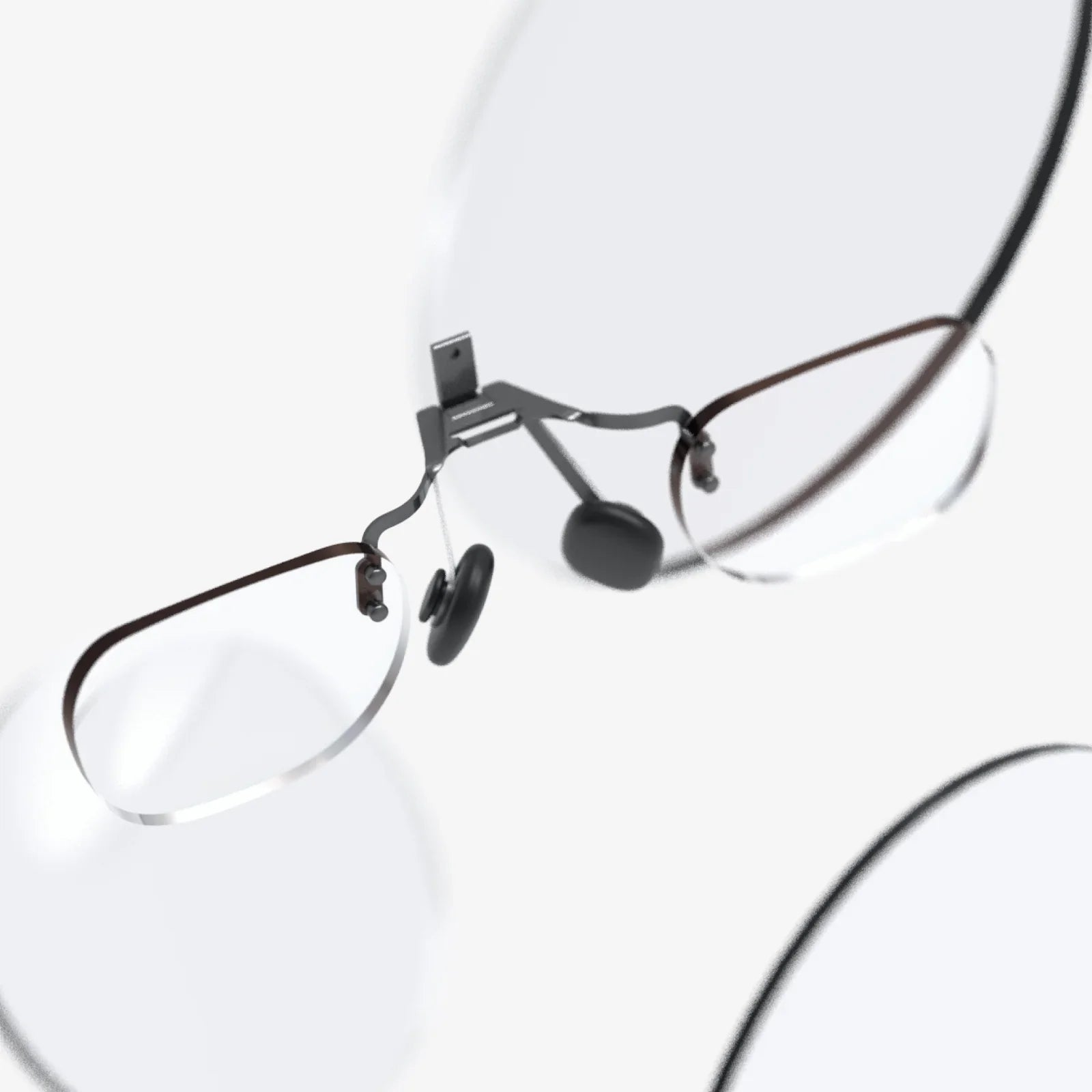
Remember the clunky, futuristic promises of smart glasses from a decade ago? The ones that screamed "tech enthusiast" from a mile away and offered more novelty than necessity? Forget them. If you haven't looked at the smart glasses landscape lately, 2025 is the year you need to pay attention. What was once a niche gadget for developers and early adopters has undergone a metamorphosis so profound that it's quietly integrating into the fabric of our daily lives, moving from science fiction to indispensable tool. The news today isn't about a single, earth-shattering product launch; it's about a mature ecosystem finally delivering on its long-held potential, and it's happening right before our eyes.
The Convergence: Where AI, Fashion, and Utility Finally Meet
The pivotal shift in 2025 isn't attributable to one magic bullet but to the harmonious convergence of several critical technologies reaching maturity simultaneously. For years, smart glasses were hampered by a fundamental trilemma: they could be powerful, they could be stylish, or they could have all-day battery life, but never all three at once. This year, that trade-off has effectively been eliminated.
First, and most importantly, is the artificial intelligence revolution. The on-device AI chipsets powering this year's models are not just incremental upgrades; they represent a generational leap. These are not mere assistants waiting for a voice command; they are proactive, contextual companions. They leverage multimodal AI—processing data from built-in cameras, microphones, and a suite of environmental sensors—to understand your situation and offer information before you even ask for it.
Imagine walking through a foreign city. Your glasses, recognizing you're in a new location, can subtly highlight navigation cues on the sidewalk, translate street signs in real-time as you look at them, and provide historical context about a building's architecture with a glance. This isn't a overlay of distracting graphics; it's a subtle, intuitive layer of context woven into your perception, all processed locally on the device for speed and privacy.
Second, the fashion barrier has been shattered. The defining characteristic of 2025's leading smart glasses is that they no longer look like smart glasses. Collaborations between leading tech firms and iconic eyewear designers have resulted in frames that are indistinguishable from high-end traditional eyewear. They come in a plethora of shapes, sizes, and materials—from classic aviators to bold, contemporary designs—catering to personal style rather than imposing a tech-centric aesthetic. The miniaturization of components is the unsung hero here: projectors are now small enough to be embedded within the frame itself, and batteries are distributed throughout the arms, eliminating the bulky appendages of previous generations.
Beyond Novelty: The Practical Applications Reshaping Industries
The true measure of a technology's success is its utility beyond entertainment. In 2025, smart glasses are proving to be transformative tools across numerous professional fields, moving from a cool gadget to a critical piece of enterprise infrastructure.
Revolutionizing Field Work and Manufacturing
For technicians, engineers, and assembly line workers, hands-free access to information is a game-changer. A technician repairing a complex piece of machinery can see a schematic overlay identifying parts and torque specifications directly on the equipment they are working on. A warehouse worker fulfilling orders has navigation cues and item details displayed in their periphery, dramatically increasing picking accuracy and efficiency. Remote expert assistance has also become seamless; a senior engineer can see exactly what a field technician sees and annotate their real-world view with arrows and notes to guide them through a complex procedure, saving immense time and travel costs.
The New Frontier of Healthcare
In healthcare, the applications are nothing short of revolutionary. Surgeons can monitor a patient's vital signs and view imaging data without ever looking away from the operating field. Medical students can observe procedures from the surgeon's point of view, with AI highlighting critical anatomical structures and techniques. For general practitioners, patient records and diagnostic aids can be accessed instantly during a consultation, allowing for more natural and engaged patient interaction.
Enhancing Daily Connectivity and Accessibility
For the general consumer, the value is in subtle augmentation. Real-time transcription and translation make conversations with someone who speaks a different language flow naturally, breaking down barriers in real-time. For individuals with visual impairments, AI-powered description of surroundings, text recognition, and navigation assistance provide a new level of independence. The always-available, low-friction camera means capturing life's moments from a first-person perspective without the barrier of a screen, leading to more authentic photos and videos.
Navigating the Inevitable: Privacy, Security, and the Social Contract
With great power comes great responsibility, and a device that can passively capture audio and video from a first-person perspective inevitably raises profound questions. The industry news in 2025 is not just about features; it's about the intense focus on building trust.
Privacy by design is now a non-negotiable selling point. Leading devices feature prominent hardware privacy switches that physically disconnect cameras and microphones, accompanied by a clear visual indicator (often an LED light) that signals when recording is active. This gives the user complete and verifiable control. Furthermore, on-device processing is emphasized heavily. Rather than streaming raw video data to the cloud, the AI extracts relevant information (e.g., translated text, an identified object) locally, and only that minimal data is used, ensuring that continuous video of your life isn't being stored or analyzed on remote servers.
A new social contract is being written around the use of this technology. Etiquette is evolving, with clear norms developing around when it is and isn't appropriate to record. Legislators are playing catch-up, but the industry's proactive stance on privacy features is a crucial step in preventing a public backlash and fostering widespread adoption. The conversation has shifted from "if" this technology will be adopted to "how" we will adopt it responsibly.
The Invisible Platform: The Ecosystem War Heats Up
The hardware is only part of the story. The real battle in 2025 is for the platform—the operating system and ecosystem that will define the standard for augmented reality. We are seeing the emergence of dedicated AR operating systems designed from the ground up for spatial computing, rather than modified mobile OSes.
These platforms are attracting developers in droves. The app ecosystem is exploding beyond simple utilities. Imagine interactive educational experiences where a biology student can explore a life-sized, animated human heart floating in their living room. Architects can walk clients through 3D holographic models of unbuilt structures. New forms of immersive storytelling and gaming are emerging that blend the physical and digital worlds in ways previously confined to imagination. This vibrant developer environment is creating a positive feedback loop: better apps drive hardware sales, which in turn attracts more developers.
What's Next? The Road Ahead for Smart Glasses
If 2025 is the year of maturation, what does the future hold? The trajectory points towards even deeper integration. We are moving towards contact lenses with basic AR capabilities, though that remains a few years out. Brain-computer interfaces are in early research stages, potentially allowing for control of AR environments through thought alone. The line between our biological senses and digital augmentation will continue to blur, raising new and even more complex ethical questions that we, as a society, must begin to grapple with now.
The technology is also becoming more personalized. AI models will learn individual preferences, routines, and behaviors to a far greater degree, acting as a true second brain—anticipating needs, managing information overload, and enhancing memory and cognition in personalized ways.
So, the next time you see someone wearing what looks like a ordinary pair of glasses, look closer. They might be navigating a new city, receiving real-time information about the world around them, or seamlessly communicating in another language. The revolution isn't coming; it's already here, and it's hiding in plain sight. The most compelling smart glasses news today in 2025 is that the future we were promised is finally wearing a very familiar face, and it’s quietly changing everything.
Share:
How Do VR Goggles Work: A Deep Dive Into Immersive Technology
Big Screen VR: The Ultimate Escape into Expansive Digital Realms