


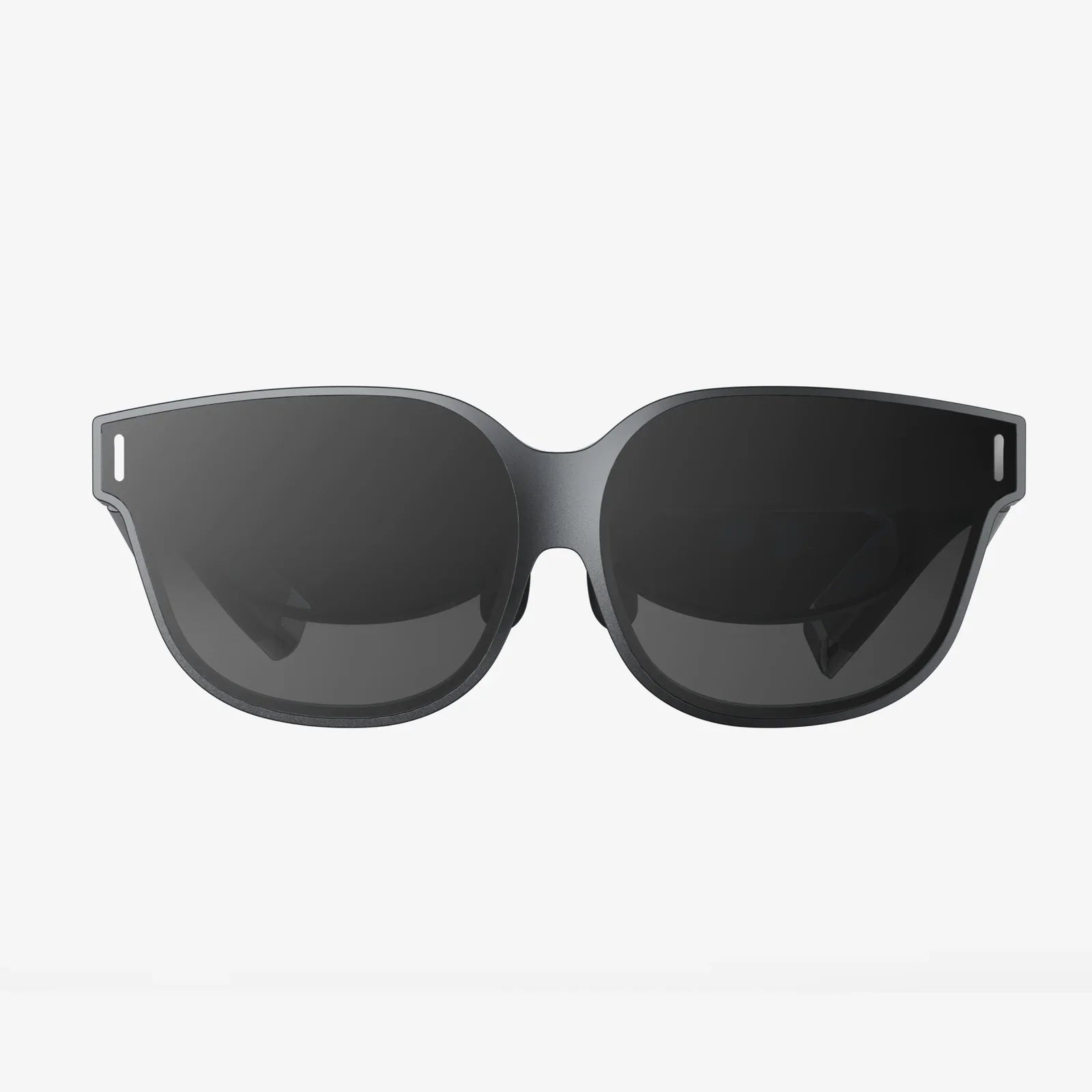
Imagine a world where digital information doesn't live on a screen in your hand, but is seamlessly woven into the very fabric of your reality. Where directions float effortlessly on the street ahead, translations appear in real-time over foreign text, and a colleague's vital stats materialize beside them during a crucial meeting. This is the promise of smart glasses, a promise that in 2025 has finally, tangibly, arrived. The market is no longer a speculative playground for early adopters; it's a burgeoning ecosystem of powerful, practical, and increasingly stylish wearable computers. But with so many options vying for your attention, how do you separate the truly transformative from the merely trendy? Our definitive smart glasses ranking for 2025 is your essential guide, meticulously crafted to navigate this exciting new frontier and help you find the pair that will change how you see the world.
The 2025 Smart Glasses Landscape: A Market Transformed
The journey to 2025 has been one of fits and starts for smart glasses. Early iterations were often bulky, expensive, and limited in functionality, confining them to niche industrial and developer circles. The turning point was a confluence of technological maturation. Breakthroughs in waveguide and holographic optics finally allowed for bright, clear displays without the dreaded "ski goggle" effect. Advances in micro-LED and laser beam scanning miniaturized projection systems to something that could fit into a standard eyeglass frame. Perhaps most critically, the development of ultra-low-power, dedicated AI co-processors meant these devices could handle complex computer vision and augmented reality tasks without draining their batteries in minutes or requiring a tethered phone for heavy lifting. This technological leap has given rise to a diverse market segmented not by price alone, but by core philosophy and use case.
The Criteria for Our 2025 Ranking
To compile a meaningful ranking, we moved beyond mere spec sheets and marketing claims. Our evaluation is built on a multi-faceted analysis, weighing each device against a rigorous set of criteria designed to reflect real-world value.
Display and Visual Fidelity
This is the soul of the experience. We assess brightness (nits), field of view (degrees), resolution, color accuracy, and transparency. Can you read text clearly on a sunny day? Does the digital overlay feel integrated with the real world or like a separate, floating layer? In 2025, the best displays are virtually indistinguishable from reality.
Audio and Microphone System
Smart glasses are as much about audio as they are about visuals. We evaluate the quality of spatial audio delivery—whether it's rich, immersive, and doesn't leak sound to those around you. Similarly, the microphone array is tested for its ability to isolate your voice in noisy environments like city streets or windy parks, making them effective for calls and voice commands.
Battery Life and Performance
We differentiate between total rated battery life and active use battery life—the duration when the display is on and processing is at its peak. A device that lasts 8 hours for music but only 90 minutes with AR features active is judged accordingly. Performance is measured by the fluidity of the interface and the responsiveness of AI features.
Design, Comfort, and Everyday Wearability
Do they look like normal glasses? Can you wear them for an entire day without fatigue? Are they available with prescription lenses? This category is paramount. Technology that you won't wear is useless. The top contenders in 2025 are fashion-forward, lightweight, and come in a variety of shapes and finishes.
Software Ecosystem and AI Capabilities
The hardware is a vessel for the software. We assess the intuitiveness of the user interface (often using gesture, touch, or voice control), the depth and usefulness of the native app library, and the intelligence of the integrated AI assistant. Can it proactively provide contextually relevant information? How well does it understand and execute complex commands?
Privacy and Security
In an era of always-on cameras and microphones, this is non-negotiable. We look for clear physical privacy switches that disable sensors, robust data encryption policies, and transparent user controls over what data is collected and how it is used.
The Top Contenders: 2025's Smart Glasses Elite
After extensive testing, a clear hierarchy has emerged. The following represent the pinnacle of what the current market has to offer, each excelling in specific areas.
The All-Round Champion
Topping our list is a model that achieves a near-perfect balance of power, elegance, and utility. Its strength lies in its lack of weakness. The display is stunningly crisp with a generous field of view, the audio is premium-grade, and its design is arguably the most indistinguishable from high-end traditional eyewear on the market. What sets it apart is its sophisticated contextual awareness. Its AI doesn't just wait for commands; it learns your routines and subtly surfaces information that is genuinely helpful—a calendar reminder as you leave for a meeting, the weather forecast as you glance out the window, or a translation prompt when it hears a foreign language. The battery comfortably lasts a full day of mixed use, and its software platform is both open enough for developers yet curated enough to ensure a high-quality experience. It is, simply put, the most complete package available today.
The Power User's Proposition
Claiming a very close second place is a device engineered for those who demand maximum computational performance. If the top pick is a sleek sports car, this is a loaded workstation on your face. It features the widest field of view in its class, processing power that rivals some handheld devices, and support for advanced developer tools for creating complex AR experiences. It is the undisputed king for immersive gaming, detailed 3D model visualization for engineers and architects, and real-time data overlays for field technicians. The trade-off is a design that, while improved, is still slightly more pronounced than our top pick, and a battery life that requires midday charging under heavy workloads. For creators and professionals who need the absolute cutting edge, it is unmatched.
The Discreet Daily Driver
In third place sits a model that has mastered the art of subtlety. Its philosophy is augmentation, not immersion. The display is smaller and designed primarily for glanceable information: notifications, short messages, navigation cues, and music controls. It excels precisely because it never demands your full attention. The design is supremely lightweight and available in countless styles, including collaborations with well-known fashion houses. The battery lasts for multiple days on a single charge, and its focus on core functionality makes it incredibly easy to use. It lacks the raw power for advanced AR applications, but for the vast majority of users who want to stay connected without constantly looking at their phone, it represents the most practical and wearable evolution of the technology.
The Budget-Conscious Innovator
Proving that high-end features are trickling down, our fourth-place entry offers a remarkable suite of capabilities at a surprisingly accessible price point. It makes intelligent compromises, opting for a very good (but not class-leading) display and a plastic composite frame instead of titanium. However, it retains core essentials like a responsive touchpad, decent microphones, and a robust companion app. Its standout feature is its aggressive partnership with mobile platforms, allowing it to leverage a phone's processing power to deliver experiences that rival more expensive standalone models. For students, curious newcomers, or anyone looking for their first step into smart eyewear without a massive financial commitment, it is an outstanding and highly compelling value.
Key Trends Defining 2025
Beyond individual models, broader trends are shaping the entire industry.
The Invisible Interface
The goal is no longer to have the most impressive interface, but to have no interface at all. Interaction is becoming increasingly seamless through advanced pinch-and-pull gestures detected by ultra-precise time-of-flight sensors, and always-listening AI that requires no wake word for simple, intuitive commands.
Health and Wellness Integration
This has emerged as a killer app. Advanced sensors are now capable of non-contact measurement of vital signs like heart rate, respiratory rate, and even blood oxygen levels through specialized wavelengths of light analyzed at the temple. They provide gentle reminders to correct posture, reduce screen time, or take a mindful breathing break, transforming them from communication devices into health companions.
Spatial Computing Becomes Mainstream
The concept of leaving digital artifacts—notes, drawings, reminders—in specific physical locations for yourself or others to find is moving from a tech demo to a practical tool. Painting a virtual "Honey-Do" list onto the refrigerator or leaving a animated instruction manual hovering over a piece of office equipment is now a reality with the right ecosystem.
Choosing What's Right For You
Selecting the perfect pair is a personal decision. Ask yourself these questions: Is raw computing power and immersive AR your top priority, or is discreet, all-day wearability more important? How integrated are you into a specific mobile ecosystem? Do you require prescription lenses? Most importantly, what problem do you want them to solve? Your answers will guide you to the right tier and model within our ranking.
The Future on the Horizon
As impressive as the 2025 lineup is, the horizon holds even more wonder. Prototypes already demonstrate retinal projection technology that could eliminate optics altogether, and developments in neural interfaces suggest a future where control is merely a thought. The convergence of AI and AR will create devices that don't just show us information, but truly understand our context and intentions, acting as proactive partners in navigating life.
The dream of ubiquitous computing is finally crystallizing onto our faces, not as a clunky accessory, but as a natural extension of our sight and cognition. The devices in our 2025 ranking are the vanguard of this revolution, each offering a unique lens through which to reimagine your reality. The question is no longer if you will adopt this technology, but which vision of the future you will choose to wear. Your window into an augmented world is now open; the only step left is to take a look.
Share:
Future of VR Goggles: A Journey Beyond the Screen and Into the Metaverse
Who Makes the Best AR? The Definitive Guide to Finding Your Perfect Rifle