


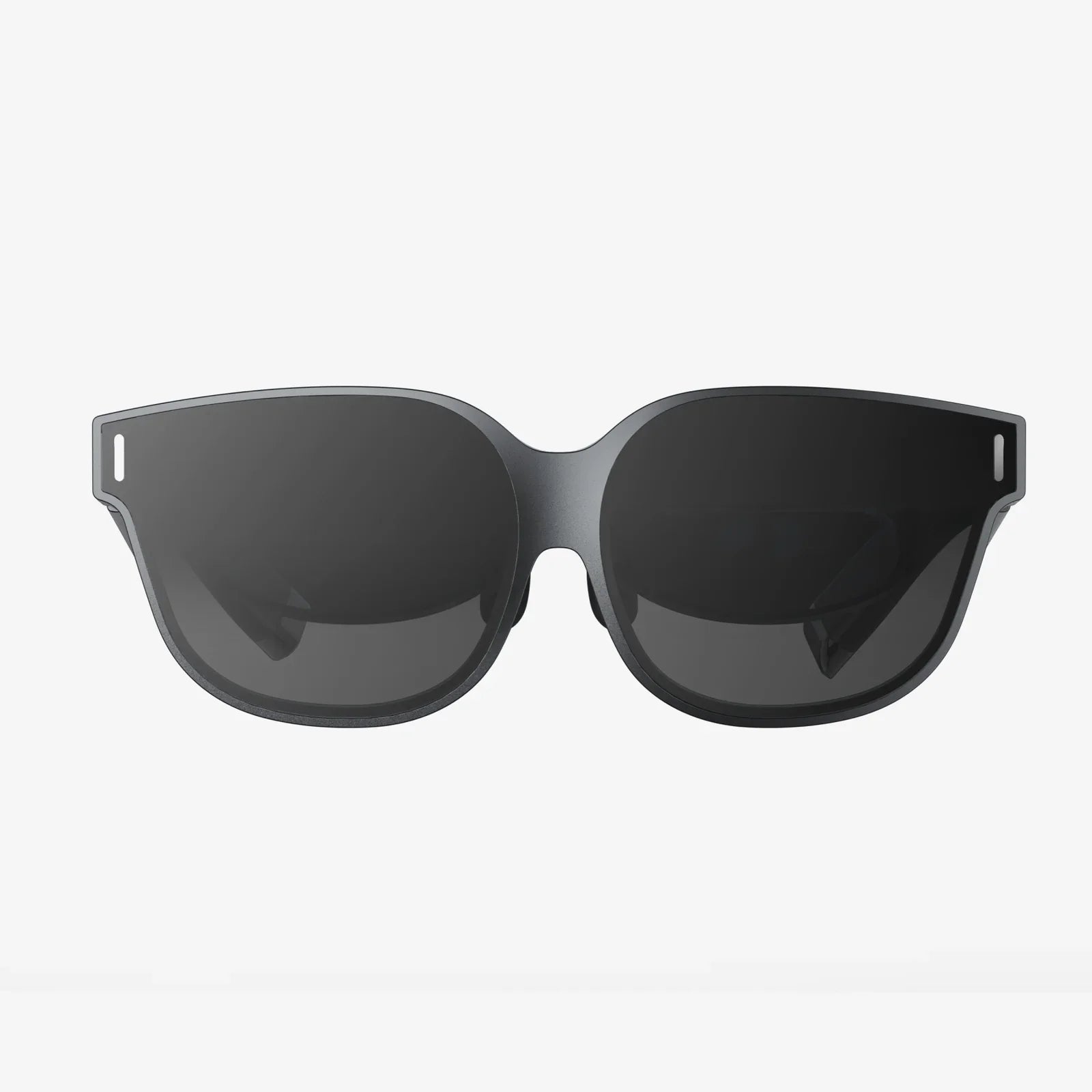
You’ve seen the headlines, the futuristic concept videos, and maybe even spotted someone on the street wearing a pair. But behind the sleek designs and sci-fi promises, a quiet revolution is unfolding, one that is fundamentally altering how we interact with information and with each other. The latest smart glasses sales news isn't just about numbers on a spreadsheet; it's a powerful signal of a tectonic shift in consumer technology, moving from niche gadgetry to an indispensable tool for modern life. This isn't a story about a single product's success or failure, but about the maturation of an entire category poised to become as ubiquitous as the smartphone.
Decoding the Surge: More Than Just Hype
Recent market analyses and sales figures point to a consistent and impressive upward trajectory for smart glasses. After years of being perceived as a technology perpetually "five years away," the data suggests the future has arrived. This growth is not a singular phenomenon but the result of a perfect storm of technological advancement, shifting consumer needs, and a broader acceptance of always-connected wearable devices.
The driving forces are multifaceted. The global push toward hybrid and remote work models has created a new demand for tools that enhance productivity without tethering users to a desk. Concurrently, the underlying technologies—from micro-OLED displays and waveguide optics to ultra-efficient processors and sophisticated voice recognition—have finally reached a point where they can be integrated into a form factor that is both powerful and socially acceptable to wear.
Beyond Novelty: The Core Use Cases Driving Adoption
The earliest iterations of smart glasses were often criticized for being solutions in search of a problem. Today, the sales momentum is being fueled by clear and compelling utility across several key domains.
The Professional and Industrial Arena
This has been the bedrock of the market's stability and growth. In sectors like manufacturing, logistics, field service, and healthcare, smart glasses are proving to be transformative. Technicians can access schematics and receive remote expert guidance hands-free, drastically reducing error rates and downtime. Warehouse workers can see picking and packing instructions overlaid on their visual field, streamlining complex fulfillment processes. In medical settings, surgeons can view patient vitals or reference imaging data without breaking sterility or looking away from the operating table. The return on investment in these scenarios is so tangible that enterprise adoption continues to be a primary engine for overall market expansion.
The Consumer Lifestyle Shift
While enterprise leads, the consumer segment is experiencing the most rapid growth. The use cases here are more diverse and personal. For the modern multitasker, smart glasses offer a way to stay connected without being disconnected from their surroundings. Receiving navigation prompts, reading and responding to messages, controlling smart home devices, or translating foreign language text in real-time—all these actions can be accomplished without ever pulling out a phone. This promotes a state of augmented awareness, where digital information enhances the physical world rather than distracting from it. For content creators and enthusiasts, first-person perspective recording and photography offer an immersive and seamless way to capture experiences.
Accessibility and Inclusivity
One of the most profound impacts of this technology is in the realm of accessibility. For individuals with hearing impairments, real-time speech-to-text transcription displayed within smart glasses can revolutionize communication. For those with low vision, features like magnification and object recognition can provide greater independence. This application transforms smart glasses from a convenience into a vital assistive technology, opening up new possibilities for inclusion.
The Form Factor Revolution: Design as a Sales Catalyst
A critical lesson learned from earlier market attempts is that technology must be subordinate to style. Consumers and professionals alike are unwilling to wear bulky, obtrusive, or socially awkward devices. The recent sales surge is directly correlated with a new generation of products that prioritize a familiar, eyeglasses-like form factor.
Manufacturers have made significant strides in miniaturizing the electronics and batteries, often embedding them within the frames themselves. The use of advanced materials has resulted in lighter, more comfortable designs. Perhaps most importantly, there is now a strong emphasis on aesthetics, with collaborations with renowned designers and a wide array of frame styles, colors, and lens options. This focus on wearability and fashion has been a major factor in breaking down the social barriers to adoption, making smart glasses not just a tool you wear, but an accessory you want to wear.
Navigating the Hurdles: Privacy, Battery Life, and Ecosystem
Despite the exciting progress, the path forward is not without its challenges. These hurdles represent both the current limitations of the technology and the concerns that must be addressed for truly mass-market adoption.
- The Privacy Paradox: Devices with always-on cameras and microphones understandably raise significant privacy concerns. The industry is grappling with establishing clear and transparent norms. Features like prominent recording indicator lights, physical camera shutters, and robust data encryption are becoming standard requirements to build trust with users and the public.
- The Battery Life Conundrum: Balancing performance with all-day battery life remains a technical challenge. Innovations in low-power displays, efficient processors, and perhaps new charging paradigms (like solar or kinetic energy harvesting) will be crucial for devices that are meant to be worn from morning to night.
- Building the Ecosystem: A device is only as useful as its software. The development of a rich and diverse application ecosystem is paramount. Developers need powerful and intuitive software development kits (SDKs) to create experiences that are truly native to the glasses form factor, moving beyond simple smartphone app ports.
The Future Lens: What Soaring Sales Tell Us About Tomorrow
The current sales trends are a preview of a more integrated future. We are moving toward a paradigm where contextual computing is ambient. Information will not be confined to a rectangle in your pocket but will be available in your periphery, responsive to your location, your activity, and your intent. Advances in artificial intelligence will power more intuitive and predictive interfaces, moving beyond simple voice commands to understanding gestures, gaze, and even context.
The line between augmented reality (AR) and virtual reality (VR) will continue to blur, with future devices likely offering mixed-reality experiences. Furthermore, the convergence of smart glasses with other health and biometric sensors could position them as a central hub for personal wellness, monitoring everything from activity levels to potential health indicators.
The rising sales figures are a clear vote of confidence from early adopters and enterprises. They signal that the technology has moved past the gimmick stage and is delivering real value. As the technology continues to refine itself—becoming lighter, more powerful, more intuitive, and more secure—its appeal will broaden exponentially. The question is no longer if smart glasses will become a mainstream reality, but how quickly they will redefine our relationship with the digital universe.
Imagine a world where your most important notifications don't buzz in your pocket but appear subtly in the corner of your eye during a conversation, allowing you to stay present. Envision walking through a foreign city where directions are painted onto the sidewalk and menus translate as you glance at them. Picture a mechanic who sees the torque specifications for every bolt overlayed directly on the engine, or a student learning anatomy by examining a holographic heart floating above their textbook. This is the promise reflected in the latest sales data—not just of selling more units, but of selling a new way of seeing, working, and living. The market is speaking, and it's telling us to look closer; the future is putting on a pair of glasses and seeing the world for what it can truly be.
Share:
What a Digital Product Is and Why It's Redefining Our World
Microdisplays Market: Illuminating the Future of Visual Technology and Its Explosive Growth