


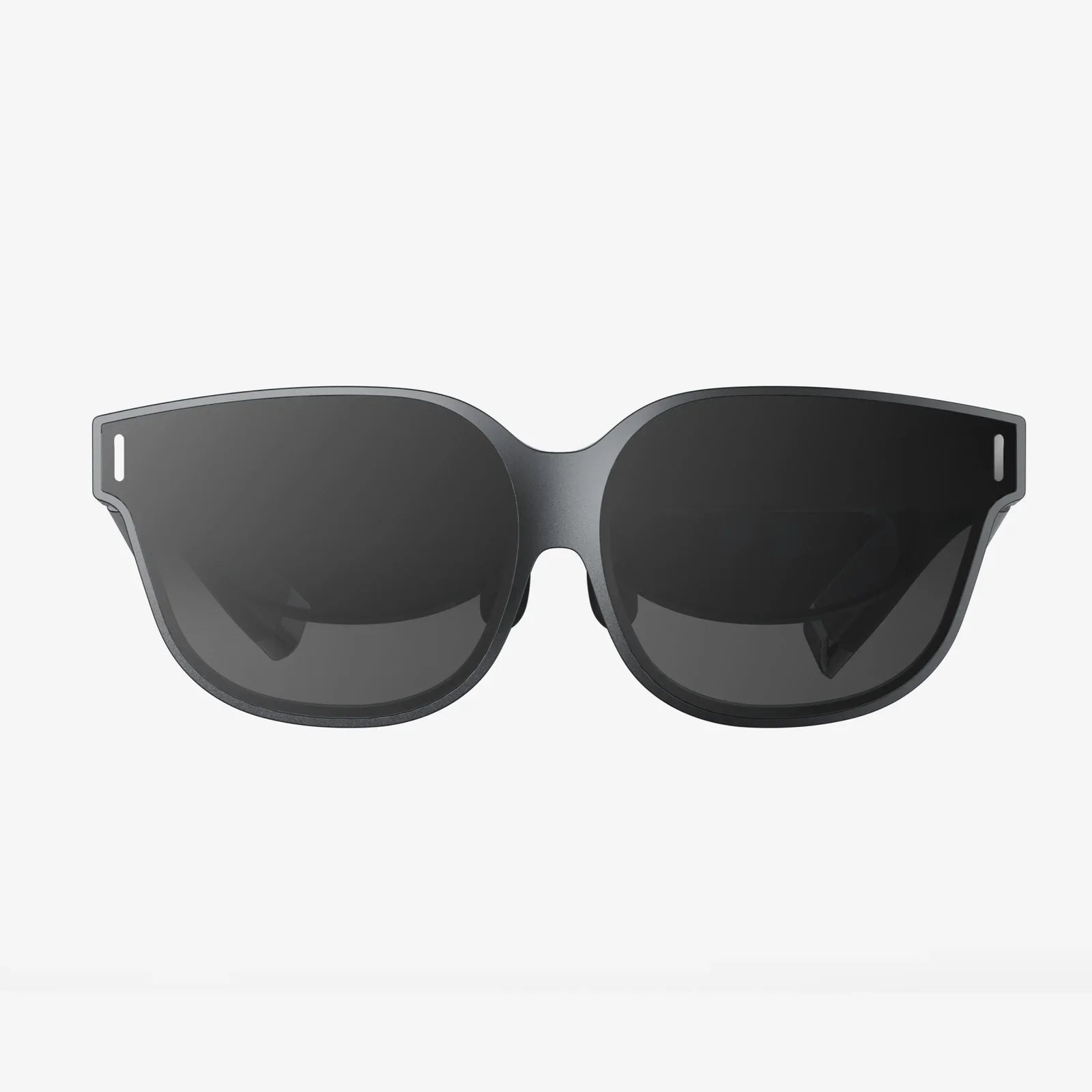
- by wangfred
Smart Glasses Technology and Applications: The Invisible Revolution Reshaping Reality
- by wangfred
Imagine a world where information doesn't live on a screen in your hand, but floats effortlessly in your field of vision. Where directions are painted onto the street in front of you, where a foreign language is instantly translated and subtitled onto a person’s face, and where a complex engine schematic can be overlaid onto the physical machinery you’re repairing. This is not a distant science fiction fantasy; it is the rapidly emerging reality being built by the relentless advancement of smart glasses technology and applications. This invisible revolution promises to fundamentally alter our relationship with technology, information, and each other, and it’s already begun.
At their core, smart glasses are wearable computers. But unlike their handheld counterparts, their primary interface is not touch, but sight and sound. This unique form factor is made possible by a sophisticated symphony of hardware and software components working in perfect harmony.
The most critical and technologically challenging component is the optical system, or the display. This is the mechanism that projects digital images into the user’s eye, making them appear as part of the real world. Several competing technologies are vying for dominance.
To understand and interact with the environment, smart glasses are equipped with a suite of sensors. This is the technology that allows them to see the world as you see it, but with a computer’s understanding.
All this data must be processed in real-time. This requires a powerful System-on-a-Chip (SoC), similar to those found in high-end smartphones, capable of handling complex computer vision algorithms, graphics rendering, and AI computations. Seamless connectivity via Wi-Fi, Bluetooth, and 5G is mandatory for accessing cloud-based services, streaming data, and enabling communication. Finally, all of this is powered by advanced, dense batteries often integrated into the frame’s temples, a constant challenge in the quest for all-day wearable comfort.
While consumer applications capture the public imagination, the most profound and immediate impact of smart glasses is occurring within enterprise and industrial settings. Here, the technology is not a novelty; it is a powerful tool solving real-world problems, boosting efficiency, and enhancing safety.
In fields like manufacturing, logistics, and field service, workers need access to information while their hands are busy. Smart glasses provide a revolutionary solution.
The healthcare sector is embracing smart glasses for their ability to provide sterile, hands-free access to critical information.
The path to mainstream consumer adoption is more complex, hinging on a delicate balance of social acceptance, compelling use cases, and flawless design. Early attempts often failed by trying to do too much, resulting in bulky, expensive, and socially awkward devices. The new generation is learning from these mistakes.
Instead of being a full-fledged computer for your face, many new consumer devices are focusing on specific, high-value applications.
For consumers, aesthetics are non-negotiable. The technology must be miniaturized to the point of near-invisibility. The ideal pair of smart glasses should be indistinguishable from a fashionable pair of traditional eyewear—lightweight, comfortable, and available in a variety of styles. This requires immense innovation in materials science, battery technology, and thermal management. The companies that can perfect this design will be the ones to unlock the mass market.
As with any transformative technology, the rise of smart glasses brings a host of serious challenges that society must proactively address.
This is the single biggest hurdle. A device with always-on cameras and microphones worn on one’s face represents a unprecedented privacy challenge. The potential for surreptitious recording in sensitive spaces—locker rooms, private meetings, public bathrooms—is a grave concern. Robust, transparent, and user-centric privacy frameworks are essential. Features like a mandatory, visible recording indicator light (a “privacy LED”) and clear auditory cues when recording are basic necessities. Legislation will need to evolve to protect individuals from being recorded without their consent in private settings.
How do we interact with someone who may be recording us, looking up information about us, or is distracted by a digital overlay during a conversation? New social norms and etiquette will need to develop. Is it rude to wear smart glasses during a dinner date? In a business meeting? Establishing these unwritten rules will be a gradual and potentially awkward process for early adopters.
If smartphones fractured our attention, smart glasses have the potential to shatter it entirely. The constant barrage of notifications and information directly in our line of sight could make it impossible to truly disconnect and be present in the moment. The line between the digital and physical worlds, already blurred, may disappear altogether, raising questions about our connection to un-augmented reality and the potential for new forms of digital addiction.
The technology is still in its relative infancy, but the trajectory is clear. We are moving towards a future of "ambient computing," where technology recedes into the background of our lives, providing information and assistance only when needed, without demanding our active attention. Smart glasses are the perfect vessel for this paradigm shift. Future iterations will likely move beyond glasses entirely, towards even more seamless interfaces like smart contact lenses or neural interfaces, but for the next decade, glasses will be the platform upon which this new reality is built. Their success won't be measured by how much time we spend using them, but by how effortlessly they integrate into our lives, enhancing our capabilities without diminishing our humanity.
The true potential of smart glasses technology isn't about replacing your smartphone or flooding your vision with distracting notifications; it's about granting you a subtle superpower—the ability to see the hidden layers of information that make up our world, to connect with expertise instantly, and to navigate life with an unprecedented level of context and understanding. The device itself will fade from view, both physically and mentally, leaving only the enhanced capability it provides. The question is no longer if this future will arrive, but how quickly we can build it responsibly, and how ready we are to see the world through a new, smarter lens.
Share:
Buy AI Glasses with Video: The Ultimate Guide to the Next Evolution in Wearable Tech
Smart Glasses Technology Trends 2025: The Dawn of Pervasive Augmented Reality