


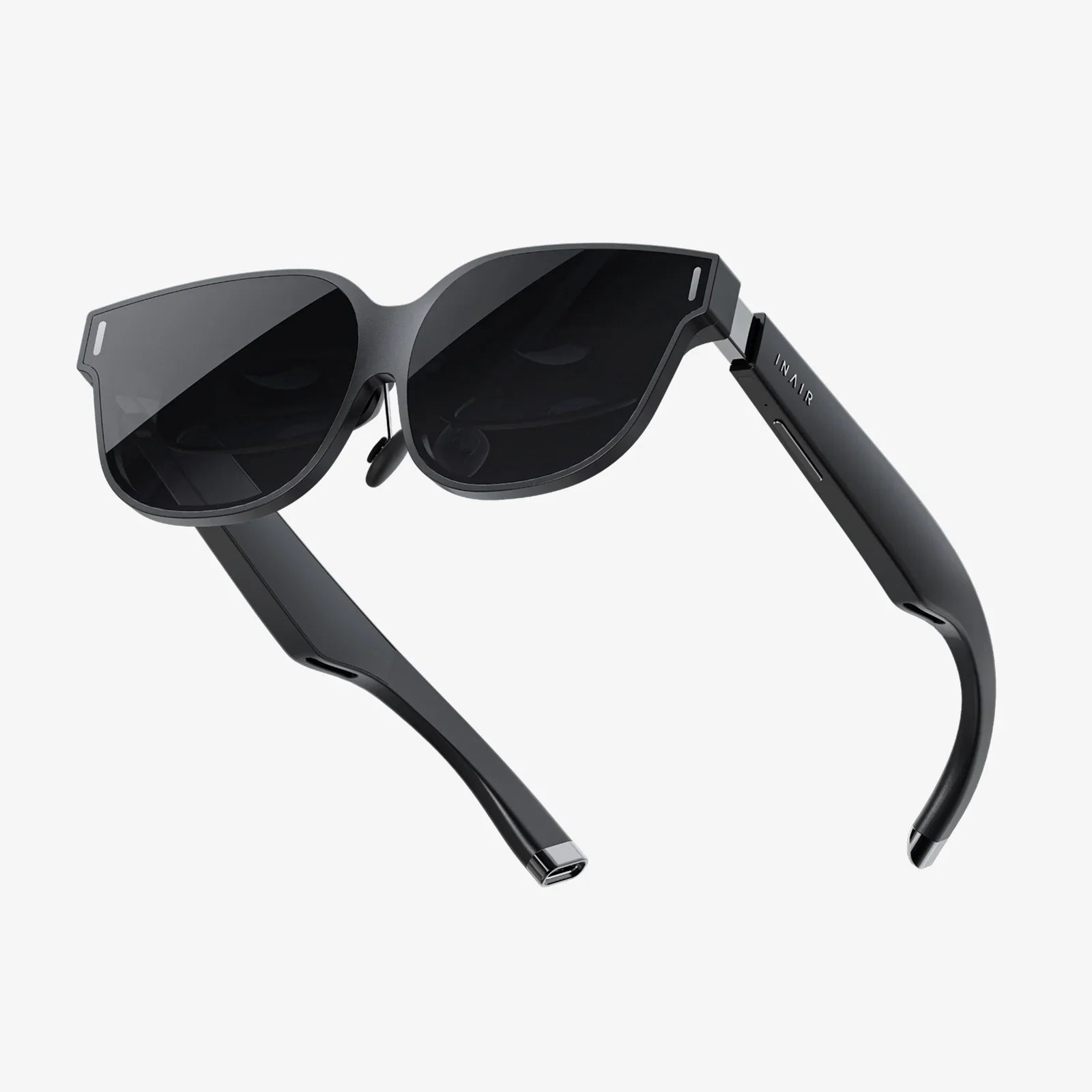
Imagine a world where information flows as freely as air, where digital data seamlessly overlays your physical reality, and the boundary between the computer and the human eye dissolves. This is not a scene from a science fiction epic; it is the imminent future promised by smart glasses that have a screen. This revolutionary wearable technology is rapidly evolving from clunky prototypes into sleek, powerful devices, poised to become the next dominant platform in personal computing, fundamentally altering how we work, socialize, and perceive the world around us.
The Architectural Blueprint: How Screen-Equipped Smart Glasses Work
At their core, smart glasses with displays are a marvel of miniaturization and optical engineering. They are not merely cameras and speakers attached to a frame; they are sophisticated computers designed to project a digital interface onto the user's field of vision.
The Display Technologies: A Window to the Digital World
The most critical component is, unsurprisingly, the display system. Unlike a traditional screen you look at, these displays must project an image that appears to float in space, transparently overlaid on the real world. Several competing technologies are vying for dominance:
- Waveguide Technology: This is currently the most prevalent method in consumer-ready devices. It involves using tiny projectors, often based on LEDs or lasers, to shoot light into a transparent piece of glass or plastic (the waveguide). This light is then bounced through the waveguide using a series of complex microscopic structures like diffraction gratings or holographic optical elements (HOEs) until it is finally directed into the user's eye. The result is a bright, sharp image that appears to be several feet away, all while the lens itself remains clear.
- Curved Mirror Optics: This approach uses a miniature display panel, like a micro-OLED, positioned above or to the side of the lens. The image from this display is then reflected off a specially designed curved mirror combiner and into the eye. This method can offer exceptional image quality and color fidelity but can sometimes result in a bulkier form factor.
- Retinal Projection: The most futuristic approach, retinal projection, bypasses a screen altogether. It uses low-power lasers to scan images directly onto the retina of the eye. This technology promises incredibly high resolution and a vast field of view that is always in focus, regardless of the user's vision. However, it remains complex and is still largely in the research and development phase.
The Sensory Suite: Seeing, Hearing, and Understanding the World
To be truly "smart," these glasses are packed with a suite of sensors that act as their eyes and ears:
- Cameras: High-resolution cameras capture the world from a first-person perspective, enabling photo and video capture, computer vision, and augmented reality (AR) experiences. Depth-sensing cameras, like time-of-flight sensors, map the environment in 3D, allowing digital objects to understand and interact with physical surfaces.
- Inertial Measurement Units (IMUs): These sensors, including accelerometers and gyroscopes, track the precise movement and orientation of the user's head. This is crucial for stabilizing the digital overlay and ensuring it stays locked in place in the real world, whether you're turning your head or walking down the street.
- Microphones and Speakers: Advanced microphone arrays allow for voice commands and clear audio capture, even in noisy environments. Bone conduction speakers or tiny directional speakers deliver audio directly to the user's ears without blocking ambient noise, which is essential for situational awareness.
The Onboard Intelligence: The Brain Behind the Lenses
Processing all this sensor data in real-time requires significant computing power. Early models often relied on a tethered connection to a smartphone or a separate processing unit. The current generation, however, is integrating powerful systems-on-a-chip (SoCs) directly into the frames. These chips handle everything from running the operating system and interpreting voice commands to executing complex computer vision algorithms that recognize objects, faces, and text. This shift toward standalone processing is what will ultimately untether users and make the experience truly immersive and mobile.
A Universe of Applications: Beyond Novelty and Into Necessity
The true potential of screened smart glasses lies not in the technology itself, but in the transformative applications it enables across nearly every facet of life.
Revolutionizing the Professional Workspace
The enterprise and industrial sectors are poised to be the earliest and most profound beneficiaries. For field technicians, having a schematic, instruction manual, or live video feed from a remote expert superimposed on the machinery they are repairing allows for hands-free, error-free work. Surgeons could have vital signs, MRI data, or procedural guides visible during an operation without ever looking away from the patient. In logistics and warehousing, workers can see picking lists, inventory data, and optimal navigation routes overlaid on the shelves, dramatically improving efficiency and accuracy.
Redefining Social Connection and Content Consumption
On a personal level, the implications are staggering. Imagine watching a movie on a virtual 100-inch screen while on an airplane or having turn-by-turn navigation arrows painted directly onto the road in front of you. Social interactions could be enhanced with real-time translation subtitles appearing below a person speaking a foreign language. Photographers and content creators can frame shots without a viewfinder, capturing life from a truly first-person perspective.
The Next Evolution of Accessibility
This technology holds immense promise for accessibility. For individuals with visual impairments, smart glasses could highlight obstacles on a sidewalk, read text from a menu aloud, or identify products on a shelf. For those with hearing difficulties, they could provide real-time captions of conversations. This ability to augment human senses has the potential to break down barriers and create a more inclusive world.
The Inevitable Challenges: Navigating the Ethical and Social Minefield
With such powerful technology comes an equally significant set of challenges that society must confront head-on.
The Privacy Paradox: The Always-On Camera
The most immediate and visceral concern is privacy. A device that can record video and audio from a first-person perspective raises alarming questions about consent and surveillance. The concept of the "glasshole"—a term coined for users who are intrusive and disrespectful of social norms—is just the tip of the iceberg. How do we prevent covert recording in locker rooms, private meetings, or confidential spaces? Legislation and social etiquette will need to evolve rapidly to establish clear boundaries. Technical solutions, like a mandatory, visible recording indicator light that cannot be disabled, will be a crucial first step in building public trust.
The Digital Divide and the Dystopian Potential
There is a real risk of creating a new digital divide between those who can afford this advanced technology and those who cannot. Furthermore, the potential for constant information overload, targeted advertising injected directly into our vision, and a further erosion of our attention spans is a legitimate concern. Will we be able to look at a beautiful sunset without a notification popping up? Will our reality become a cluttered canvas of digital spam? The design of these systems must prioritize user control, minimalism, and the ability to easily disconnect.
The Human Factor: Social Acceptance and Safety
Social acceptance remains a major hurdle. Talking to someone who is wearing cameras and a screen can feel disconcerting; it's unclear if they are paying attention or recording the interaction. Safety is another critical issue. While audio passthrough is common, visual distraction is a real danger. Walking down a street or, more perilously, driving a car while interacting with digital content could have catastrophic consequences. The technology must incorporate robust safety features, perhaps using eye-tracking to disable complex interfaces during activities like driving.
The Road Ahead: From Prototype to Ubiquity
The journey toward mainstream adoption of screened smart glasses is a marathon, not a sprint. Current limitations in battery life, field of view, display brightness, and form factor are significant but not insurmountable. We can expect rapid advancements in micro-battery technology, more efficient processors, and breakthroughs in optical engineering that will make the devices lighter, more powerful, and indistinguishable from regular eyewear.
The killer application that drives mass adoption may not yet exist. It could be a new social media platform built entirely around a first-person perspective, a revolutionary gaming experience that blends the physical and digital worlds, or an enterprise tool that becomes as essential as a laptop. The ecosystem of apps and services will be just as important as the hardware itself.
The path forward requires a delicate balance of relentless innovation and thoughtful regulation. Tech companies must engage in transparent dialogue with policymakers, ethicists, and the public to co-create a future where this technology enhances humanity without diminishing our privacy, safety, or human connection.
The age of staring down at a handheld rectangle is drawing to a close. The next computing revolution will not be held in your hand; it will be projected directly before your eyes, weaving the digital and physical into a single, continuous tapestry of experience. The question is no longer if this future will arrive, but how we will choose to shape it.
Share:
VR Headset Price Canada: Your 2024 Guide to Cost, Value, and Finding the Perfect Fit
VR Headset Price Canada: Your 2024 Guide to Cost, Value, and Finding the Perfect Fit