


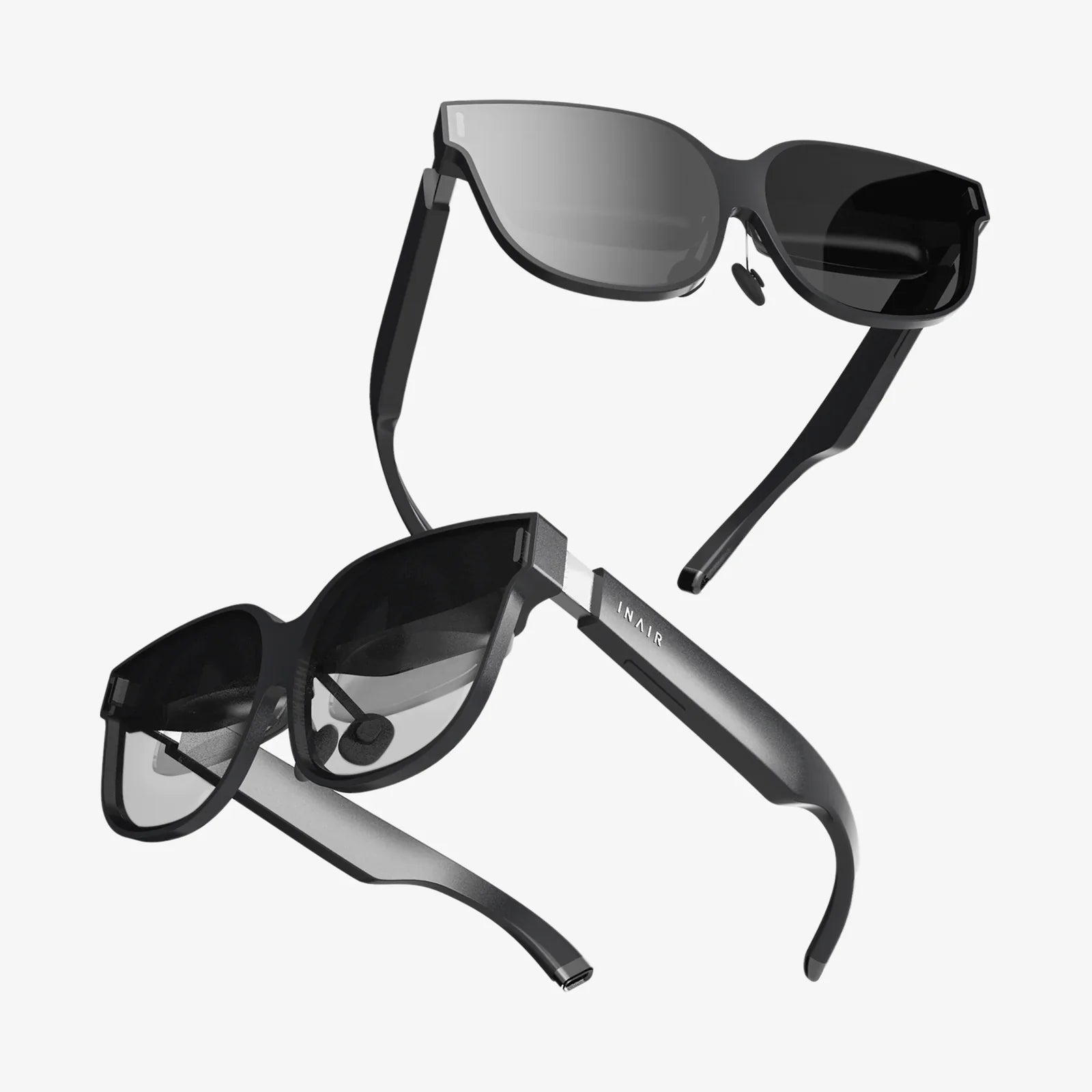
- by wangfred
Smart Glasses That Read Text Are Revolutionizing Accessibility and Human Interaction
- by wangfred
Imagine walking through a foreign city where every street sign, every menu, every scrap of text instantly translates and whispers into your ear. Envision a world where a person who is blind can independently walk into a grocery store and know not just which can is tomatoes, but the nutritional information and the price. This is not a distant sci-fi fantasy; it is the emerging reality being built today by smart glasses that read text. This technology represents a fundamental shift, moving computing from something we hold in our hands to something that seamlessly overlays and enhances our perception of the world, turning the visual landscape into an audible and interactive experience.
The concept of wearable displays has captivated inventors and consumers for decades. Early iterations were often bulky, expensive, and limited in functionality, perceived more as tech demonstrations than practical tools. The true turning point came with the refinement of core technologies: miniaturized cameras, powerful mobile processors, advanced battery solutions, and crucially, sophisticated software. This convergence allowed developers to move beyond simple display functions and tackle a more profound challenge: interpreting the world visually. Reading text was a natural and immensely valuable first application. It addressed a clear, universal need—access to information embedded in our physical environment—and did so in a way that was both intuitive and hands-free.
The seemingly simple act of capturing text and reading it aloud is a complex dance of hardware and software working in concert. The process can be broken down into several critical stages.
It all begins with a miniature, high-resolution camera discreetly embedded in the frame of the glasses. This camera acts as the device's eye, continuously or on-command capturing images or video feed of the user's field of view. Advanced models may utilize multiple cameras for depth sensing or to widen the field of view, ensuring they can capture text from various angles and distances.
The raw image data is then processed using a powerful combination of on-device and cloud-based computing. The first step is image pre-processing, where the software corrects for distortions, adjusts contrast, and sharpens the image to make the text as clear as possible. This is crucial for handling poor lighting, curved surfaces, or worn-out text.
This is the core technological marvel. OCR algorithms analyze the pre-processed image to identify and isolate regions containing text. They then perform the intricate task of recognizing individual characters—distinguishing an 'o' from a 'c', or a '8' from a 'B'—and assembling them into words, sentences, and paragraphs. Modern OCR, powered by machine learning, is exceptionally adept at this, capable of recognizing a vast array of fonts, styles, and even handwritten text with increasing accuracy.
Basic OCR might simply read the characters in order. But advanced systems go much further. Natural Language Processing algorithms analyze the extracted text to understand its context. Is this a headline? A paragraph in a book? An ingredient list on a bottle? This understanding allows for smarter reading. For instance, when encountering a menu, the glasses might intelligently list the options rather than reading the entire layout including prices and footnotes monotonously. It can also handle tasks like language translation in near real-time, recognizing that the captured text is in one language and outputting speech in another.
The final step is delivering the information to the user. This is typically done through a bone conduction speaker or a small directed speaker housed in the temple of the glasses. Bone conduction is particularly elegant as it transmits sound waves through the skull bone directly to the inner ear, leaving the ears completely open to hear ambient environmental sounds—a critical feature for safety and situational awareness. The user hears a clear, synthetic (or sometimes human-recorded) voice reading the text, often with customizable speed, volume, and voice type.
While the applications are broad, the impact of text-reading smart glasses on the visually impaired and blind community is nothing short of revolutionary. For this group, the technology is not a convenience; it is a key to greater autonomy and engagement with the world.
Traditional tools like magnifiers are limited and can be socially stigmatizing. Smart glasses, however, offer a discreet, powerful, and integrated solution. They can read mail, identify denominations of paper currency, confirm the right can of soup, read a computer screen at work, and recognize product labels on a shelf. This reduces reliance on others for everyday tasks and fosters a profound sense of self-reliance. The ability to simply look at a sign and know what it says restores a layer of interaction with the environment that many sighted people take for granted. It’s a tool for social inclusion, allowing for more fluid participation in everything from reading a handout in a meeting to browsing a book at a cafe.
The utility of this technology extends far beyond its core accessibility function, offering compelling benefits for a wide range of users.
Despite the promise, the path forward for smart glasses that read text is not without significant obstacles.
Privacy and the Social Contract: A device with a always-present camera inherently raises privacy concerns. The idea of being recorded without consent is a major societal hurdle. Manufacturers must address this with clear physical indicators like recording lights, robust privacy controls that give users complete command over data capture, and transparent data policies. Public acceptance will depend on establishing a clear social etiquette for their use.
Technical Limitations: Battery life remains a constraint, as continuous video processing is computationally intensive. Accuracy, while impressive, is not perfect; highly stylized fonts, poor lighting, and complex layouts can still challenge the software. Furthermore, the form factor must continue to improve, becoming lighter, more stylish, and indistinguishable from regular eyewear to achieve mass adoption.
The Cost Barrier: Currently, advanced models represent a significant investment. For the technology to fulfill its promise of universal accessibility, costs must come down to be within reach of those who need it most.
The evolution of smart glasses that read text is pointing toward even more deeply integrated and intelligent systems. We are moving toward contextual awareness, where the glasses won't just read text but will understand its meaning relative to your location and activity—reading a restaurant menu and then offering reviews for the dishes you just heard. Haptic feedback could provide subtle vibrations to guide a user's gaze toward text that needs reading. Integration with vast AI models could turn the glasses into a real-time research assistant, capable of answering complex questions based on the text it sees. Ultimately, this technology is a stepping stone to a broader paradigm of augmented reality, where digital information doesn't live on a screen but is woven into the very fabric of our perceived reality.
The quiet hum of a voice in your ear, translating the visible world into sound, is more than just a helpful feature. It is the sound of barriers crumbling—barriers of ability, language, and information access. Smart glasses that read text are forging a path toward a more inclusive, efficient, and interconnected human experience, promising a future where everyone has the power to hear what the world has to say.