


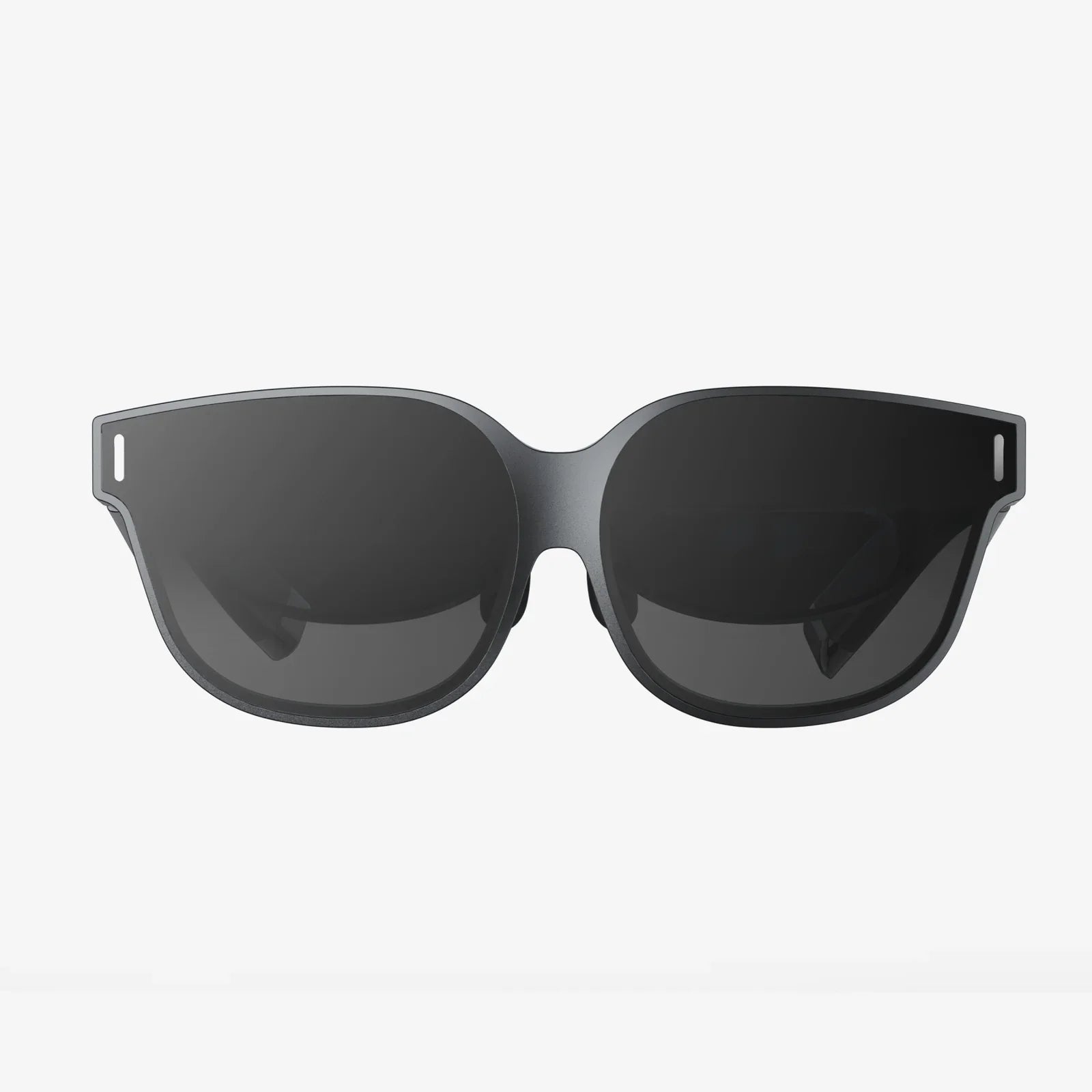
Imagine a world where digital information doesn't live on a screen in your hand but is seamlessly painted onto the canvas of your reality. This is the promise that has hovered on the horizon for over a decade, a future perpetually five years away. Yet, if you look closely at the flurry of smart glasses updates today, a different story emerges—one of quiet but monumental progress, converging technologies, and a industry-wide push to finally deliver on that sci-fi dream. The race to own the space in front of your eyes is heating up, and the latest developments suggest the finish line is closer than ever.
The Hardware Revolution: Seeing the World in High Definition
The single greatest barrier to widespread smart glasses adoption has been the hardware. Clunky designs, poor battery life, and, most critically, underwhelming displays have relegated most devices to niche markets or developer kits. However, recent smart glasses updates today reveal a significant leap forward.
At the core of this progress are advancements in waveguide and microLED technology. Waveguides are the transparent lenses that project digital images into the user's eye. Early versions were often dim, had a narrow field of view (FOV), and suffered from color distortion. The latest iterations are achieving unprecedented clarity and brightness, even in direct sunlight. Manufacturers are now producing waveguides that offer a FOV comparable to looking at a large computer monitor at a comfortable distance, a critical threshold for immersive usability.
Paired with these optical breakthroughs are microLED displays. These tiny, incredibly efficient light sources are the key to creating bright, vibrant images without draining the battery or generating excessive heat. The miniaturization of these components is a headline-making smart glasses update today, as it directly enables the holy grail of the industry: a form factor that resembles, and is as lightweight as, a standard pair of eyeglasses. We are moving away from the face-mounted computer look and toward a future of socially acceptable, all-day wearable AR.
The AI Brain: From Display to Digital Assistant
Powerful hardware is useless without intelligent software. The most pivotal smart glasses updates today are not just about what you see, but how the device understands what you are seeing. This is where Artificial Intelligence and machine learning take center stage.
Modern smart glasses are evolving into context-aware companions. Through a combination of computer vision and on-device AI processing, they can:
- Identify Objects and Text: Look at a landmark and instantly receive historical information. Glance at a menu in a foreign language and see a real-time translation overlaid on the text. This capability is moving from a neat demo to a reliable, everyday tool.
- Provide Navigational Context: Instead of looking down at a phone map, directional arrows and cues can be projected onto the street in front of you, allowing for seamless, heads-up navigation.
- Offer Real-Time Information: Imagine looking at a complex piece of machinery and seeing diagnostic data or assembly instructions floating beside it. For field technicians and engineers, this is a game-changing productivity tool that is rapidly becoming a reality.
This shift transforms smart glasses from a simple display into an active participant in your environment. The device is no longer a screen; it's an intelligent assistant that perceives the world with you and provides relevant, contextual information exactly when and where you need it.
The Connectivity Conundrum: 5G, Wi-Fi 6E, and On-Device Power
Processing vast amounts of visual data and running complex AI models requires immense computational power. There are two competing philosophies driving smart glasses updates today, each with major implications for design and function.
The first is a tethered or companion-model approach. Here, the glasses themselves are a sophisticated display and sensor hub, but they offload the heavy number-crunching to a more powerful device in your pocket or on your belt, connected via a high-speed link like Bluetooth or a proprietary protocol. This allows for a lighter, cooler, and more energy-efficient design on the face.
The second, more ambitious approach is the standalone model. These glasses aim to contain all the necessary processing power within the frame itself. This grants ultimate freedom and mobility but comes with significant challenges in managing thermals, weight, and battery life. Advances in low-power chipsets designed specifically for AR are making this increasingly feasible.
Bridging these two worlds is the rollout of high-speed, low-latency connectivity like 5G and Wi-Fi 6E. These technologies enable a hybrid model where some processing is done on-device for immediacy, while more complex tasks are handled in the cloud, with the high-speed connection making the delay imperceptible. This evolving connectivity landscape is a crucial enabler discussed in nearly every analysis of smart glasses updates today.
The Software Ecosystem: Building the AR App Store
A platform is only as valuable as the software it runs. The most beautiful, powerful pair of smart glasses is a paperweight without a robust ecosystem of applications. Recognizing this, major players are making significant software-focused smart glasses updates today.
Development kits are becoming more accessible and powerful, allowing creators to experiment and build novel AR experiences. We are seeing the emergence of AR-specific operating systems and APIs that give developers standardized tools to create applications that can understand and interact with the physical world.
The types of applications emerging are diverse:
- Enterprise & Productivity: Remote assistance, hands-free instruction manuals, and 3D model visualization for architects and designers.
- Health & Wellness: Real-time fitness metrics, guided meditation with visual cues, and applications assisting those with visual impairments by enhancing contrast or reading text aloud.
- Social & Entertainment: Persistent AR games that turn a city park into a digital battlefield, or social filters that allow friends to leave digital messages and artwork in specific locations for others to discover.
The battle to become the default platform for AR software is just beginning, and the strategies being deployed now will determine who wins the next great computing platform.
The Privacy Paradigm: Navigating the Always-On Camera
It is impossible to discuss smart glasses updates today without addressing the elephant in the room: privacy. A device that sits on your face, capable of recording audio and video, raises legitimate and serious concerns. How the industry addresses these concerns will be a primary factor in public acceptance.
Latest developments show a multi-pronged approach. On the hardware side, we are seeing more prominent physical privacy switches that clearly disable cameras and microphones, and indicator lights that are hardwired to activate when recording. On the software side, there is a push for on-device processing, ensuring that sensitive visual and audio data never leaves the glasses themselves, being processed and immediately discarded rather than streamed to the cloud.
Transparency from companies about what data is collected and how it is used is becoming a standard part of product launches. Building trust is no longer an afterthought; it is a foundational requirement for any product hoping to succeed in the consumer market. The conversation around smart glasses updates today is as much about ethics and policy as it is about transistors and pixels.
The Market Landscape: Titans, Startups, and Open Platforms
The market for smart glasses is no longer a fragmented collection of startups. The flurry of smart glasses updates today reveals a strategic battlefield where tech titans, specialized hardware firms, and software giants are all vying for position.
Some are pursuing a closed, vertically integrated model, controlling the hardware, software, and services to ensure a seamless user experience. Others are betting on an open platform approach, focusing on creating the core operating system and partnering with a variety of hardware manufacturers, much like the model that dominates the smartphone industry.
This competition is incredibly healthy for innovation. It leads to rapid iteration, a diversity of form factors and price points, and prevents any single entity from stalling progress. The collaboration between component makers, software developers, and device manufacturers is creating a rising tide that is lifting all boats, accelerating the entire industry toward a more capable and accessible future.
From the subtle refinement of a new waveguide that makes text sharper to the grand strategic partnerships aiming to define the metaverse, the landscape is dynamic and fiercely competitive. This constant churn of innovation is what makes following smart glasses updates today so fascinating.
The whispers of a revolution have finally grown into a roar you can hear through the frames of the latest devices. The pieces of the puzzle—crystal-clear optics, intelligent software, and always-available connectivity—are rapidly snapping into place, moving augmented reality from a compelling concept to an imminent, tangible part of our daily lives. The next time you put on a pair of glasses, the world you see might just be fundamentally different.
Share:
Augmented Reality AR and Quick Response QR: The Invisible Bridge to a Hyper-Connected Future
Augmented Reality Glasses How It Works: A Deep Dive Into The Digital Overlay