


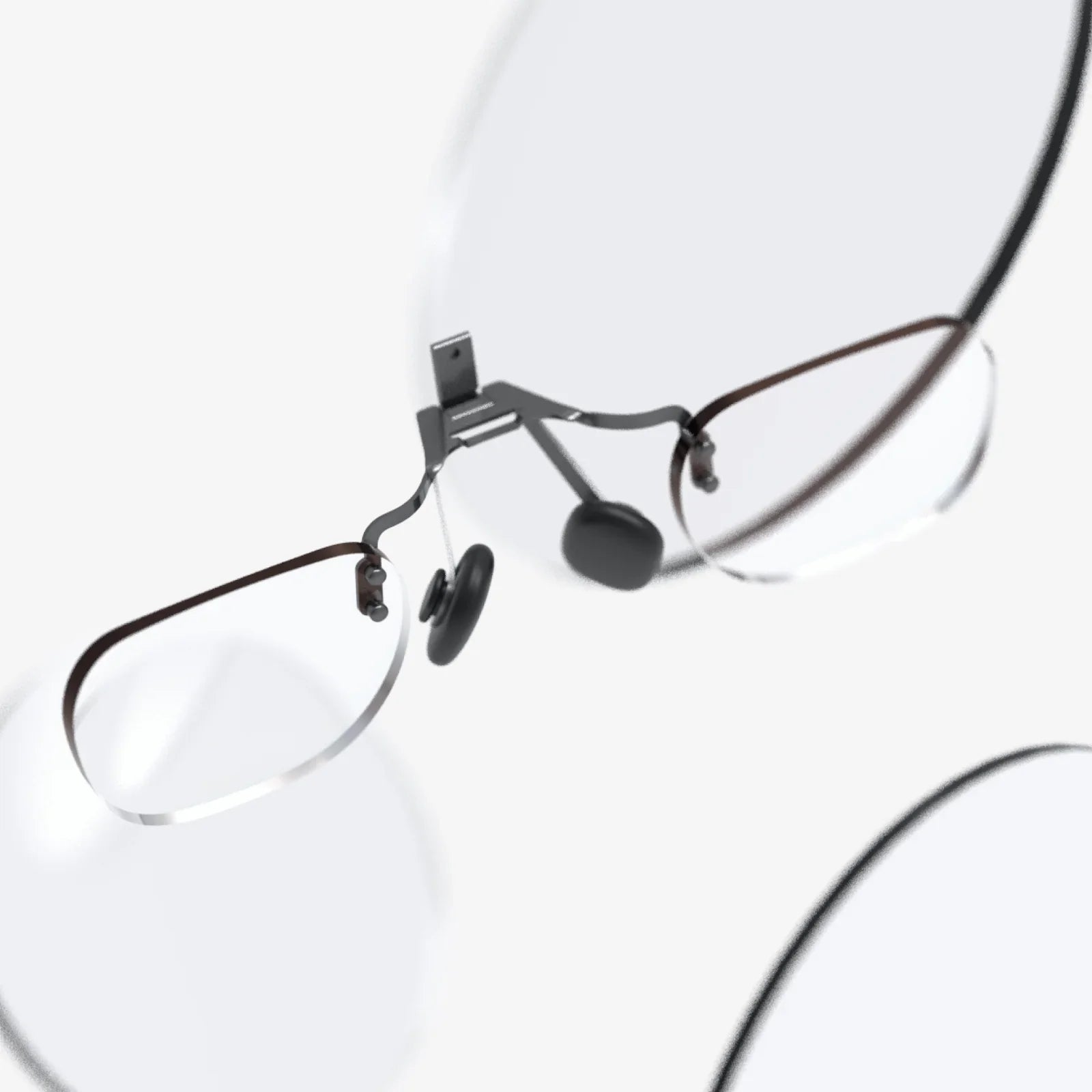
Imagine a world where information doesn't live on a screen in your hand, but floats effortlessly in your field of vision, where a foreign language is instantly translated on the face of the person speaking it, and where complex instructions are overlaid directly onto the machinery you're repairing. This isn't a scene from a science fiction film; it's the emerging reality made possible by smart glasses with AI built in. This convergence of advanced optics, sophisticated sensors, and powerful, on-device artificial intelligence is poised to fundamentally alter our relationship with technology, moving it from something we look at to something we look through.
Beyond Augmented Reality: The Power of an Intelligent Lens
The concept of eyewear that does more than correct vision is not new. For years, the tech industry has experimented with various forms of head-mounted displays, often focusing on the visual spectacle of augmented reality (AR)—placing digital dinosaurs in your living room or a giant screen on your wall. However, the true revolution isn't just in overlaying graphics; it's in contextual understanding. Early iterations struggled because they were often just dumb displays tethered to a powerful phone, lacking the innate intelligence to comprehend the world they were showing you.
The game-changer is the integration of dedicated artificial intelligence directly into the frames of the glasses. This isn't a connection to a distant cloud server that processes your request with a noticeable lag. This is on-device AI—a compact, hyper-efficient neural processing unit (NPU) embedded within the glasses themselves. This allows for instantaneous processing of visual and auditory data without a constant internet connection, preserving user privacy and enabling real-time interactions that feel magical and, more importantly, useful.
The Architectural Symphony: Sensors, Silicon, and Sight
To understand the capabilities of these devices, one must look at the sophisticated components working in harmony. Modern smart glasses with integrated AI are a marvel of miniaturization and engineering.
- Advanced Microdisplays: Using technologies like microLED or waveguide optics, these tiny projectors beam information directly onto the lenses, creating the illusion of text, images, and interfaces existing in the real world, often at a equivalent distance of several feet away.
- A Suite of Sensors: High-resolution cameras, depth sensors, accelerometers, gyroscopes, and microphones act as the eyes and ears of the AI. They continuously gather data about the user's environment, movements, and commands.
- The AI Brain: The core is the dedicated AI chipset. This processor is specifically designed for low-power, high-efficiency tasks like computer vision, natural language processing, and machine learning inference. It's what transforms raw sensor data into actionable intelligence.
This architecture allows the glasses to not just see, but to comprehend. They can identify objects, recognize faces, parse text, map environments in 3D, and process spoken commands—all in a fraction of a second and without ever leaving the device.
Transforming the Workplace: The Industrial Metaverse is Here
While consumer applications are exciting, the most profound immediate impact of AI-powered smart glasses is occurring in enterprise and industrial settings. Here, they are solving real-world problems, boosting efficiency, enhancing safety, and reducing errors.
Precision in Manufacturing and Field Service
A technician tasked with repairing a complex piece of equipment no longer needs to juggle a tablet, physical manuals, and tools. Through their smart glasses, the AI can:
- Identify components simply by looking at them, pulling up the relevant schematic, operating history, or installation guide.
- Overlay digital arrows and instructions directly onto the physical machine, guiding the technician step-by-step through a complex procedure.
- Enable a remote expert thousands of miles away to see exactly what the on-site technician sees and annotate their field of view with helpful circles, notes, and drawings, effectively teleporting expertise.
This application drastically reduces downtime, minimizes costly mistakes, and allows less experienced workers to perform tasks at an expert level.
Revolutionizing Logistics and Warehousing
In massive distribution centers, workers equipped with AI glasses can have the most optimal pick-path displayed before their eyes. The AI can scan shelves, instantly verify that the picked item is correct, and update inventory systems in real-time through voice commands, leaving hands free to handle goods. This streamlines operations to an unprecedented degree, fulfilling the promise of the truly connected warehouse.
Advancing Healthcare and Surgery
The potential in medicine is staggering. Surgeons can have vital signs, MRI scans, or ultrasound data visualized directly in their line of sight during a procedure without turning away from the patient. Medical students can learn anatomy through interactive 3D models overlaid onto a mannequin. Furthermore, AI algorithms could analyze a wound in real-time, comparing it to vast medical databases to provide diagnostic suggestions or monitor healing progress.
Enhancing Daily Life: A Personal Assistant in Your Periphery
For the general consumer, the applications shift from industrial power to personal empowerment. AI smart glasses promise a future of ambient computing, where technology fades into the background, assisting us without demanding our full attention.
- Real-Time Translation: Imagine traveling abroad and seeing subtitles seamlessly translated over the conversation you're having. The AI hears the foreign language, processes it, and displays the translation in near-real-time, effectively breaking down language barriers.
- Contextual Information: Look at a landmark, and its history pops up. Look at a restaurant, and see its reviews and menu highlights. The glasses act as a hyper-intelligent tour guide, providing information on-demand about the world around you.
- Accessibility Revolution: For individuals who are blind or have low vision, the AI can describe scenes, read text aloud from signs or documents, identify currency, and even recognize friends as they approach, narrating the world in a profoundly new way.
- Memory Augmentation: Struggling to remember a name at a networking event? The AI, with appropriate permissions and privacy safeguards, could recognize the person and discreetly display their name and where you last met.
Navigating the Minefield: Privacy, Social Acceptance, and Security
This technology does not arrive without significant challenges. The very feature that makes it powerful—its ability to constantly see and hear—also makes it a potential privacy nightmare. The thought of people wearing cameras on their faces is a major social hurdle. Key concerns that must be addressed include:
- Clear User Indication: Devices must have clear, unambiguous visual signals (like a light) when recording is active to inform people in the vicinity.
- Robust Data Ethics: Companies must adopt a principle of "data minimalism," processing as much information as possible locally on the device rather than streaming it to the cloud. User data should not be used for advertising without explicit, informed consent.
- Security First: The hardware and software must be built with impregnable security to prevent hacking of these always-on audio and video feeds.
- Social Etiquette: New norms will need to develop around the appropriate use of such technology in social settings, restaurants, and private spaces.
Overcoming the "glasshole" stigma of earlier, clumsier iterations requires not just better technology, but a demonstrable commitment to respecting the privacy of both the user and the public.
The Future Lens: Where Do We Go From Here?
The current generation is merely the foundation. The trajectory points towards even more seamless integration. Future iterations will likely become indistinguishable from regular eyewear, with all the advanced technology hidden within stylish frames. Battery life will extend to last all day, and displays will become full-color with a wider field of view. The AI itself will evolve from reactive to proactive, anticipating needs based on context and behavior.
We are moving towards a paradigm of intelligent augmentation, where AI doesn't distract us from reality but enhances our innate human capabilities—our memory, our perception, and our ability to connect with the world and each other. The goal is not to live in a virtual world, but to make our physical world more understandable, efficient, and accessible.
The true potential of this technology lies not in what we will see through these intelligent lenses, but in how they will help us see ourselves and our world differently, unlocking new levels of human potential and understanding that we are only just beginning to imagine.
Share:
What's The Best VR Headset On The Market? A 2024 Ultimate Buyer's Guide
How Much Is a VR Headset - The Ultimate Price and Value Guide