


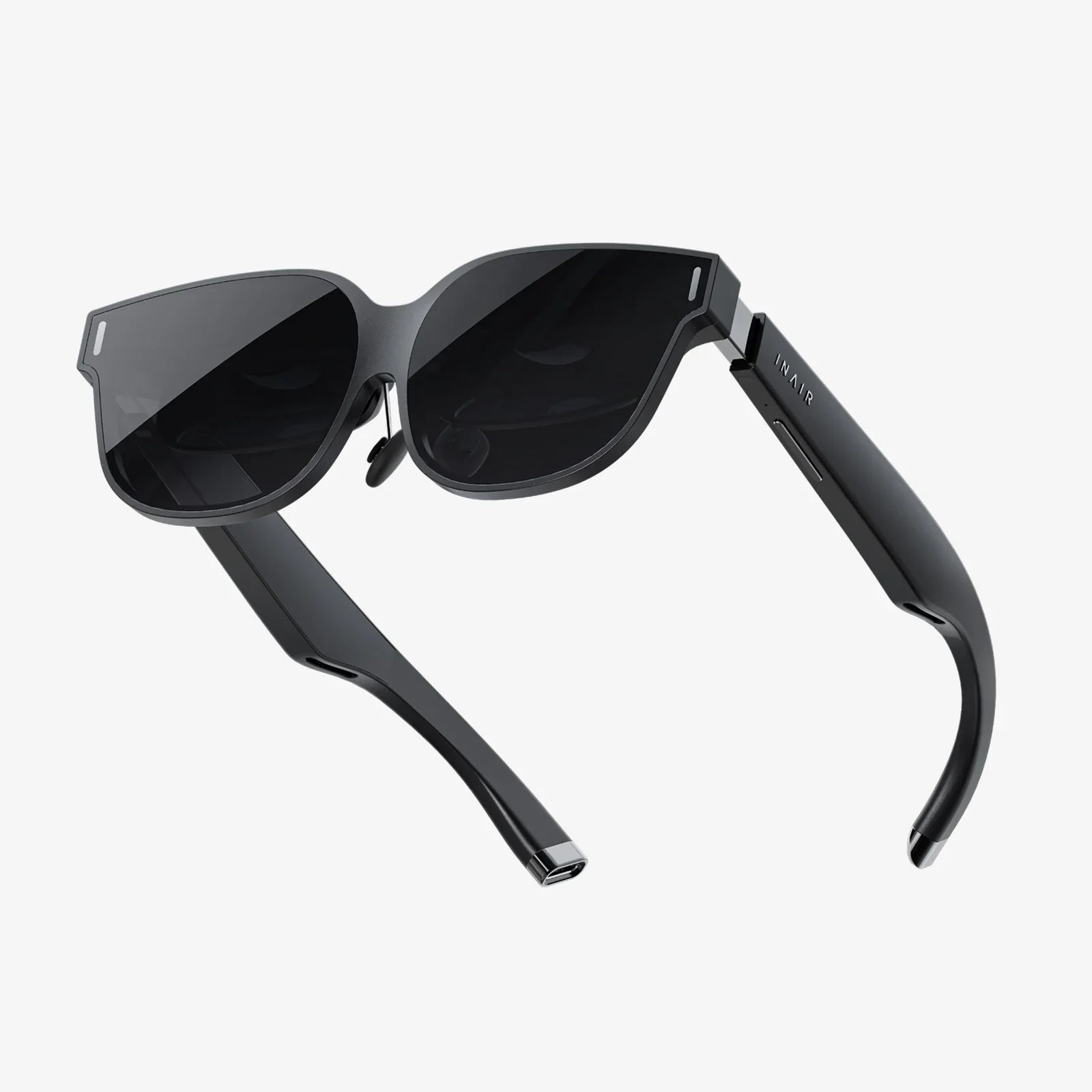
Imagine a world where information doesn't live trapped behind a screen in your pocket but flows freely into your field of vision, enhancing everything you see, do, and experience. This is the revolutionary promise of smart glasses with display AR glasses, a technology poised to fundamentally reshape our relationship with the digital universe, moving computing from something we hold to something we wear and experience as a natural extension of our senses.
The Architectural Blueprint: How AR Smart Glasses See The World
At their core, smart glasses with integrated displays are a marvel of miniaturization and optical engineering. Unlike virtual reality, which seeks to replace your reality, augmented reality aims to enrich it. This requires a sophisticated dance of hardware components working in perfect harmony.
The process begins with a suite of sensors. Cameras, accelerometers, gyroscopes, and depth sensors constantly scan the environment. This data is fed to an onboard processor, the brain of the operation, which performs the monumental task of simultaneous localization and mapping (SLAM). In essence, SLAM allows the glasses to understand their precise position in a three-dimensional space while simultaneously building a digital map of the surroundings in real-time.
Once the environment is mapped, the magic of display takes over. The primary challenge is projecting a digital image onto a transparent lens without obstructing the user's natural view. Several innovative solutions have emerged:
- Waveguide Technology: This is the most prevalent method in modern devices. Light from a micro-display is coupled into a thin, transparent piece of glass or plastic (the waveguide). Using a combination of holographic or diffractive optical elements, the light is "piped" through the waveguide and then ejected toward the user's eye. This allows for a sleek, eyeglasses-like form factor while projecting a bright, stable image.
- Curved Mirror Optics: This approach uses a miniature display projected onto a specially curved mirror, which then reflects the image onto a combiner lens and into the eye. While effective, it can sometimes result in a bulkier design.
- Retinal Projection: A more futuristic approach, this method aims to scan low-power laser light directly onto the user's retina. This can create a vast, high-resolution image that appears to float in space, but it presents significant technical and regulatory hurdles.
The result of this complex orchestration is a persistent digital layer—a heads-up display for life—that appears locked in place within the real world, whether it's a floating navigation arrow on the street or a schematic overlaid on a complex machine.
Beyond Novelty: The Transformative Applications Reshaping Industries
The true value of this technology is not in the wow factor of floating holograms, but in its profound utility across countless professional and personal domains.
Revolutionizing Enterprise and Industrial Work
The enterprise sector has emerged as the early proving ground for AR smart glasses, where they deliver immediate returns on investment by enhancing efficiency, safety, and accuracy.
- Field Service and Maintenance: A technician repairing a complex piece of equipment can have schematics, step-by-step instructions, and live video feeds from remote experts overlaid directly onto their workspace. They can work hands-free, reducing errors and drastically cutting down repair times.
- Manufacturing and Logistics: On assembly lines, workers can see digital pick lists and instructions directly in their line of sight, guiding them through complex processes. In warehouses, order pickers can be visually directed to the exact bin location, with item information and quantities displayed, streamlining the entire supply chain.
- Healthcare and Medicine: Surgeons can visualize patient vitals or 3D anatomical models during procedures without looking away from the operating table. Medical students can learn through interactive, hands-free AR simulations, and practitioners can use them for remote patient consultations, seeing what the patient sees.
Redefining Personal and Social Interaction
While the enterprise leads, the potential for consumer applications is staggering, promising to change how we navigate daily life.
- Contextual Navigation: Imagine walking through a foreign city where directional arrows are painted onto the street itself, and historical information about buildings pops up as you glance at them. This goes far beyond the turn-by-turn directions of a phone, offering a truly immersive guidance system.
- Enhanced Learning and Exploration:
Museum exhibits could come alive with animated figures and historical context. Students studying astronomy could have the solar system mapped out on their classroom ceiling. The potential for interactive, visual learning is limitless.
- Accessibility: For individuals with visual or hearing impairments, AR glasses could provide real-time captioning of conversations, highlight obstacles on a path, or amplify text by reading it aloud and enhancing its contrast.
- Social Connection and Content Creation: The way we share experiences could be transformed. Instead of holding up a phone to record a concert, you could livestream a first-person perspective to friends. Language barriers could melt away with real-time translation subtitles appearing beneath a speaking person.
The Inevitable Hurdles: Challenges on the Path to Ubiquity
Despite the exciting potential, the path to mainstream adoption of smart glasses with displays is fraught with significant technical and social challenges.
Technical Limitations: Battery life remains a constant battle. Powering processors, displays, and sensors for hours on end demands energy-dense batteries that add weight. The quest for the perfect balance of performance, all-day battery life, and a lightweight, socially acceptable form factor is the industry's holy grail. Furthermore, display technology itself needs to improve, offering higher resolution, better brightness for outdoor use, and a wider field of view without increasing size or cost.
The Privacy Paradox: This is arguably the most significant barrier. Devices equipped with always-on cameras and microphones present a profound privacy challenge. The potential for unauthorized recording, facial recognition, and constant environmental data collection raises alarming dystopian concerns. Navigating this will require robust, transparent privacy frameworks, clear user controls, and perhaps even physical hardware indicators like recording lights that cannot be disabled.
Social Acceptance: Google Glass famously encountered a fierce social backlash, being labeled as geeky and intrusive, with wearers dubbed "Glassholes." For this technology to succeed, it must become indistinguishable from regular eyewear—fashionable, lightweight, and comfortable. It must also develop clear social etiquette. Is it rude to wear them during a conversation? When is it appropriate to record? These social norms will need to be established organically over time.
A Glimpse Into The Future: The Road Ahead
The evolution of smart glasses with display AR glasses is not a question of "if" but "when." In the near term, we will see continued refinement in enterprise applications, driving down costs and improving technology. The next wave will likely be the integration of artificial intelligence, transforming the glasses from a passive display into an active assistant. An onboard AI could analyze your surroundings, anticipate your needs, and surface information before you even ask for it.
Further out, the convergence of AR with other emerging technologies like 5G/6G connectivity and brain-computer interfaces could lead to even more seamless integration. We may move toward contact lens displays or neural links, ultimately making the hardware disappear entirely, leaving only the augmented capability.
This technology holds the key to a new paradigm of human-computer interaction, often referred to as ambient computing or spatial computing. The goal is a world where technology fades into the background, contextually aware and responsive, amplifying human potential without demanding our constant attention. It promises a future where we are more connected to the physical world around us, not less, because the digital layer serves to enhance our reality rather than distract from it.
The journey toward a seamlessly augmented world is just beginning, filled with both incredible potential and serious questions. One thing is certain: the way we interact with information is on the verge of its most dramatic shift since the invention of the smartphone, and it will change everything.
Share:
What Is HUD Meaning? The Ultimate Guide to Head-Up Displays
Mini Hologram Display: The Future of Visual Interaction is Here and It's Tiny