


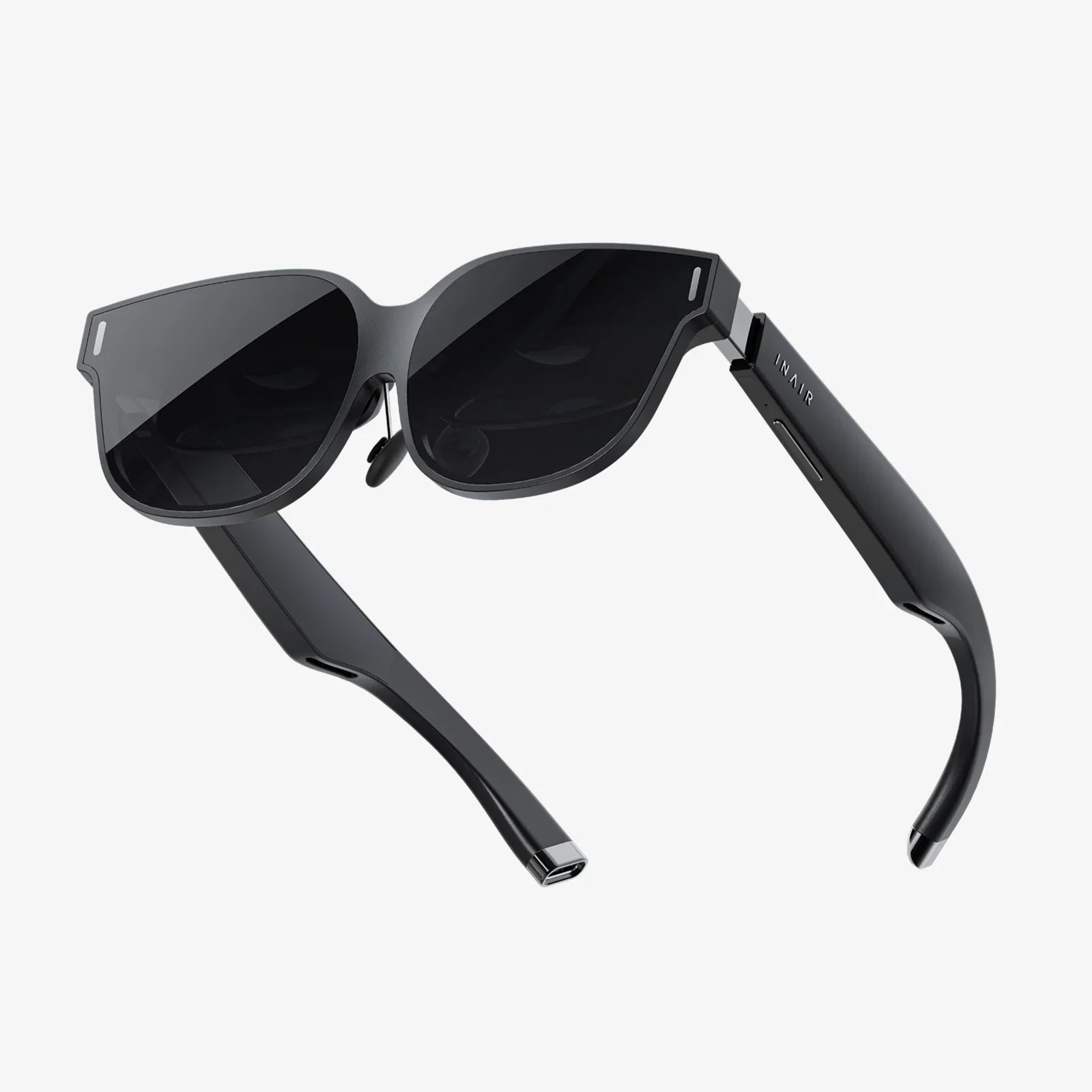
Imagine walking through a bustling foreign market, the air thick with the aroma of exotic spices and the vibrant, rapid-fire chatter of a language you don't understand. Instead of feeling lost or disconnected, you simply glance at a merchant, and their words instantly appear in your native tongue, transcribed clearly before your eyes. You reply, and they hear your words in their own language. This is no longer a scene from science fiction; it is the burgeoning reality made possible by smart glasses with real-time translation display, a technological leap poised to dismantle the oldest and most persistent barrier humanity has known: language itself.
The Architecture of a Universal Translator
At first glance, the concept seems deceptively simple—glasses that translate. Yet, the technology humming within the sleek frames is a symphony of cutting-edge innovation, a complex interplay of hardware and software working in perfect, real-time harmony.
The Hardware Triad: Ears, Eyes, and Brain
The foundational hardware can be broken down into three critical components. First, an array of sensitive microphones acts as the device's ears, strategically placed to capture clear speech while employing advanced noise-cancellation algorithms to filter out ambient chatter, wind, and other background interference. This ensures the source audio is as pure as possible before the translation process even begins.
Second, the display technology serves as the device's mouth and eyes. Using either miniature projectors that beam information onto the lenses or micro-LED screens embedded within the lens itself, these systems create a transparent overlay of text. This augmented reality (AR) interface is designed to be non-obtrusive, presenting information contextually without completely blocking the user's natural field of vision. This allows the wearer to maintain eye contact and read body language, preserving the crucial human elements of conversation.
Third, the processing unit is the brain of the operation. This is not a simple chip but a powerful onboard computer, often paired with a connection to cloud-based servers. It handles the immense computational load required for real-time speech recognition, machine translation, and text rendering. This split between edge computing (on the device) and cloud computing allows for balancing speed, privacy, and access to ever-improving translation models.
The Software Symphony: From Sound to Meaning
The software pipeline is where the magic truly happens, transforming raw audio into comprehensible meaning in a fraction of a second.
- Automatic Speech Recognition (ASR): The captured audio is first fed into a sophisticated ASR engine. This AI-driven software converts the spoken words into raw text. This step must account for accents, dialects, speech patterns, and even mid-sentence corrections.
- Machine Translation (MT): The recognized text is then passed to the neural machine translation engine. Unlike older rule-based systems, modern neural MT uses deep learning models trained on vast corpora of parallel texts (e.g., millions of documents and their professional translations). This allows it to understand context, idiom, and nuance far more effectively, producing translations that sound natural and accurate.
- Natural Language Generation & Display: The translated text is then formatted and positioned within the user's field of view. The software must decide on font, size, and placement for optimal readability. Some systems are exploring spatial anchoring, where the text appears to float near the speaker's mouth, creating a more intuitive and immersive link between the person and their translated speech.
Transforming Industries and Human Experiences
The applications for this technology extend far beyond the tourist or the casual user. They promise to revolutionize entire sectors and redefine how we connect across cultures.
The Professional Frontier
In the globalized business world, these glasses are a game-changer. Imagine multinational teams collaborating on engineering projects, discussing complex architectural blueprints, or negotiating sensitive contracts without the constant, awkward pause of a human translator. The flow of ideas becomes instantaneous, fostering a level of synergy and understanding previously hampered by language delays. For customer support in global firms, technicians could be guided through repairs in a foreign country by an expert speaking another language, with instructions translated directly into their line of sight. In healthcare, while not replacing professional medical interpreters, they could provide immediate assistance in emergency triage situations, allowing first responders to quickly understand a patient's symptoms and allergies.
Education and Cultural Exchange
The implications for education are profound. Students studying abroad could attend lectures in a foreign language, following along with real-time subtitles. This would drastically reduce the initial learning curve and immersion shock. Language learners could practice with native speakers in real-world settings, seeing and hearing the language simultaneously, which is a powerful tool for acquisition. Furthermore, visiting museums, historical sites, and cultural events becomes a deeply enriched experience, as placards, tour guides, and performances can be understood in one's native language, unlocking deeper layers of meaning and appreciation.
Travel and Everyday Life
For the everyday traveler, the technology promises a liberation from the guidebook and translation app. Ordering a meal, asking for directions, reading a train schedule, or simply sharing a story with a local in a café becomes a seamless, authentic experience. It removes the anxiety and isolation of being in a place where you cannot communicate, empowering users to explore with confidence and engage with cultures on a much deeper level.
Navigating the Challenges: The Road Ahead
Despite the exciting potential, the path to perfect, ubiquitous translation glasses is fraught with technical, social, and ethical challenges that developers and society must navigate.
Technical Hurdles
Accuracy remains the holy grail. While machine translation has improved leaps and bounds, it still struggles with highly technical jargon, heavy accents, thick dialects, slang, and cultural subtleties like sarcasm and humor. A mistranslation in a casual conversation is a nuisance; in a legal or medical context, it could be catastrophic. Latency, or delay, is another critical factor. Even a delay of a few seconds can disrupt the natural rhythm of conversation, making interactions feel stilted and unnatural. Furthermore, battery life is a constant constraint. The immense processing power required for these tasks drains batteries quickly, limiting their use to short intervals unless significant breakthroughs in power efficiency are achieved.
The Social and Ethical Dimension
Perhaps the most complex challenges are not technical but human. Wearing a recording and translating device in every conversation raises serious privacy concerns. The etiquette of recording someone's speech without explicit, continuous permission needs to be established. Will conversations feel authentic and trusting if one or both parties know they are being translated and logged? There is also a risk of cultural dilution. If everyone can communicate in their own language, will the incentive to learn another language diminish? Language is deeply tied to culture and identity, and a over-reliance on technology could lead to a loss of this valuable human skill and the cultural understanding it fosters. Finally, the digital divide is a concern. This technology will likely be expensive at first, creating a world where seamless communication is a luxury available only to those who can afford it, potentially exacerbating existing social and economic inequalities.
The Future is Translated
The evolution of this technology is pointing toward even more immersive integration. Future iterations will move beyond text displays to near-instantaneous speech-to-speech translation played through discreet bone conduction speakers, creating a true bionic ear effect. AI will become more context-aware, understanding not just the words but the situation—whether you're in a boardroom, a factory, or a restaurant—to provide the most appropriate tone and terminology. Eventually, the hardware will become indistinguishable from regular eyewear, making the technology a seamless, invisible part of our daily wear.
The dream of a universal translator, once a fantastical trope of Star Trek, is materializing on our noses. Smart glasses with real-time translation are more than a clever gadget; they are a profound tool for human connection. They won't eliminate the beauty of linguistic diversity, but rather, they will build bridges over the chasms that diversity can create. They promise a world where ideas flow freely, collaboration has no borders, and understanding is limited only by our imagination, not our vocabulary. The next time you hear a language you don't understand, don't see a barrier—see an opportunity, waiting for the right technology to turn it into a conversation.
Share:
Glasses Integrated Display The Future of Personal Computing on Your Face
Proactive AI Glasses With Invisible Display Product Information Are The Next Leap In Personal Computing