


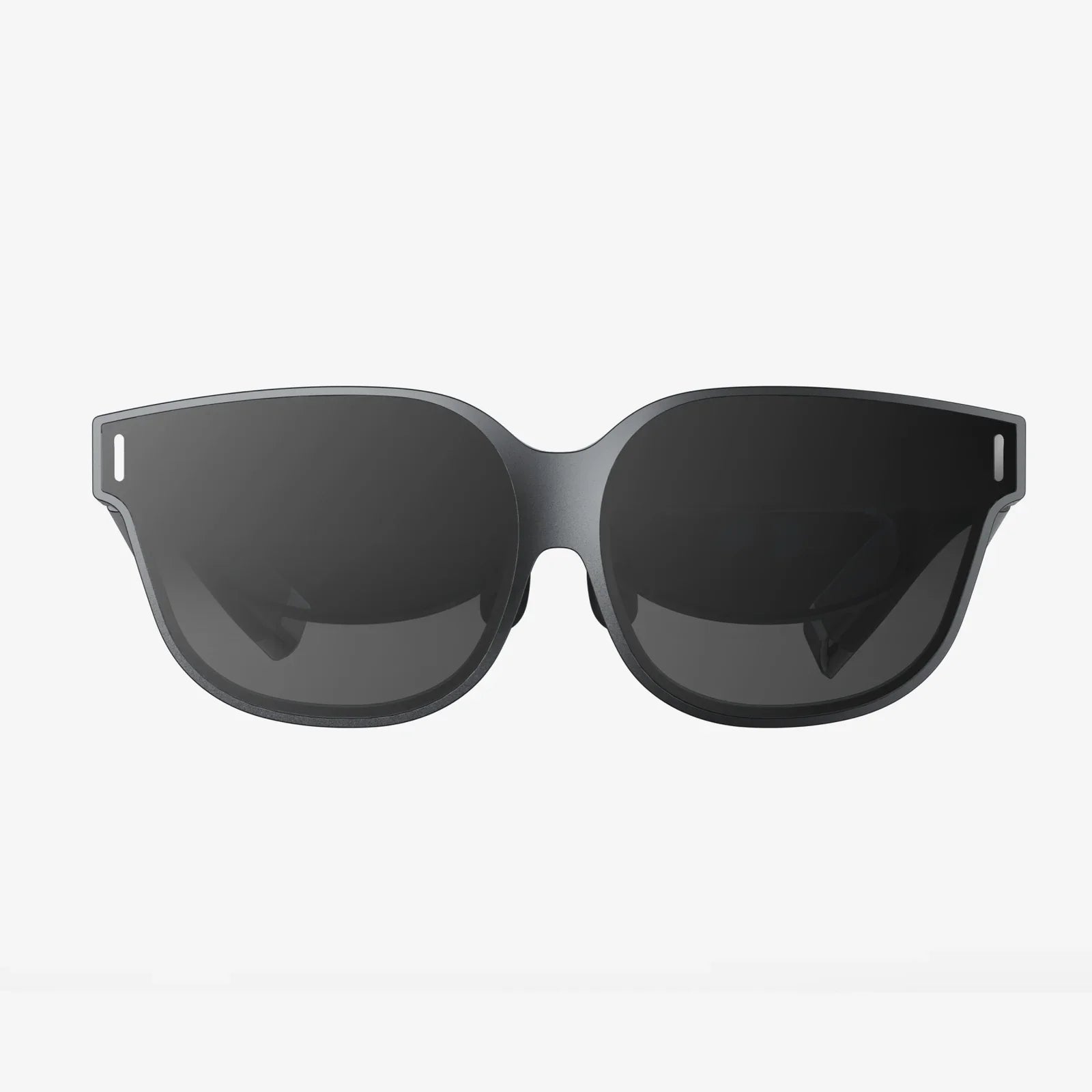
Imagine watching the latest blockbuster, your favorite show, or a crucial tutorial on a screen that only you can see, all while your hands remain free and your view of the world around you stays perfectly clear. This is no longer a scene from a science fiction novel; it is the tangible reality offered by the latest generation of wearable technology. Smart glasses with integrated video playback are poised to revolutionize not just how we consume media, but how we interact with information, our work, and our environment. They represent a significant leap towards a future where digital and physical realities are seamlessly interwoven, offering a glimpse into a world of unparalleled convenience and immersive experience.
The Evolution of Personal Viewing: From Portables to Wearables
The journey to this point has been one of relentless miniaturization and innovation. Not long ago, portable viewing was synonymous with bulky handheld devices with small, low-resolution screens. The quest was always for a larger, brighter display confined to a smaller, lighter body. The paradigm, however, was due for a shift. The concept of wearing our technology, rather than holding it, began to take root with the advent of smartwatches and fitness trackers. This wearable revolution paved the way for a more ambitious goal: projecting visual information directly into our field of vision.
Early attempts at head-mounted displays were often cumbersome, expensive, and offered a limited field of view, confining them to niche industrial or enthusiast applications. The true breakthrough came with the refinement of waveguide and micro-OLED technology. These advancements allowed for the creation of tiny, powerful projectors and transparent lenses that could overlay high-definition video onto the real world without obstructing it. This convergence of optics, computing power, and battery efficiency is what has finally made smart glasses with genuine, usable video playback a consumer reality.
How It Works: The Magic Behind the Lenses
At the heart of this technology lies a fascinating optical system. Unlike virtual reality headsets that immerse you in a completely digital environment by blocking out the real world, smart glasses for video playback are designed for augmented reality (AR). They allow you to see a digital screen superimposed on your natural surroundings.
The process typically involves a miniature micro-OLED display panel, a marvel of engineering that is incredibly small yet capable of producing vibrant colors and deep blacks. This panel acts as the source of the image. This image is then projected towards a specially designed transparent lens. Using principles of optics, often involving a combination of partial mirrors, diffraction gratings, or holographic waveguides, the light from the micro-OLED is "piped" through the lens and directed into the user's eye.
The result is the perception of a floating screen, seemingly positioned a few feet away. The clarity, size, and perceived distance of this virtual screen can vary between models, but the effect is consistently impressive. You can be sitting on a park bench, and in the top corner of your vision, a crystal-clear video plays, while you still maintain full awareness of the people and events around you.
Beyond Entertainment: A Multitude of Use Cases
While watching movies and shows is an obvious and compelling application, the utility of video playback on smart glasses extends far beyond passive entertainment. This technology is a powerful tool that can enhance numerous aspects of daily life.
Revolutionizing Productivity and Remote Work
For the modern professional, these glasses are a game-changer. Imagine attending a video conference call while referencing a document, all without needing to toggle between windows on a physical monitor. Or following a complex software tutorial with the instructions hovering right next to your actual workspace. For field technicians, they can stream live diagnostic data or repair manuals hands-free, drastically improving efficiency and safety. The ability to have multiple virtual screens accessible anywhere transforms coffee shops, airports, and home offices into highly productive environments.
The Ultimate Travel and Commute Companion
Long journeys become significantly more enjoyable. Passengers can immerse themselves in a film or series without being hunched over a small tablet, reducing neck strain and conserving precious battery life on their primary phone. The form factor is discreet, avoiding the social awkwardness of larger head-mounted displays. Furthermore, navigation can be seamlessly integrated; imagine walking through a foreign city with turn-by-step directions appearing as floating arrows on the street ahead, all while your favorite podcast continues to play.
Accessibility and Inclusive Technology
This technology holds profound potential for accessibility. For individuals with low vision, smart glasses could potentially magnify and enhance their view of the world in real-time. Real-time captioning for conversations or public announcements could be displayed directly within the user's field of view, a tremendous aid for the hard of hearing. By presenting information in a customizable, heads-up format, these devices can break down barriers and create new avenues for interaction and independence.
Fitness and Interactive Learning
Fitness enthusiasts can follow workout routines with a virtual trainer demonstrating exercises right in front of them, all while tracking their heart rate and reps on a separate virtual metric panel. Cooks can follow a recipe video without getting their phone or tablet smeared with ingredients. The hands-free, eyes-forward nature of the technology makes it ideal for any activity where focus and manual engagement are required.
Navigating the Challenges: Considerations for the Future
Despite the exciting potential, the widespread adoption of smart glasses with video playback is not without its hurdles. Addressing these challenges is critical for the technology to move from early adopters to the mainstream.
Battery Life and Performance: Driving high-resolution displays and processing data is power-intensive. Balancing all-day battery life with performance remains a key engineering challenge. Efficient processors and innovative power management solutions are continually evolving to meet this demand.
Social Acceptance and Privacy: The prospect of people wearing cameras on their faces raises legitimate privacy concerns among the public. Manufacturers must prioritize clear indicator lights and robust privacy controls to ensure users and those around them feel secure. Furthermore, the aesthetics of the glasses are crucial; designs must become increasingly fashionable and indistinguishable from regular eyewear to achieve broad social acceptance.
Digital Eye Strain and Comfort: Prolonged use of any screen can cause eye fatigue. The unique nature of having a projected image focused at a specific distance requires careful optical design to minimize strain. Lightweight materials and ergonomic design are also essential for all-day comfort.
Connectivity and Ecosystem: For a seamless experience, these glasses need to work flawlessly with our existing smartphones, laptops, and cloud services. Robust, low-latency wireless connections like Bluetooth and Wi-Fi are paramount. Developing a strong software ecosystem with dedicated apps will be just as important as the hardware itself.
The Road Ahead: An Integrated Digital Life
The development of smart glasses with video playback is not an endpoint but a significant milestone on a longer journey. The future will likely see these devices become more powerful, more intuitive, and more integrated into our lives. We can anticipate advancements in eye-tracking for navigation, improved contextual awareness where the glasses understand what you're looking at and provide relevant information, and even more immersive audio experiences through spatial audio technology.
They are a stepping stone towards a world where information is not something we seek out on a device, but something that is ambiently available, contextually relevant, and presented in a way that complements our reality rather than detracting from it. They promise a shift from "looking down at a device" to "looking ahead with information."
The true potential of this technology is not merely in replacing your tablet screen, but in fundamentally changing your relationship with digital content. It’s about empowering you with information without isolation, offering entertainment without escapism, and enhancing your perception of the world instead of replacing it. The screen is no longer a destination; it becomes a layer, a tool, and a constant, unobtrusive companion. This is the promise of smart glasses with video playback—a promise that is now being delivered, right before our eyes.
Share:
AR Range: The Invisible Spectrum Reshaping Our Digital and Physical Worlds
AR Manufactures a New Reality for Industrial Design and Production