


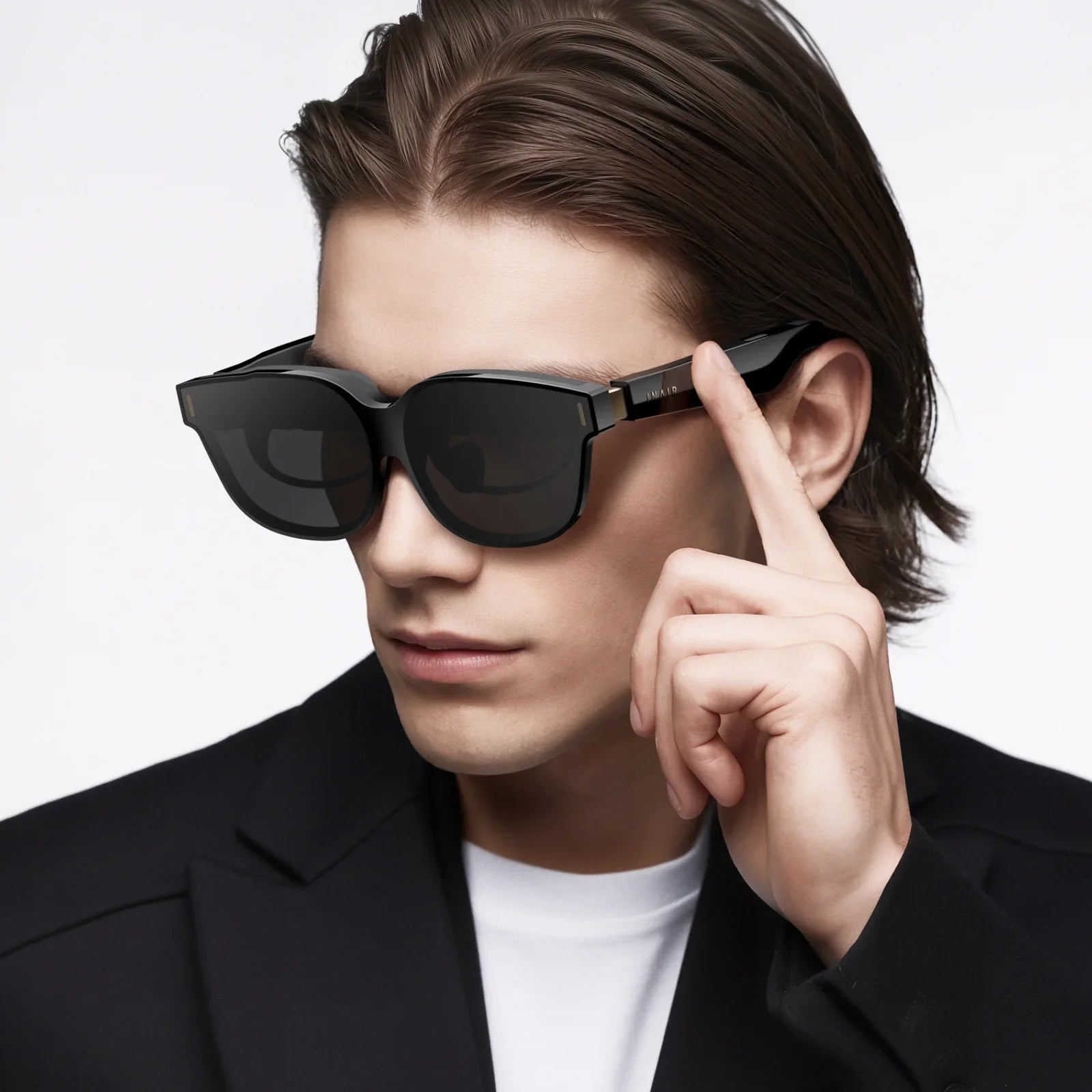
Imagine a world where information doesn’t live on a screen in your hand, but is woven seamlessly into the fabric of your reality. Where directions appear as a gentle path of light on the sidewalk, a colleague’s avatar can point to a 3D model hovering on your desk, and a forgotten name materializes subtly in your periphery as you greet an acquaintance. This is the future being unlocked not by a distant sci-fi concept, but by the tangible, rapid evolution of wearable technology, culminating in the arrival of the smart goggles second generation. This isn't merely a product update; it is the critical inflection point where a promising technology transitions from a developer's curiosity into a transformative tool for humanity.
From Prototype to Platform: The Evolutionary Leap
The first generation of smart eyewear was, by all accounts, a necessary and valuable proof of concept. It proved that the technology was possible. We saw heads-up displays, basic camera functions, and the first attempts at voice-controlled interfaces. However, they were often hampered by significant limitations: bulky and socially awkward designs, short battery life, limited field of view, a lack of compelling applications, and a processing power that struggled to keep up with the ambitious vision. They were, for many, a solution in search of a problem.
The second generation marks a departure from this phase. It represents a holistic re-imagining of the category, addressing the core shortcomings not with incremental tweaks, but with foundational innovations. The focus has shifted from what we can do to how it should feel. The goal is no longer just to display information, but to create a sense of presence and utility so intuitive that the technology itself fades into the background, leaving only the enhanced experience.
Pillars of the Second Generation Revolution
This dramatic leap forward is built upon several key technological pillars, each of which has seen remarkable progress in a very short time.
The Invisible Interface: Advanced Display and Waveguide Technology
Perhaps the most visible (or rather, invisible) improvement is in the display systems. First-gen devices often had a dim, small, and distracting display that felt like a small window into a digital world. Second-generation smart goggles employ cutting-edge micro-OLED or laser-beam scanning (LBS) displays, offering stunning brightness, high resolution, and vibrant color. This is paired with sophisticated waveguide optics that pipe the light to the eyes. These new waveguides are thinner, more efficient, and allow for a much wider field of view, creating digital objects that feel solid and persistent in the real world, not like faint projections.
The Brain Behind the Lenses: On-Device AI and Spatial Computing
If the displays are the eyes, the onboard AI processor is the brain. This is the true game-changer. First-gen devices often relied on a tether to a smartphone or computer for heavy processing. The new generation features dedicated, powerful AI chips capable of real-time sensor fusion and spatial computing. This means the goggles can understand the world around them instantly and continuously.
They create a live 3D map of your environment—understanding the geometry of rooms, recognizing surfaces like tables and walls, and tracking the position of your hands with sub-millimeter accuracy. This enables persistent anchoring of digital content; a virtual monitor you place on your wall will be there exactly as you left it when you return to the room. This spatial understanding, powered by relentless on-device computation, is the foundation for all truly immersive AR experiences.
Intuitive Control: Beyond Voice and Touch
Early interfaces relied heavily on voice commands (which can be socially awkward or ineffective in noisy environments) or clumsy touchpads on the device's frame. Second-generation goggles introduce a more natural and powerful paradigm: hand tracking and eye tracking. Users can now interact with digital elements using natural pinch and gesture controls, reaching out and manipulating holograms as if they were physical objects. Eye tracking allows for foveated rendering (drastically reducing processing load by rendering only where you are looking in high detail) and enables incredibly intuitive menu navigation—simply looking at an option and giving a slight confirmation gesture.
Form Meets Function: A Design for Everyday Life
Acknowledging that technology must be worn to be used, manufacturers have made a monumental effort to redesign the form factor. The goal is normalization. Second-generation smart goggles are significantly lighter, more balanced, and far closer in appearance to a pair of premium sunglasses or high-end ski goggles. They use novel materials and distributed weight systems to avoid the neck strain of their predecessors. While not yet indistinguishable from regular eyewear, the design direction is clear: wearability all day, every day, without drawing undue attention or causing discomfort.
Transforming Industries and Redefining Work
The applications for this technology stretch as far as the imagination, but several fields are poised for immediate and profound disruption.
The Remote Workspace Reimagined
The concept of working from home is elevated to working in an augmented home. Instead of juggling multiple physical monitors, a user can summon vast, virtual screens that remain perfectly positioned in space. Virtual collaboration moves from a flat video call on a screen to a shared spatial experience where remote colleagues can appear as life-like avatars in your living room, all interacting with the same 3D models, diagrams, and data visualizations. An architect could walk a client through a building model at 1:1 scale before a single brick is laid. This is the promise of a truly sense-of-presence meeting, bridging the gap between physical and remote work.
Precision in the Field
For field technicians, surgeons, or mechanics, these goggles can overlay crucial information, schematics, and instructions directly onto the equipment they are servicing. A surgeon could see a patient's vital signs and a 3D reconstruction of a tumor directly in their field of view without looking away from the operating table. A mechanic could see torque specifications and a step-by-step guide overlaid on an engine block, with the ability to stream their view to a remote expert who can then annotate the real world to guide them. This hands-free access to contextual information drastically improves efficiency, reduces errors, and democratizes expertise.
The Future of Learning and Training
Education becomes experiential. Instead of reading about ancient Rome, students can walk through a digitally reconstructed Forum. Medical students can practice complex procedures on hyper-realistic virtual cadavers. Training for dangerous jobs, from firefighting to operating heavy machinery, can be conducted in perfectly simulated environments that overlay the real world, providing a safe yet immensely effective training ground.
Navigating the New Frontier: Challenges and Considerations
For all its promise, the path forward for second-generation smart goggles is not without its obstacles. The societal and ethical questions are as significant as the technological ones.
The concept of privacy takes on a new dimension. Devices with always-on cameras and microphones, continuously scanning and interpreting the world, raise legitimate concerns. Robust privacy frameworks, clear user controls over data collection, and perhaps even physical hardware shutters will be non-negotiable for widespread adoption. The industry must prioritize privacy by design to build the necessary trust.
Furthermore, the potential for digital addiction and reality blurring is palpable. If a digitally augmented world is more stimulating, convenient, or entertaining than the physical one, where do we draw the line? The industry and users together will need to develop new digital wellness practices and etiquette—perhaps features that encourage breaks, delineate work-from-play modes, or indicate when recording is active to those around the user.
Finally, there is the challenge of accessibility and the digital divide. As with any transformative technology, there is a risk that it could exacerbate existing inequalities if it remains a luxury good. Ensuring that the productivity and educational benefits of this technology can be accessed broadly, not just by the affluent, will be a critical challenge for developers and policymakers alike.
A New Lens on Reality
The second generation of smart goggles represents more than just advanced hardware; it signifies a fundamental shift in our relationship with computing. We are moving from a model of pulling information from a device to one where information is pushed into our context in a helpful, timely, and elegant manner. This is the shift from personal computing to contextual computing.
It’s a transition as significant as the move from the command line to the graphical user interface, or from desktop to mobile. It redefines the very definition of a "platform." The phone’s platform is its operating system and app store; the platform for smart goggles is the entire physical world. Every table, wall, street, and object becomes a potential canvas for interaction and experience.
The true potential of this second generation lies not in any single killer app, but in the platform itself. It provides a blank slate for developers, creators, and enterprises to build experiences we haven't even conceived of yet. It’s a tool for enhancing human capability, amplifying creativity, and connecting us with information and with each other in ways that feel less like using a tool and more like harnessing a new sense.
The gateway to this blended reality is no longer a distant dream—it’s being built today, and it’s putting on a new, more sophisticated face. The next time you look at someone wearing a pair of sleek, futuristic goggles, don’t just see a gadget; see a person interacting with a deeper layer of reality, one that is richer, more informed, and brimming with possibilities we are only just beginning to explore.
Share:
How to Turn Your Phone into a VR Headset: A Complete DIY Guide
Wireless VR Headset Price - A Complete Buyer's Investment Guide