


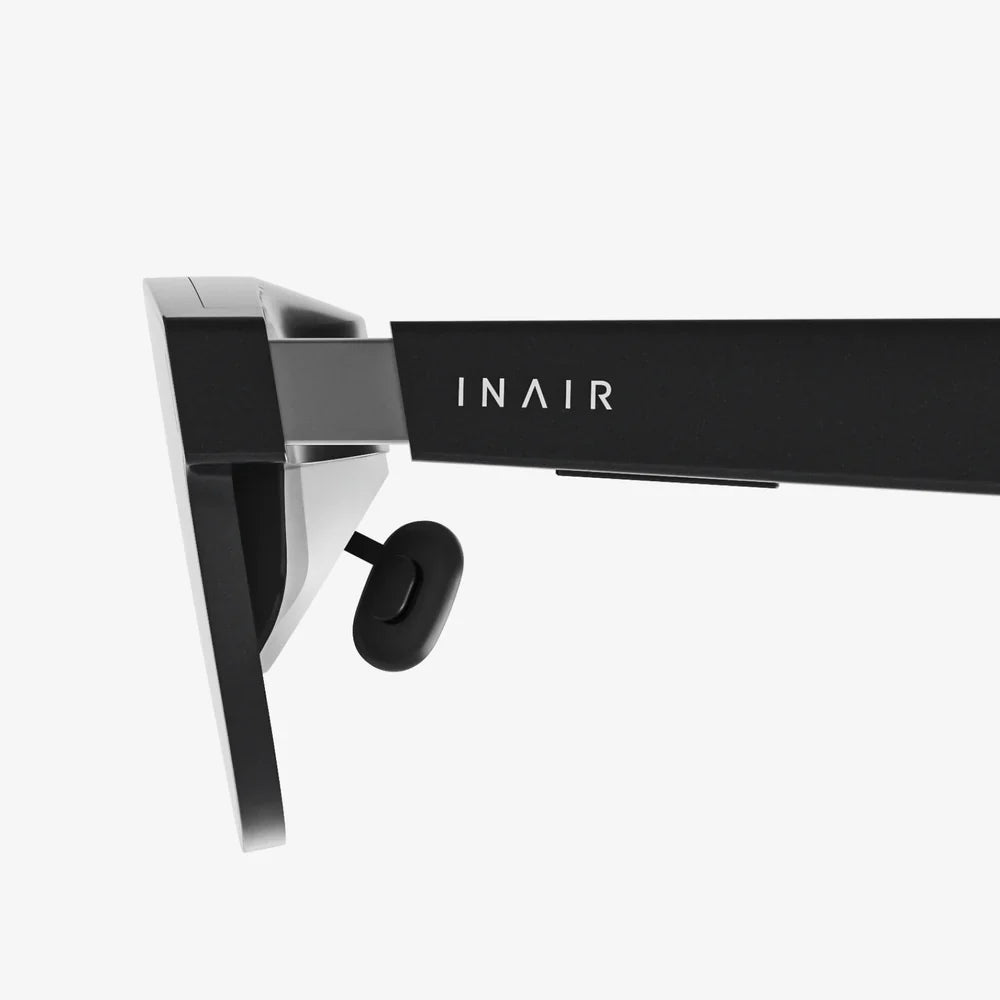
Imagine a world where digital information is seamlessly painted onto the fabric of your reality, where your field of vision becomes a dynamic canvas for productivity, entertainment, and connection. This is no longer the realm of science fiction; it is the imminent future being built today, and it’s being worn on our faces. The race to create the ultimate window between our physical and digital lives is accelerating, moving beyond handheld devices to a more intuitive, immersive form of computing. This revolution is being led by a piece of technology that promises to redefine our very perception of reality: smart goggles.
The Architectural Foundation: How Smart Goggles Perceive and Project
At their core, smart goggles are a sophisticated convergence of multiple advanced technologies, all miniaturized and integrated into a single, wearable form factor. Unlike their virtual reality counterparts, which seek to replace the real world with a simulated one, smart goggles are designed to augment it. This fundamental difference dictates their architecture.
The first critical component is the array of sensors. These act as the goggles' eyes and ears, constantly scanning and interpreting the environment. High-resolution cameras capture the world in real-time, while depth sensors (like LiDAR or time-of-flight sensors) map the geometry of the space, understanding the distance to walls, tables, and other objects. Simultaneously, inertial measurement units (IMUs)—including accelerometers and gyroscopes—track the precise movement and rotation of the user's head, ensuring the digital overlay remains locked in place, whether it's a floating screen or a virtual character sitting on your actual sofa.
This torrent of spatial data is processed by an onboard system-on-a-chip (SoC), a powerful miniature computer that fuses the information to create a persistent, understanding of the environment—a process often referred to as simultaneous localization and mapping (SLAM). It is this digital understanding of the physical world that allows for convincing and stable augmentation.
The second half of the equation is the display technology. This is where the magic becomes visible to the user. Most systems utilize either optical see-through or video see-through methods. Optical see-through employs semi-transparent waveguides or holographic optical elements. Tiny projectors fire light into these transparent lenses, which then bounce the light to the user's eye, effectively painting digital images onto the real world while allowing them to see through the lens naturally. Video see-through, on the other hand, uses outward-facing cameras to capture a live video feed of the real world, composites digital elements onto that feed in real-time, and displays the combined image on an opaque screen inside the goggles. Each method has trade-offs in latency, resolution, and realism.
Beyond Novelty: Transformative Applications Across Industries
The true power of smart goggles is not in their technological specs but in their practical applications. They are poised to become indispensable tools, reshaping workflows and creating new possibilities across a vast spectrum of fields.
Revolutionizing Enterprise and Field Work
In industrial and technical settings, smart goggles are already proving their immense value. A field engineer repairing a complex piece of machinery can have schematic diagrams, step-by-step instructions, and animated guides overlaid directly onto the equipment they are fixing. Their hands remain free, and their focus remains on the task, drastically reducing error rates and training time. A remote expert can see what the on-site technician sees through a live feed, and using digital annotations, can literally draw circles and arrows onto the technician's real-world view to guide them. This has profound implications for maintaining infrastructure, from wind farms to cellular networks, enabling a single senior expert to support dozens of junior staff anywhere in the world.
The Future of Healthcare and Medicine
In surgery, a surgeon could have a patient's vital signs, ultrasound data, or pre-operative scans visually pinned to their field of view without ever looking away from the operating table. During medical training, students wearing goggles could practice procedures on hyper-realistic virtual patients overlaid in a physical space, or witness a complex operation from the surgeon's point of view through a immersive live stream. For diagnostics, a physician could visualize 3D models of MRI or CT scan data, manipulating them in mid-air to better understand a pathology.
Redefining Collaboration and Remote Work
The concept of the 'virtual office' will be transformed. Instead of a grid of faces on a flat screen, smart goggles could enable a persistent shared workspace where colleagues from across the globe appear as life-like avatars in your physical room, or you are virtually transported into a shared digital office. You could collaboratively interact with 3D models of products, architectural designs, or data visualizations, manipulating them as if they were physically present. This spatial computing approach to collaboration promises a level of presence and nuance that video conferencing cannot match.
A New Paradigm for Entertainment and Social Connection
Entertainment will cease to be confined to a rectangle on your wall. Imagine watching a film where the characters and environments burst out of the screen and into your living room. Sports fans could watch a game with real-time stats floating around the action, or choose to watch from any virtual seat in the stadium. Socially, the promise is to make digital interaction feel more human. Instead of texting or calling, you could simply 'drop in' as a holographic presence in a friend's living room to watch a show together, play a board game on a virtual table, or just hang out, all while feeling physically co-present.
Navigating the Obstacle Course: Challenges on the Path to Adoption
For all their potential, smart goggles face significant hurdles before they can achieve mainstream, all-day adoption. The most immediate is the form factor. Current prototypes often struggle with balancing performance, battery life, weight, and aesthetics. The goal is to create a device that is as socially acceptable and comfortable to wear as a pair of everyday eyeglasses, a feat of engineering that requires massive advancements in miniaturization, battery technology, and thermal management.
Battery life remains a critical constraint. Powering high-resolution displays, multiple sensors, and powerful processors is incredibly energy-intensive. Users will not tolerate a device that needs recharging every two hours. Breakthroughs in battery density and low-power chip design are essential.
Perhaps the most complex challenges are not technical but social and ethical. The concept of 'attention theft' is a major concern. If everyone is constantly surrounded by personalized digital stimuli, will public spaces become even more isolating? Will we be present in our physical lives, or perpetually distracted by a digital layer? Furthermore, the always-on cameras and microphones necessary for these devices raise monumental privacy questions. The potential for continuous, pervasive surveillance—by both companies and malicious actors—is a dystopian risk that must be addressed through robust encryption, clear user data controls, and perhaps new social and legal norms around recording in public and private spaces.
Finally, the user interface itself is an unsolved puzzle. How does one interact with a interface that has no physical buttons or touchscreen? Early solutions include hand-tracking and gesture control, voice assistants, and wearable controllers. The ideal method will be intuitive, effortless, and socially unobtrusive—whispering commands or making subtle finger gestures, for example, rather than waving arms around in a coffee shop.
The Horizon: What the Future Holds for Visual Computing
The development of smart goggles is not a singular event but a gradual evolution. The first wave will likely be dominated by specific professional and enterprise use cases, where the value proposition is clear and the users are willing to tolerate bulkier equipment. As the technology matures, it will trickle down to prosumers and early adopters.
Looking further ahead, the convergence with artificial intelligence will be the true catalyst for transformation. An AI-powered assistant, contextually aware of your surroundings and your needs, could proactively provide information. Look at a restaurant and see its menu and reviews pinned to its door; glance at a foreign language sign and see it instantly translated; forget a colleague's name at a conference and have it discreetly displayed next to their face. This ambient, anticipatory computing could make the technology feel less like a tool and more like a seamless extension of our own cognition.
Eventually, the technology may move beyond goggles altogether. Research into direct retinal projection and even more advanced neural interfaces suggests a future where digital information is beamed directly into our eyes or brains, eliminating the need for any wearable hardware. While this remains a distant prospect, it underscores the ultimate goal: to erase the boundary between human and computer, making access to the world's knowledge and digital experiences as natural as thought itself.
The journey toward ubiquitous augmented reality is fraught with both immense excitement and legitimate caution. It promises to unlock human potential in ways we are only beginning to imagine, offering new lenses through which to learn, work, create, and connect. Yet, it also demands a thoughtful and deliberate conversation about the world we want to build. One thing is certain: the next great platform for human-computer interaction is not in your pocket; it’s being designed to sit on the bridge of your nose, and its arrival will change everything you see.
Share:
Multi User Augmented Reality: The Collaborative Future of Digital Interaction
Extended Reality Tools Are Reshaping Our World: A Deep Dive into the Virtual Revolution