


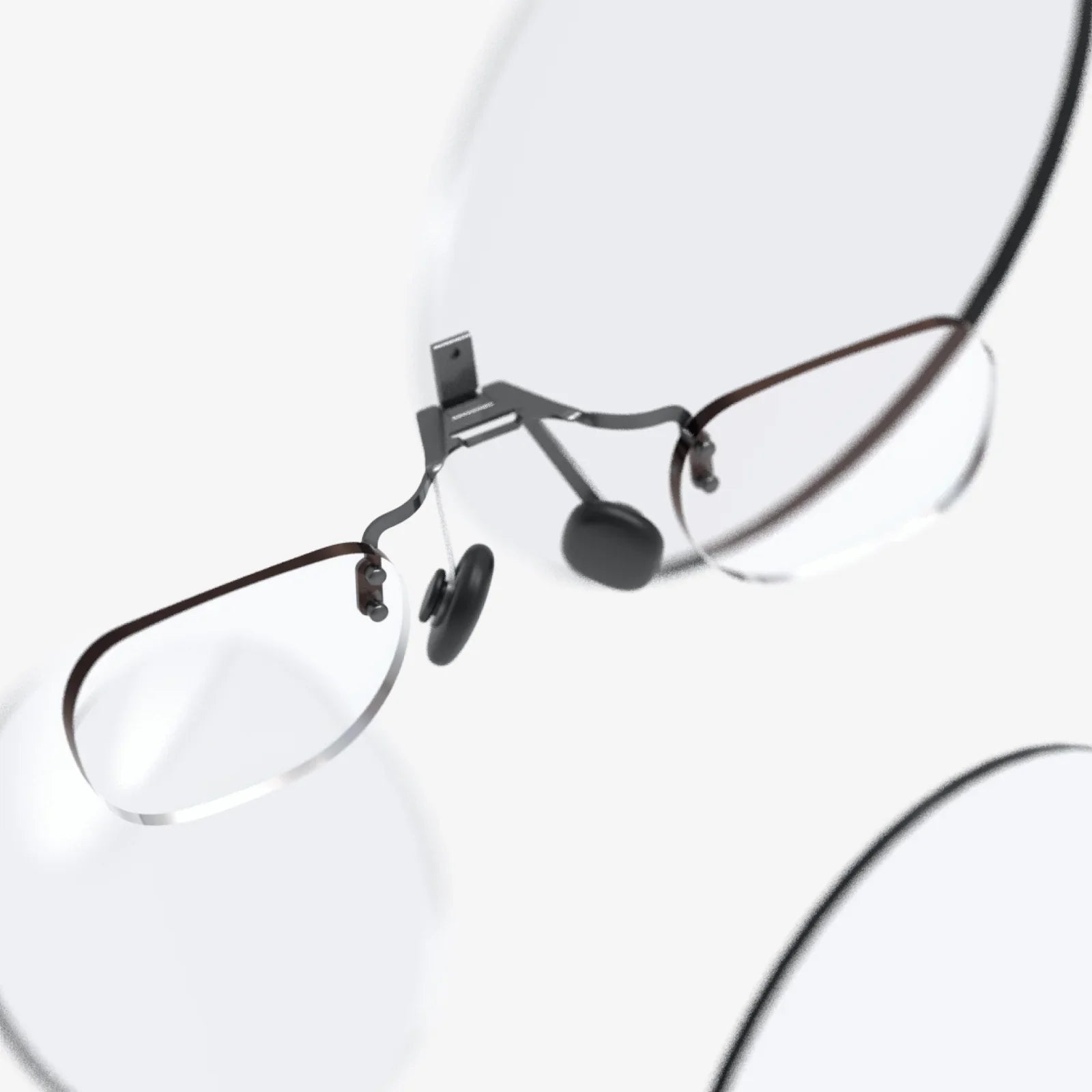
Imagine a world where information doesn’t live on a screen in your hand but is woven seamlessly into the very fabric of your perception. Where directions appear as a gentle glow on the pavement ahead, a colleague’s name hovers discreetly above their head during a crucial meeting, and the recipe for dinner you’re cooking is projected just beside the sizzling pan, hands-free. This is not a distant sci-fi fantasy; it is the imminent reality being built today, and its cornerstone is a device poised to become as ubiquitous as the smartphone: smart life smart glasses. This is the story of the invisible revolution that will fundamentally alter how we interact with technology, information, and each other.
Beyond Novelty: The Evolution of a Vision
The concept of computerized eyewear is not new. For decades, it has captured the imagination of inventors and storytellers alike, often depicted as clunky, obtrusive, or purely fantastical. Early iterations were hampered by technological limitations—bulky components, short battery life, limited processing power, and displays that were more distracting than helpful. They were, for the most part, solutions in search of a problem.
Today, that narrative has flipped. The convergence of several technological mega-trends has created the perfect storm for smart glasses to finally come of age. Miniaturization has advanced to the point where powerful processors and sensors can be embedded into a form factor that is barely distinguishable from traditional eyewear. Advancements in battery technology and power efficiency allow for all-day use. Breakthroughs in waveguide and micro-LED display technology enable crisp, bright augmented reality (AR) overlays that blend naturally with the real world. Crucially, the surrounding ecosystem of high-speed connectivity, powerful cloud computing, and sophisticated artificial intelligence provides the brainpower these devices need to be truly intelligent. They are no longer a novelty; they are becoming a necessity for the next phase of our digitally integrated lives.
The Seamless Symphony: How Smart Glasses Enable a Connected Life
The true power of smart glasses lies not in any single feature, but in their ability to act as a silent, personal conduit between you and your digital ecosystem. They are the central hub for a smart life, orchestrating a symphony of connected experiences without ever requiring you to look down.
- Contextual Awareness: Equipped with cameras, microphones, and a suite of sensors, these glasses perceive the world as you do. They can identify objects, translate foreign text on a menu in real-time, and provide information about a landmark you’re viewing—all processed instantly through on-device or cloud AI.
- Ambient Computing: Information becomes ambient. Instead of actively seeking data on a device, it is delivered to you proactively and contextually. A notification for your next meeting can appear with a subtle cue, reminding you it’s time to leave based on your current location and real-time traffic conditions.
- Intuitive Control: Interaction moves beyond touchscreens and voice commands. Imagine a subtle nod to accept a call, a wink to capture a photo, or a touch on the temple to adjust volume. This tactile, almost subconscious form of control reduces friction and makes technology feel like a natural extension of oneself.
Augmenting Reality: A New Layer of Human Experience
At its core, the magic of smart glasses is their ability to augment our reality. This augmentation manifests across every facet of daily life, creating a layer of digital interaction that enhances rather than interrupts.
Professional Productivity Reimagined
For the modern professional, smart glasses are a productivity powerhouse. Field technicians can have schematic diagrams and instruction manuals overlaid onto the machinery they are repairing, allowing them to work hands-free with expert guidance. Surgeons could access vital patient statistics and imaging data within their field of view during procedures. Architects and interior designers can walk through a physical space and see their digital models superimposed upon it, making real-time adjustments. In logistics and warehousing, workers can receive picking instructions and inventory data directly in their line of sight, dramatically improving accuracy and efficiency. The device becomes the ultimate hands-free assistant, delivering critical information exactly when and where it is needed.
The Revolution of Social and Personal Interaction
Perhaps the most profound impact will be on how we connect with one another. Smart glasses promise to dissolve the physical barriers of communication. Real-time language translation can be displayed beneath a speaking person, making cross-cultural conversations fluid and natural. For individuals who are hard of hearing, speech could be converted to text captions in real-time, providing unprecedented access to dialogue. They could also enhance memory and social grace by discreetly displaying the names and key details of people you meet, helping you navigate complex social and professional situations with greater confidence.
Navigation and Exploration
Gone are the days of holding up a phone to find your way. With smart glasses, navigation transforms into an immersive experience. Directional arrows can be painted onto the street itself, guiding you turn-by-turn while you keep your head up and remain aware of your surroundings. Points of interest, historical facts, or restaurant ratings can pop up as you explore a new city, turning every walk into an interactive tour. This seamless integration of guidance not only enhances convenience but also significantly improves safety for pedestrians and cyclists.
Navigating the Invisible Frontier: Challenges and Considerations
For all their potential, the path to mainstream adoption of smart life smart glasses is fraught with significant challenges that must be thoughtfully addressed.
The Privacy Paradox
This is the single greatest hurdle. A device that sees and hears what you do inherently raises monumental privacy concerns for both the wearer and those around them. The potential for constant, passive recording is a societal minefield. Robust, transparent, and user-centric privacy frameworks are non-negotiable. Features like a clear, external indicator light that signals when recording is active, strict on-device processing for sensitive data, and clear ethical guidelines on data usage and retention will be critical to building public trust. The industry must prioritize privacy by design, not as an afterthought.
The Social Acceptance Hurdle
Technology must be socially acceptable to be adopted. Early wearers of conspicuous devices may be labeled as "glassholes" or viewed with suspicion. The key to overcoming this is in the design. The technology must be miniaturized to the point of invisibility, becoming fashion-forward and indistinguishable from regular glasses. Normalization will be a gradual process, driven by demonstrable utility and subtle, respectful design that does not make non-users feel uncomfortable or recorded.
Battery Life and the Always-On Dilemma
To be a true ambient companion, smart glasses need all-day battery life. Current technology often forces a trade-off between capability and endurance. Breakthroughs in low-power displays, efficient processing chips, and perhaps even alternative charging methods like solar or kinetic energy will be required to make the devices truly seamless and forgettable in the best way possible.
The Future Lens: What Lies Ahead
Looking forward, the trajectory of smart glasses points toward even deeper integration. We are moving toward a future where your eyewear is your phone, your computer, your navigator, and your personal AI assistant—all fused into a single, elegant device on your face. They will likely evolve to monitor health metrics like blood sugar levels through non-invasive sensors, or track eye movement to gauge focus and alertness. They could become the primary interface for the emerging spatial web, a 3D internet layered over our physical world.
The ultimate goal is not to lose ourselves in a digital world, but to use digital information to enhance our appreciation and understanding of the physical one. The success of this technology will not be measured by its computational power, but by its ability to fade into the background, empowering us to be more present, more capable, and more connected to the real world around us.
The next time you instinctively reach for your phone to check a message, look up a fact, or find your way, pause for a second. Now, imagine that same action happening without breaking your stride, your conversation, or your train of thought. That effortless flow of information is the promise held within the frames of smart glasses. This is more than just a new product category; it’s a fundamental shift from pulling technology out of our pockets to wearing it on our faces, integrating it directly into our line of sight and our lives. The revolution won’t be televised on a screen; it will be seen through a new kind of lens, one that is quietly, intelligently, and profoundly changing everything.
Share:
Self Adjusting Smart Glasses The Future of Vision is Autonomous
What is the Best AR? A Deep Dive into the Augmented Reality Landscape