


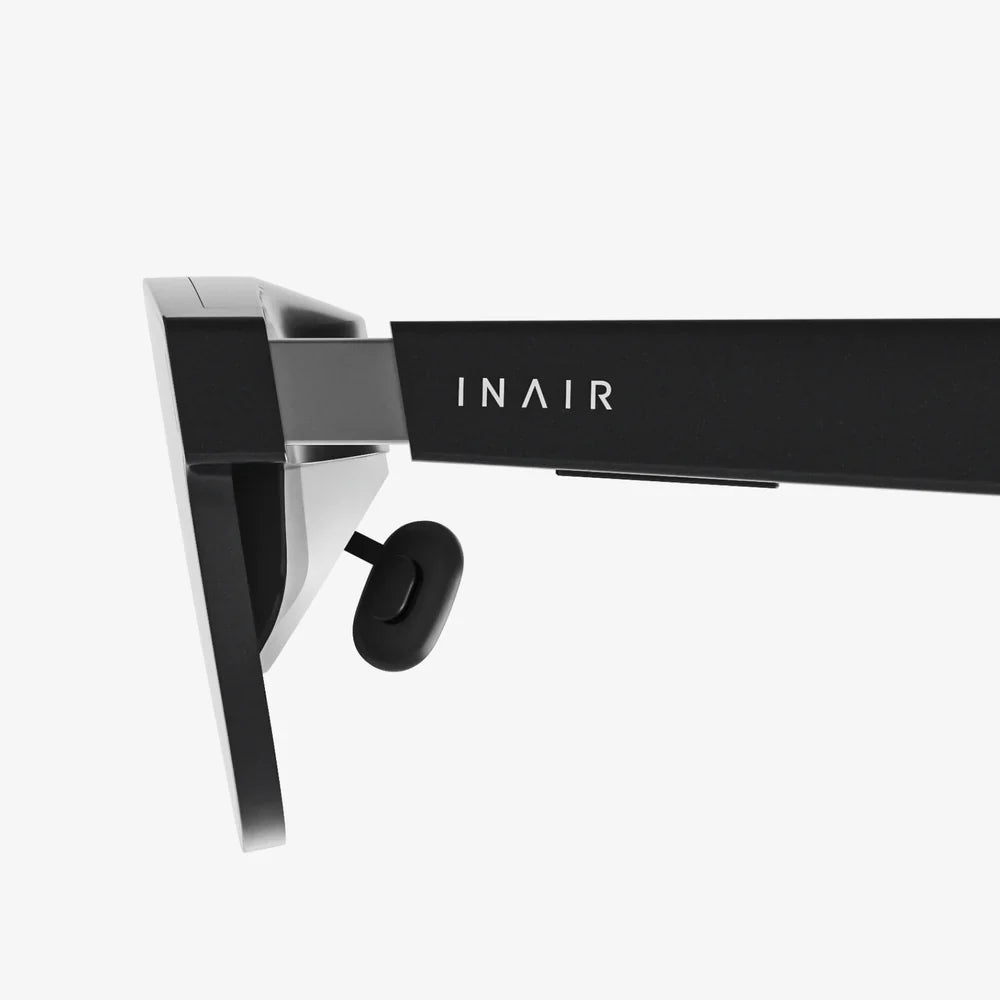
Imagine slipping on a pair of sunglasses that not only shield your eyes from the sun's glare but also seamlessly integrate with your digital life, projecting navigation right before your eyes, translating foreign street signs in real-time, or monitoring your health metrics—all while looking like you've just stepped off a Milanese runway. This is no longer the realm of science fiction; it is the present and future reality of smart looking sunglasses. This revolutionary category of wearable technology is rapidly transforming from a niche gadget for tech enthusiasts into a must-have accessory for the style-conscious and digitally-connected individual. They represent the perfect marriage of form and function, where sophisticated aesthetics meet bleeding-edge innovation, creating a product that is as much a statement of personal style as it is a powerful tool for modern living.
The Evolution of Eyewear: From Pure Protection to Intelligent Accessory
To truly appreciate the significance of smart looking sunglasses, one must first understand the journey of eyewear itself. For centuries, the primary purpose of sunglasses was singular: protection. From the smoked quartz lenses used by judges in ancient Chinese courts to conceal their expressions to the green-tinted spectacles worn by 18th-century European aristocrats, the focus was on shielding the eyes from light. The 20th century witnessed the explosion of sunglasses as a dominant fashion accessory, propelled by silver screen icons and cultural movements. Aviators, wayfarers, and oversized frames became symbols of cool, mystery, and status.
The dawn of the digital age introduced a new dimension: functionality beyond sun protection. The first tentative steps into smart eyewear were often clunky, prioritizing technical specs over design, resulting in products that felt more like a computer for your face than a piece of fashion. They were perceived as geeky and obtrusive. However, a pivotal shift occurred when designers and engineers began to collaborate with a fundamental principle: the technology must be invisible. The goal was no longer to create glasses that looked "smart," but to create stunning sunglasses that happened to be intelligent. This philosophy birthed the era of truly smart looking sunglasses—devices where the advanced technology is seamlessly embedded into classic, universally appealing frames, making the powerful computing capabilities a delightful surprise rather than an obvious feature.
Defining the Smart Looking Sunglass: Where Aesthetics Meet Engineering
So, what exactly sets this new generation apart? It is the uncompromising commitment to both cutting-edge technology and high-fashion design.
The Hallmarks of Design Excellence
First and foremost, they must look exceptional. Manufacturers are investing heavily in design, often partnering with renowned fashion houses or employing top-tier industrial designers. The focus is on:
- Classic Silhouettes: Leveraging timeless frame shapes—aviator, round, square, cat-eye—that have proven their aesthetic appeal over decades. This immediately grounds the product in familiarity and style.
- Premium Materials: The use of lightweight yet durable materials like titanium, premium acetate, carbon fiber, and aluminum ensures comfort and a luxury feel. Hinges are engineered for smooth movement and a solid, high-end tactile experience.
- Discreet Technology: The most crucial design aspect is the concealment of technology. Miniaturized speakers are hidden within the arms, microphones are virtually invisible, and batteries are distributed to maintain a balanced weight. The defining feature—the micro-display—is cleverly positioned at the edge of the lens or projected directly onto it, remaining unseen until activated.
- Customization: Offering a range of frame colors, finishes (matte, glossy, metallic), and interchangeable lenses (prescription, polarized, photochromic) allows users to personalize their devices to match their individual style.
The Core Technological Pillars
Beneath the stylish exterior lies a sophisticated network of technology designed to augment your reality without intruding upon it.
- Augmented Reality (AR) Displays: This is the heart of the experience. Using technologies like micro-LED or laser beam scanning, these systems project a wealth of information—text messages, caller ID, navigation prompts, real-time translation—into the user's field of vision. The information appears as a translucent overlay on the real world, allowing for hands-free interaction.
- Advanced Audio: Instead of bulky headphones, smart sunglasses use bone conduction or微型扬声器 embedded in the temples to deliver sound directly to the ear. This allows the user to listen to music, take calls, or receive audio alerts while still being aware of ambient noises, a critical feature for safety while walking or cycling.
- Integrated Sensors: A suite of sensors, including accelerometers, gyroscopes, GPS, and heart rate monitors, tracks activity, navigation, and health data. Some models even incorporate sensors to monitor UV exposure, reminding you when it's time to seek shade.
- Voice Assistant Integration: Full integration with popular voice assistants allows for complete control through simple voice commands. You can ask for directions, set reminders, play music, or send messages without ever touching your phone.
- Connectivity: Bluetooth provides a stable connection to your smartphone, acting as the bridge to your digital ecosystem. Some models also offer standalone LTE connectivity for complete freedom from your phone.
A Day in the Life: The Practical Magic of Smart Sunglasses
The true value of these devices is revealed in daily use. Their utility spans countless scenarios, seamlessly blending the digital and physical worlds.
The Urban Explorer: Navigating a new city becomes intuitive. Turn-by-turn directions are superimposed onto the streets ahead. Look at a restaurant menu in a foreign language, and live translations appear next to the text. You can listen to a guided audio tour of a museum while keeping your phone in your pocket and your eyes on the exhibits.
The Fitness Enthusiast: For runners and cyclists, they are a game-changer. Key metrics like pace, distance, heart rate, and route mapping are displayed in the corner of your vision, eliminating the need to constantly look at a watch or phone screen. You can control your music and take calls without breaking stride, all while wearing protective, performance-oriented sunglasses.
The Multitasking Professional: Imagine walking between meetings while a important document is read aloud to you. You receive a calendar alert for your next appointment with the address displayed for quick reference. You can take a hands-free call with crystal clarity, all while maintaining a professional, polished appearance that Bluetooth earpieces simply cannot match.
The Everyday User: Even simple errands are enhanced. Grocery lists can be checked without fumbling for a phone. You can get recipe instructions right in front of you while cooking. Listening to podcasts or music while doing chores feels completely natural and unencumbered.
Beyond the Hype: Considerations and the Road Ahead
As with any emerging technology, there are important factors to consider. Battery life, while improving, is still a constraint, often lasting a full day with moderate use but requiring nightly charging. The price point remains premium, positioning them as an investment. Privacy is another critical conversation; cameras and microphones on your face understandably raise questions about data security and social etiquette, necessitating clear indicators when recording and robust privacy controls.
Yet, the trajectory is overwhelmingly positive. Future iterations promise even more exciting developments: longer battery life through improved efficiency and solar-charging lenses, more powerful and brighter displays, advanced biometric tracking including blood glucose and alcohol levels, and AI that is more contextually aware, offering information before you even ask for it. The convergence of fashion and technology will only deepen, with more collaborations and designs that cater to every possible taste.
Smart looking sunglasses are not merely a new product; they are a new platform. They represent a fundamental shift in how we interact with technology—moving it from our hands and pockets into our natural field of vision, making it less disruptive and more supportive. They acknowledge that in our increasingly digital world, we still value aesthetics, expression, and the subtle nuances of personal style. They prove that the future of technology doesn't have to be bulky, awkward, or obvious; it can be elegant, intuitive, and effortlessly cool, resting right on the bridge of your nose and opening up a new world of possibilities right before your eyes.
The next time you reach for your sunglasses, you won't just be choosing a tool for protection or an accessory for your outfit. You'll be choosing a lens through which to see and interact with the world in an entirely new way. The question is no longer if you need smart sunglasses, but how you ever managed without them. The future is clear, connected, and incredibly stylish—and it's waiting for you to put it on.
Share:
Compare AR, VR, and MR: A Deep Dive into the Spectrum of Digital Realities
Compare AR, VR, and MR: A Deep Dive into the Spectrum of Digital Realities