


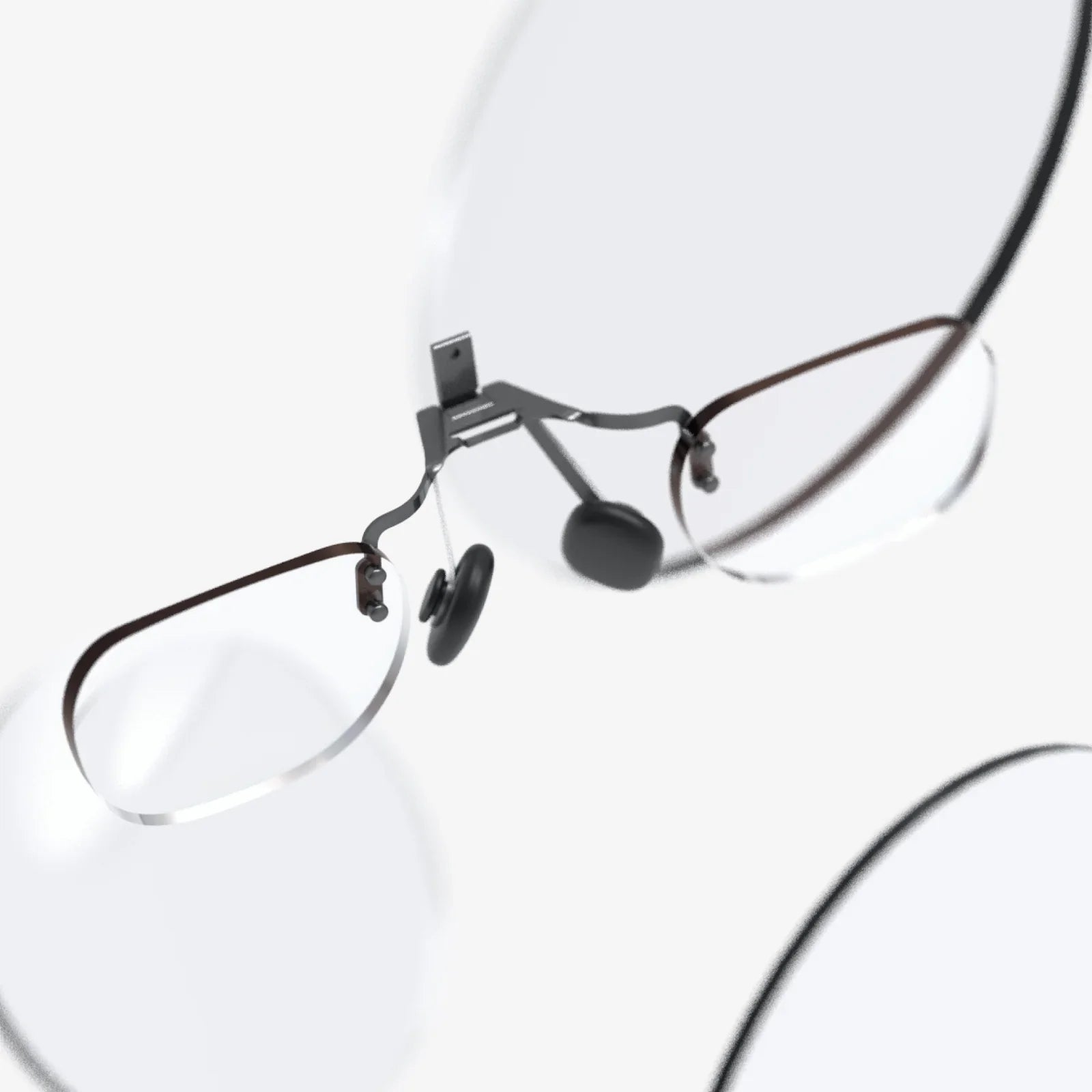
Imagine a world where your entire digital universe—your social feeds, your work, your entertainment, your memories—is no longer confined to a small, glowing rectangle in your hand, but is instead painted onto the very fabric of reality around you. This is the tantalizing promise of smart phone goggles, a device category that is rapidly evolving from science fiction fantasy into a tangible, consumer-ready reality. These aren't just another gadget; they represent a fundamental shift in our relationship with technology, promising to untether our digital lives from our palms and project them seamlessly into our field of vision. The race to define this new paradigm of personal computing is on, and it promises to change everything from how we work and play to how we connect with each other and perceive the world itself.
Beyond the Screen: Defining the Smart Phone Goggle Experience
At its core, the concept of smart phone goggles is deceptively simple: it is a wearable headset that leverages the immense processing power, connectivity, and ecosystem of a modern smartphone to deliver immersive visual and auditory experiences. Unlike their more powerful, standalone virtual reality cousins, which often require a tether to a high-end computer, these goggles use the device you already own as their engine. The smartphone acts as the brain, handling the complex computations, while the goggles serve as the immersive display and interface portal.
The magic happens through a combination of advanced micro-OLED or LCD displays, precision optics, and sophisticated sensors. These components work in concert to project high-resolution images onto lenses that are mere centimeters from your eyes, creating the illusion of a vast, floating screen—or a completely virtual environment. This technology effectively transforms your phone into a personal IMAX theater, a sprawling desktop workstation, or a portal to a digital metaverse, all contained within a relatively lightweight and portable headset.
The Engine Room: How Your Phone Powers the Experience
The symbiotic relationship between the phone and the goggles is the defining characteristic of this technology. The smartphone provides the critical components:
- Processing Power: The application processor (AP) and graphics processing unit (GPU) inside modern phones are incredibly powerful, capable of rendering complex 3D environments and streaming high-bitrate video.
- Connectivity: Your phone’s 5G or Wi-Fi connection is the lifeline to cloud services, multiplayer experiences, and vast libraries of streaming content.
- Battery Life: By offloading the computational heavy lifting to the phone, the goggles themselves can remain relatively lightweight, avoiding the need for a large, bulky battery pack on your head.
- Content and Ecosystem: The entire existing universe of mobile apps, games, and services becomes the foundational library for the goggle experience, providing instant access to a wealth of content.
This architecture makes the experience incredibly accessible. Instead of investing in an entirely new and expensive standalone system, users can often unlock a powerful immersive experience with a peripheral that complements their existing device.
A World of Use Cases: More Than Just Games
While immersive gaming is an obvious and thrilling application, the potential uses for smart phone goggles extend far beyond entertainment. They are poised to become a transformative tool in numerous aspects of daily life.
The Ultimate Portable Cinema
For media consumption, the experience is unparalleled. Users can watch films on a virtual screen that feels dozens of feet wide, from the comfort of an airplane seat or their living room couch, with no distractions in their peripheral vision. This creates a deeply personal and captivating viewing experience that no physical television can match for sheer scale and immersion.
Redefining the Remote Workspace
The professional applications are equally compelling. Imagine replacing your physical monitors with infinite virtual screens. A knowledge worker could have their email, word processor, web browser, and video conference call arrayed around them in a virtual office, free from the constraints of a physical desk. This "spatial computing" approach could fundamentally change remote work, allowing for a focused, customizable, and portable digital workspace anywhere on earth.
Augmented Learning and Exploration
In education and training, smart phone goggles can overlay interactive 3D models onto the real world. A medical student could examine a beating heart hologram from every angle, a mechanic could see wiring diagrams superimposed onto an engine, or a history class could take a virtual field trip to ancient Rome. This blend of the digital and physical—often referred to as augmented reality (AR)—makes learning experiential and engaging.
The Human Factor: Navigating the Social and Psychological Impact
As with any disruptive technology, the rise of smart phone goggles is not without its challenges and concerns. The social and psychological implications are profound and warrant careful consideration.
On one hand, this technology has the potential to enhance connection. Immersive video calling could make participants feel like they are truly in the same room, preserving body language and a sense of shared presence that is lost in traditional video chats. For families and friends separated by geography, this could be a powerful tool for maintaining closeness.
On the other hand, the risk of further escapism and social isolation is real. If the digital world becomes more compelling than the physical one, will we retreat into personalized digital bubbles? The etiquette of using such devices in public spaces is also uncharted territory. Walking down the street or sitting in a café with goggles on represents a significant barrier to spontaneous human interaction, potentially leading to a new form of digital divide between those who are "present" and those who are immersed elsewhere.
Furthermore, the psychological effects of long-term immersion are not fully understood. Issues like simulator sickness (cybersickness), eye strain, and the cognitive load of managing overlapping realities present hurdles that manufacturers must address through improved hardware design and user experience guidelines.
The Road Ahead: Challenges and the Future of Immersive Tech
For smart phone goggles to transition from a niche product to a mainstream necessity, several technological and design hurdles must be overcome. The current generation, while impressive, often faces criticisms around weight, comfort during extended use, and battery drain on the host phone. The visual fidelity, while rapidly improving, still struggles to match the resolution and clarity of the human eye, leading to a phenomenon known as the "screen door effect" in some early devices.
The future path is clear: lighter materials, more efficient displays, longer-lasting batteries, and ever more powerful smartphones will gradually erase these limitations. We can anticipate the integration of more advanced inside-out tracking, allowing for more seamless blending of digital and physical objects in AR mode. Haptic feedback gloves and more intuitive controllers will evolve the user interface beyond simple hand-tracking and gamepads.
Ultimately, the killer app for smart phone goggles may not be a single game or movie, but rather a holistic integration into our digital lives—a persistent layer of useful information and connection that enhances our reality without replacing it. The goal is not to live inside the goggles, but to have them serve as an intelligent lens, providing information, context, and entertainment exactly when and where we want it.
The journey of the smartphone, from a humble communication device to the indispensable center of our modern lives, provides a blueprint. Smart phone goggles are at a similar inflection point, standing on the brink of moving from a curious novelty to an essential window into our digital future. They promise a world where our computing environment is no longer something we hold, but something we inhabit. The screen is dissolving, and in its place, an entirely new reality is coming into focus.
Share:
Series X VR Headset: The Ultimate Guide to Next-Gen Immersive Gaming
Series X VR Headset: The Ultimate Guide to Next-Gen Immersive Gaming