


- by wangfred
Smart Sunglasses The Ultimate Guide to the Future on Your Face
- by wangfred
Imagine a world where your sunglasses do more than just shield your eyes from the sun; they translate foreign street signs in real-time, play your favorite podcast directly into your ears without any headphones, and give you turn-by-turn navigation without ever needing to look down at your phone. This isn't a scene from a sci-fi movie—it's the reality being built today with smart sunglasses, the most seamless and stylish wearable technology to hit the market. This comprehensive guide dives deep into the evolution, technology, applications, and profound implications of wearing a computer on your face, exploring how these devices are poised to become an indispensable part of our daily lives.
Eyewear has a long and fascinating history. What began as simple slabs of smoked quartz used in 12th-century China to obscure judges' expressions evolved through the centuries into a critical vision-correction tool and, eventually, a potent fashion statement. The 20th century cemented sunglasses as an icon of cool, from the aviators of World War II pilots to the unmistakable silhouettes worn by Hollywood stars. Each iteration combined function with form, but the fundamental purpose remained passive: protection and perception.
The dawn of the digital age set the stage for the next great leap. The concept of augmented reality (AR)—overlaying digital information onto the real world—transitioned from laboratory theory to consumer possibility. Early attempts at smart glasses were often bulky, expensive, and socially awkward, more akin to safety goggles than a fashion accessory. They were designed for specific industrial or enterprise applications, leaving the average consumer behind. However, they proved the concept was viable. The challenge became one of miniaturization, battery life, and, most importantly, design. The true breakthrough for smart sunglasses lies in their ability to hide their intelligence, to look and feel like the classic sunglasses people already love to wear, while packing a powerful technological punch.
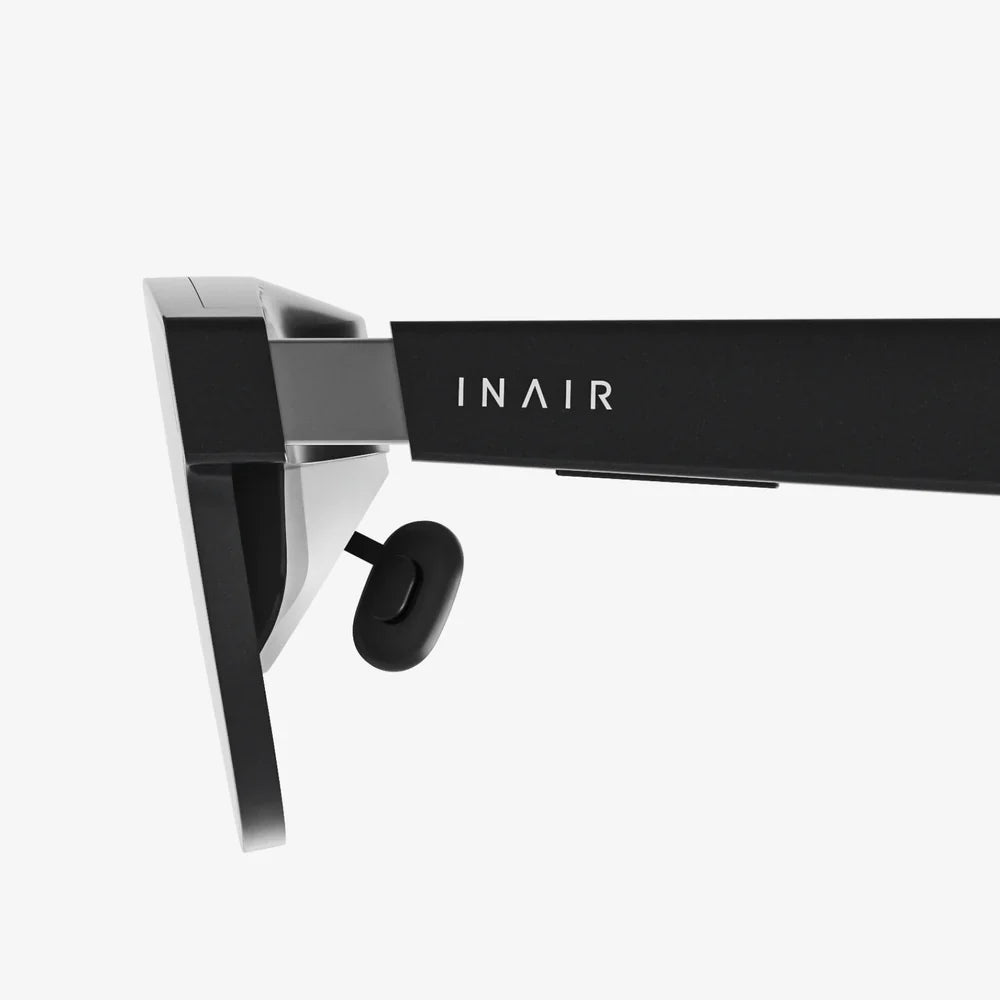
At first glance, a premium pair of smart sunglasses is indistinguishable from its traditional counterpart. The magic is in the meticulous engineering integrated into the frame and lenses. Understanding the core components is key to appreciating their capabilities.
Perhaps the most immediately noticeable feature is integrated audio. Instead of traditional headphones or earbuds, smart sunglasses use miniature speakers embedded in the arms (temples) of the frames. These speakers fire audio down into the ear canal, but crucially, they do not block ambient noise. This technology, often called bone conduction or open-ear audio, allows you to listen to music, take calls, and hear navigation prompts while remaining fully aware of your surroundings. This is a significant safety advantage for cyclists, runners, and pedestrians, enabling them to enjoy audio content without isolating themselves from the environment.
While not all models currently feature full visual AR displays, this is the holy grail of the category. The most advanced smart sunglasses incorporate micro-displays and waveguides—essentially, transparent lenses that project light directly into the retina. This creates the illusion that digital images, text, and graphics are floating in the world in front of you. You might see a floating navigation arrow superimposed on the road, real-time translation text hovering next to a menu, or your heart rate data from a connected fitness tracker displayed in the corner of your vision, all without obscuring your view.
Hidden within the frame is a sophisticated computer-on-a-chip, a processor that coordinates all functions. This is complemented by a suite of sensors that may include:
All this technology requires power. Batteries are strategically placed within the frame's arms to balance weight and maximize capacity. Given the size constraints, battery life is a constant engineering challenge. Most models offer several hours of continuous audio or AR use, often with a sleek charging case that provides multiple additional charges on the go. The goal is to get through a full day of typical use on a single charge.
The potential of smart sunglasses extends far beyond being a hands-free headphone replacement. They are a platform for contextual computing, meaning the technology can react to and assist with your specific situation.
For the active individual, smart sunglasses are a game-changer. Runners and cyclists can access their pace, distance, and heart rate data without breaking stride. Hikers can follow a mapped route with directional cues overlaid on the trail ahead. Swimmers with waterproof models can track laps and listen to music. By combining GPS, motion sensors, and audio, they become the ultimate workout companion, eliminating the need to constantly check a watch or phone.
Traveling in an unfamiliar city is transformed. Imagine walking through Tokyo and seeing virtual translations of shop signs appear through your lenses. Or getting walking directions to your hotel with a giant glowing arrow on the sidewalk only you can see. Smart sunglasses can provide contextual information about landmarks, historical sites, and restaurants as you look at them, acting as a personal, immersive tour guide.
The technology holds immense promise for accessibility. Real-time transcription and translation can break down communication barriers for those who are deaf or hard of hearing, displaying conversations as subtitles in their field of view. For individuals with low vision, AR could highlight obstacles on a path, amplify text, or recognize and announce faces, granting a new level of independence and interaction with the world.
The integrated first-person perspective camera offers a uniquely authentic way to capture life's moments. Vloggers, journalists, and everyday users can record photos and videos hands-free, capturing their point of view with unprecedented ease. This facilitates a more genuine and immersive form of storytelling, sharing experiences exactly as they were seen.
With great power comes great responsibility, and smart sunglasses are no exception. Their ability to record audio and video discreetly raises serious and valid privacy concerns. The idea of being recorded in public without knowledge is unsettling for many, and the industry faces a critical challenge in developing clear social etiquette and technological safeguards. Features like recording indicator lights that are impossible to disable are a basic first step. Furthermore, the data collected by these devices—your location, what you look at, what you listen to—is incredibly valuable and must be protected with robust encryption and transparent privacy policies. Social acceptance, or the "glasshole" stigma inherited from earlier attempts, is another hurdle. The success of smart sunglasses depends on them being perceived as a normal, even desirable, piece of fashion, not a conspicuous piece of surveillance equipment.
The current generation of smart sunglasses is impressive, but it is merely the foundation. The future will bring even more powerful processors, longer battery life thanks to low-energy components, and more immersive display technologies with wider fields of view and higher resolution. We can expect deeper integration with the broader ecosystem of Internet of Things (IoT) devices, allowing your sunglasses to interact with your smart home, your car, and other wearables. Artificial intelligence will become the central nervous system, proactively offering information and assistance based on what it sees and hears, transforming them from a tool you use into a partner you interact with.
The convergence of the digital and physical worlds is accelerating, and the interface for this new reality won't be a screen we carry in our pockets, but something we wear on our faces. Smart sunglasses represent the most logical, comfortable, and human-centric path to this always-on, augmented future. They offer a glimpse of a world where technology doesn't demand our attention but effortlessly enhances our perception, making us more capable, connected, and informed without ever having to look down.
The next time you put on a pair of sunglasses, consider what they might be capable of in just a few short years. The humble frames shielding your eyes are on the cusp of becoming the most personal and powerful computer you will ever own, transforming every walk, every conversation, and every glance into an opportunity to connect with a richer, more informed world. The future is looking bright, and it's being filtered through a lens of intelligent design.
Share:
What Industries Use Virtual Reality: A Deep Dive Into 10 Transformative Sectors
Aura Frames: The Art of Modern Memory Keeping and Digital Display