


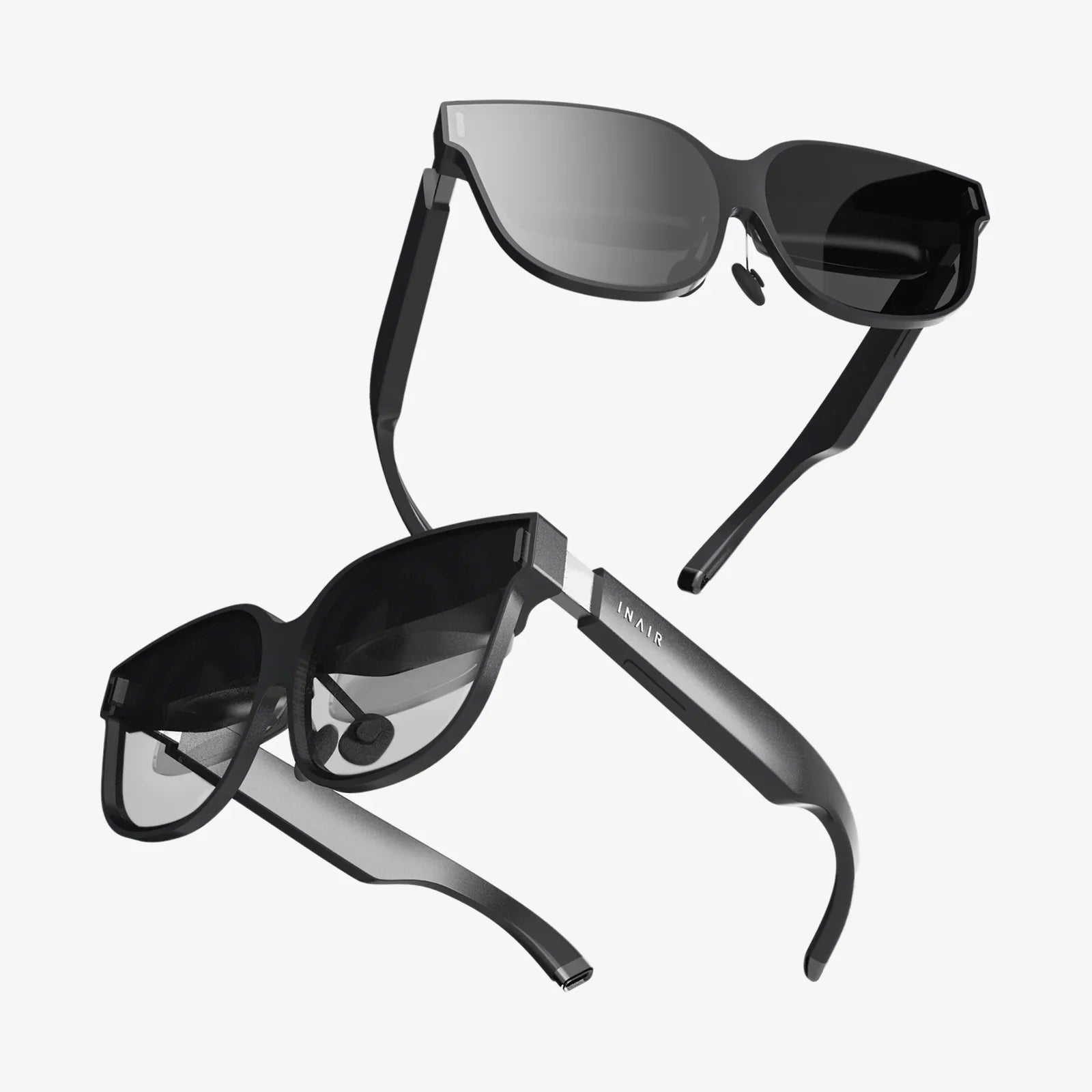
Imagine a world where your most vital information doesn't reside in your pocket or on your wrist, but floats effortlessly in the corner of your eye, seamlessly integrated into your perception of reality. The digital and physical worlds are on a collision course, and the most stylish, unobtrusive vehicle for this merger is emerging not as a bulky headset, but as a familiar, everyday accessory: smart sunglasses with display. This isn't science fiction; it's the next frontier of wearable technology, promising to redefine our relationship with information, connectivity, and the environment around us.
The Evolution of Wearable Tech: From Clunky to Cool
The journey to smart eyewear has been a fascinating one, marked by both ambitious leaps and sobering stumbles. The concept of augmenting human vision with computer-generated data has long been a dream, but early iterations were often hampered by technological limitations. Initial prototypes were cumbersome, drawing more attention for their geeky aesthetic than their functionality. Battery life was measured in minutes, processing power was insufficient for smooth graphics, and the displays themselves were often dim, low-resolution, and plagued by a narrow field of view.
However, the relentless march of Moore's Law and breakthroughs in material science have quietly solved these fundamental challenges. Microprocessors have become incredibly powerful and energy-efficient, allowing for complex computations without generating excessive heat in a small form factor. Battery technology, while still evolving, now supports all-day use for many devices. The most critical advancement, however, has been in the realm of micro-displays and waveguide technology. These tiny, brilliant projectors and the transparent lenses that channel light directly to the retina are the magic behind the illusion, transforming ordinary lenses into dynamic, interactive canvases.
Deconstructing the Magic: How They Actually Work
At its core, a pair of smart sunglasses with a display is a sophisticated mini-computer designed for augmented reality (AR). The technological symphony involves several key components working in perfect harmony.
The Optical Engine: Projecting a New Reality
The heart of the device is the micro-display, a minuscule screen often based on technologies like MicroLED or OLED. This display is incredibly bright and efficient, generating the raw image that you will ultimately see. This image is then projected toward the lens using a series of miniature optics. This is where the true innovation lies. Instead of a simple reflection, most high-end devices use a method called waveguide projection. The image from the micro-display is "coupled" into a transparent glass or plastic lens that acts as a waveguide. Through a process of internal reflection and diffraction, the light representing the image bounces through the lens until it is "decoupled" and directed straight into your eye.
The result is a crisp, bright digital overlay that appears to hover in space several feet to several yards away, perfectly integrated with your real-world view. You can read text, watch videos, or see navigation arrows painted onto the road ahead without ever needing to refocus your eyes away from the distance.
Sensing the World: Cameras and Sensors
To be truly "smart," the sunglasses need to understand their environment. This is achieved through a suite of integrated sensors. Typically, this includes:
- Cameras: High-resolution cameras capture the world in front of you. This visual data is processed for tasks like photo and video capture, object recognition, and text translation.
- Inertial Measurement Unit (IMU): This combination of accelerometers and gyroscopes tracks the precise movement, rotation, and orientation of your head. This is crucial for anchoring digital objects in space so they don't drift as you move.
- Ambient Light Sensor: Automatically adjusts the brightness of the display to ensure optimal visibility, whether you're in bright sunlight or a dimly lit room.
- Microphones and Speakers: Enable voice control through digital assistants, allow for phone calls, and provide spatial audio feedback without needing headphones.
The Brain and Brawn: Processing and Connectivity
All the data from these sensors is fed into a powerful system-on-a-chip (SoC), the brain of the operation. This processor runs the operating system, handles computer vision algorithms, manages power, and renders the graphics for the display. For connectivity, Bluetooth links the sunglasses to your smartphone, giving them access to data, notifications, and GPS. Many models also include Wi-Fi and cellular connectivity for standalone operation, freeing you from your phone entirely.
Beyond Novelty: Transformative Real-World Applications
The true value of smart sunglasses is revealed not in their specs, but in their application. They are poised to transform numerous aspects of our daily lives and professional workflows.
Navigation and Exploration
Imagine walking through a foreign city where turn-by-turn directions are painted onto the streets themselves. Landmarks could have floating informational tags, and restaurant reviews and ratings could appear over their doors as you approach. For hiking or cycling, your route could be overlayed on the trail, with altitude and distance metrics always visible. This hands-free, heads-up guidance is far safer and more intuitive than constantly glancing down at a phone.
Enhanced Productivity and Multitasking
For professionals on the go, the potential is enormous. A repair technician could see schematics and instructions overlaid on the machinery they are fixing. A warehouse worker could see picking lists and bin locations without carrying a scanner. During a walk, you could see meeting reminders, read important messages, or even preview a presentation slide—all without breaking stride or pulling out a device. It enables a new form of continuous, ambient productivity.
Fitness and Health
For athletes, smart sunglasses are the ultimate training partner. Runners and cyclists can keep their pace, heart rate, power output, and map constantly in their peripheral vision. Swimmers could use them with waterproof models to track laps and intervals. Beyond fitness, future iterations could integrate health monitoring, using sensors to track vital signs like heart rate variability or even blood oxygen levels, providing real-time biofeedback.
Social Connection and Content Creation
These devices offer a fundamentally new way to capture your perspective. The first-person point-of-view photos and videos are incredibly immersive, perfect for sharing experiences as you live them. Live streaming directly from your point of view could redefine social media. Furthermore, AR could enable new shared experiences—playing a virtual game that unfolds on your real-world tabletop with a friend who is miles away, both of you seeing the same digital elements through your glasses.
The Inevitable Challenges: Privacy, Security, and the Social Contract
With such transformative power comes significant responsibility and a host of complex challenges that society must address.
The Privacy Paradox
The always-on cameras and sensors represent a profound shift in privacy, both for the user and for everyone around them. The potential for surreptitious recording is a major concern. Will public spaces become unnerving when anyone could be recording at any time? Establishing new social and legal norms is critical. Features like a prominent recording indicator light are a start, but the debate around consent in the age of pervasive AR is just beginning.
Data Security and Digital Vulnerability
These devices collect a staggering amount of sensitive data: everything you look at, where you go, what you say, and even biometric information. This makes them a prime target for hackers. Securing this data stream, both on the device and in the cloud, is paramount. A breach wouldn't just leak your passwords; it could reveal the intimate details of your daily life.
The Attention Economy's Final Frontier
If we thought smartphones were distracting, consider an interface that is permanently available in your field of vision. The potential for information overload and constant distraction is immense. The battle for your attention will literally be front and center. Developers and designers will have a moral imperative to create interfaces that are helpful and non-intrusive, prioritizing user well-being over engagement metrics. The risk of further blurring the lines between our digital and physical lives, to the detriment of real-world interaction, is a very real danger.
Gazing into the Crystal Ball: The Future of Smart Eyewear
The current generation is just the beginning. The future trajectory points toward even greater miniaturization, better battery life through advanced chemistries and perhaps even solar charging, and more intuitive control schemes moving beyond touch and voice to include subtle gesture control and even neural interfaces. The displays will become full-color, higher resolution, and eventually will expand to cover our entire field of view for truly immersive AR experiences. They will evolve from being a companion device to potentially replacing our smartphones, TVs, and laptops as our primary computing interface.
The ultimate success of smart sunglasses with display won't be determined by their technical prowess alone, but by their ability to become invisible. They must fade into the background, both in terms of style and function, enhancing our lives without complicating them. They represent a fundamental step toward a future where technology doesn't demand our attention but quietly empowers it, where the line between helper and hindrance is drawn by design and intent. The opportunity to augment human potential is literally before our eyes; the challenge is to ensure it makes our reality richer, not less real. The next time you put on a pair of sunglasses, you might not just be shielding your eyes from the sun—you might be opening them to a new world.
Share:
Augmented Reality vs VR: The Ultimate Showdown for the Future of Digital Experience
Augmented Reality vs VR: The Ultimate Showdown for the Future of Digital Experience